
Inhaltsangabe
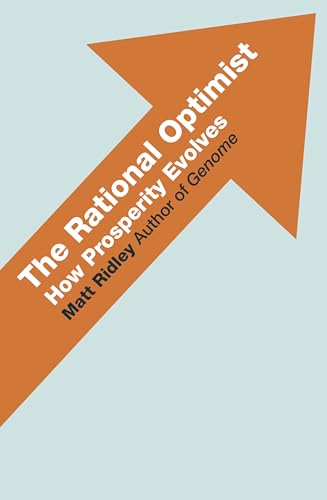
Life is getting better, and at an accelerating rate. Food availability, income and lifespan are up; disease, child mortality and violence are down - all across the globe.
Though the world is far from perfect, necessities and luxuries alike are getting cheaper; Africa is following Asia out of poverty; the internet, the mobile phone and container shipping are enriching people's lives as never before. The pessimists who dominate public discourse insist that we will soon reach a turning point and things will start to get worse. But they have been saying this for 200 years.
Matt Ridley does more than describe how things are getting better. He explains why.
Prosperity comes from everybody working for everybody else. The habit of exchange and specialisation - which started more than 100,000 years ago - has created a collective brain that set human living standards on a rising trend.
This bold book covers the entire sweep of human history, from the Stone Age to the internet, from the stagnation of the Ming empire to the likely consequences of climate change. Thanks to the ceaseless capacity of the human race for innovative change, and despite inevitable disasters, the twenty-first century will see both human prosperity and natural biodiversity enhanced.
Acute, refreshing and revelatory, The Rational Optimist will tip your way of thinking about the world for the better.
Die Inhaltsangabe kann sich auf eine andere Ausgabe dieses Titels beziehen.
Über die Autorin bzw. den Autor
Matt Ridley received his BA and D. Phil at Oxford researching the evolution of behaviour. He has been science editor, Washington correspondent and American editor of The Economist. He is the author of bestselling titles The Red Queen (1993), The Origins of Virtue (1996), Genome (1999) and Nature via Nurture (2003). His books have sold over half a million copies, been translated into 25 languages and been shortlisted for six literary prizes. In 2004 he won the National Academies Book Award from the US National Academies of Science, Engineering and Medicine for Nature via Nurture. In 2007 Matt won the Davis Prize from the US History of Science Society for Francis Crick: Discoverer of the Genetic Code. He is married to the neuroscientist Professor Anya Hurlbert.
„Über diesen Titel“ kann sich auf eine andere Ausgabe dieses Titels beziehen.
Weitere beliebte Ausgaben desselben Titels

Suchergebnisse für The Rational Optimist: How Prosperity Evolves

Beispielbild für diese ISBN
The Rational Optimist: How Prosperity Evolves
Anbieter: ThriftBooks-Atlanta, AUSTELL, GA, USA
Verkäuferbewertung 5 von 5 Sternen

Paperback. Zustand: Good. No Jacket. Pages can have notes/highlighting. Spine may show signs of wear. ~ ThriftBooks: Read More, Spend Less. Bestandsnummer des Verkäufers G0007378904I3N00
Gebraucht kaufen
EUR 18,17
Versand gratis
Versand innerhalb von USA
Versand innerhalb von USA
Anzahl: 1 verfügbar
Beispielbild für diese ISBN
The Rational Optimist: How Prosperity Evolves
Anbieter: medimops, Berlin, Deutschland
Verkäuferbewertung 5 von 5 Sternen
Zustand: good. Befriedigend/Good: Durchschnittlich erhaltenes Buch bzw. Schutzumschlag mit Gebrauchsspuren, aber vollständigen Seiten. / Describes the average WORN book or dust jacket that has all the pages present. Bestandsnummer des Verkäufers M00007378904-G
Gebraucht kaufen
EUR 11,28
EUR 10,00 Versand
Versand von Deutschland nach USA
Versand von Deutschland nach USA
Anzahl: 1 verfügbar
Foto des Verkäufers
The Rational Optimist: How Prosperity Evolves
Verlag:
Harper Collins Publ. UK, 2010
ISBN 10: 0007378904
ISBN 13: 9780007378906
Gebraucht
Softcover
Anbieter: Book Broker, Berlin, Deutschland
Verkäuferbewertung 5 von 5 Sternen
Zustand: Gut. 448 S. Alle Bücher & Medienartikel von Book Broker sind stets in gutem & sehr gutem gebrauchsfähigen Zustand. Unser Produktfoto entspricht dem hier angebotenen Artikel, dieser weist folgende Merkmale auf: Altersentsprechend nachgedunkelte/saubere Seiten in fester Bindung. Leichte Gebrauchsspuren. Dem Alter entsprechend sehr guter Zustand. Sprache: Englisch Gewicht in Gramm: 659 Taschenbuch, Maße: 15.3 cm x 3.5 cm x 23.4 cm. Bestandsnummer des Verkäufers 661128712
Gebraucht kaufen
EUR 11,81
EUR 35,89 Versand
Versand von Deutschland nach USA
Versand von Deutschland nach USA
Anzahl: 1 verfügbar
Beispielbild für diese ISBN
The Rational Optimist: How Prosperity Evolves.
Anbieter: BOOKHOME SYDNEY, Annandale Sydney, NSW, Australien
Verkäuferbewertung 5 von 5 Sternen
1st p/b ed. Paperback thick octavo, very good condition, few tiny dents front cover, pages faintly toned, covers little creased, minor edgewear, sticker mark front cover. 438 pp. Matt Ridley describes and then explains why human society is getting better. The book covers human history, from the Stone Age to the internet, from the stagnation of the Ming empire to the invention of the steam engine, and the recent population explosion to climate change. Bestandsnummer des Verkäufers 28635
Gebraucht kaufen
EUR 13,74
EUR 38,20 Versand
Versand von Australien nach USA
Versand von Australien nach USA
Anzahl: 1 verfügbar