
Verwandte Artikel zu Reading Like a Writer: A Guide for People Who Love...
Reading Like a Writer: A Guide for People Who Love Books and for Those Who Want to Write Them ― Literary Essays on Close Reading and Creative Craft (P.S.) - Softcover
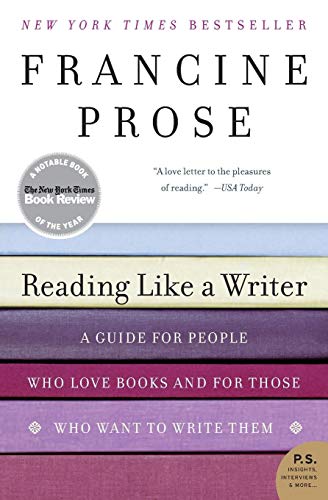
Inhaltsangabe
A distinguished novelist and critic inspires readers and writers with this inside look at how the professionals read―and write
Long before there were creative writing workshops and degrees, how did aspiring writers learn to write? By reading the work of their predecessors and contemporaries, says Francine Prose.
As she takes us on a guided tour of the tools and the tricks of the masters―Dostoyevsky, Flaubert, Kafka, Austen, Dickens, Woolf, Chekhov―Prose discovers why these writers endure. She takes pleasure in the signature elements of such outstanding writers as Philip Roth, Isaac Babel, John Le Carré, James Joyce, and Katherine Mansfield. Throughout, she champions the art of close reading, cautioning readers to slow down and pay attention to words, the raw material out of which literature is crafted. Written with passion, humor, and wisdom, Reading Like a Writer will inspire readers to return to literature with a fresh eye and an eager heart.
In this indispensable guide for writers and book lovers, you’ll discover:
- A Writer’s Toolkit: Unpack the signature tools and tricks of literary greats, from mastering narration and dialogue to crafting unforgettable characters.
- Learn from the Masters: Go beyond standard creative writing workshops and learn directly from the sentences of Dostoyevsky, Flaubert, Woolf, and Chekhov.
- Word-by-Word Analysis: See how every word choice, every sentence, and every paragraph is a deliberate decision that brings a piece of literature to life.
- Read with a Fresh Eye: Whether you’re an aspiring novelist or a passionate reader, find a new, more profound way to appreciate the books you love.
Die Inhaltsangabe kann sich auf eine andere Ausgabe dieses Titels beziehen.
Über die Autorin bzw. den Autor
Francine Prose is the author of twenty-three works of fiction, including the highly acclaimed Five Weeks in the Country; The Vixen; Mister Monkey; the New York Times bestseller Lovers at the Chameleon Club, Paris 1932; A Changed Man, which won the Dayton Literary Peace Prize; and Blue Angel, which was a finalist for the National Book Award. Her works of nonfiction include the highly praised 1974: A Personal History, Anne Frank: The Book, The Life, The Afterlife, and the New York Times bestseller Reading Like a Writer, which has become a classic. The recipient of numerous grants and honors, including a Guggenheim and a Fulbright and a Director’s Fellow at the Center for Scholars and Writers at the New York Public Library, Prose is a former president of PEN American Center, and a member of the American Academy of Arts and Letters and the American Academy of Arts and Sciences. She is a Distinguished Writer in Residence at Bard College.
Von der hinteren Coverseite
Long before there were creative-writing workshops and degrees, how did aspiring writers learn to write? By reading the work of their predecessors and contemporaries, says Francine Prose.
In Reading Like a Writer, Prose invites you to sit by her side and take a guided tour of the tools and the tricks of the masters. She reads the work of the very best writers—Dostoyevsky, Flaubert, Kafka, Austen, Dickens, Woolf, Chekhov—and discovers why their work has endured. She takes pleasure in the long and magnificent sentences of Philip Roth and the breathtaking paragraphs of Isaac Babel; she is deeply moved by the brilliant characterization in George Eliot's Middlemarch. She looks to John Le Carré for a lesson in how to advance plot through dialogue, to Flannery O'Connor for the cunning use of the telling detail, and to James Joyce and Katherine Mansfield for clever examples of how to employ gesture to create character. She cautions readers to slow down and pay attention to words, the raw material out of which literature is crafted.
Written with passion, humor, and wisdom, Reading Like a Writer will inspire readers to return to literature with a fresh eye and an eager heart.
Auszug. © Genehmigter Nachdruck. Alle Rechte vorbehalten.
Reading Like a Writer
A Guide for People Who Love Books and for Those Who Want to Write ThemBy Francine ProseHarper Perennial
Copyright © 2007 Francine ProseAll right reserved.
ISBN: 9780060777050
Chapter One
Close Reading
Can creative writing be taught?
It's a reasonable question, but no matter how often I've been asked, I never know quite what to say. Because if what people mean is: Can the love of language be taught? Can a gift for storytelling be taught? then the answer is no. Which may be why the question is so often asked in a skeptical tone implying that, unlike the multiplication tables or the principles of auto mechanics, creativity can't be transmitted from teacher to student. Imagine Milton enrolling in a graduate program for help with Paradise Lost, or Kafka enduring the seminar in which his classmates inform him that, frankly, they just don't believe the part about the guy waking up one morning to find he's a giant bug.
What confuses me is not the sensibleness of the question but the fact that it's being asked of a writer who has taught writing, on and off, for almost twenty years. What would it say about me, my students, and the hours we'd spent in the classroom if I said that any attempt to teach the writing of fiction was a complete waste of time? Probably, I should just go ahead and admit that I've been committing criminal fraud.
Instead I answer by recalling my own most valuable experience, not as a teacher but as a student in one of the few fiction workshops I took. This was in the 1970s, during my brief career as a graduate student in medieval English literature, when I was allowed the indulgence of taking one fiction class. Its generous teacher showed me, among other things, how to line edit my work. For any writer, the ability to look at a sentence and see what's superfluous, what can be altered, revised, expanded, or especially cut is essential. It's satisfying to see that sentence shrink, snap into place, and ultimately emerge in a more polished form: clear, economical, sharp.
Meanwhile, my classmates were providing me with my first real audience. In that prehistory, before mass photocopying enabled students to distribute manuscripts in advance, we read our work aloud. That year, I was beginning what would become my first novel. And what made an important difference to me was the attention I felt in the room as the others listened. I was encouraged by their eagerness to hear more.
That's the experience I describe, the answer I give people who ask about teaching creative writing: A workshop can be useful. A good teacher can show you how to edit your work. The right class can form the basis of a community that will help and sustain you.
But that class, as helpful as it was, was not where I learned to write.
Like most, maybe all, writers, I learned to write by writing and, by example, from books.
Long before the idea of a writer's conference was a glimmer in anyone's eye, writers learned by reading the work of their predecessors. They studied meter with Ovid, plot construction with Homer, comedy with Aristophanes; they honed their prose style by absorbing the lucid sentences of Montaigne and Samuel Johnson. And who could have asked for better teachers: generous, uncritical, blessed with wisdom and genius, as endlessly forgiving as only the dead can be?
Though writers have learned from the masters in a formal, methodical way—Harry Crews has described taking apart a Graham Greene novel to see how many chapters it contained, how much time it covered, how Greene handled pacing, tone, and point of view—the truth is this sort of education more often involves a kind of osmosis. After I've written an essay in which I've quoted at length from great writers, so that I've had to copy out long passages of their work, I've noticed that my own work becomes, however briefly, just a little more fluent.
In the ongoing process of becoming a writer, I read and reread the authors I most loved. I read for pleasure, first, but also more analytically, conscious of style, of diction, of how sentences were formed and information was being conveyed, how the writer was structuring a plot, creating characters, employing detail and dialogue. And as I wrote I discovered that writing, like reading, was done one word at a time, one punctuation mark at a time. It required what a friend calls "putting every word on trial for its life": changing an adjective, cutting a phrase, removing a comma, and putting the comma back in.
I read closely, word by word, sentence by sentence, pondering each deceptively minor decision that the writer had made. And though it's impossible to recall every source of inspiration and instruction, I can remember the novels and stories that seemed to me revelations: wells of beauty and pleasure that were also textbooks, private lessons in the art of fiction.
This book is intended partly as a response to that unavoidable question about how writers learn to do something that cannot be taught. What writers know is that, ultimately, we learn to write by practice, hard work, by repeated trial and error, success and failure, and from the books we admire. And so the book that follows represents an effort to recall my own education as a novelist and to help the passionate reader and would-be writer understand how a writer reads.
When I was a high school junior, our English teacher assigned us to write a term paper on the theme of blindness in Oedipus Rex and King Lear. We were supposed to go through the two tragedies and circle every reference to eyes, light, darkness, and vision, then draw some conclusion on which we would base our final essay.
It all seemed so dull, so mechanical. We felt we were way beyond it. Without this tedious, time-consuming exercise, all of us knew that blindness played a starring role in both dramas.
Still, we liked our English teacher, we wanted to please him. And searching for every . . .
Continues...
Excerpted from Reading Like a Writerby Francine Prose Copyright © 2007 by Francine Prose. Excerpted by permission.
All rights reserved. No part of this excerpt may be reproduced or reprinted without permission in writing from the publisher.
Excerpts are provided by Dial-A-Book Inc. solely for the personal use of visitors to this web site.
„Über diesen Titel“ kann sich auf eine andere Ausgabe dieses Titels beziehen.
Suchergebnisse für Reading Like a Writer: A Guide for People Who Love...

Foto des Verkäufers
Reading Like a Writer: A Guide for People Who Love Books and for Those Who Want to Write Them â Literary Essays on Close Reading and Creative Craft (P.S.)
Anbieter: Zoom Books East, Glendale Heights, IL, USA
Verkäuferbewertung 5 von 5 Sternen

Zustand: good. Book is in good condition and may include underlining highlighting and minimal wear. The book can also include "From the library of" labels. May not contain miscellaneous items toys, dvds, etc. . We offer 100% money back guarantee and 24 7 customer service. Bestandsnummer des Verkäufers ZEV.0060777052.G
Gebraucht kaufen
EUR 4,49
Versand gratis
Versand innerhalb von USA
Versand innerhalb von USA
Anzahl: 1 verfügbar
Beispielbild für diese ISBN
Reading Like a Writer: A Guide for People Who Loves Books and for Those Who Want to Write Them
Verlag:
HarperCollins Publishers Inc, 2007
ISBN 10: 0060777052
ISBN 13: 9780060777050
Gebraucht
Paperback
Anbieter: World of Books (was SecondSale), Montgomery, IL, USA
Verkäuferbewertung 5 von 5 Sternen
Paperback. Zustand: Good. A distinguished novelist and critic inspires readers and writers with this inside look at how the professionals read--and write Long before there were creative writing workshops and degrees, how did aspiring writers learn to write? By reading the work of their predecessors and contemporaries, says Francine Prose. As she takes us on a guided tour of the tools and the tricks of the masters--Dostoyevsky, Flaubert, Kafka, Austen, Dickens, Woolf, Chekhov--Prose discovers why these writers endure. She takes pleasure in the signature elements of such outstanding writers as Philip Roth, Isaac Babel, John Le Carré, James Joyce, and Katherine Mansfield. Throughout, she champions the art of close reading, cautioning readers to slow down and pay attention to words, the raw material out of which literature is crafted. Written with passion, humor, and wisdom, Reading Like a Writer will inspire readers to return to literature with a fresh eye and an eager heart. In this indispensable guide for writers and book lovers, you'll discover: A Writer's Toolkit: Unpack the signature tools and tricks of literary greats, from mastering narration and dialogue to crafting unforgettable characters. Learn from the Masters: Go beyond standard creative writing workshops and learn directly from the sentences of Dostoyevsky, Flaubert, Woolf, and Chekhov. Word-by-Word Analysis: See how every word choice, every sentence, and every paragraph is a deliberate decision that brings a piece of literature to life. Read with a Fresh Eye: Whether you're an aspiring novelist or a passionate reader, find a new, more profound way to appreciate the books you love. Bestandsnummer des Verkäufers 00101558976
Gebraucht kaufen
EUR 4,49
Versand gratis
Versand innerhalb von USA
Versand innerhalb von USA
Anzahl: Mehr als 20 verfügbar
Beispielbild für diese ISBN
Reading Like a Writer: A Guide for People Who Loves Books and for Those Who Want to Write Them
Verlag:
HarperCollins Publishers Inc, 2007
ISBN 10: 0060777052
ISBN 13: 9780060777050
Gebraucht
Paperback
Anbieter: World of Books (was SecondSale), Montgomery, IL, USA
Verkäuferbewertung 5 von 5 Sternen
Paperback. Zustand: Fair. A distinguished novelist and critic inspires readers and writers with this inside look at how the professionals read--and write Long before there were creative writing workshops and degrees, how did aspiring writers learn to write? By reading the work of their predecessors and contemporaries, says Francine Prose. As she takes us on a guided tour of the tools and the tricks of the masters--Dostoyevsky, Flaubert, Kafka, Austen, Dickens, Woolf, Chekhov--Prose discovers why these writers endure. She takes pleasure in the signature elements of such outstanding writers as Philip Roth, Isaac Babel, John Le Carré, James Joyce, and Katherine Mansfield. Throughout, she champions the art of close reading, cautioning readers to slow down and pay attention to words, the raw material out of which literature is crafted. Written with passion, humor, and wisdom, Reading Like a Writer will inspire readers to return to literature with a fresh eye and an eager heart. In this indispensable guide for writers and book lovers, you'll discover: A Writer's Toolkit: Unpack the signature tools and tricks of literary greats, from mastering narration and dialogue to crafting unforgettable characters. Learn from the Masters: Go beyond standard creative writing workshops and learn directly from the sentences of Dostoyevsky, Flaubert, Woolf, and Chekhov. Word-by-Word Analysis: See how every word choice, every sentence, and every paragraph is a deliberate decision that brings a piece of literature to life. Read with a Fresh Eye: Whether you're an aspiring novelist or a passionate reader, find a new, more profound way to appreciate the books you love. Bestandsnummer des Verkäufers 00104297361
Gebraucht kaufen
EUR 4,49
Versand gratis
Versand innerhalb von USA
Versand innerhalb von USA
Anzahl: 8 verfügbar
Foto des Verkäufers
Reading Like a Writer: A Guide for People Who Love Books and for Those Who Want to Write Them â Literary Essays on Close Reading and Creative Craft (P.S.)
Anbieter: Aspen Book Co., Denver, CO, USA
Verkäuferbewertung 5 von 5 Sternen
Zustand: acceptable. It's been through some chapters of life! Expect visible wearâ"creases, notes, highlights, maybe even a splash of water here and there. Perfect for readers who love a book with history. Bestandsnummer des Verkäufers PKV.0060777052.A
Gebraucht kaufen
EUR 4,50
Versand gratis
Versand innerhalb von USA
Versand innerhalb von USA
Anzahl: 1 verfügbar
Foto des Verkäufers
Reading Like a Writer: A Guide for People Who Love Books and for Those Who Want to Write Them â Literary Essays on Close Reading and Creative Craft (P.S.)
Anbieter: Dream Books Co., Denver, CO, USA
Verkäuferbewertung 5 von 5 Sternen
Zustand: acceptable. This copy has clearly been enjoyedâ"expect noticeable shelf wear and some minor creases to the cover. Binding is strong, and all pages are legible. May contain previous library markings or stamps. Bestandsnummer des Verkäufers DBV.0060777052.A
Gebraucht kaufen
EUR 4,80
Versand gratis
Versand innerhalb von USA
Versand innerhalb von USA
Anzahl: 2 verfügbar
Beispielbild für diese ISBN
Reading Like a Writer: A Guide for People Who Love Books and for Those Who Want to Write Them (P.S.)
Anbieter: More Than Words, Waltham, MA, USA
Verkäuferbewertung 5 von 5 Sternen
Zustand: Good. A sound copy with only light wear. Overall a solid copy at a great price! Bestandsnummer des Verkäufers BOS-E-01f-02230
Gebraucht kaufen
EUR 2,07
EUR 3,55 Versand
Versand innerhalb von USA
Versand innerhalb von USA
Anzahl: 3 verfügbar
Foto des Verkäufers
Reading Like a Writer: A Guide for People Who Love Books and for Those Who Want to Write Them â Literary Essays on Close Reading and Creative Craft (P.S.)
Anbieter: Austin Goodwill 1101, Austin, TX, USA
Verkäuferbewertung 5 von 5 Sternen
Zustand: good. Book shows general signs of use and handling. May have light wear on the cover or edges and minimal writing or highlighting. Binding remains tight, and pages are clean and readable. Bestandsnummer des Verkäufers CTXV.0060777052.G
Gebraucht kaufen
EUR 3,21
EUR 2,94 Versand
Versand innerhalb von USA
Versand innerhalb von USA
Anzahl: 1 verfügbar
Beispielbild für diese ISBN
Reading Like a Writer: A Guide for People Who Loves Books and for Those Who Want to Write Them
Verlag:
HarperCollins Publishers Inc, 2007
ISBN 10: 0060777052
ISBN 13: 9780060777050
Gebraucht
Paperback
Anbieter: World of Books Inc, Montgomery, IL, USA
Verkäuferbewertung 4 von 5 Sternen

Paperback. Zustand: Fair. A distinguished novelist and critic inspires readers and writers with this inside look at how the professionals read--and write Long before there were creative writing workshops and degrees, how did aspiring writers learn to write? By reading the work of their predecessors and contemporaries, says Francine Prose. As she takes us on a guided tour of the tools and the tricks of the masters--Dostoyevsky, Flaubert, Kafka, Austen, Dickens, Woolf, Chekhov--Prose discovers why these writers endure. She takes pleasure in the signature elements of such outstanding writers as Philip Roth, Isaac Babel, John Le Carré, James Joyce, and Katherine Mansfield. Throughout, she champions the art of close reading, cautioning readers to slow down and pay attention to words, the raw material out of which literature is crafted. Written with passion, humor, and wisdom, Reading Like a Writer will inspire readers to return to literature with a fresh eye and an eager heart. In this indispensable guide for writers and book lovers, you'll discover: A Writer's Toolkit: Unpack the signature tools and tricks of literary greats, from mastering narration and dialogue to crafting unforgettable characters. Learn from the Masters: Go beyond standard creative writing workshops and learn directly from the sentences of Dostoyevsky, Flaubert, Woolf, and Chekhov. Word-by-Word Analysis: See how every word choice, every sentence, and every paragraph is a deliberate decision that brings a piece of literature to life. Read with a Fresh Eye: Whether you're an aspiring novelist or a passionate reader, find a new, more profound way to appreciate the books you love. Bestandsnummer des Verkäufers CIN0060777052A
Gebraucht kaufen
EUR 6,33
Versand gratis
Versand innerhalb von USA
Versand innerhalb von USA
Anzahl: 8 verfügbar
Beispielbild für diese ISBN
Reading Like a Writer: A Guide for People Who Loves Books and for Those Who Want to Write Them
Verlag:
HarperCollins Publishers Inc, 2007
ISBN 10: 0060777052
ISBN 13: 9780060777050
Gebraucht
Paperback
Anbieter: World of Books Inc, Montgomery, IL, USA
Verkäuferbewertung 4 von 5 Sternen
Paperback. Zustand: Good. A distinguished novelist and critic inspires readers and writers with this inside look at how the professionals read--and write Long before there were creative writing workshops and degrees, how did aspiring writers learn to write? By reading the work of their predecessors and contemporaries, says Francine Prose. As she takes us on a guided tour of the tools and the tricks of the masters--Dostoyevsky, Flaubert, Kafka, Austen, Dickens, Woolf, Chekhov--Prose discovers why these writers endure. She takes pleasure in the signature elements of such outstanding writers as Philip Roth, Isaac Babel, John Le Carré, James Joyce, and Katherine Mansfield. Throughout, she champions the art of close reading, cautioning readers to slow down and pay attention to words, the raw material out of which literature is crafted. Written with passion, humor, and wisdom, Reading Like a Writer will inspire readers to return to literature with a fresh eye and an eager heart. In this indispensable guide for writers and book lovers, you'll discover: A Writer's Toolkit: Unpack the signature tools and tricks of literary greats, from mastering narration and dialogue to crafting unforgettable characters. Learn from the Masters: Go beyond standard creative writing workshops and learn directly from the sentences of Dostoyevsky, Flaubert, Woolf, and Chekhov. Word-by-Word Analysis: See how every word choice, every sentence, and every paragraph is a deliberate decision that brings a piece of literature to life. Read with a Fresh Eye: Whether you're an aspiring novelist or a passionate reader, find a new, more profound way to appreciate the books you love. Bestandsnummer des Verkäufers CIN0060777052G
Gebraucht kaufen
EUR 6,33
Versand gratis
Versand innerhalb von USA
Versand innerhalb von USA
Anzahl: Mehr als 20 verfügbar
Beispielbild für diese ISBN
Reading Like a Writer: A Guide for People Who Love Books and for Those Who Want to Write Them
Anbieter: ThriftBooks-Phoenix, Phoenix, AZ, USA
Verkäuferbewertung 5 von 5 Sternen
Paperback. Zustand: Fair. No Jacket. Readable copy. Pages may have considerable notes/highlighting. ~ ThriftBooks: Read More, Spend Less. Bestandsnummer des Verkäufers G0060777052I5N00
Gebraucht kaufen
EUR 6,42
Versand gratis
Versand innerhalb von USA
Versand innerhalb von USA
Anzahl: 2 verfügbar