
Verwandte Artikel zu Goldberg: Variations: A Literary Tapestry Where Past,...
Goldberg: Variations: A Literary Tapestry Where Past, Present, Imagination, and Truth Intertwine - Softcover
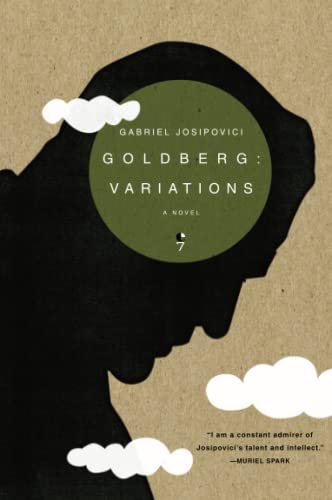
Inhaltsangabe
At the turn of the eighteenth century, a writer—a Jew—enters an English country manor, where he has been invited to read through the night to his host until the gentleman falls asleep. What unfolds then are seemingly unconnected stories covering a vast array of topics—from incest to madness to a poetic competition in the court of George III. And what emerges by the end is a breathtaking tapestry in which past and present, imagination and truth, are intricately woven together into one remarkable whole.
Die Inhaltsangabe kann sich auf eine andere Ausgabe dieses Titels beziehen.
Über die Autorin bzw. den Autor
One of Europe's most innovative and admired thinkers and writers, Gabriel Josipovici has published more than a dozen novels, three volumes of short stories, several books of criticism, and plays that are widely performed throughout Europe. He lives in Lewes, England.
Von der hinteren Coverseite
At the turn of the eighteenth century, a writer—a Jew—enters an English country manor, where he has been invited to read through the night to his host until the gentleman falls asleep. What unfolds then are seemingly unconnected stories covering a vast array of topics—from incest to madness to a poetic competition in the court of George III. And what emerges by the end is a breathtaking tapestry in which past and present, imagination and truth, are intricately woven together into one remarkable whole.
Auszug. © Genehmigter Nachdruck. Alle Rechte vorbehalten.
Goldberg: Variations
By Gabriel JosipoviciHarperCollins Publishers, Inc.
Copyright © 2007 Gabriel JosipoviciAll right reserved.
ISBN: 9780060897239
Chapter One
Goldberg
We arrived at nightfall. Mr Hammond set me down at the manor and drove on to see his son. Mr Westfield was expecting me. His manservant showed me to my room. It is larger than our living-room and has a small bathroom attached, the whole elegantly panelled and freshly painted. The windows are large and look directly down on to the kitchen garden, but the big oak and elm trees of the park are visible beyond. It is altogether very pleasant and peaceful, and I am sure I will be able to do very good work here. There is a desk in one corner and Mr Westfield has provided me with every kind of paper, pencil, pen and ink.
I was given dinner in a little room adjoining the main dining-room. It was very abundant and well-cooked, with a bottle of excellent wine to go with it, and coffee to follow. This I declined, and asked instead for a cup of lemon verbena tea such as I am accustomed to at home, but this the maid could not provide. She promised, however, to fetch in a supply on the morrow, and furnished me instead with a cup of rosehip tea, pleasant to the taste though a little tart.
At nine o'clock I was ushered into Mr Westfield's rooms. He was lying on a chaise-longue, drinking coffee. He is a large, pleasant-faced man, florid in complexion and with a conspicuous wart on his nose. I did not like to tell him at this juncture that his problems might be eased if he did not drink coffee after six o'clock in the evening. He has presumably already been told this by his physician and chosen to disregard it.
I am to read to him till dawn or else till I am sure he is asleep, whichever is the first. I am to sit in the room adjacent to the bedroom, the very room where I had my first interview with him, in a chair close to the door leading into the bedroom, which will be open. Only when he begins to snore am I to stop. Steady, heavy breathing does not mean that he is asleep. Indeed, he points out that this would be the very worst moment to stop, as the sudden silence would immediately catapult him into wakefulness, even if he had been on the point of falling asleep.
I asked if he wished to hear me read, but he said he had made enquiries and had every confidence in my abilities. He wants an even tone of voice, but not monotonous. Do not try to read as though you were soothing me to sleep, he told me. I cannot abide that. Read in your normal manner, but do not let yourself be carried away by what you are reading. Only if I am compelled to attend will I be able to forget my own thoughts for long enough to fall asleep.
With that he dismissed me, instructing me to return with my book at midnight. I asked him if I should knock and he pondered a moment, then said that I should. However, he himself would not reply. Knock merely and then let yourself in, he said. The door will not be locked.
His room was in darkness when I returned, but he called out to me from his bed, and when I answered he asked me to be seated and to begin when I was ready. I settled myself in the chair, adjusted the lamp, and began. But after a while he called out to me again and asked me to enter the bedroom. The light from the lamp allowed me to make out the large four-poster in which I presumed he lay. I stood at the door, but his voice, coming from the recess of the bed, asked me to come forward and to sit at his bedside. When I had done this he lay for so long in silence I thought my simple presence there beside him had been enough to do what all the skills of my delivery had so far failed to do, but eventually he spoke, very softly, and asked me about you and the children. I answered all his questions as simply and clearly as I was able. He asked me then whether I myself had anything written I might choose to read from instead of the books I had brought with me. I answered that I had much, but not with me. I wondered whether he would suggest sending a servant to fetch these the next day, but he lay in silence for a while, and then asked whether I would be prepared to write some special thing to read to him, night after night.
—What kind of thing do you have in mind? I asked him.
He laughed at that, and said he was not himself a writer, and that he would leave such things to me. I understood the reason then for the desk under the window and the different kinds of paper and pen laid out upon it. I said I would try.
—I will not have anything other than a new composition of your own, he said.
He was silent again, and I wondered what I should do. Did he wish me to return to the other room and take up my reading again, or leave him altogether, or else to sit there in case he had other questions for me to answer. I was debating these different possibilities when he said:
—I have read all the books that have been written, Mr Goldberg, and it makes me melancholy. A terrible tedium comes upon me whenever I open again one of these volumes, or even when another voice renders me their contents.
—But would not a new book arouse your interest too much? I asked him, would it not have the effect of keeping you awake rather than the desired one of sending you to sleep?
Continues...
Excerpted from Goldberg: Variationsby Gabriel Josipovici Copyright © 2007 by Gabriel Josipovici. Excerpted by permission.
All rights reserved. No part of this excerpt may be reproduced or reprinted without permission in writing from the publisher.
Excerpts are provided by Dial-A-Book Inc. solely for the personal use of visitors to this web site.
„Über diesen Titel“ kann sich auf eine andere Ausgabe dieses Titels beziehen.
Suchergebnisse für Goldberg: Variations: A Literary Tapestry Where Past,...

Beispielbild für diese ISBN
Goldberg: Variations
Anbieter: World of Books (was SecondSale), Montgomery, IL, USA
Verkäuferbewertung 5 von 5 Sternen

Zustand: Very Good. Item in very good condition! Textbooks may not include supplemental items i.e. CDs, access codes etc. Bestandsnummer des Verkäufers 00103515209
Gebraucht kaufen
EUR 4,60
Versand gratis
Versand innerhalb von USA
Versand innerhalb von USA
Anzahl: 1 verfügbar
Beispielbild für diese ISBN
Goldberg: Variations: A Literary Tapestry Where Past, Present, Imagination, and Truth Intertwine
Anbieter: BooksRun, Philadelphia, PA, USA
Verkäuferbewertung 5 von 5 Sternen
Paperback. Zustand: Very Good. It's a well-cared-for item that has seen limited use. The item may show minor signs of wear. All the text is legible, with all pages included. It may have slight markings and/or highlighting. Bestandsnummer des Verkäufers 0060897236-11-1
Gebraucht kaufen
EUR 4,61
Versand gratis
Versand innerhalb von USA
Versand innerhalb von USA
Anzahl: 1 verfügbar
Beispielbild für diese ISBN
Goldberg: Variations
Verlag:
HarperCollins Publishers, 2007
ISBN 10: 0060897236
ISBN 13: 9780060897239
Gebraucht
Softcover
Anbieter: Better World Books, Mishawaka, IN, USA
Verkäuferbewertung 5 von 5 Sternen
Zustand: Good. 1 Edition. Former library copy. Pages intact with minimal writing/highlighting. The binding may be loose and creased. Dust jackets/supplements are not included. Includes library markings. Stock photo provided. Product includes identifying sticker. Better World Books: Buy Books. Do Good. Bestandsnummer des Verkäufers 3079975-6
Gebraucht kaufen
EUR 6,86
Versand gratis
Versand innerhalb von USA
Versand innerhalb von USA
Anzahl: 1 verfügbar
Beispielbild für diese ISBN
Goldberg: Variations
Anbieter: Top Notch Books, Tolar, TX, USA
Verkäuferbewertung 5 von 5 Sternen
Soft Cover. Zustand: Good. Wraps have rubbed edges, spine is unbent. Pages are clean with no markings in text. Size: 8vo - over 7¾" - 9¾" tall. Bestandsnummer des Verkäufers 127800
Gebraucht kaufen
EUR 4,49
EUR 5,02 Versand
Versand innerhalb von USA
Versand innerhalb von USA
Anzahl: 1 verfügbar
Beispielbild für diese ISBN
Goldberg: Variations
Anbieter: Lakeside Books, Benton Harbor, MI, USA
Verkäuferbewertung 5 von 5 Sternen
Zustand: New. Brand New! Not Overstocks or Low Quality Book Club Editions! Direct From the Publisher! We're not a giant, faceless warehouse organization! We're a small town bookstore that loves books and loves it's customers! Buy from Lakeside Books! Bestandsnummer des Verkäufers OTF-S-9780060897239
Neu kaufen
EUR 12,26
EUR 3,48 Versand
Versand innerhalb von USA
Versand innerhalb von USA
Anzahl: Mehr als 20 verfügbar
Foto des Verkäufers
Goldberg : Variations
Anbieter: GreatBookPrices, Columbia, MD, USA
Verkäuferbewertung 5 von 5 Sternen
Zustand: New. Bestandsnummer des Verkäufers 4346782-n
Neu kaufen
EUR 13,46
EUR 2,30 Versand
Versand innerhalb von USA
Versand innerhalb von USA
Anzahl: Mehr als 20 verfügbar
Foto des Verkäufers
Goldberg: Variations (Paperback or Softback)
Verlag:
Ecco Press 2/27/2007, 2007
ISBN 10: 0060897236
ISBN 13: 9780060897239
Neu
Paperback or Softback
Anbieter: BargainBookStores, Grand Rapids, MI, USA
Verkäuferbewertung 5 von 5 Sternen
Paperback or Softback. Zustand: New. Goldberg: Variations. Book. Bestandsnummer des Verkäufers BBS-9780060897239
Foto des Verkäufers
Goldberg: Variations
Verlag:
HarperCollins Publishers Inc, US, 2007
ISBN 10: 0060897236
ISBN 13: 9780060897239
Neu
Paperback
Anbieter: Rarewaves USA, HEBRON, KY, USA
Verkäuferbewertung 5 von 5 Sternen
Paperback. Zustand: New. Bestandsnummer des Verkäufers LU-9780060897239
Neu kaufen
EUR 17,16
Versand gratis
Versand innerhalb von USA
Versand innerhalb von USA
Anzahl: Mehr als 20 verfügbar
Foto des Verkäufers
Goldberg : Variations
Anbieter: GreatBookPrices, Columbia, MD, USA
Verkäuferbewertung 5 von 5 Sternen
Zustand: As New. Unread book in perfect condition. Bestandsnummer des Verkäufers 4346782
Gebraucht kaufen
EUR 15,19
EUR 2,30 Versand
Versand innerhalb von USA
Versand innerhalb von USA
Anzahl: Mehr als 20 verfügbar
Foto des Verkäufers
Goldberg: Variations
Verlag:
HarperCollins Publishers Inc, US, 2007
ISBN 10: 0060897236
ISBN 13: 9780060897239
Neu
Paperback
Anbieter: Rarewaves.com USA, London, LONDO, Vereinigtes Königreich
Verkäuferbewertung 5 von 5 Sternen
Paperback. Zustand: New. Bestandsnummer des Verkäufers LU-9780060897239
Neu kaufen
EUR 18,38
Versand gratis
Versand von Vereinigtes Königreich nach USA
Versand von Vereinigtes Königreich nach USA
Anzahl: Mehr als 20 verfügbar