Inhaltsangabe
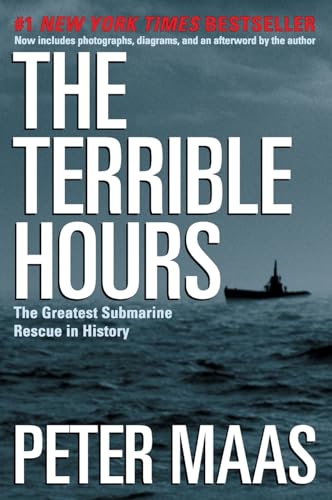
On the eve of World War II, the Squalus, America’s prized submarine, plunged to the bottom of the North Atlantic. Thirty-three members survived, largely because of the efforts of U.S. Navy officer Charles Swede Momsen. In this thrilling true account, Maas vividly recreates the adventure, which will be aired as an NBC-TV movie in April 2001.
Die Inhaltsangabe kann sich auf eine andere Ausgabe dieses Titels beziehen.
Über die Autorin bzw. den Autor
Peter Maas's is the author of the number one New York Times bestseller Underboss. His other notable bestsellers include The Valachi Papers, Serpico, Manhunt, and In a Child's Name. He lives in New York City.
Von der hinteren Coverseite
On the eve of World War II, the Squalus, America's newest submarine, plunged into the North Atlantic. Miraculously, thirty-three crew members still survived. While their loved ones waited in unbearable tension on shore, their ultimate fate would depend upon one man, U.S. Navy officer Charles "Swede" Momsen -- an extraordinary combination of visionary, scientist, and man of action. In this thrilling true narrative, prize-winning author Peter Maas brings us in the vivid detail a moment-by-moment account of the disaster and the man at its center. Could he actually pluck those men from a watery grave? Or had all his pioneering work been in vain?
Auszug. © Genehmigter Nachdruck. Alle Rechte vorbehalten.
The Terrible Hours
The Greatest Submarine Rescue in HistoryBy Maas, PeterPerennial
Copyright © 2004 Peter MaasAll right reserved.
ISBN: 0060932775
Chapter One
It was a Tuesday, May 23, 1939.
In New York City, Bloomingdale's department store was promoting a new electronic wonder for American homes called television.
With great fanfare, United Airlines began advertising a nonstop flight from New York to Chicago that would take only four hours and thirty-five minutes.
In baseball, a young center fielder for the New York Yankees named Joe DiMaggio was headed for his first major league batting title.
The film adaptation of the novel Wuthering Heights, starring the English actor Laurence Olivier in his first hit movie, was in its sixth smash week.
Another novel destined to become an American classic, Nathanael West's portrait of Hollywood, The Day of the Locust, was dismissed in the New York Times as "cheap" and "vulgar."
In Canada, the visiting British monarchs, King George VI and Queen Elizabeth, met the Dionne quintuplets for the first time.
In London, Ambassador Joseph P. Kennedy advised an association of English tailors that they would never gain a foothold in the American market unless they stopped making trouser waistlines too high and shirttails too long.
In Berlin, as Europe teetered on the brink of war, Hitler and Mussolini formally signed a military alliance between Germany and Italy with a vow to "remake" the continent. In Asia, meanwhile, Japan had finished another week of wholesale carnage in China.
That Tuesday morning, in the picture-postcard seacoast town of Portsmouth, New Hampshire, with Federal architecture and cobblestone streets dating back to the late eighteenth century, Rear Admiral Cyrus W. Cole, commandant of the Portsmouth Navy Yard, the nation's oldest, received a group of visiting dignitaries. Cole was a peppery little man with an imposing head and a piercing gaze that made him seem larger than he actually was. Although not a submariner himself, he had a particular affinity for the men who manned the Navy's "pigboats." His only son served on one, and before coming to the Portsmouth yard, which specialized in submarine construction, Cole had commanded the Navy's underseas fleet. Now he liked to wisecrack, "They sent me back to see how they're built."
When one of his visitors asked the admiral if he thought the United States might be drawn into the looming conflict in Europe, he said he hoped not. If it proved otherwise, though, any enemy would rue the day.
You hear a lot about those German U-boats, he declared, but they couldn't compare with the submarines that the Portsmouth yard was sending down the ways. This very afternoon the newest addition to the fleet, the Squalus, would return to her berth after a series of test dives. He promised a tour, so they could see her for themselves.
"Squalus? What kind of name is that?"
Cole confessed that he'd had to look it up. "It's a species of shark. A small one. But with a big bite," he added, smiling.
Then Cole passed his visitors over to Captain Halford Greenlee, the yard's industrial manager. Their arrival, arranged at the last minute, had forced Greenlee to cancel plans to go down to the overnight anchorage of the Squalus and board her that morning. Greenlee had been especially looking forward to it. His son-in-law, Ensign Joseph Patterson, was the sub's youngest officer.
"Sorry you couldn't go out with her today," Cole said.
"It's not the end of the world," Greenlee replied. "I can always catch her another time."
Two reporters for the Portsmouth Herald at the yard on assignment for other matters were the first outsiders to hear the news. After frantically gathering whatever scraps of information were available, they raced back to the paper.
Minutes later, just past two p.m., the first stark, bell-ringing bulletin clattered over Associated Press teletypes to newspapers and radio stations throughout the country:
Continues...
Excerpted from The Terrible Hoursby Maas, Peter Copyright © 2004 by Peter Maas. Excerpted by permission.
All rights reserved. No part of this excerpt may be reproduced or reprinted without permission in writing from the publisher.
Excerpts are provided by Dial-A-Book Inc. solely for the personal use of visitors to this web site.
„Über diesen Titel“ kann sich auf eine andere Ausgabe dieses Titels beziehen.
Weitere beliebte Ausgaben desselben Titels

Suchergebnisse für Terrible Hours, The: The Greatest Submarine Rescue...

Beispielbild für diese ISBN
The Terrible Hours: The Greatest Submarine Rescue in History
Anbieter: World of Books (was SecondSale), Montgomery, IL, USA
Verkäuferbewertung 5 von 5 Sternen

Zustand: Good. Item in good condition. Textbooks may not include supplemental items i.e. CDs, access codes etc. Bestandsnummer des Verkäufers 00074660633
Beispielbild für diese ISBN
The Terrible Hours: The Greatest Submarine Rescue in History
Anbieter: World of Books (was SecondSale), Montgomery, IL, USA
Verkäuferbewertung 5 von 5 Sternen
Zustand: Very Good. Item in very good condition! Textbooks may not include supplemental items i.e. CDs, access codes etc. Bestandsnummer des Verkäufers 00087966081
Beispielbild für diese ISBN
The Terrible Hours: The Greatest Submarine Rescue in History
Anbieter: Gulf Coast Books, Cypress, TX, USA
Verkäuferbewertung 5 von 5 Sternen
Paperback. Zustand: Good. Bestandsnummer des Verkäufers 0060932775-3-22476058
Beispielbild für diese ISBN
The Terrible Hours: The Greatest Submarine Rescue in History
Anbieter: Orion Tech, Kingwood, TX, USA
Verkäuferbewertung 5 von 5 Sternen
paperback. Zustand: Fair. Bestandsnummer des Verkäufers 0060932775-4-27741514
Beispielbild für diese ISBN
The Terrible Hours: The Greatest Submarine Rescue in History
Anbieter: Used Book Company, Egg Harbor Township, NJ, USA
Verkäuferbewertung 5 von 5 Sternen
paperback. Zustand: VeryGood. Former library copy. Shows minimal signs of wear and previous use. Can include minimal notes/highlighting. A portion of your purchase benefits nonprofits! - Note: Edition & format may differ from what is shown in stock photo & item details. May not include supplementary material (toys, access code, dvds, etc). Bestandsnummer des Verkäufers 584R0H000CNT_ns
Beispielbild für diese ISBN
The Terrible Hours: The Greatest Submarine Rescue in History
Anbieter: Jenson Books Inc, Logan, UT, USA
Verkäuferbewertung 5 von 5 Sternen
paperback. Zustand: Good. The item is in good condition and works perfectly, however it is showing some signs of previous ownership which could include: small tears, scuffing, notes, highlighting, gift inscriptions, and library markings. Bestandsnummer des Verkäufers 4BQWN8003R3I
Foto des Verkäufers
The Terrible Hours: The Greatest Submarine Rescue in History
Anbieter: ZBK Books, Carlstadt, NJ, USA
Verkäuferbewertung 5 von 5 Sternen
Zustand: good. Fast & Free Shipping â" Good condition with a solid cover and clean pages. Shows normal signs of use such as light wear or a few marks highlighting, but overall a well-maintained copy ready to enjoy. Supplemental items like CDs or access codes may not be included. Bestandsnummer des Verkäufers ZWV.0060932775.G
Beispielbild für diese ISBN
The Terrible Hours: The Greatest Submarine Rescue in History
Anbieter: Once Upon A Time Books, Siloam Springs, AR, USA
Verkäuferbewertung 4 von 5 Sternen

paperback. Zustand: Acceptable. This is a used book. It may contain highlighting/underlining and/or the book may show heavier signs of wear . It may also be ex-library or without dustjacket. This is a used book. It may contain highlighting/underlining and/or the book may show heavier signs of wear . It may also be ex-library or without dustjacket. Bestandsnummer des Verkäufers mon0001384243
Beispielbild für diese ISBN
The Terrible Hours: The Greatest Submarine Rescue in History
Anbieter: Wonder Book, Frederick, MD, USA
Verkäuferbewertung 5 von 5 Sternen
Zustand: Good. Good condition. A copy that has been read but remains intact. May contain markings such as bookplates, stamps, limited notes and highlighting, or a few light stains. Bundled media such as CDs, DVDs, floppy disks or access codes may not be included. Bestandsnummer des Verkäufers Q11N-00987
Foto des Verkäufers
The Terrible Hours: The Greatest Submarine Rescue in History
Anbieter: Blue Vase Books, Interlochen, MI, USA
Verkäuferbewertung 5 von 5 Sternen
Zustand: good. The item shows wear from consistent use, but it remains in good condition and works perfectly. All pages and cover are intact including the dust cover, if applicable . Spine may show signs of wear. Pages may include limited notes and highlighting. May NOT include discs, access code or other supplemental materials. Bestandsnummer des Verkäufers BVV.0060932775.G