
Verwandte Artikel zu The Rabbi and the Hit Man: A True Tale of Murder, Passion,...
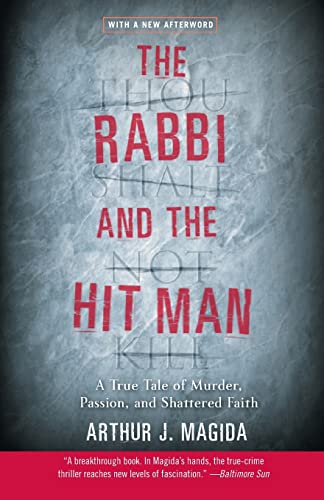
The Rabbi and the Hit Man: A True Tale of Murder, Passion, and Shattered Faith – A Devastating True-Crime Examination of Clergy Conviction and Betrayal - Softcover
Inhaltsangabe
A fascinating true-crime narrative about the first rabbi ever accused of murder and what the case says about the role of clergy in America.
On the evening of November 1, 1994, Rabbi Fred Neulander returned home to find his wife, Carol, facedown on the living room floor, blood everywhere. He called for help, but it was too late. Two trials and eight years later, the founder of the largest reform synagogue in southern New Jersey became the first rabbi ever convicted of murder and sentenced to life in prison.
In a gripping examination of the misuses of the pulpit and the self-delusions of power, Arthur J. Magida paints a devastating portrait of a manipulative man who used his position of trust in the temple to attract several mistresses -- and to befriend a lonely recovering alcoholic, whom he convinced to kill his wife "for the good of Israel."
The Rabbi and the Hit Man straddles the juncture of faith and trust, and confronts issues of sex, narcissism, arrogance, and adultery. It is the definitive account of a charismatic clergyman who paid the ultimate price for ignoring his own words of wisdom: "We live at any moment with our total past ... What we do will stay with us forever."
Die Inhaltsangabe kann sich auf eine andere Ausgabe dieses Titels beziehen.
Über die Autorin bzw. den Autor
Arthur J. Magida is the author of Prophet of Rage: A Life of Louis Farrakhan and His Nation. A former contributing correspondent to PBS's Religion & Ethics Newsweekly, he has also been senior editor of the Baltimore Jewish Times. He is currently writer-in-residence at the University of Baltimore.
Von der hinteren Coverseite
A fascinating true-crime narrative about the first rabbi ever accused of murder and what the case says about the role of clergy in America.
On the evening of November 1, 1994, Rabbi Fred Neulander returned home to find his wife, Carol, facedown on the living room floor, blood everywhere. He called for help, but it was too late. Two trials and eight years later, the founder of the largest reform synagogue in southern New Jersey became the first rabbi ever convicted of murder and sentenced to life in prison.
In a gripping examination of the misuses of the pulpit and the self-delusions of power, Arthur J. Magida paints a devastating portrait of a manipulative man who used his position of trust in the temple to attract several mistresses -- and to befriend a lonely recovering alcoholic, whom he convinced to kill his wife "for the good of Israel."
The Rabbi and the Hit Man straddles the juncture of faith and trust, and confronts issues of sex, narcissism, arrogance, and adultery. It is the definitive account of a charismatic clergyman who paid the ultimate price for ignoring his own words of wisdom: "We live at any moment with our total past ... What we do will stay with us forever."
Auszug. © Genehmigter Nachdruck. Alle Rechte vorbehalten.
The Rabbi and the Hit Man
By Magida, Arthur J.Perennial
ISBN: 0060935618Chapter One
"There's Blood over Everything"
The sixteen-mile drive from M'kor Shalom to Crescent Burial Park normally took twenty minutes, but so many people joined the funeral procession for Carol Neulander that nearly an hour was required. Police and state troopers were stationed at major intersections to hold back other motorists so that the caravan could wend its doleful way across the landscape. All along the route, commercialenterprises that typified the best?and worst?of the GardenState were copiously in evidence. A BMW dealer whose "Ltd." after its name connoted a certain British classiness (eventhough BMWs are as Teutonic as any car can get); a splattering of capacious diners, appropriate symbols of an area totally lacking a culinary identity; a small, beige cottage whose neon sign advertised PSYCHIC/TAROT CARD READINGS; and an unending series of motels, sometimes up to eight in a row, featuring "free Continentalbreakfast" -- watered-down orange juice, instant coffee, doughnuts plucked from cardboard boxes.
The procession inched north on Route 73 for a few miles, then turned south on Route 130 until arriving at Crescent Burial Park. This was the largest Jewish cemetery in South Jersey, yet there wasn't enough room for the multitude of cars. Some people parked on the long, narrow road that stretched the entire length of the cemetery; others hunted for space on neighboring side streets.The hearse and the family's limousines went straight to the far end of the cemetary. Pallbearers carried the plain pine coffin to the burial plot thirty feet away, followed by Carol's children, her siblings, and, of course, her husband. A rabbi who had been friends with Fred and Carol recited verses from Psalms that didn't quite provide the intended comfort:
For He will give His angels charge over thee,
To keep thee in all thy ways ...
Because he has loved Me, therefore I will deliver him;
I will see him securely on high, because he has known Myname ...
With a long life, I will satisfy him,
And let him behold My salvation.
The freshly dug ground of Grave D in Plot 910 of Section F was just behind the tall green fence that separated Crescent Burial Park from the modest homes bordering on it. Not the best place to raise kids, but an inexpensive one. Carol Neulander would be laid to rest next to her in-laws, Sally and Ernest Neulander. Their tombstones lay to the right of Grave D. Off to the left were smaller markers for five children unrelated to the Neulanders. They had died in infancy, some on the very day of their birth: Ellen Shaya.Joshua Adam Brodsky. Eli James Lewis. Baby Carson. Baby Dana Emdur. Carol Neulander had never known them, but she might have been pleased to spend eternity with them. After all, she had been a kind and devoted mother of three, and her interest in children had led her to major in child and adolescent psychology in college.
After more prayers were said, the casket was lowered into the ground and the mourners took turns shoveling dirt on it, according to Jewish custom. The thud of earth on the casket's hard surface was intended to remind people of the absolute finality of death. At last, it was time for the ritual recitation of the kaddish, the prayer that asks for peace for the deceased:
"Yisgadal v'yiskadash sh'mai raba, b'olmo deev'ro chir'usai v'yamlich malchusai b'chayeichon uv'yomeichon v'chayai d'chol bit yisroel, ba'agala u'viz'man kariv v'imru: Amen.
("May your Great Name be magnified and hallowed in theworld according to Your will and may Your reign be quicklyestablished, in our own lives and our own day, and in the life of all of Israel, and let us say: Amen.)
"Y'hei shmei raba m'vorach l'alam ul'almenu almaya. Yitborach v'yishtabach v'yitpa'ra v'yitromam v'yitnasei, v'yit'hadar, v'yi'ale v'vit'halal sh'mei d'kud'sha b'rich hu, l'ile min-kol-brichata v'shirata, tush b'chata v'nechemata, da'amiran b'alma, v'imru: Amen.
("May your great name be blessed for ever and ever! Allpraise and glory, splendor, exaltation and honor, radiance and veneration and worship to the Holy One of Blessing, even beyond any earthly prayer or song, any adoration or tribute we can offer, and let us say: Amen.)
"Y'hei sh'lama raba min-sh'maya, v'chayim aleinu v'al-kol-yis-roel, v'imru: Amen.
("May there be great peace from the heavens, and life for us and for all of Israel, as we say: Amen.)
"Oseh shalom bimromav, hu ya-aseh shalom aleinu v'al kol yis-ra'el, v'imru: Amen."
("May the one who makes peace in the high heavens sendpeace for us and for all of Israel, as we say: Amen.")
Then, the family turned to pass through two parallel lines of relatives and friends uttering a prayer of consolation: "Ha'makom yenachem et'chem b'toch she'ar avelei tziyon vi'Yerushalayim." ["May the Lord comfort you among the other mourners of Zion and Jerusalem."] Finally, Fred Neulander and his children -- Matthew,Benjamin, and Rebecca, all young adults -- left the cold November winds for the comfort of the limousine and the somber journey back to the house where Fred had found Carol's lifeless body. She had still been wearing the gold necklace with six small diamonds that Fred had given her a few years earlier on their wedding anniversary. In eight weeks, they would have celebrated their twenty-ninth anniversary.
On the Tuesday night of Carol's murder, Fred had stayed at the synagogue later than usual. M'kor Shalom was always busy on Tuesdays, with choir practice in the evening and lots of meetings for adults while their kids attended religious classes ...
Continues...Excerpted from The Rabbi and the Hit Manby Magida, Arthur J. Excerpted by permission.
All rights reserved. No part of this excerpt may be reproduced or reprinted without permission in writing from the publisher.
Excerpts are provided by Dial-A-Book Inc. solely for the personal use of visitors to this web site.
„Über diesen Titel“ kann sich auf eine andere Ausgabe dieses Titels beziehen.
Suchergebnisse für The Rabbi and the Hit Man: A True Tale of Murder, Passion,...

Foto des Verkäufers
The Rabbi and the Hit Man: A True Tale of Murder, Passion, and Shattered Faith â" A Devastating True-Crime Examination of Clergy Conviction and Betrayal
Anbieter: Zoom Books East, Glendale Heights, IL, USA
Verkäuferbewertung 5 von 5 Sternen

Zustand: very_good. Book is in very good condition and may include minimal underlining highlighting. The book can also include "From the library of" labels. May not contain miscellaneous items toys, dvds, etc. . We offer 100% money back guarantee and 24 7 customer service. Bestandsnummer des Verkäufers ZEV.0060935618.VG
Gebraucht kaufen
EUR 4,06
Versand gratis
Versand innerhalb von USA
Versand innerhalb von USA
Anzahl: 1 verfügbar
Beispielbild für diese ISBN
The Rabbi and the Hit Man: A True Tale of Murder, Passion, and Shattered Faith â" A Devastating True-Crime Examination of Clergy Conviction and Betrayal
Anbieter: New Legacy Books, Annandale, NJ, USA
Verkäuferbewertung 5 von 5 Sternen
paperback. Zustand: Good. The cover shows normal wear. The pages show normal wear. Fast shipping and order satisfaction guaranteed. A portion of your purchase benefits Non-Profit Organizations, First Aid and Fire Stations! Bestandsnummer des Verkäufers mon0000166140
Gebraucht kaufen
EUR 2,28
EUR 2,22 Versand
Versand innerhalb von USA
Versand innerhalb von USA
Anzahl: 1 verfügbar
Foto des Verkäufers
The Rabbi and the Hit Man: A True Tale of Murder, Passion, and Shattered Faith â" A Devastating True-Crime Examination of Clergy Conviction and Betrayal
Anbieter: Greenworld Books, Arlington, TX, USA
Verkäuferbewertung 5 von 5 Sternen
Zustand: like_new. Fast Free Shipping â" Excellent condition book with clean cover and pages. Barely handled, with minimal wear. An outstanding copy, close to enjoy! Bestandsnummer des Verkäufers GWV.0060935618.LN
Gebraucht kaufen
EUR 5,06
Versand gratis
Versand innerhalb von USA
Versand innerhalb von USA
Anzahl: 1 verfügbar
Foto des Verkäufers
The Rabbi and the Hit Man: A True Tale of Murder, Passion, and Shattered Faith â" A Devastating True-Crime Examination of Clergy Conviction and Betrayal
Anbieter: Greenworld Books, Arlington, TX, USA
Verkäuferbewertung 5 von 5 Sternen
Zustand: very_good. Fast Free Shipping â" Very Good condition book with a firm cover and clean pages. Shows normal use and some light wear or limited notes markings. A solid, nice copy to enjoy. Bestandsnummer des Verkäufers GWV.0060935618.VG
Gebraucht kaufen
EUR 5,06
Versand gratis
Versand innerhalb von USA
Versand innerhalb von USA
Anzahl: 2 verfügbar
Beispielbild für diese ISBN
The Rabbi and the Hit Man: A True Tale of Murder, Passion, and Shattered Faith â" A Devastating True-Crime Examination of Clergy Conviction and Betrayal
Anbieter: Once Upon A Time Books, Siloam Springs, AR, USA
Verkäuferbewertung 4 von 5 Sternen

paperback. Zustand: Very Good. Bestandsnummer des Verkäufers mon0003582708
Gebraucht kaufen
EUR 2,07
EUR 3,52 Versand
Versand innerhalb von USA
Versand innerhalb von USA
Anzahl: 1 verfügbar
Beispielbild für diese ISBN
The Rabbi and the Hit Man: A True Tale of Murder, Passion, and Shattered Faith
Verlag:
Harper Perennial (edition Reprint), 2004
ISBN 10: 0060935618
ISBN 13: 9780060935610
Gebraucht
Paperback
Anbieter: BooksRun, Philadelphia, PA, USA
Verkäuferbewertung 5 von 5 Sternen
Paperback. Zustand: Fair. Reprint. The item might be beaten up but readable. May contain markings or highlighting, as well as stains, bent corners, or any other major defect, but the text is not obscured in any way. Bestandsnummer des Verkäufers 0060935618-7-1
Gebraucht kaufen
EUR 6,45
Versand gratis
Versand innerhalb von USA
Versand innerhalb von USA
Anzahl: 1 verfügbar
Beispielbild für diese ISBN
The Rabbi and the Hit Man : A True Tale of Murder, Passion, and Shattered Faith
Verlag:
HarperCollins Publishers, 2004
ISBN 10: 0060935618
ISBN 13: 9780060935610
Gebraucht
Softcover
Anbieter: Better World Books, Mishawaka, IN, USA
Verkäuferbewertung 5 von 5 Sternen
Zustand: Good. Reprint. Pages intact with minimal writing/highlighting. The binding may be loose and creased. Dust jackets/supplements are not included. Stock photo provided. Product includes identifying sticker. Better World Books: Buy Books. Do Good. Bestandsnummer des Verkäufers 4226253-6
Gebraucht kaufen
EUR 6,56
Versand gratis
Versand innerhalb von USA
Versand innerhalb von USA
Anzahl: 2 verfügbar
Beispielbild für diese ISBN
The Rabbi and the Hit Man: A True Tale of Murder, Passion, and Shattered Faith
Anbieter: Wonder Book, Frederick, MD, USA
Verkäuferbewertung 5 von 5 Sternen
Zustand: Good. Good condition. A copy that has been read but remains intact. May contain markings such as bookplates, stamps, limited notes and highlighting, or a few light stains. Bestandsnummer des Verkäufers V16B-06949
Gebraucht kaufen
EUR 7,14
Versand gratis
Versand innerhalb von USA
Versand innerhalb von USA
Anzahl: 1 verfügbar
Beispielbild für diese ISBN
The Rabbi and the Hit Man: A True Tale of Murder, Passion, and Shattered Faith
Anbieter: ThriftBooks-Atlanta, AUSTELL, GA, USA
Verkäuferbewertung 5 von 5 Sternen
Paperback. Zustand: Good. No Jacket. Pages can have notes/highlighting. Spine may show signs of wear. ~ ThriftBooks: Read More, Spend Less. Bestandsnummer des Verkäufers G0060935618I3N00
Gebraucht kaufen
EUR 7,15
Versand gratis
Versand innerhalb von USA
Versand innerhalb von USA
Anzahl: 1 verfügbar
Beispielbild für diese ISBN
The Rabbi and the Hit Man: A True Tale of Murder, Passion, and Shattered Faith
Anbieter: ThriftBooks-Atlanta, AUSTELL, GA, USA
Verkäuferbewertung 5 von 5 Sternen
Paperback. Zustand: Very Good. No Jacket. May have limited writing in cover pages. Pages are unmarked. ~ ThriftBooks: Read More, Spend Less. Bestandsnummer des Verkäufers G0060935618I4N00
Gebraucht kaufen
EUR 7,15
Versand gratis
Versand innerhalb von USA
Versand innerhalb von USA
Anzahl: 1 verfügbar