
Inhaltsangabe
“One of the most important writers in 21st-Century fantasy.”
—Contra Costa Times
“Robin Hobb is one of our very best fantasy writers…always fresh, entertaining, and completely engrossing.”
—New York Times bestselling author Kevin J. Anderson
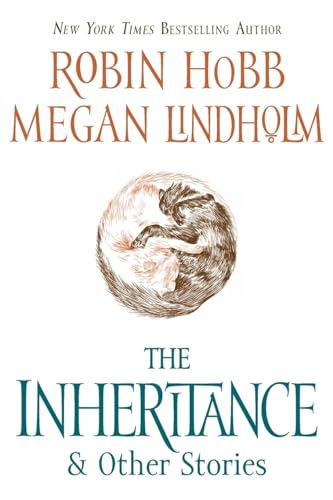
The Inheritance & Other Stories is a marvelous new collection of short fiction from New York Times bestselling master storyteller Robin Hobb—including tales written under the pseudonym Megan Lindholm, by which the acclaimed fantasist first began her illustrious writing career. Included in this essential volume are Hugo and Nebula Award-nominated short masterworks, as well as brand new tales and the never before published in the U.S. title story—a unique compendium of wonders displaying the breathtaking skill, imagination, and remarkably varied styles of both alter egos.
Die Inhaltsangabe kann sich auf eine andere Ausgabe dieses Titels beziehen.
Über die Autorinnen und Autoren
Robin Hobb was born in California but grew up in Alaska. It was there that she learned to love the forest and the wilderness. She has lived most of her life in the Pacific Northwest and currently resides in Tacoma, Washington. She is the author of five critically acclaimed fantasy series: The Rain Wilds Chronicles (Dragon Keeper, Dragon Haven, City of Dragons, Blood of Dragons), The Soldier Son Trilogy, The Tawny Man Trilogy, The Liveship Traders Trilogy, and The Farseer Trilogy. Under the name Megan Lindholm she is the author of The Wizard of the Pigeons, Windsingers, and Cloven Hooves. The Inheritance, a collection of stories, was published under both names. Her short fiction has won the Asimov's Readers' Award and she has been a finalist for both the Nebula and Hugo awards.
Robin Hobb / Megan Lindholm was born in California, grew up in Alaska, and currently lives in Tacoma, Washington. As Robin Hobb, she is the author of fourteen novels and numerous shorter works. Megan Lindholm has published nine novels; her short fiction has won the Asimov's Readers' Award and been a finalist for both the Nebula and Hugo awards.
Von der hinteren Coverseite
A treasure trove of tales from a master storyteller—the first to feature works written under both her pseudonyms, Robin Hobb and Megan Lindholm . . .
The Inheritance
Before she became an acclaimed New York Times bestselling author, Robin Hobb received resounding critical praise for work written under the name Megan Lindholm. Though they spring from the same imagination, Hobb and Lindholm are separate, diverse identities, each with her own unique style and perspective.
The Inheritance celebrates the boundless vision of Hobb and Lindholm, bringing together for the first time classic and new short works from both names. The collection is comprised of three generous offerings from Robin Hobb, including the title story, which makes its U.S. debut here, and a brand-new tale, "Cat's Meat." Megan Lindholm contributes her Hugo and Nebula Award finalist "A Touch of Lavender" and Nebula finalist "Silver Lady and the Fortyish Man," as well as several classic and new gems.
Each piece is prefaced by a brief yet informative author's note, offering insight into each story's genesis. Fascinating, compelling, and wonderfully entertaining, The Inheritance reveals the full spectrum of skill and talent of one of the world's finest fantasy writers.
Auszug. © Genehmigter Nachdruck. Alle Rechte vorbehalten.
The Inheritance and Other Stories
By Robin Hobb, Megan LindholmHarper Voyager
Copyright © 2011 Robin Hobb, Megan LindholmAll right reserved.
ISBN: 9780061561641
Chapter One
A Touch of LavenderThe old question ?Where do you get your story ideas from?? still has the
power to stump me. The easy, and truthful, answer is ?Everywhere.? Any
writer will tell you that. An overheard conversation on the bus, a
newspaper headline read the wrong way, a simple ?what if? question?any of
those things can be the germ that grows into a story.
But for me, at least, there is one other odd source. A stray first line.
I may be driving or mowing the lawn or trying to fall asleep at night,
and some odd sentence will suddenly intrude. I always recognize these
sentences for what they are: the first line of a story that I don?t yet know.
In the days before computers figured into writing, I would jot those
butterfly lines down on a piece of scrap paper and keep them in my
desk drawer, with other stray ideas. I knew they had to be captured
immediately or they would flutter off forever. The line ?We grew up
like mice in a rotting sofa, my sister and I? came to me at a time when
I had just moved into a house that possessed just such an item of
furniture. It was a smelly old sofa, damp and featuring a green brocade
sort of upholstery. It came with the used-to-be-a-chicken-house house
that my husband and I purchased with my very first book advance
from Ace Books. My advance was $3,500 and the run-down house, on
almost four acres of choice swampland (oh, wait, we call those ?wetlands?
nowadays and preserve them!) cost us the whopping sum of
$32,500. The payment of $325 a month represented a $50 saving over
what we had been paying in monthly rent! And we could keep chickens
for eggs. Such a deal!
From the attic, I could look up and see sky between the cedar
shingles that were the roof. A brooder full of chickens was parked in
the bathroom. (Buff Orpingtons for you chicken connoisseurs.) We
regarded those twenty-five half-fledged layers as a value-added feature
of the house, much better than a spare room. A spare room can?t lay
eggs! There were no interior doors in the house, and some of the
windows didn?t close all the way. We tore up the rotted carpet and lived
with bare ship-lap floors. There were no shelves in the noisy old refrigerator;
we cut plywood to fit and inserted it. The only heat came from
a woodstove. It was thus a mixed blessing that the yard was dominated
by an immense fallen cedar tree. My ax and I rendered it into
heat for the house for that first winter, one chop at a time.
A week after we bought it, at the end of March, Fred said good-bye
and went off to fish the Bering Sea, leaving me there with my faithful
portable Smith-Coronamatic, three children under ten years old, an
overweight pit bull, and a tough old cat. I would not see my husband
again until October. We were impossibly broke when he left, and I
knew that somehow I had to hold it together until after the end of
herring season when he would finally get paid. We borrowed money from
his sister to buy a can of paint because my daughter could not stand
the lavender walls left her by the previous tenant of her bedroom. The
bathroom chickens got older and began to lay eggs. It was mend-and-
make-do time. Smelly and mice infested or not, the couch and other
abandoned furnishings were what we had. I felt a bit bad for the mice
when I evicted them. They?d been cozy and safe there, despite the rundown
surroundings. Vacuumed, cleaned by hand, and with an old
bedspread tossed over it, the rotting sofa became the main seating in
the living room.
Somewhere in the back of my mind, I suppose it occurred to me
that my children were now much like those mice had been. Tough as
things were, we now had a place to call our own. And, I hoped, my kids
had good folks who would see them through.
Did the lavender walls have anything to do with the story that
would be written, years later, and feature that opening line? Who
knows?
It?s all grist for the writing mill.
We grew up like mice nesting in a rotting sofa, my sister and
I. Even when I was only nine and she was an infant, I thought of
us that way. At night, when she?d be asleep in the curl of my belly
and I?d be half falling off the old sofa we used as a bed, I?d hear
the mice nibbling and moving inside the upholstery beneath us,
and sometimes the tiny squeakings of the newborn ones when the
mother came to nurse them. I?d curl tighter around Lisa and
pretend she was a little pink baby mouse instead of a little pink baby
girl, and that I was the father mouse, curled around her to protect
her. Sometimes it made the nights less chill.
I?d lived in the same basement apartment all my life. It was
always chill, even in summer. It was an awful place, dank and ratty,
but the upstairs apartments were worse, rank with urine and rot.
The building was an old town house, long ago converted to four
apartments upstairs and one in the basement. None of them were
great, but ours was the cheapest, because we had the furnace and
the water heater right next to us. When I was real small, three
or so, a water main beside the building broke, and water came
rising up in our apartment, maybe a foot deep. I woke up to my
stuff floating beside me, and the old couch sucking up water like
a sponge. I yelled for Mom. I heard the splash as she rolled out
of bed in the only bedroom and then her cussing as she waded
through the water to pick me up. Her current musician took the
whole thing as a big joke, until he saw his sax case floating. Then
he grabbed up his stuff and was out of there. I don?t remember
seeing him after that.
My mom and I spent that day sitting on the steps down to our
apartment, waiting for the city maintenance crew to fix the pipe,
waiting for the water to go down, and then waiting for our landlord.
He finally came and looked the place over and nodded, and said,
hell, it was probably for the best, he?d been meaning to put down
new tiles and spraysulate the walls anyway. ?You go ahead and tear
out the old stuff,? he told my mom. ?Stack it behind the house, and
I?ll have it hauled away. Let me know when you?re ready, and I?ll
send in a crew to fix the place up. Now about your rent . . .?
?I told you, I already mailed it,? Mom said coldly, looking past
his ear, and the landlord sighed and drove off.
So Mom and her friends peeled up the cracking linoleum and
tore the Sheetrock off the walls, leaving the bare concrete floor
with stripes of mastic showing and the two-by-four wall studs
standing bare against the gray block walls. That was as far as the
remodeling ever got. The landlord never hauled the stuff away, or
sent in a crew. He never spraysulated the walls, either. Even in the
summer the walls were cool and misty, and in winter it was like
the inside of a refrigerator.
My mom wasn?t so regular about paying the rent that she could
raise a fuss. Most of the folks in our building were like that: pay
when you can, and don?t stay home when you can?t, so the landlord
can?t nag at you. The apartments were lousy, but complaining
could get you kicked out. All the tenants knew that if the...
„Über diesen Titel“ kann sich auf eine andere Ausgabe dieses Titels beziehen.
Weitere beliebte Ausgaben desselben Titels

Suchergebnisse für The Inheritance: And Other Stories

Foto des Verkäufers
The Inheritance: And Other Stories
Anbieter: Zoom Books East, Glendale Heights, IL, USA
Verkäuferbewertung 5 von 5 Sternen

Zustand: very_good. Book is in very good condition and may include minimal underlining highlighting. The book can also include "From the library of" labels. May not contain miscellaneous items toys, dvds, etc. . We offer 100% money back guarantee and 24 7 customer service. Bestandsnummer des Verkäufers ZEV.0061561649.VG
Gebraucht kaufen
EUR 8,60
Versand gratis
Versand innerhalb von USA
Versand innerhalb von USA
Anzahl: 1 verfügbar
Beispielbild für diese ISBN
The Inheritance : And Other Stories
Verlag:
HarperCollins Publishers, 2011
ISBN 10: 0061561649
ISBN 13: 9780061561641
Gebraucht
Softcover
Anbieter: Better World Books, Mishawaka, IN, USA
Verkäuferbewertung 5 von 5 Sternen
Zustand: Good. Original. Pages intact with minimal writing/highlighting. The binding may be loose and creased. Dust jackets/supplements are not included. Stock photo provided. Product includes identifying sticker. Better World Books: Buy Books. Do Good. Bestandsnummer des Verkäufers 8261142-6
Gebraucht kaufen
EUR 9,61
Versand gratis
Versand innerhalb von USA
Versand innerhalb von USA
Anzahl: 1 verfügbar
Beispielbild für diese ISBN
The Inheritance : And Other Stories
Verlag:
HarperCollins Publishers, 2011
ISBN 10: 0061561649
ISBN 13: 9780061561641
Gebraucht
Softcover
Anbieter: Better World Books, Mishawaka, IN, USA
Verkäuferbewertung 5 von 5 Sternen
Zustand: Good. Original. Former library copy. Pages intact with minimal writing/highlighting. The binding may be loose and creased. Dust jackets/supplements are not included. Includes library markings. Stock photo provided. Product includes identifying sticker. Better World Books: Buy Books. Do Good. Bestandsnummer des Verkäufers GRP104773050
Gebraucht kaufen
EUR 9,61
Versand gratis
Versand innerhalb von USA
Versand innerhalb von USA
Anzahl: 2 verfügbar
Beispielbild für diese ISBN
The Inheritance Format: Paperback
Verlag:
Harper Collins Publishers, 2011
ISBN 10: 0061561649
ISBN 13: 9780061561641
Gebraucht
Softcover
Anbieter: INDOO, Avenel, NJ, USA
Verkäuferbewertung 5 von 5 Sternen
Zustand: As New. Unread copy in mint condition. Bestandsnummer des Verkäufers TN9780061561641
Gebraucht kaufen
EUR 14,70
Versand gratis
Versand innerhalb von USA
Versand innerhalb von USA
Anzahl: Mehr als 20 verfügbar
Beispielbild für diese ISBN
The Inheritance Format: Paperback
Anbieter: INDOO, Avenel, NJ, USA
Verkäuferbewertung 5 von 5 Sternen
Zustand: New. Bestandsnummer des Verkäufers 9780061561641
Neu kaufen
EUR 14,75
Versand gratis
Versand innerhalb von USA
Versand innerhalb von USA
Anzahl: Mehr als 20 verfügbar
Beispielbild für diese ISBN
Inheritance and Other Stories
Anbieter: GreatBookPrices, Columbia, MD, USA
Verkäuferbewertung 5 von 5 Sternen
Zustand: New. Bestandsnummer des Verkäufers 11624537-n
Neu kaufen
EUR 13,82
EUR 2,27 Versand
Versand innerhalb von USA
Versand innerhalb von USA
Anzahl: 15 verfügbar
Foto des Verkäufers
The Inheritance: And Other Stories (Paperback or Softback)
Anbieter: BargainBookStores, Grand Rapids, MI, USA
Verkäuferbewertung 5 von 5 Sternen
Paperback or Softback. Zustand: New. The Inheritance: And Other Stories. Book. Bestandsnummer des Verkäufers BBS-9780061561641
Beispielbild für diese ISBN
The Inheritance: And Other Stories [Paperback] Hobb, Robin and Lindholm, Megan
Anbieter: Lakeside Books, Benton Harbor, MI, USA
Verkäuferbewertung 5 von 5 Sternen
Zustand: New. Brand New! Not Overstocks or Low Quality Book Club Editions! Direct From the Publisher! We're not a giant, faceless warehouse organization! We're a small town bookstore that loves books and loves it's customers! Buy from Lakeside Books! Bestandsnummer des Verkäufers OTF-S-9780061561641
Neu kaufen
EUR 13,20
EUR 3,44 Versand
Versand innerhalb von USA
Versand innerhalb von USA
Anzahl: Mehr als 20 verfügbar
Foto des Verkäufers
Inheritance and Other Stories
Anbieter: GreatBookPrices, Columbia, MD, USA
Verkäuferbewertung 5 von 5 Sternen
Zustand: As New. Unread book in perfect condition. Bestandsnummer des Verkäufers 11624537
Gebraucht kaufen
EUR 14,87
EUR 2,27 Versand
Versand innerhalb von USA
Versand innerhalb von USA
Anzahl: 15 verfügbar
Beispielbild für diese ISBN
The Inheritance: And Other Stories
Anbieter: California Books, Miami, FL, USA
Verkäuferbewertung 4 von 5 Sternen

Zustand: New. Bestandsnummer des Verkäufers I-9780061561641
Neu kaufen
EUR 17,75
Versand gratis
Versand innerhalb von USA
Versand innerhalb von USA
Anzahl: Mehr als 20 verfügbar