
Verwandte Artikel zu Bitter Brew: The Rise and Fall of Anheuser-Busch and...
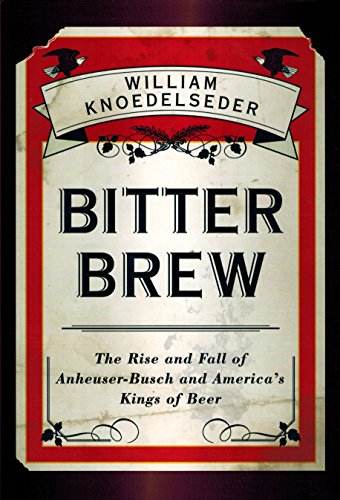
Inhaltsangabe
“Bitter Brew deftly chronicles the contentious succession of kings in a uniquely American dynasty. You’ll never crack open a six again without thinking of this book.”
—John Sayles, Director of Eight Men Out and author of A Moment in the Sun
The creators of Budweiser and Michelob beers, the Anheuser-Busch company is one of the wealthiest, most colorful and enduring family dynasties in the history of American commerce. In Bitter Brew, critically acclaimed journalist William Knoedelseder tells the riveting, often scandalous saga of the rise and fall of the dysfunctional Busch family—an epic tale of prosperity, profligacy, hubris, and the dark consequences of success that spans three centuries, from the open salvos of the Civil War to the present day.
Die Inhaltsangabe kann sich auf eine andere Ausgabe dieses Titels beziehen.
Über die Autorin bzw. den Autor
William Knoedelseder is the New York Times bestselling author of Bitter Brew: The Rise and Fall of Anheuser-Busch and America’s Kings of Beer, as well as the critically acclaimed Stiffed: A True Story of MCA, the Music Business, and the Mafia. His book I’m Dying Up Here: Heartbreak and High Times in
Stand-Up Comedy’s Golden Era is the basis for the Showtime series of the same name. He lives in Los
Angeles, California.
Von der hinteren Coverseite
The engrossing, often scandalous saga of one of the wealthiest, longest-lasting, and most colorful family dynasties in the history of American commerce—a cautionary tale about prosperity, profligacy, hubris, and the blessings and dark consequences of success.
From countless bar signs, stadium scoreboards, magazine ads, TV commercials, and roadside billboards, the name Budweiser has been burned into the American consciousness as the "King of Beers." Over a span of more than a century, the company behind it, Anheuser-Busch, has attained legendary status. A jewel of the American Industrial Revolution, in the hands of its founders—the sometimes reckless and always boisterous Busch family of St. Louis, Missouri—it grew into one of the most fearsome marketing machines in modern times. In Bitter Brew, critically acclaimed journalist Knoedelseder paints a fascinating portrait of immense wealth and power accompanied by a barrelful of scandal, heartbreak, tragedy, and untimely death.
This engrossing, vivid narrative captures the Busch saga through five generations. At the same time, it weaves a broader story of American progress and decline over the past 150 years. It's a cautionary tale of prosperity, hubris, and loss.
Auszug. © Genehmigter Nachdruck. Alle Rechte vorbehalten.
Bitter Brew
By William KnoedelsederHarperCollins Publishers
Copyright ©2012 William Knoedelseder
All rights reserved.
ISBN: 978-0-06-200926-5All rights reserved.
Excerpt
CHAPTER 1
"BEER IS BACK!"
A crowd began gathering at the brewery gates in the early eveningof April 7, 1933, milling around near the intersection of Broadwayand Pestalozzi Streets on the south side of the city near the river. Asthe hands of the lighted clock on the Gothic Brew House towerapproached midnight, the number of people swelled to an estimated35,000, standing shoulder to shoulder for blocks around, growingincreasingly boisterous in anticipation: America's thirteen yearprohibition against the sale of beer was about to end.
"Happy days are here again, the skies above are clear again,"they roared out in a raucous chorus, "Let us sing a song of cheeragain."
Similar scenes played out in smaller scale all around town.Over at Kyum Brothers Café at Ninth and Pine, patrons sangIrving Berlin's teetotaler's lament "The Near Future" - "How dry Iam ..."- while hundreds of customers at the German Houserestaurant joined in an old Deutschland drinking song,"Was Wilst du Haben?" (What will you have?).
Inside the iron gates of the giant brewery complex, 300 truckspressed up to the loading dock, while 1,200 more lined up bumper-to-bumperon the street outside, ready to take their place. Fromwithin the plant the rumble of machinery signaled that the longhibernating giant was now fully awake, as seemingly endlesscolumns of brown Budweiser bottles, with their famous red-and-whitelabels, clattered along snaking conveyor belts to be packedin wooden crates proudly stamped, "Property of Anheuser-Busch,St. Louis Mo."
On the bottling plant floor, brewery president August A. BuschSr. and his two sons, Adolphus III and August Jr., posed forphotographers as they packed a twenty-four count crate destined forPresident Franklin D. Roosevelt, who'd swept into office in - Novemberon the promise of a "new deal" for America that includedthe repeal of the Eighteenth Amendment, which banned themanufacture and sale of alcoholic beverages in the United States.Full repeal would not come for eight more months because itrequired another constitutional amendment and thus neededratification by the legislatures in thirty-six (three-fourths) of theforty-eight states. But FDR had already made good on his campaignpromise to the nation's brewers. On March 4, nine days after hisinauguration, he asked Congress to immediately modify theso-called Volstead Act, which had set the maximum legal alcoholiccontent of beverages at .05 percent, to allow the sale of beer witha 3.2 percent alcohol. "I deem action at this time to be of highestimportance," he said. Both the House and the Senate quicklycomplied, setting April 8 as the date when the sale of beer couldresume.
The Busches had been preparing for this moment ever sincethe election, spending more than $7 million to refit and modernizetheir plant, purchase supplies, and gather the ingredients forthe brewing process, notably the expensive Bohemian hops theyconsidered crucial to the character of Budweiser, which had beenthe No. 1 selling beer in the world when America's state lawmakersshut off the tap.
Eager to reestablish their brand as the "King of Beers," thecompany's board of directors had authorized August Jr., thesuperintendent of the brewery, to buy several teams of Clydesdaledraft horses "for advertising purposes." Gussie, as he was called,purchased sixteen of the massive 2,000-pound animals for $21,000at the Kansas City stockyards. He also found two wooden wagonsfrom back in the days when the company employed eight hundredteams of horses to deliver its beer, and set about having themrestored to the exacting standards of his late grandfather, breweryfounder Adolphus Busch, who liked to conduct weekly inspectionsfrom a viewing stand, with his son August at his side as all the driverspassed in parade, hoping to win the $25 prize for the best keptteam and wagon.
Gussie's wagon restoration was conducted in secrecy behindlocked doors in the brewery's famed Circular Stable because hewanted to surprise his father with this majestic symbol of thecompany's history and the old man's youth. Gussie even tracked downBilly Wales, who had been the company's best eight-horse driverfor years prior to Prohibition, when he left to work in the Chicagostockyards because he couldn't bear to be away from horses.When all was ready, Gussie and his brother Adolphus III calledtheir father out of his office, telling him they wanted to show hima new automobile. Instead, as they walked across the street towardthe stable, the big doors swung open and the first team of perfectlymatched Clydesdales - each with white stockings and feathers, awhite blaze on its face, and white ribbons braided into its mane andtail - high-stepped into view, pulling a bright red brass-trimmedwagon with Billy Wales sitting up in the driver's seat. Speechless,the old man wept at the sight.
And now, finally, the big moment had arrived. A brass bandwas playing outside the brewery as the crowd counted down theBrew House clock. At the stroke of midnight, the plant whistlesshrieked, setting off widespread jubilation, with cars honking andbells ringing all across the city. At 12:01, beer trucks began rollingthrough the gates and onto the streets. Sirens wailed as policecars escorted the first truck to the St. Louis airport, where one caseof Budweiser was loaded onto a Ford Trimotor plane bound forWashington, D.C. and President Roosevelt, and another was putaboard a flight to Newark, New Jersey, for former New York Governor,Al Smith, a hero to August Sr. because of his anti-Prohibitionpresidential campaign against Herbert Hoover in 1928. A six-horsehitch of Clydesdales had been sent ahead to Newark, New Jersey,where it now waited on the tarmac to carry the precious cargo onthe last leg of the journey.
In the train yard of the Anheuser-Busch complex, newly hiredworkers loaded cases of bottled Budweiser onto 130 freight carswhile the brewery's fleet of bright red trucks fanned out throughthe city, making priority deliveries to the Jefferson, Mayfair,Lennox, and Chase Park Plaza hotels, where crowds of well-heeledpatrons waited. In the lobby of the bottling plant, Gussie Buschstepped to a microphone that had been set up by the fledgling CBSRadio Network for a nationally broadcast report on the celebrationsgoing on in three "beer cities"—St. Louis, Chicago, and Milwaukee'shis ailing father listened to the radio broadcast at his home,Gussie addressed the nation for the first time:
"April seventh is here, and it is a real occasion for thankfulness,marking a new found freedom for the American people, made possibleby the wisdom, foresight and courage of a great president andthe cooperation of an understanding Congress. There is a song inour hearts: it's 'Happy Days Are Here Again.' And they are hereagain," he said, "for out of a maze of confusion and anxiety hascome a beacon light to guide the way to better times. Happy, gratefulmen are back to work after what seemed an endless idleness."
Reading from a script he surely had not written but every wordof which he certainly believed, Gussie went on for more than twominutes, linking the country's economic future to that of the brewingindustry. "Once again freight cars are rolling in, loaded withgrain from American farms, bottles and cases and various equipment,as well as coal and supplies from industries long suffering fromthe Depression, while others soon will be rolling out and onward,contributing their share toward the rehabilitation of industry,agriculture, and transportation." With brewers...
„Über diesen Titel“ kann sich auf eine andere Ausgabe dieses Titels beziehen.
Suchergebnisse für Bitter Brew: The Rise and Fall of Anheuser-Busch and...

Beispielbild für diese ISBN
Bitter Brew: The Rise and Fall of Anheuser-Busch and America's Kings of Beer
Anbieter: NW Book Rescue, Hubbard, OR, USA
Verkäuferbewertung 1 von 5 Sternen

hardcover. Zustand: Good. Ex Libris copy. May have library stickers and plastic covering. Good Clean copy. Minimal signs of wear. Bestandsnummer des Verkäufers NLF-20260518-0020-1.1M-F1868
Gebraucht kaufen
EUR 4,10
Versand gratis
Versand innerhalb von USA
Versand innerhalb von USA
Anzahl: 1 verfügbar
Foto des Verkäufers
Bitter Brew: The Rise and Fall of Anheuser-Busch and America's Kings of Beer
Anbieter: Zoom Books Company, Lynden, WA, USA
Verkäuferbewertung 5 von 5 Sternen

Zustand: very_good. Book is in very good condition and may include minimal underlining highlighting. The book can also include "From the library of" labels. May not contain miscellaneous items toys, dvds, etc. . We offer 100% money back guarantee and 24 7 customer service. Bestandsnummer des Verkäufers ZBV.0062009265.VG
Gebraucht kaufen
EUR 4,17
Versand gratis
Versand innerhalb von USA
Versand innerhalb von USA
Anzahl: 1 verfügbar
Beispielbild für diese ISBN
Bitter Brew: The Rise and Fall
Anbieter: World of Books (was SecondSale), Montgomery, IL, USA
Verkäuferbewertung 5 von 5 Sternen
Zustand: Acceptable. Item in acceptable condition! Textbooks may not include supplemental items i.e. CDs, access codes etc. Bestandsnummer des Verkäufers 00109403482
Gebraucht kaufen
EUR 4,25
Versand gratis
Versand innerhalb von USA
Versand innerhalb von USA
Anzahl: 1 verfügbar
Beispielbild für diese ISBN
Bitter Brew: The Rise and Fall of Anheuser-Busch and America's Kings of Beer
Verlag:
HarperCollins Publishers Inc, 2012
ISBN 10: 0062009265
ISBN 13: 9780062009265
Gebraucht
Hardcover
Anbieter: World of Books (was SecondSale), Montgomery, IL, USA
Verkäuferbewertung 5 von 5 Sternen
Hardback. Zustand: Good. Stretching across three centuries, from the start of the Civil War through two World Wars and Prohibition to today, Bitter Brew tells the astonishing story of how five generations of men-fathers, sons, and brothers - took a small, bankrupt brewery on the banks of the Mississippi and built it into an international colossus. It is the story of America's past and present-a tale of promise and fulfillment for immigrants like Adolphus Busch, determined to strike it rich; and of a modern generation who squandered that dream. It is a story of breathtaking wealth, political power, and public acclaim-and of heartbreak, scandal, tragedy, and death. In chronicling the rise and fall of the Busch family and its business, veteran journalist William Knoedelseder tells a broader story of American progress and decline over the last 150 years. Bestandsnummer des Verkäufers 00106771527
Gebraucht kaufen
EUR 4,25
Versand gratis
Versand innerhalb von USA
Versand innerhalb von USA
Anzahl: 3 verfügbar
Foto des Verkäufers
Bitter Brew: The Rise and Fall of Anheuser-Busch and America's Kings of Beer
Anbieter: Greenworld Books, Arlington, TX, USA
Verkäuferbewertung 5 von 5 Sternen
Zustand: good. Fast Free Shipping â" Good condition. It may show normal signs of use, such as light writing, highlighting, or library markings, but all pages are intact and the book is fully readable. A solid, complete copy that's ready to enjoy. Bestandsnummer des Verkäufers GWV.0062009265.G
Gebraucht kaufen
EUR 5,00
Versand gratis
Versand innerhalb von USA
Versand innerhalb von USA
Anzahl: 3 verfügbar
Foto des Verkäufers
Bitter Brew: The Rise and Fall of Anheuser-Busch and America's Kings of Beer
Anbieter: Greenworld Books, Arlington, TX, USA
Verkäuferbewertung 5 von 5 Sternen
Zustand: very_good. Fast Free Shipping â" Very Good condition book with a firm cover and clean pages. Shows normal use and some light wear or limited notes markings. A solid, nice copy to enjoy. Bestandsnummer des Verkäufers GWV.0062009265.VG
Gebraucht kaufen
EUR 5,00
Versand gratis
Versand innerhalb von USA
Versand innerhalb von USA
Anzahl: 5 verfügbar
Beispielbild für diese ISBN
Bitter Brew: The Rise and Fall of Anheuser-Busch and America's Kings of Beer
Verlag:
Harper Business (edition First Edition), 2012
ISBN 10: 0062009265
ISBN 13: 9780062009265
Gebraucht
Hardcover
Erstausgabe
Anbieter: BooksRun, Philadelphia, PA, USA
Verkäuferbewertung 5 von 5 Sternen
Hardcover. Zustand: Very Good. First Edition. With dust jacket. It's a well-cared-for item that has seen limited use. The item may show minor signs of wear. All the text is legible, with all pages included. It may have slight markings and/or highlighting. Bestandsnummer des Verkäufers 0062009265-8-6-29
Gebraucht kaufen
EUR 5,90
Versand gratis
Versand innerhalb von USA
Versand innerhalb von USA
Anzahl: 1 verfügbar
Beispielbild für diese ISBN
Bitter Brew: The Rise and Fall of Anheuser-Busch and America's Kings of Beer
Anbieter: ThriftBooks-Phoenix, Phoenix, AZ, USA
Verkäuferbewertung 5 von 5 Sternen
Hardcover. Zustand: Fair. No Jacket. Readable copy. Pages may have considerable notes/highlighting. ~ ThriftBooks: Read More, Spend Less. Bestandsnummer des Verkäufers G0062009265I5N00
Gebraucht kaufen
EUR 6,03
Versand gratis
Versand innerhalb von USA
Versand innerhalb von USA
Anzahl: 1 verfügbar
Beispielbild für diese ISBN
Bitter Brew: The Rise and Fall of Anheuser-Busch and America's Kings of Beer
Anbieter: ThriftBooks-Phoenix, Phoenix, AZ, USA
Verkäuferbewertung 5 von 5 Sternen
Hardcover. Zustand: Very Good. No Jacket. May have limited writing in cover pages. Pages are unmarked. ~ ThriftBooks: Read More, Spend Less. Bestandsnummer des Verkäufers G0062009265I4N00
Gebraucht kaufen
EUR 6,03
Versand gratis
Versand innerhalb von USA
Versand innerhalb von USA
Anzahl: 1 verfügbar
Beispielbild für diese ISBN
Bitter Brew: The Rise and Fall of Anheuser-Busch and America's Kings of Beer
Anbieter: ThriftBooks-Reno, Reno, NV, USA
Verkäuferbewertung 5 von 5 Sternen
Hardcover. Zustand: Very Good. No Jacket. May have limited writing in cover pages. Pages are unmarked. ~ ThriftBooks: Read More, Spend Less. Bestandsnummer des Verkäufers G0062009265I4N00
Gebraucht kaufen
EUR 6,03
Versand gratis
Versand innerhalb von USA
Versand innerhalb von USA
Anzahl: 1 verfügbar