
Verwandte Artikel zu Reader, Come Home: The Reading Brain in a Digital World...
Reader, Come Home: The Reading Brain in a Digital World ― A Cautionary Cognitive Science Study on How Screens Affect Attention Spans - Softcover
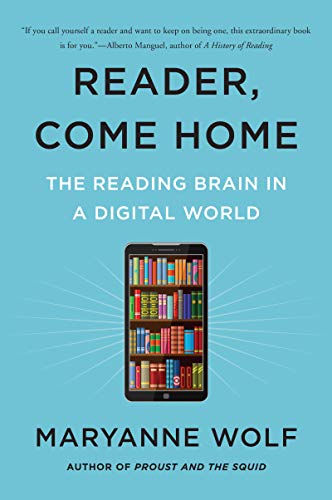
Inhaltsangabe
The author of the acclaimed Proust and the Squid follows up with a lively, ambitious, and deeply informative book that considers the future of the reading brain and our capacity for critical thinking, empathy, and reflection as we become increasingly dependent on digital technologies.
A decade ago, Maryanne Wolf’s Proust and the Squid revealed what we know about how the brain learns to read and how reading changes the way we think and feel. Since then, the ways we process written language have changed dramatically with many concerned about both their own changes and that of children. New research on the reading brain chronicles these changes in the brains of children and adults as they learn to read while immersed in a digitally dominated medium.
Drawing deeply on this research, this book comprises a series of letters Wolf writes to us—her beloved readers—to describe her concerns and her hopes about what is happening to the reading brain as it unavoidably changes to adapt to digital mediums. Wolf raises difficult questions, including:
- Will children learn to incorporate the full range of "deep reading" processes that are at the core of the expert reading brain?
- Will the mix of a seemingly infinite set of distractions for children’s attention and their quick access to immediate, voluminous information alter their ability to think for themselves?
- With information at their fingertips, will the next generation learn to build their own storehouse of knowledge, which could impede the ability to make analogies and draw inferences from what they know?
- Will all these influences change the formation in children and the use in adults of "slower" cognitive processes like critical thinking, personal reflection, imagination, and empathy that comprise deep reading and that influence both how we think and how we live our lives?
- How can we preserve deep reading processes in future iterations of the reading brain?
Concerns about attention span, critical reasoning, and over-reliance on technology are never just about children—Wolf herself has found that, though she is a reading expert, her ability to read deeply has been impacted as she has become increasingly dependent on screens.
Wolf draws on neuroscience, literature, education, and philosophy and blends historical, literary, and scientific facts with down-to-earth examples and warm anecdotes to illuminate complex ideas that culminate in a proposal for a biliterate reading brain. Provocative and intriguing, Reader, Come Home is a roadmap that provides a cautionary but hopeful perspective on the impact of technology on our brains and our most essential intellectual capacities—and what this could mean for our future.
Die Inhaltsangabe kann sich auf eine andere Ausgabe dieses Titels beziehen.
Über die Autorin bzw. den Autor
Maryanne Wolf is a scholar, teacher, and global advocate for children and literacy. She directs the Center for Dyslexia, Diverse Learners, and Social Justice at UCLA and is the former John DiBiaggio Professor of Citizenship and Public Service at Tufts University. She has authored over 170 publications, including Reader, Come Home, Proust and the Squid, and Tales of Literacy for the 21st Century.
Von der hinteren Coverseite
The author of the acclaimed Proust and the Squid follows up with a lively, ambitious, and deeply informative book that considers the future of the reading brain and our capacity for critical thinking, empathy, and reflection as we become increasingly dependent on digital technologies.A decade ago, Maryanne Wolf's Proust and the Squid revealed what we know about how the brain learns to read and how reading changes the way we think and feel. Since then, the ways we process written language have changed dramatically with many concerned about both their own changes and that of children. New research on the reading brain chronicles these changes in the brains of children and adults as they learn to read while immersed in a digitally dominated medium.Drawing deeply on this research, this book comprises a series of letters Wolf writes to us?her beloved readers?to describe her concerns and her hopes about what is happening to the reading brain as it unavoidably changes to adapt to digital mediums. Wolf raises difficult questions, including:
- Will children learn to incorporate the full range of "deep reading" processes that are at the core of the expert reading brain?
- Will the mix of a seemingly infinite set of distractions for children's attention and their quick access to immediate, voluminous information alter their ability to think for themselves?
- With information at their fingertips, will the next generation learn to build their own storehouse of knowledge, which could impede the ability to make analogies and draw inferences from what they know?
- Will all these influences change the formation in children and the use in adults of "slower" cognitive processes like critical thinking, personal reflection, imagination, and empathy that comprise deep reading and that influence both how we think and how we live our lives?
- How can we preserve deep reading processes in future iterations of the reading brain?
Concerns about attention span, critical reasoning, and over-reliance on technology are never just about children?Wolf herself has found that, though she is a reading expert, her ability to read deeply has been impacted as she has become increasingly dependent on screens.Wolf draws on neuroscience, literature, education, and philosophy and blends historical, literary, and scientific facts with down-to-earth examples and warm anecdotes to illuminate complex ideas that culminate in a proposal for a biliterate reading brain. Provocative and intriguing, Reader, Come Home is a roadmap that provides a cautionary but hopeful perspective on the impact of technology on our brains and our most essential intellectual capacities?and what this could mean for our future.
„Über diesen Titel“ kann sich auf eine andere Ausgabe dieses Titels beziehen.
Suchergebnisse für Reader, Come Home: The Reading Brain in a Digital World...

Beispielbild für diese ISBN
Reader, Come Home: The Reading Brain in a Digital World
Verlag:
HarperCollins Publishers Inc, 2019
ISBN 10: 0062388770
ISBN 13: 9780062388773
Gebraucht
Paperback
Anbieter: World of Books (was SecondSale), Montgomery, IL, USA
Verkäuferbewertung 5 von 5 Sternen

Paperback. Zustand: Good. The author of the acclaimed Proust and the Squid follows up with a lively, ambitious, and deeply informative book that considers the future of the reading brain and our capacity for critical thinking, empathy, and reflection as we become increasingly dependent on digital technologies. A decade ago, Maryanne Wolf's Proust and the Squid revealed what we know about how the brain learns to read and how reading changes the way we think and feel. Since then, the ways we process written language have changed dramatically with many concerned about both their own changes and that of children. New research on the reading brain chronicles these changes in the brains of children and adults as they learn to read while immersed in a digitally dominated medium. Drawing deeply on this research, this book comprises a series of letters Wolf writes to us--her beloved readers--to describe her concerns and her hopes about what is happening to the reading brain as it unavoidably changes to adapt to digital mediums. Wolf raises difficult questions, including: Will children learn to incorporate the full range of "deep reading" processes that are at the core of the expert reading brain? Will the mix of a seemingly infinite set of distractions for children's attention and their quick access to immediate, voluminous information alter their ability to think for themselves? With information at their fingertips, will the next generation learn to build their own storehouse of knowledge, which could impede the ability to make analogies and draw inferences from what they know? Will all these influences change the formation in children and the use in adults of "slower" cognitive processes like critical thinking, personal reflection, imagination, and empathy that comprise deep reading and that influence both how we think and how we live our lives? How can we preserve deep reading processes in future iterations of the reading brain? Concerns about attention span, critical reasoning, and over-reliance on technology are never just about children--Wolf herself has found that, though she is a reading expert, her ability to read deeply has been impacted as she has become increasingly dependent on screens. Wolf draws on neuroscience, literature, education, and philosophy and blends historical, literary, and scientific facts with down-to-earth examples and warm anecdotes to illuminate complex ideas that culminate in a proposal for a biliterate reading brain. Provocative and intriguing, Reader, Come Home is a roadmap that provides a cautionary but hopeful perspective on the impact of technology on our brains and our most essential intellectual capacities--and what this could mean for our future. Bestandsnummer des Verkäufers 00108997491
Gebraucht kaufen
EUR 7,28
Versand gratis
Versand innerhalb von USA
Versand innerhalb von USA
Anzahl: 10 verfügbar
Beispielbild für diese ISBN
Reader, Come Home: The Reading Brain in a Digital World
Verlag:
HarperCollins Publishers Inc, 2019
ISBN 10: 0062388770
ISBN 13: 9780062388773
Gebraucht
Paperback
Anbieter: World of Books (was SecondSale), Montgomery, IL, USA
Verkäuferbewertung 5 von 5 Sternen
Paperback. Zustand: Fair. The author of the acclaimed Proust and the Squid follows up with a lively, ambitious, and deeply informative book that considers the future of the reading brain and our capacity for critical thinking, empathy, and reflection as we become increasingly dependent on digital technologies. A decade ago, Maryanne Wolf's Proust and the Squid revealed what we know about how the brain learns to read and how reading changes the way we think and feel. Since then, the ways we process written language have changed dramatically with many concerned about both their own changes and that of children. New research on the reading brain chronicles these changes in the brains of children and adults as they learn to read while immersed in a digitally dominated medium. Drawing deeply on this research, this book comprises a series of letters Wolf writes to us--her beloved readers--to describe her concerns and her hopes about what is happening to the reading brain as it unavoidably changes to adapt to digital mediums. Wolf raises difficult questions, including: Will children learn to incorporate the full range of "deep reading" processes that are at the core of the expert reading brain? Will the mix of a seemingly infinite set of distractions for children's attention and their quick access to immediate, voluminous information alter their ability to think for themselves? With information at their fingertips, will the next generation learn to build their own storehouse of knowledge, which could impede the ability to make analogies and draw inferences from what they know? Will all these influences change the formation in children and the use in adults of "slower" cognitive processes like critical thinking, personal reflection, imagination, and empathy that comprise deep reading and that influence both how we think and how we live our lives? How can we preserve deep reading processes in future iterations of the reading brain? Concerns about attention span, critical reasoning, and over-reliance on technology are never just about children--Wolf herself has found that, though she is a reading expert, her ability to read deeply has been impacted as she has become increasingly dependent on screens. Wolf draws on neuroscience, literature, education, and philosophy and blends historical, literary, and scientific facts with down-to-earth examples and warm anecdotes to illuminate complex ideas that culminate in a proposal for a biliterate reading brain. Provocative and intriguing, Reader, Come Home is a roadmap that provides a cautionary but hopeful perspective on the impact of technology on our brains and our most essential intellectual capacities--and what this could mean for our future. Bestandsnummer des Verkäufers 00109716067
Gebraucht kaufen
EUR 7,28
Versand gratis
Versand innerhalb von USA
Versand innerhalb von USA
Anzahl: 2 verfügbar
Foto des Verkäufers
Reader, Come Home: The Reading Brain in a Digital World â A Cautionary Cognitive Science Study on How Screens Affect Attention Spans
Anbieter: Zoom Books East, Glendale Heights, IL, USA
Verkäuferbewertung 5 von 5 Sternen
Zustand: good. Book is in good condition and may include underlining highlighting and minimal wear. The book can also include "From the library of" labels. May not contain miscellaneous items toys, dvds, etc. . We offer 100% money back guarantee and 24 7 customer service. Bestandsnummer des Verkäufers ZEV.0062388770.G
Gebraucht kaufen
EUR 7,81
Versand gratis
Versand innerhalb von USA
Versand innerhalb von USA
Anzahl: 2 verfügbar
Beispielbild für diese ISBN
Reader, Come Home: The Reading Brain in a Digital World
Anbieter: HPB Inc., Dallas, TX, USA
Verkäuferbewertung 5 von 5 Sternen
Paperback. Zustand: Very Good. Connecting readers with great books since 1972! Used books may not include companion materials, and may have some shelf wear or limited writing. We ship orders daily and Customer Service is our top priority! Bestandsnummer des Verkäufers S_487358553
Gebraucht kaufen
EUR 5,50
EUR 3,34 Versand
Versand innerhalb von USA
Versand innerhalb von USA
Anzahl: 1 verfügbar
Beispielbild für diese ISBN
Reader, Come Home: The Reading Brain in a Digital World
Verlag:
HarperCollins Publishers Inc, 2019
ISBN 10: 0062388770
ISBN 13: 9780062388773
Gebraucht
Paperback
Anbieter: World of Books Inc, Montgomery, IL, USA
Verkäuferbewertung 4 von 5 Sternen

Paperback. Zustand: Good. The author of the acclaimed Proust and the Squid follows up with a lively, ambitious, and deeply informative book that considers the future of the reading brain and our capacity for critical thinking, empathy, and reflection as we become increasingly dependent on digital technologies. A decade ago, Maryanne Wolf's Proust and the Squid revealed what we know about how the brain learns to read and how reading changes the way we think and feel. Since then, the ways we process written language have changed dramatically with many concerned about both their own changes and that of children. New research on the reading brain chronicles these changes in the brains of children and adults as they learn to read while immersed in a digitally dominated medium. Drawing deeply on this research, this book comprises a series of letters Wolf writes to us--her beloved readers--to describe her concerns and her hopes about what is happening to the reading brain as it unavoidably changes to adapt to digital mediums. Wolf raises difficult questions, including: Will children learn to incorporate the full range of "deep reading" processes that are at the core of the expert reading brain? Will the mix of a seemingly infinite set of distractions for children's attention and their quick access to immediate, voluminous information alter their ability to think for themselves? With information at their fingertips, will the next generation learn to build their own storehouse of knowledge, which could impede the ability to make analogies and draw inferences from what they know? Will all these influences change the formation in children and the use in adults of "slower" cognitive processes like critical thinking, personal reflection, imagination, and empathy that comprise deep reading and that influence both how we think and how we live our lives? How can we preserve deep reading processes in future iterations of the reading brain? Concerns about attention span, critical reasoning, and over-reliance on technology are never just about children--Wolf herself has found that, though she is a reading expert, her ability to read deeply has been impacted as she has become increasingly dependent on screens. Wolf draws on neuroscience, literature, education, and philosophy and blends historical, literary, and scientific facts with down-to-earth examples and warm anecdotes to illuminate complex ideas that culminate in a proposal for a biliterate reading brain. Provocative and intriguing, Reader, Come Home is a roadmap that provides a cautionary but hopeful perspective on the impact of technology on our brains and our most essential intellectual capacities--and what this could mean for our future. Bestandsnummer des Verkäufers CIN0062388770G
Gebraucht kaufen
EUR 9,11
Versand gratis
Versand innerhalb von USA
Versand innerhalb von USA
Anzahl: 10 verfügbar
Beispielbild für diese ISBN
Reader, Come Home: The Reading Brain in a Digital World
Verlag:
HarperCollins Publishers Inc, 2019
ISBN 10: 0062388770
ISBN 13: 9780062388773
Gebraucht
Paperback
Anbieter: World of Books Inc, Montgomery, IL, USA
Verkäuferbewertung 4 von 5 Sternen
Paperback. Zustand: Fair. The author of the acclaimed Proust and the Squid follows up with a lively, ambitious, and deeply informative book that considers the future of the reading brain and our capacity for critical thinking, empathy, and reflection as we become increasingly dependent on digital technologies. A decade ago, Maryanne Wolf's Proust and the Squid revealed what we know about how the brain learns to read and how reading changes the way we think and feel. Since then, the ways we process written language have changed dramatically with many concerned about both their own changes and that of children. New research on the reading brain chronicles these changes in the brains of children and adults as they learn to read while immersed in a digitally dominated medium. Drawing deeply on this research, this book comprises a series of letters Wolf writes to us--her beloved readers--to describe her concerns and her hopes about what is happening to the reading brain as it unavoidably changes to adapt to digital mediums. Wolf raises difficult questions, including: Will children learn to incorporate the full range of "deep reading" processes that are at the core of the expert reading brain? Will the mix of a seemingly infinite set of distractions for children's attention and their quick access to immediate, voluminous information alter their ability to think for themselves? With information at their fingertips, will the next generation learn to build their own storehouse of knowledge, which could impede the ability to make analogies and draw inferences from what they know? Will all these influences change the formation in children and the use in adults of "slower" cognitive processes like critical thinking, personal reflection, imagination, and empathy that comprise deep reading and that influence both how we think and how we live our lives? How can we preserve deep reading processes in future iterations of the reading brain? Concerns about attention span, critical reasoning, and over-reliance on technology are never just about children--Wolf herself has found that, though she is a reading expert, her ability to read deeply has been impacted as she has become increasingly dependent on screens. Wolf draws on neuroscience, literature, education, and philosophy and blends historical, literary, and scientific facts with down-to-earth examples and warm anecdotes to illuminate complex ideas that culminate in a proposal for a biliterate reading brain. Provocative and intriguing, Reader, Come Home is a roadmap that provides a cautionary but hopeful perspective on the impact of technology on our brains and our most essential intellectual capacities--and what this could mean for our future. Bestandsnummer des Verkäufers CIN0062388770A
Gebraucht kaufen
EUR 9,11
Versand gratis
Versand innerhalb von USA
Versand innerhalb von USA
Anzahl: 2 verfügbar
Beispielbild für diese ISBN
Reader, Come Home: The Reading Brain in a Digital World
Anbieter: HPB-Diamond, Dallas, TX, USA
Verkäuferbewertung 5 von 5 Sternen
Paperback. Zustand: Very Good. Connecting readers with great books since 1972! Used books may not include companion materials, and may have some shelf wear or limited writing. We ship orders daily and Customer Service is our top priority! Bestandsnummer des Verkäufers S_480656262
Gebraucht kaufen
EUR 6,61
EUR 3,34 Versand
Versand innerhalb von USA
Versand innerhalb von USA
Anzahl: 1 verfügbar
Beispielbild für diese ISBN
Reader, Come Home: The Reading Brain in a Digital World ? A Cautionary Cognitive Science Study on How Screens Affect Attention Spans
Anbieter: Orphans Treasure Box, Champaign, IL, USA
Verkäuferbewertung 4 von 5 Sternen
paperback. Zustand: Very Good. Ships quickly. Mild shelf/reading wear. Orphans Treasure Box sells books to raise money for orphans and vulnerable kids. Bestandsnummer des Verkäufers 1C-07292026-TAL076
Gebraucht kaufen
EUR 8,68
EUR 4,45 Versand
Versand innerhalb von USA
Versand innerhalb von USA
Anzahl: 1 verfügbar
Beispielbild für diese ISBN
Reader, Come Home: The Reading Brain in a Digital World
Anbieter: Lakeside Books, Benton Harbor, MI, USA
Verkäuferbewertung 5 von 5 Sternen
Zustand: New. Brand New! Not Overstocks or Low Quality Book Club Editions! Direct From the Publisher! We're not a giant, faceless warehouse organization! We're a small town bookstore that loves books and loves it's customers! Buy from Lakeside Books! Bestandsnummer des Verkäufers OTF-S-9780062388773
Neu kaufen
EUR 11,75
EUR 3,56 Versand
Versand innerhalb von USA
Versand innerhalb von USA
Anzahl: Mehr als 20 verfügbar
Foto des Verkäufers
Reader, Come Home : The Reading Brain in a Digital World
Anbieter: GreatBookPrices, Columbia, MD, USA
Verkäuferbewertung 5 von 5 Sternen
Zustand: New. Bestandsnummer des Verkäufers 35344017-n
Neu kaufen
EUR 12,98
EUR 2,35 Versand
Versand innerhalb von USA
Versand innerhalb von USA
Anzahl: Mehr als 20 verfügbar