
Verwandte Artikel zu Census: A Moving Novel―A Father and His Son...
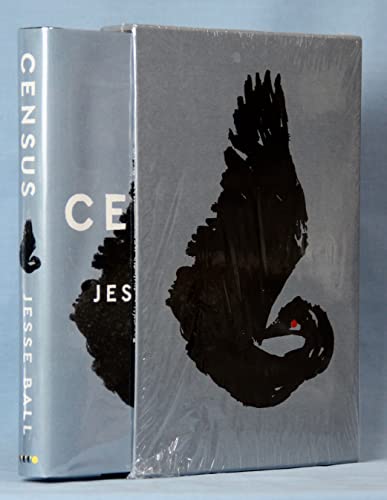
Census: A Moving Novel―A Father and His Son with Down Syndrome on Their Final Journey Through Love and Grief - Hardcover
Inhaltsangabe
NAMED A RECOMMENDED BOOK OF 2018 BY
The New York Times • Buzzfeed • Esquire • Nylon • The Boston Globe • The Huffington Post • The Chicago Tribune • The Rumpus • The AV Club • Southern Living • The Millions • The Chicago Reader • Kirkus • Publishers Weekly • NPR
A powerful and moving new novel from an award-winning, acclaimed author: in the wake of a devastating revelation, a father and son journey north across a tapestry of towns
When a widower receives notice from a doctor that he doesn’t have long left to live, he is struck by the question of who will care for his adult son—a son whom he fiercely loves, a boy with Down syndrome. With no recourse in mind, and with a desire to see the country on one last trip, the man signs up as a census taker for a mysterious governmental bureau and leaves town with his son.
Traveling into the country, through towns named only by ascending letters of the alphabet, the man and his son encounter a wide range of human experience. While some townspeople welcome them into their homes, others who bear the physical brand of past censuses on their ribs are wary of their presence. When they press toward the edges of civilization, the landscape grows wilder, and the towns grow farther apart and more blighted by industrial decay. As they approach “Z,” the man must confront a series of questions: What is the purpose of the census? Is he complicit in its mission? And just how will he learn to say good-bye to his son?
Mysterious and evocative, Census is a novel about free will, grief, the power of memory, and the ferocity of parental love, from one of our most captivating young writers.
Die Inhaltsangabe kann sich auf eine andere Ausgabe dieses Titels beziehen.
Über die Autorin bzw. den Autor
Jesse Ball is the author of fifteen books, and his works have been translated into more than a dozen languages. He is on the faculty at the School of the Art Institute of Chicago, a winner of The Paris Review’s Plimpton Prize for Fiction and the Gordon Burn Prize, and was long-listed for the National Book Award.
Von der hinteren Coverseite
When a widower receives the devastating news that he doesn’t have long to live, he is struck by the question of who will care for his adult son—a son whom he fiercely loves, a boy with Down syndrome. With no recourse in mind, and with a desire to see the country on one last trip, the man signs up as a census taker for a mysterious governmental bureau and leaves town with his son.
Traveling north, farther into the country, through a tapestry of towns named only by ascending letters of the alphabet, the man and his son encounter a wide range of human experience. While some townspeople welcome the pair into their homes, others, who bear the physical brand of past censuses on their ribs, are wary of their presence. Toward the edges of civilization, the landscape grows wilder and the towns grow farther apart and more blighted by industrial decay. As they approach Z, the man must confront a series of questions: What is the purpose of the census? Is he complicit in its mission? And just how will he learn to say goodbye to his son?
Wrenching and beautiful, Census is a novel about free will, grief, the power of memory, and the ferocity of parental love. It is also an indictment of the cruelties of our society by a major writer.
Auszug. © Genehmigter Nachdruck. Alle Rechte vorbehalten.
Census
By Jesse BallHarperCollins Publishers
Copyright © 2017 Jesse Ball
All rights reserved.
ISBN: 978-0-06-267613-9All rights reserved.
CHAPTER 1
A
As I turned to lean my shovel against the rusted gray of the car, I looked in passing down into the grave I had dug, and saw there, along the face or wall, in trembling roots, the path I had traveled these several months taking the census in the farthest districts. As if by chance, my eye followed the slender red roots down and down into the grave, first left then left, then left then left, then right, then left then left, then right, then left then left, and always down. It was as if I could feel my hand upon the wheel, driving those field-wrapping roads and felt almost removed into the person I had been — someone like to myself, someone I myself might have known, someone bound in fact, as an arrow towards me, towards my heart and the place in which I now stand. Had I known him? Who is it that can claim at any time to know his own appearance, his own ideas? And yet we come back into ourselves again and again — there must be some recognition, something, even so slight. Must there be?
For me, I return to myself, I return and what I find is — that which surrounds me. The march of the hills that meets my eyes — it continues on within, uninterrupted. There is so little in me now to raise a cry.
I am waiting, and as I wait images circle — of my life, of my son, of these most recent days. Everything further is dim, and becomes dimmer still, though now and then something vivid arrives, something vivid breaks the frame and then, perhaps then most of all, I forget who I am or when.
Who can comprehend blankness? We as humans are so full of longing; what is blank eludes us. To be blank, to contain at your core, a blankness, it must be a talent — a person must have it, and must have it, possibly, from the very first. I have always had it.
In my time, I had read things, things like,
A census taker must above all attempt, even long for, blankness.
The fact that we mar our impressions, mar the scenes we enter by even our presence alone — it is something census takers carefully, gently even, pretend not to know. If we knew it, we could not even begin our basic enterprise. For us, the census is a sort of crusade into the unknown. Someone once said about it, into a tempest with a lantern. Into a tempest with a lantern — these are words I have said under my breath many times, though for me the feeling is not heroic but co- medic. There is a helplessness to the census taker. The limits of what can be done are very clear. Perhaps it is this very element that draws those who do it to this terrible and completely thankless work. For it is clear that whatever good it might appear to do, there can really be no meaning in such a thing, much less in some infinitely small part of such an impossibly large endeavor. My wife, now dead, would laugh to see me in an old coat approaching houses. But, I feel it still, the warmth of the little lantern, the storm of the tempest.
Most of all it was my son who prepared me for this work, my son who showed me, not in speech, but in his daily way, that we are by our nature a kind of measure, that we are measuring each other at every moment. This was the census he began at birth, that he continues even now. It was his census that led into ours, into our taking of the census, our travel north.
It was his life, his way of thinking that made the work of the census seem possible, even inevitable.
But before that, before I went to the office to become a census taker, it happened that there was a notice given to me, not about the census, not about anything, but the opposite: about everything, a notice about everything. In some sense, a messenger arrived with an envelope and put it into my hand and at that moment I knew I was soon to die. In another sense, the way it would look from the outside, I was simply going about my business, I was speaking to a nurse in my practice, standing, gesturing in the hall. Next I knew, I was lying on my back in an examination room, and concerned faces hovered above, seeing me as if for the first time.
From there I went to see a physician, a friend of mine, who had a look at me. He poked around, prodded, stood scowling.
I could do tests, he said, but I think we both know what the tests would show.
He laughed. That was his way.
We sat there for a while, and finally, he patted me on the shoulder.
But your son, what will he do? Would anyone want to take him? Who would that be? Would he go to a group home?
The way he said the word group home was awful. I shook my head.
I said there was a woman I knew who'd made an agreement with my wife and I. Her promise was, she'd watch my grown son, take care of him if anything happened to myself, my wife. She lived down the road a short ways, was undistinguished, unimpressive, gentle, wonderful.
I was leaving the room, he was showing me out, and he stopped. He adjusted my collar with his hand and nodded to himself.
I think you should stop working. I think you should go somewhere dry, somewhere to the north, near Z. The trip would do you good. Think about it. There's no need to die where you lived. It's not nobler.
I got my son from the house he was at, the people he was with. They knew nothing of what had happened. I told them we were going on a trip, that my son would not be back for a while. They made a show over him about the trip, how nice it was to go on a trip. He was glad of it, and pleased. He had been building something with sticks, and he showed it to me. I told him I liked it, what was it. He didn't like that I didn't know what it was. Our house, he told me. Of course, I said, of course it is, I was looking at it wrong.
Back at our house, I walked around the rooms, from to room to room. I thought, now I won't live here. Not even my son will live here. Somehow no one can live here now.
I left my son by himself for an hour and went down the road.
You do look like you'll die, she said. I never thought you would outlive your wife.
I've done it, I said.
But only just.
I'm going to take a trip, I told her. I'm going to go north doing the census. It will give us something to do, a last season together, a purpose that has essentially as much purpose as a thing can have, yet keep no purpose at all. My son and I can be together. We can see the same things and look at them. I'll keep close to the train line, and then, if things get bad, my son will travel back. I'll send word so you know to get him at the train.
She said it wasn't the plan she would have made, but she could see it, why I wanted it that way.
One last trip together, my son and I. And maybe I'll get better.
You might, she said.
I started to say some things about taking care of my son, about certain facts, or certain needs he had.
I know all this.
Just let me say it.
You can say it if you want, but I know it already. I'll take care of him, don't worry. It will be the same as it has been, whatever that was.
I know you didn't like my wife, I started to say.
It's your son who'll live with me, not your wife, thank god. Don't worry.
The next morning I went to the census office. I was there for a long time, and I left confirmed in a new appointment, a new profession.
My wife and I had always wanted to take to the road. Why don't we take to the road she would say. But somehow it did not happen. Although in a sense my son was the best possible reason to take to the road, he also...
„Über diesen Titel“ kann sich auf eine andere Ausgabe dieses Titels beziehen.
Suchergebnisse für Census: A Moving Novel―A Father and His Son...

Beispielbild für diese ISBN
Census
Anbieter: Gulf Coast Books, Cypress, TX, USA
Verkäuferbewertung 5 von 5 Sternen

Hardcover. Zustand: Very Good. Bestandsnummer des Verkäufers 006267613X-2-21491077
Gebraucht kaufen
EUR 3,93
Versand gratis
Versand innerhalb von USA
Versand innerhalb von USA
Anzahl: 1 verfügbar
Beispielbild für diese ISBN
Census
Verlag:
HarperCollins Publishers Inc, 2018
ISBN 10: 006267613X
ISBN 13: 9780062676139
Gebraucht
Hardcover
Anbieter: World of Books (was SecondSale), Montgomery, IL, USA
Verkäuferbewertung 5 von 5 Sternen
Hardback. Zustand: Fair. NAMED A RECOMMENDED BOOK OF 2018 BY The New York Times * Buzzfeed * Esquire * Nylon * The Boston Globe * The Huffington Post * The Chicago Tribune * The Rumpus * The AV Club * Southern Living * The Millions * The Chicago Reader * Kirkus * Publishers Weekly * NPR A powerful and moving new novel from an award-winning, acclaimed author: in the wake of a devastating revelation, a father and son journey north across a tapestry of towns When a widower receives notice from a doctor that he doesn't have long left to live, he is struck by the question of who will care for his adult son--a son whom he fiercely loves, a boy with Down syndrome. With no recourse in mind, and with a desire to see the country on one last trip, the man signs up as a census taker for a mysterious governmental bureau and leaves town with his son. Traveling into the country, through towns named only by ascending letters of the alphabet, the man and his son encounter a wide range of human experience. While some townspeople welcome them into their homes, others who bear the physical brand of past censuses on their ribs are wary of their presence. When they press toward the edges of civilization, the landscape grows wilder, and the towns grow farther apart and more blighted by industrial decay. As they approach "Z," the man must confront a series of questions: What is the purpose of the census? Is he complicit in its mission? And just how will he learn to say good-bye to his son? Mysterious and evocative, Census is a novel about free will, grief, the power of memory, and the ferocity of parental love, from one of our most captivating young writers. Bestandsnummer des Verkäufers 00083636160
Gebraucht kaufen
EUR 3,94
Versand gratis
Versand innerhalb von USA
Versand innerhalb von USA
Anzahl: 2 verfügbar
Foto des Verkäufers
Census
Anbieter: Reliant Bookstore, El Dorado, KS, USA
Verkäuferbewertung 5 von 5 Sternen
Zustand: good. This book is in good condition with very minimal damage. This is an ex-library book with stickers and markings. Pages may have minimal notes or highlighting. Cover image on the book may vary from photo. Ships out quickly in a secure plastic mailer. Bestandsnummer des Verkäufers RDV.006267613X.G
Gebraucht kaufen
EUR 4,49
Versand gratis
Versand innerhalb von USA
Versand innerhalb von USA
Anzahl: 1 verfügbar
Beispielbild für diese ISBN
Census
Anbieter: New Legacy Books, Annandale, NJ, USA
Verkäuferbewertung 5 von 5 Sternen
hardcover. Zustand: Good. There is a signature or handwriting on the side of book. This is a ex library book, stickers and markings accordingly. Fast shipping and order satisfaction guaranteed. A portion of your purchase benefits Non-Profit Organizations, First Aid and Fire Stations! Bestandsnummer des Verkäufers 5FSZKJ000DK4
Gebraucht kaufen
EUR 2,28
EUR 2,22 Versand
Versand innerhalb von USA
Versand innerhalb von USA
Anzahl: 1 verfügbar
Foto des Verkäufers
Census: A Moving NovelâA Father and His Son with Down Syndrome on Their Final Journey Through Love and Grief
Anbieter: Bay State Book Company, North Smithfield, RI, USA
Verkäuferbewertung 5 von 5 Sternen
Zustand: good. The book is in good condition with all pages and cover intact, including the dust jacket if originally issued. The spine may show light wear. Pages may contain some notes or highlighting, and there might be a "From the library of" label. Boxed set packaging, shrink wrap, or included media like CDs may be missing. Bestandsnummer des Verkäufers BSM.1AAAI
Gebraucht kaufen
EUR 5,06
Versand gratis
Versand innerhalb von USA
Versand innerhalb von USA
Anzahl: 1 verfügbar
Beispielbild für diese ISBN
Census: A Moving NovelâA Father and His Son with Down Syndrome on Their Final Journey Through Love and Grief
Verlag:
Ecco (edition Illustrated), 2018
ISBN 10: 006267613X
ISBN 13: 9780062676139
Gebraucht
Hardcover
Anbieter: BooksRun, Philadelphia, PA, USA
Verkäuferbewertung 5 von 5 Sternen
Hardcover. Zustand: Very Good. Illustrated. With dust jacket. It's a well-cared-for item that has seen limited use. The item may show minor signs of wear. All the text is legible, with all pages included. It may have slight markings and/or highlighting. Bestandsnummer des Verkäufers 006267613X-8-6-29
Gebraucht kaufen
EUR 5,30
Versand gratis
Versand innerhalb von USA
Versand innerhalb von USA
Anzahl: 1 verfügbar
Beispielbild für diese ISBN
Census
Verlag:
HarperCollins Publishers Inc, 2018
ISBN 10: 006267613X
ISBN 13: 9780062676139
Gebraucht
Hardcover
Anbieter: World of Books Inc, Montgomery, IL, USA
Verkäuferbewertung 4 von 5 Sternen

Hardback. Zustand: Fair. NAMED A RECOMMENDED BOOK OF 2018 BY The New York Times * Buzzfeed * Esquire * Nylon * The Boston Globe * The Huffington Post * The Chicago Tribune * The Rumpus * The AV Club * Southern Living * The Millions * The Chicago Reader * Kirkus * Publishers Weekly * NPR A powerful and moving new novel from an award-winning, acclaimed author: in the wake of a devastating revelation, a father and son journey north across a tapestry of towns When a widower receives notice from a doctor that he doesn't have long left to live, he is struck by the question of who will care for his adult son--a son whom he fiercely loves, a boy with Down syndrome. With no recourse in mind, and with a desire to see the country on one last trip, the man signs up as a census taker for a mysterious governmental bureau and leaves town with his son. Traveling into the country, through towns named only by ascending letters of the alphabet, the man and his son encounter a wide range of human experience. While some townspeople welcome them into their homes, others who bear the physical brand of past censuses on their ribs are wary of their presence. When they press toward the edges of civilization, the landscape grows wilder, and the towns grow farther apart and more blighted by industrial decay. As they approach "Z," the man must confront a series of questions: What is the purpose of the census? Is he complicit in its mission? And just how will he learn to say good-bye to his son? Mysterious and evocative, Census is a novel about free will, grief, the power of memory, and the ferocity of parental love, from one of our most captivating young writers. Bestandsnummer des Verkäufers CIN006267613XA
Gebraucht kaufen
EUR 5,77
Versand gratis
Versand innerhalb von USA
Versand innerhalb von USA
Anzahl: 2 verfügbar
Beispielbild für diese ISBN
Census
Anbieter: ThriftBooks-Atlanta, AUSTELL, GA, USA
Verkäuferbewertung 5 von 5 Sternen
Hardcover. Zustand: Very Good. No Jacket. May have limited writing in cover pages. Pages are unmarked. ~ ThriftBooks: Read More, Spend Less. Bestandsnummer des Verkäufers G006267613XI4N00
Gebraucht kaufen
EUR 5,94
Versand gratis
Versand innerhalb von USA
Versand innerhalb von USA
Anzahl: 1 verfügbar
Beispielbild für diese ISBN
Census
Anbieter: ThriftBooks-Atlanta, AUSTELL, GA, USA
Verkäuferbewertung 5 von 5 Sternen
Hardcover. Zustand: Very Good. No Jacket. Former library book; May have limited writing in cover pages. Pages are unmarked. ~ ThriftBooks: Read More, Spend Less. Bestandsnummer des Verkäufers G006267613XI4N10
Gebraucht kaufen
EUR 5,94
Versand gratis
Versand innerhalb von USA
Versand innerhalb von USA
Anzahl: 1 verfügbar
Beispielbild für diese ISBN
Census
Anbieter: ThriftBooks-Reno, Reno, NV, USA
Verkäuferbewertung 5 von 5 Sternen
Hardcover. Zustand: Very Good. No Jacket. May have limited writing in cover pages. Pages are unmarked. ~ ThriftBooks: Read More, Spend Less. Bestandsnummer des Verkäufers G006267613XI4N00
Gebraucht kaufen
EUR 5,94
Versand gratis
Versand innerhalb von USA
Versand innerhalb von USA
Anzahl: 1 verfügbar