
Verwandte Artikel zu Pharaoh's Daughter: A Novel of Ancient Egypt
Inhaltsangabe
I saved my brother from the soldiers,
but the princess says he is hers now.
Abba and Ima will never trust me again.
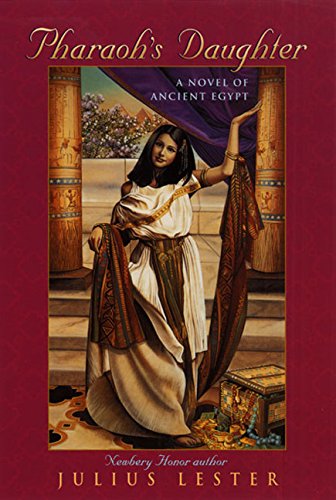
In ancient Egypt, there lives a girl named Almah who will do anything to ensure the safety of her baby brother, Mosis.
She will leave her enslaved family and assume the role of Egyptian princess. She will change her identity if it means winning health and freedom for her brother.
Mosis, however, does not feel completely free. His identity has been changed against his will, and he longs to find himself. And when he does, he will do anything in his power to see that justice is served.
Die Inhaltsangabe kann sich auf eine andere Ausgabe dieses Titels beziehen.
Über die Autorin bzw. den Autor
Julius Lester is the author of the Newbery Honor Book To Be a Slave, the Caldecott Honor Book John Henry, the National Book Award finalist The Long Journey Home: Stories from Black History, and the Coretta Scott King Award winner Day of Tears. He is also a National Book Critics Circle nominee and a recipient of the Boston Globe-Horn Book Award. His most recent picture book, Let's Talk About Race, was named to the New York Public Library's "One Hundred Titles for Reading and Sharing." In addition to his critically acclaimed writing career, Mr. Lester has distinguished himself as a civil rights activist, musician, photographer, radio talk-show host, and professor. For thirty-two years he taught at the University of Massachusetts at Amherst. He lives in western Massachusetts.
Von der hinteren Coverseite
I saved my brother from the soldiers,
but the princess says he is hers now.
Abba and Ima will never trust me again.
In ancient Egypt, there lives a girl named Almah who will do anything to ensure the safety of her baby brother, Mosis.
She will leave her enslaved family and assume the role of Egyptian princess. She will change her identity if it means winning health and freedom for her brother.
Mosis, however, does not feel completely free. His identity has been changed against his will, and he longs to find himself. And when he does, he will do anything in his power to see that justice is served.
Auszug. © Genehmigter Nachdruck. Alle Rechte vorbehalten.
Pharaoh's Daughter
A Novel of Ancient EgyptBy Julius LesterHarperCollins Publishers, Inc.
Copyright © 2006 Julius LesterAll right reserved.
ISBN: 0064409694
Chapter One
My parents talked in the darkness for a long time, their voices moving in and out of my sleep like the back of a hippopotamus rising and sinking in the Great Hapi. Abba, Father, spoke softly and slowly, while lma, Mother, talked rapidly, as if she had to get all the words out before she forgot them. My brother Aharon, and sister, Miryam, are seven and four and hear nothing, not even the sounds of their own sleep. My baby brother, Yekutiel, is barely three months old. He sleeps through everything.
I am Almah, and I used to sleep like Yekutiel, but now that ¡ am twelve I lie awake in the darkness. Something is wrong. Every evening after Abba comes home from working on the pharaoh's temple in Pi-Ramesses, men come to talk. My father is named Amram, and he is a leader of our people, the Habiru, "the people from the other side." ("The other side of what?" I asked him once. He said we have a land of our own, and one day our god, Ya, will send a redeemer who will lead us out of Khemet and into our land. Abba said that in our land the rivers flow with milk and honey. When I asked, "What is a redeemer and when is he coming?" he looked away.) Abba and the men talk long into the darkness, but their voices are low and ¡ cannot hear their words. Yesterday I asked Ima what they were talking about. She looked at me as if I were bad luck that had come to life.
I get up when I see the blackness on the ceiling change to gray. Miryam has a leg on top of mine, an arm flung across my chest. Aharon lies pressed against me on the other side. Abba snores softly. Gently I move Miryam's arm and leg and get up. She and Aharon do not waken, but they sense ¡ am leaving and move closer to each other. Aharon has only a little while longer to sleep before it will be time for him to get up and go with Abba to work in Pi-Ramesses.
Rubbing my eyes I walk into the kitchen and get the water jar. I go out the back door, past the bread oven built-against the house, through the doorway in the wall, and into the narrow street. Pale pink tinges the eastern sky where the sun will rise.
Our house is on the corner of the Street of the Serpent and the Street of the River, at the farthest end of the village. It faces the Great Hapi, though at a safe distance. The river has started rising, which means the new year has begun. In Khemetian it is called the season of Akhet. The river will rise until it threatens to flow over the top of the road that protects us. That has never happened, though. But for almost two months it will be as if we are living next to the Great Green Sea. Then slowly, so slowly that we will not notice at first, the river will return to its bed and leave behind the thick black mud in which we will plant.
Other girls and women walk by me, water jars atop their heads like hair piled high, on their first of many trips to the river for water. Though one or two glance at me, they do not speak.
Instead of following them, I cross the street to a small path and disappear among the canebrake and the long sharp leaves of the papyri that tower above me. The bird send warning calls from the tops of the papyri. I would think they would know me by now.
Eventually I come to a stream, one of the branches of the Great Hapi where the river is not as wide or deep. The others are afraid to come here for water. Because of the snakes. They say I come here because I think I am better than anybody else and don't want to be around them. ("Who cares you can speak Khemetian? If you were a real Habiru, you would not speak the language of people who hate us.") ¡ tried to explain that it is quiet here and that I like the music of the silence and the music of the birds. They did not believe me. Perhaps because I was not telling the truth.
I look carefully for any snakes or crocodiles that might be hiding in the thick bulrushes. Then, looking around once more to be sure no one is watching, I take off my dress and face the sun. It seems to be reaching for me through the papyri as its warmth pours over my new-swelling breasts and the wispy hair that says I am becoming a woman.
This is the real reason I come here for water. I have never told anyone. It is my secret. Mine and the sun's. I raise my arms high over my head and move them outward in a circle as if I am holding the sun, but it does not burn me because I love it and it loves me. I close my eyes and tongues of warmth cover my body. I think I could stand here like this for the rest of my life.
However, sooner than I would like, I get nervous that someone will see me. I know they can't, but that does not matter. I force my eyes open and slip my dress on. Then I fill the jar, put it on my head, and start for home.
When I reach the kitchen, I pour the water into a larger jug. I will carry water from the river many times today until the big jug is filled. Now, however, I take the bread, cucumbers, and dried fish from the baskets where they are kept, slice them, and put them on a reed plate. Then, filling a bowl with water, I go up the stairs to the roof, where Abba is kneeling and facing the sun.
Continues...
Excerpted from Pharaoh's Daughterby Julius Lester Copyright © 2006 by Julius Lester. Excerpted by permission.
All rights reserved. No part of this excerpt may be reproduced or reprinted without permission in writing from the publisher.
Excerpts are provided by Dial-A-Book Inc. solely for the personal use of visitors to this web site.
„Über diesen Titel“ kann sich auf eine andere Ausgabe dieses Titels beziehen.
Suchergebnisse für Pharaoh's Daughter: A Novel of Ancient Egypt

Beispielbild für diese ISBN
Pharaoh's Daughter
Verlag:
HarperCollins Publishers Inc, 2002
ISBN 10: 0064409694
ISBN 13: 9780064409698
Gebraucht
Paperback
Anbieter: World of Books (was SecondSale), Montgomery, IL, USA
Verkäuferbewertung 5 von 5 Sternen

Paperback. Zustand: Good. More than 3,000 years ago, a young girl in Egypt named Almah adored her baby brother named Mosis. She would do anything for their happiness--even shunning their birth parents. Mosis, however, won't be happy until he sees that justice has been served to his own people. This variation of the story of Moses offers readers some new twists. Bestandsnummer des Verkäufers 00073791913
Gebraucht kaufen
EUR 3,22
Versand gratis
Versand innerhalb von USA
Versand innerhalb von USA
Anzahl: 1 verfügbar
Beispielbild für diese ISBN
Pharaoh's Daughter
Verlag:
HarperCollins Publishers Inc, 2002
ISBN 10: 0064409694
ISBN 13: 9780064409698
Gebraucht
Paperback
Anbieter: World of Books (was SecondSale), Montgomery, IL, USA
Verkäuferbewertung 5 von 5 Sternen
Paperback. Zustand: Fair. More than 3,000 years ago, a young girl in Egypt named Almah adored her baby brother named Mosis. She would do anything for their happiness--even shunning their birth parents. Mosis, however, won't be happy until he sees that justice has been served to his own people. This variation of the story of Moses offers readers some new twists. Bestandsnummer des Verkäufers 00074415461
Gebraucht kaufen
EUR 3,22
Versand gratis
Versand innerhalb von USA
Versand innerhalb von USA
Anzahl: 1 verfügbar
Beispielbild für diese ISBN
Pharaoh's Daughter: A Novel of Ancient Egypt
Verlag:
HarperCollins (edition ), 2002
ISBN 10: 0064409694
ISBN 13: 9780064409698
Gebraucht
Paperback
Anbieter: BooksRun, Philadelphia, PA, USA
Verkäuferbewertung 5 von 5 Sternen
Paperback. Zustand: Fair. The item might be beaten up but readable. May contain markings or highlighting, as well as stains, bent corners, or any other major defect, but the text is not obscured in any way. Bestandsnummer des Verkäufers 0064409694-7-1
Gebraucht kaufen
EUR 4,13
Versand gratis
Versand innerhalb von USA
Versand innerhalb von USA
Anzahl: 1 verfügbar
Foto des Verkäufers
Pharaoh's Daughter: A Novel of Ancient Egypt
Anbieter: ZBK Books, Carlstadt, NJ, USA
Verkäuferbewertung 5 von 5 Sternen
Zustand: good. Fast & Free Shipping â" Good condition. It may show normal signs of use, such as light writing, highlighting, or library markings, but all pages are intact and the book is fully readable. A solid, complete copy that's ready to enjoy. Bestandsnummer des Verkäufers ZWV.0064409694.G
Gebraucht kaufen
EUR 4,56
Versand gratis
Versand innerhalb von USA
Versand innerhalb von USA
Anzahl: 1 verfügbar
Foto des Verkäufers
Pharaoh's Daughter: A Novel of Ancient Egypt
Anbieter: Greenworld Books, Arlington, TX, USA
Verkäuferbewertung 5 von 5 Sternen
Zustand: very_good. Fast Free Shipping â" Very Good condition book with a firm cover and clean pages. Shows normal use and some light wear or limited notes markings. A solid, nice copy to enjoy. Bestandsnummer des Verkäufers GWV.0064409694.VG
Gebraucht kaufen
EUR 4,56
Versand gratis
Versand innerhalb von USA
Versand innerhalb von USA
Anzahl: 1 verfügbar
Foto des Verkäufers
Pharaoh's Daughter: A Novel of Ancient Egypt
Anbieter: Greenworld Books, Arlington, TX, USA
Verkäuferbewertung 5 von 5 Sternen
Zustand: good. Fast Free Shipping â" Good condition. It may show normal signs of use, such as light writing, highlighting, or library markings, but all pages are intact and the book is fully readable. A solid, complete copy that's ready to enjoy. Bestandsnummer des Verkäufers GWV.0064409694.G
Gebraucht kaufen
EUR 4,56
Versand gratis
Versand innerhalb von USA
Versand innerhalb von USA
Anzahl: 2 verfügbar
Beispielbild für diese ISBN
Pharaoh's Daughter
Verlag:
HarperCollins Publishers Inc, 2002
ISBN 10: 0064409694
ISBN 13: 9780064409698
Gebraucht
Paperback
Anbieter: World of Books Inc, Montgomery, IL, USA
Verkäuferbewertung 4 von 5 Sternen

Paperback. Zustand: Good. More than 3,000 years ago, a young girl in Egypt named Almah adored her baby brother named Mosis. She would do anything for their happiness--even shunning their birth parents. Mosis, however, won't be happy until he sees that justice has been served to his own people. This variation of the story of Moses offers readers some new twists. Bestandsnummer des Verkäufers CIN0064409694G
Gebraucht kaufen
EUR 5,06
Versand gratis
Versand innerhalb von USA
Versand innerhalb von USA
Anzahl: 1 verfügbar
Beispielbild für diese ISBN
Pharaoh's Daughter
Verlag:
HarperCollins Publishers Inc, 2002
ISBN 10: 0064409694
ISBN 13: 9780064409698
Gebraucht
Paperback
Anbieter: World of Books Inc, Montgomery, IL, USA
Verkäuferbewertung 4 von 5 Sternen
Paperback. Zustand: Fair. More than 3,000 years ago, a young girl in Egypt named Almah adored her baby brother named Mosis. She would do anything for their happiness--even shunning their birth parents. Mosis, however, won't be happy until he sees that justice has been served to his own people. This variation of the story of Moses offers readers some new twists. Bestandsnummer des Verkäufers CIN0064409694A
Gebraucht kaufen
EUR 5,06
Versand gratis
Versand innerhalb von USA
Versand innerhalb von USA
Anzahl: 1 verfügbar
Beispielbild für diese ISBN
Pharaoh's Daughter: A Novel of Ancient Egypt
Anbieter: More Than Words, Waltham, MA, USA
Verkäuferbewertung 5 von 5 Sternen
Zustand: Good. A sound copy with only light wear. Overall a solid copy at a great price! Bestandsnummer des Verkäufers BOS-N-09f-01476
Gebraucht kaufen
EUR 1,57
EUR 3,56 Versand
Versand innerhalb von USA
Versand innerhalb von USA
Anzahl: 1 verfügbar
Beispielbild für diese ISBN
Pharaoh's Daughter: A Novel of Ancient Egypt
Anbieter: ThriftBooks-Dallas, Dallas, TX, USA
Verkäuferbewertung 5 von 5 Sternen
Paperback. Zustand: Very Good. No Jacket. May have limited writing in cover pages. Pages are unmarked. ~ ThriftBooks: Read More, Spend Less. Bestandsnummer des Verkäufers G0064409694I4N00
Gebraucht kaufen
EUR 6,12
Versand gratis
Versand innerhalb von USA
Versand innerhalb von USA
Anzahl: 1 verfügbar