
Verwandte Artikel zu Quick and Easy Boat Maintenance, 2nd Edition: 1,001...
Inhaltsangabe
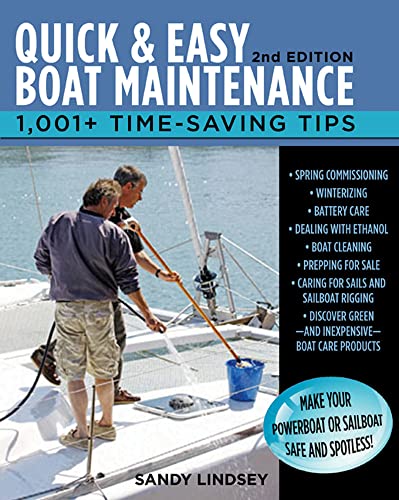
STOP WORKING ON YOUR BOAT AND GET OUT ON THE WATER! Save money and time with these 1,001 tested tips from Sandy Lindsey, a boat-maintenance contributor to Boating magazine for many years. In Quick and Easy Boat Maintenance, Lindsey has culled the best of her years of advice and gathered the top suggestions from her readers. These handy, natural solutions work amazingly well-and are environmentally friendly. Boats last longer and look more beautiful with proper care. But that care takes a lot less time when you work smart. See how you can make your winterizing and spring commissioning chores go much faster and learn Lindsey's labor-saving secrets for tackling: Teak, canvas, and carpet care Painting, metal cleaning, and polishing Fiberglass and gelcoat cleaning and repair Engine care and winterizing Mildew--how to get rid of it, how to prevent it This second edition is updated with green solutions, information about dealing with ethanol in fuel, how to maintain the new batteries, and an all-new chapter on maintenance aspects of sailboats (sail care, winches, lines, and wire rigging). Putting the helpful hints of Quick and Easy Boat Maintenance to work can change your boating life. Less time working means more time boating! "A treasure chest of proven labor-savers that can help get those pesky maintenance chores done faster." -- Observer-Dispatch
Die Inhaltsangabe kann sich auf eine andere Ausgabe dieses Titels beziehen.
Über die Autorin bzw. den Autor
Sandy Lindsey (Hollywood, FL) is the author of Quick and Easy Boat Maintenance (International Marine). A contributing editor for Boating Magazine, she has also written for SAIL, Good Housekeeping, Sports Afield, Midwest Outdoors, and Sailing.
Auszug. © Genehmigter Nachdruck. Alle Rechte vorbehalten.
QUICK & EASY BOAT MAINTENANCE
1,001 TIME-SAVING TIPS
By SANDY LINDSEYThe McGraw-Hill Companies, Inc.
Copyright © 2012 The McGraw-Hill Companies
All rights reserved.
ISBN: 978-0-07-178997-4All rights reserved.
Contents
| Preface | |
| CHAPTER 1 ON DECK | |
| CHAPTER 2 HULL WORK | |
| CHAPTER 3 CABIN CONCERNS | |
| CHAPTER 4 THE ENGINE | |
| CHAPTER 5 OTHER CRITICAL BOAT AREAS | |
| CHAPTER 6 SPECIALTY BOATING | |
| CHAPTER 7 WINTERIZING AND SPRING COMMISSIONING | |
| CHAPTER 8 SPECIAL CARE FOR SAILBOATS | |
| CHAPTER 9 MISCELLANEOUS TIPS EVERY BOATER SHOULD KNOW | |
| A Few Last Tips | |
| Index |
Excerpt
CHAPTER 1
ON DECK
CARING FOR BOAT METAL
The Original Nonabrasive Stainless Steel Polish
If your stainless steel is slightly discolored, but the stains aren't so badthat they require special treatment, you can save some money on conventionalnonabrasive stainless polishes by sprinkling baking soda on a sponge instead.Scrub down as you normally would, and rinse thoroughly.
Season Your Stainless to a High Shine
To give stainless steel a long-lasting high shine, rub down railings and otherstainless steel with a lemon peel, and then wash as usual. The lemon oil in thepeel cuts through grime that other cleaners may miss and restores luster.
If using a lemon peel is too strange for you, you can use the lemon oil that youuse on your cabin furniture as an excellent substitute to clean stainless steel.
Rubbing alcohol from your boat's first-aid kit works almost as well on stainlessas a lemon peel or lemon oil, and it disinfects.
There's More to Stainless Cleaning than Nevr-Dull
To remove salt buildup on stainless steel, rub on isopropyl rubbing alcohol. Usea 100 percent cotton rag.
To remove rust from stainless steel and most other deck metals, simply sprinklea little bit of salt on the rust spot, and then squeeze a lime over the saltuntil it soaks the salt. Leave the mixture on for 2 or 3 hours. Then gently rubthe spot with an old toothbrush or a piece of crumpled aluminum foil until thespot disappears.
Railings sticky from a child's gooey hands? Pour vinegar or straight lemon juiceonto a sponge and wipe down the goop. Let the vinegar or lemon juice sit for afew minutes to cut through the residue, and then wash off with soap and water.
Drying Is Cleaning, Too
By using a chamois cloth to dry stainless and all other polished metal surfacesafter you rinse the boat, you'll need to polish these surfaces only once eachseason.
Safe Stainless Surgery
When cutting a new section of stainless steel metal railing to size, place adowel inside the metal tube to help it hold its shape as you saw off theappropriate section.
The Aluminum/Bronze Wool Connection
To remove oxidation from aluminum, wipe down with fine bronze wool or a cleanrag dipped in mild laundry detergent such as Wisk. Rinse thoroughly afterwardand protect with a fiberglass wax to retard further damage.
If you get bronze wool slivers in your fingers after cleaning the boat's metal,put white school glue over the spot, allow to dry, and then peel off. The glueshould take the slivers with it.
Silver Polish and Aluminum
Silver polish makes an excellent aluminum cleaner.
Aluminum Do's
Just like wood, aluminum has a grain. Look closely and you'll see it. Always rubon cleaners and waxes in that direction for better-looking results and an easierjob.
Some rusty and tarnished aluminum can be cleaned by rubbing the offending spotswith the shiny side of a crumpled piece of aluminum foil.
Use a bottle cork to clean particularly stubborn rust or metal discolorationspots. Dampen the flat edge of the cork first, so that it absorbs some of themetal polish, and then apply more polish and rub away. When you rub the corkover the spot, its flat surface and naturally abrasive properties do the rest,saving you lots of elbow grease.
Aluminum Don'ts
Here's a great way to get out of some boat maintenance work: Don't attempt toshine aluminum rails or fittings when it's cooler than 50°F outside.Aluminum scratches more easily in cold temperatures.
Keep cleaners containing ammonia away from aluminum, because ammonia pits it.
Acid-based teak cleaners and brighteners destroy anodizing on aluminum. Forproof, check out the feet of a sportfisherman's tuna tower, where it boltsthrough the teak cover boards or rubrails. To prevent a purple, black, orwhitish stain that's irreversible, use plenty of freshwater when rinsing theteak and stop occasionally to rinse off the hull, transom, vinyl, and any othernonteak materials.
Aluminum Painter's Secret
Vinegar can be used to clean and acid-etch aluminum that's about to be painted.
Thrifty Is Nifty When It Comes to Brass
One of the cheapest cleaners for brass can be made at home by mixing 1tablespoon flour, 1 tablespoon salt, and 1 tablespoon vinegar. Apply thepowdered mixture with a clean, damp rag and watch the tarnish wipe off as theshine reappears.
For a quick brass cleanup, slice a lemon in half, dip the cut end in salt, andrub it on all the brass fittings and gear on your boat, working in smallsections. Wash with warm, soapy water afterward, and buff dry with a clean rag.
For tough surface discoloration, cut a lemon in half, dust the cut end withbaking soda, and rub on small sections at a time; the baking soda adds thenecessary mild abrasive to scrub your brass back to life.
Baking Soda Rx
To tell if the baking soda that's made countless voyages with you is still good,put ¼ teaspoon of it in 1 tablespoon vinegar. If it fizzes, it's stillfresh.
Simple Brass Protectant
To keep all brass surfaces and hardware looking their best, apply a protectivecoating of a polymer polish. Cabin brass should be protected with lemon oil.
Restoring Lacquered Brass
To remove chipping lacquer from coated brass, remove the brass fitting and soakit in a mixture of 1 cup baking soda and 1 gallon boiling water. Afterward, youcan either relacquer the object or clean and polish it as you would uncoatedbrass.
Rust Be Gone
A gentle method of removing rust from deck metal is to get out your baking sodapaste (1 tablespoon baking soda to 1 teaspoon water) and wipe down deck metalwith a clean, damp cloth. Scrub the mixture gently with a small piece ofaluminum foil. Buff with a dry paper towel.
To remove tough rust from boat metal, tools left on board, or the bumper of yourtow vehicle, dip bronze or stainless steel wool in mineral spirits and rub offthe rust. For the highest luster, wipe down afterward with a wadded ball ofaluminum foil, shiny side out.
Quick Chrome Cleanups
To clean small polished surfaces such as on instrument gauges or electronics,wet a soft cloth with rubbing alcohol or window cleaner and wipe gently.
For chrome that is tarnished, rub on whitening toothpaste. And while you've gotyour mother-in-law's toothbrush out ... whitening toothpaste also works wonderson scratches on Plexiglas windscreens.
You can clean the chrome bumper on your tow vehicle by sprinkling baking sodaonto a moist sponge and rubbing...
„Über diesen Titel“ kann sich auf eine andere Ausgabe dieses Titels beziehen.
Suchergebnisse für Quick and Easy Boat Maintenance, 2nd Edition: 1,001...

Beispielbild für diese ISBN
Quick and Easy Boat Maintenance, 2nd Edition: 1,001 Time-Saving Tips
Verlag:
International Marine/Ragged Mountain Press, 2012
ISBN 10: 0071789979
ISBN 13: 9780071789974
Gebraucht
Softcover
Anbieter: World of Books (was SecondSale), Montgomery, IL, USA
Verkäuferbewertung 5 von 5 Sternen

Zustand: Very Good. Item in very good condition! Textbooks may not include supplemental items i.e. CDs, access codes etc. Bestandsnummer des Verkäufers 00107224690
Gebraucht kaufen
EUR 4,41
Versand gratis
Versand innerhalb von USA
Versand innerhalb von USA
Anzahl: 1 verfügbar
Beispielbild für diese ISBN
Quick and Easy Boat Maintenance, 2nd Edition: 1,001 Time-Saving Tips
Verlag:
International Marine/Ragged Mountain Press, 2012
ISBN 10: 0071789979
ISBN 13: 9780071789974
Gebraucht
Softcover
Anbieter: World of Books (was SecondSale), Montgomery, IL, USA
Verkäuferbewertung 5 von 5 Sternen
Zustand: Acceptable. Item in good condition. Textbooks may not include supplemental items i.e. CDs, access codes etc. Bestandsnummer des Verkäufers 00068144933
Gebraucht kaufen
EUR 4,41
Versand gratis
Versand innerhalb von USA
Versand innerhalb von USA
Anzahl: 1 verfügbar
Foto des Verkäufers
Quick and Easy Boat Maintenance, 2nd Edition: 1,001 Time-Saving Tips
Verlag:
International Marine/Ragged Mountain Press, 2012
ISBN 10: 0071789979
ISBN 13: 9780071789974
Gebraucht
Softcover
Anbieter: Greenworld Books, Arlington, TX, USA
Verkäuferbewertung 5 von 5 Sternen
Zustand: very_good. Fast Free Shipping â" Very Good condition book with a firm cover and clean pages. Shows normal use and some light wear or limited notes markings. A solid, nice copy to enjoy. Bestandsnummer des Verkäufers GWV.0071789979.VG
Gebraucht kaufen
EUR 4,41
Versand gratis
Versand innerhalb von USA
Versand innerhalb von USA
Anzahl: 1 verfügbar
Beispielbild für diese ISBN
Quick and Easy Boat Maintenance, 2nd Edition: 1,001 Time-Saving Tips
Verlag:
International Marine/Ragged Moun, 2012
ISBN 10: 0071789979
ISBN 13: 9780071789974
Gebraucht
paperback
Anbieter: Evergreen Goodwill, Seattle, WA, USA
Verkäuferbewertung 5 von 5 Sternen
paperback. Zustand: Good. Bestandsnummer des Verkäufers mon0000723954
Gebraucht kaufen
EUR 1,42
EUR 3,47 Versand
Versand innerhalb von USA
Versand innerhalb von USA
Anzahl: 1 verfügbar
Beispielbild für diese ISBN
Quick and Easy Boat Maintenance, 2nd Edition : 1,001 Time-Saving Tips
Verlag:
McGraw-Hill Professional Publishing, 2012
ISBN 10: 0071789979
ISBN 13: 9780071789974
Gebraucht
Softcover
Anbieter: Better World Books, Mishawaka, IN, USA
Verkäuferbewertung 5 von 5 Sternen
Zustand: Very Good. 2nd Edition. Former library copy. Pages intact with possible writing/highlighting. Binding strong with minor wear. Dust jackets/supplements may not be included. Includes library markings. Stock photo provided. Product includes identifying sticker. Better World Books: Buy Books. Do Good. Bestandsnummer des Verkäufers 8188706-6
Gebraucht kaufen
EUR 6,03
Versand gratis
Versand innerhalb von USA
Versand innerhalb von USA
Anzahl: 1 verfügbar
Beispielbild für diese ISBN
Quick and Easy Boat Maintenance, 2nd Edition : 1,001 Time-Saving Tips
Verlag:
McGraw-Hill Professional Publishing, 2012
ISBN 10: 0071789979
ISBN 13: 9780071789974
Gebraucht
Softcover
Anbieter: Better World Books, Mishawaka, IN, USA
Verkäuferbewertung 5 von 5 Sternen
Zustand: Good. 2nd Edition. Former library copy. Pages intact with minimal writing/highlighting. The binding may be loose and creased. Dust jackets/supplements are not included. Includes library markings. Stock photo provided. Product includes identifying sticker. Better World Books: Buy Books. Do Good. Bestandsnummer des Verkäufers 10368803-6
Gebraucht kaufen
EUR 6,03
Versand gratis
Versand innerhalb von USA
Versand innerhalb von USA
Anzahl: 1 verfügbar
Beispielbild für diese ISBN
Quick and Easy Boat Maintenance, 2nd Edition: 1,001 Time-Saving Tips
Verlag:
International Marine Publishing, 2012
ISBN 10: 0071789979
ISBN 13: 9780071789974
Gebraucht
Paperback
Anbieter: ThriftBooks-Phoenix, Phoenix, AZ, USA
Verkäuferbewertung 5 von 5 Sternen
Paperback. Zustand: Good. No Jacket. Pages can have notes/highlighting. Spine may show signs of wear. ~ ThriftBooks: Read More, Spend Less. Bestandsnummer des Verkäufers G0071789979I3N00
Gebraucht kaufen
EUR 6,29
Versand gratis
Versand innerhalb von USA
Versand innerhalb von USA
Anzahl: 1 verfügbar
Beispielbild für diese ISBN
Quick and Easy Boat Maintenance, 2nd Edition: 1,001 Time-Saving Tips
Verlag:
International Marine Publishing, 2012
ISBN 10: 0071789979
ISBN 13: 9780071789974
Gebraucht
Paperback
Anbieter: ThriftBooks-Dallas, Dallas, TX, USA
Verkäuferbewertung 5 von 5 Sternen
Paperback. Zustand: Good. No Jacket. Pages can have notes/highlighting. Spine may show signs of wear. ~ ThriftBooks: Read More, Spend Less. Bestandsnummer des Verkäufers G0071789979I3N00
Gebraucht kaufen
EUR 6,29
Versand gratis
Versand innerhalb von USA
Versand innerhalb von USA
Anzahl: 1 verfügbar
Beispielbild für diese ISBN
Quick and Easy Boat Maintenance, 2nd Edition: 1,001 Time-Saving Tips
Verlag:
International Marine Publishing, 2012
ISBN 10: 0071789979
ISBN 13: 9780071789974
Gebraucht
Paperback
Anbieter: ThriftBooks-Dallas, Dallas, TX, USA
Verkäuferbewertung 5 von 5 Sternen
Paperback. Zustand: Very Good. No Jacket. Former library book; May have limited writing in cover pages. Pages are unmarked. ~ ThriftBooks: Read More, Spend Less. Bestandsnummer des Verkäufers G0071789979I4N10
Gebraucht kaufen
EUR 6,29
Versand gratis
Versand innerhalb von USA
Versand innerhalb von USA
Anzahl: 1 verfügbar
Beispielbild für diese ISBN
Quick and Easy Boat Maintenance, 2nd Edition: 1,001 Time-Saving Tips
Verlag:
International Marine Publishing, 2012
ISBN 10: 0071789979
ISBN 13: 9780071789974
Gebraucht
Paperback
Anbieter: ThriftBooks-Atlanta, AUSTELL, GA, USA
Verkäuferbewertung 5 von 5 Sternen
Paperback. Zustand: Good. No Jacket. Pages can have notes/highlighting. Spine may show signs of wear. ~ ThriftBooks: Read More, Spend Less. Bestandsnummer des Verkäufers G0071789979I3N00
Gebraucht kaufen
EUR 6,30
Versand gratis
Versand innerhalb von USA
Versand innerhalb von USA
Anzahl: 1 verfügbar