
Verwandte Artikel zu Handbook of Mammalian Vocalization: An Integrative...
Handbook of Mammalian Vocalization: An Integrative Neuroscience Approach (Volume 19) (Handbook of Behavioral Neuroscience, Volume 19, Band 19) - Hardcover
Inhaltsangabe
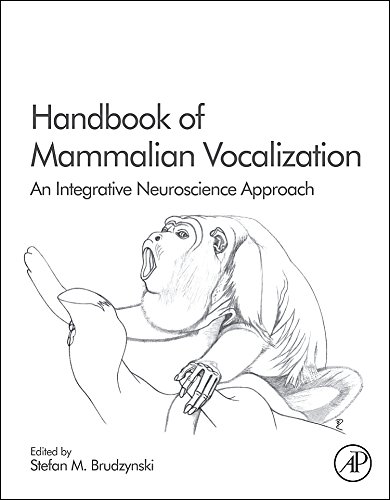
Handbook of Mammalian Vocalization is designed as a broad and comprehensive, but well-balanced book, written from the neuroscience point of view in the broad sense of this term. This well-illustrated Handbook pays particular attention to systematically organized details but also to the explanatory style of the text and internal cohesiveness of the content, so the successive chapters gradually develop a consistent story without losing the inherent complexity. Studies from many species are included, however rodents dominate, as most of the brain investigations were done on these species.
The leading idea of the Handbook is that vocalizations evolved as highly adaptive specific signals, which are selectively picked up by the brain. The brain serves as a receptor and behavioural amplifier. Brain systems will be described, which allow vocal signals rapidly changing the entire state of the organism and trigger vital biological responses, usually also with accompanying emission of vocalizations. Integrative brain functions leading to vocal outcome will be described, along with the vocalization generators and motor output to larynx and other supportive motor subsystems. The last sections of the Handbook explains bioacoustic structure of vocalizations, present understanding of information coding, and origins of the complex semiotic/ semantic content of vocalizations in social mammals.
The Handbook is a major source of information for professionals from many fields, with a neuroscience approach as a common denominator. The handbook provides consistent and unified understanding of all major aspects of vocalization in a monographic manner, and at the same time, gives an encyclopaedic overview of major topics associated with vocalization from molecular/ cellular level to behavior and cognitive processing. It is written in a strictly scientific way but clear enough to serve not only for specialized researchers in different fields of neuroscience but also for academic teachers of neuroscience, including behavioural neuroscience, affective neuroscience, clinical neuroscience, neuroethology, biopsychology, neurolingusitics, speech pathology, and other related fields, and also for research fellows, graduate and other advanced students, who widely need such a source publication.
Die Inhaltsangabe kann sich auf eine andere Ausgabe dieses Titels beziehen.
Über die Autorin bzw. den Autor
Dr. Brudzynski is professor in the Department of Psychology and the Department of Biological Sciences at Brock University, and is a member and former director of the university’s Centre for Neuroscience. He has published more than 70 journal publications on vocalization and the expression of emotionality and was the first researcher to demonstrate ultrasonic vocalization in rats induced by pharmacological methods. He is the editor of Handbook of Mammalian Vocalization, published by Elsevier in 2009, and recipient of numerous accolades, including the prestigious Outstanding Achievement Award bestowed by the International Behavioral Neuroscience Society in 2014.
Von der hinteren Coverseite
The features of mammalian vocalization extending from high ultrasonic calls of the smallest mammals to powerful infrasounds of elephants are fascinating and the neural basis of vocalization is indeed of great importance to our understanding of animal communication, particularly as an evolutionary precursor to human language. In the present volume, Brudzynski for the first time assembles the current knowledge in the field for the only comprehensive, comparative, explanatory, and authoritative handbook.
The volume provides thorough descriptions of vocalizations of land-dwelling and marine mammals, as well as bats. Over 70 specialists from 13 countries provide carefully constructed overview chapters with the newest information available, reaching from the function of single molecules and cells to advanced and timely issues such as animal cognition, affect, communication codes, and the evolutionary origin of the human language.
The Handbook is divided into 10 sections and close to 50 individual Chapters, organized in a systematic and cohesive way. Over 2000 references provide easy access to the source literature, and summary tables, many original illustrations, diagrams, and drawings are completing the beautiful production.
„Über diesen Titel“ kann sich auf eine andere Ausgabe dieses Titels beziehen.
Suchergebnisse für Handbook of Mammalian Vocalization: An Integrative...

Foto des Verkäufers
Handbook Of Mammalian Vacalization Vol 19: An Integrative Neuroscience Approach (Hb 2010).
Anbieter: Universitätsbuchhandlung Herta Hold GmbH, Berlin, Deutschland
Verkäuferbewertung 3 von 5 Sternen

1st ed. 22 x 28 cm. 546 pages. Hardcover. Versand aus Deutschland / We dispatch from Germany via Air Mail. Einband bestoßen, daher Mängelexemplar gestempelt, sonst sehr guter Zustand. Imperfect copy due to slightly bumped cover, apart from this in very good condition. Stamped. Sprache: Englisch. Bestandsnummer des Verkäufers 4510VB
Gebraucht kaufen
EUR 30,00
EUR 30,00 Versand
Versand von Deutschland nach USA
Versand von Deutschland nach USA
Anzahl: 2 verfügbar
Foto des Verkäufers
Handbook of Mammalian Vocalization: An Integrative Neuroscience Approach (Volume 19) (Handbook of Behavioral Neuroscience, Volume 19, Band 19)
Anbieter: Die Wortfreunde - Antiquariat Wirthwein Matthias Wirthwein, Mannheim, Deutschland
Verkäuferbewertung 5 von 5 Sternen

Zustand: Gut. Auflage: 1. 546 Seiten Einband mit leichten Lagerspuren, Besitzereintrag, sonst sehr gut erhalten. Sprache: Englisch Gewicht in Gramm: 1688 22,1 x 3,3 x 27,7 cm, OPp, Gebundene Ausgabe. Bestandsnummer des Verkäufers 69795
Gebraucht kaufen
EUR 35,00
EUR 39,00 Versand
Versand von Deutschland nach USA
Versand von Deutschland nach USA
Anzahl: 1 verfügbar
Beispielbild für diese ISBN
Handbook Of Mammalian Vocalization An Integrative Neuroscience Approach
Anbieter: Basi6 International, Irving, TX, USA
Verkäuferbewertung 5 von 5 Sternen
Zustand: Brand New. New. US edition. Expediting shipping for all USA and Europe orders excluding PO Box. Excellent Customer Service. Bestandsnummer des Verkäufers ABEOCT25-56359
Beispielbild für diese ISBN
Handbook of Mammalian Vocalization: An Integrative Neuroscience Approach: Volume 19 (Handbook of Behavioral Neuroscience, Volume 19)
Anbieter: Sell Books, Elland, YORKS, Vereinigtes Königreich
Verkäuferbewertung 5 von 5 Sternen
hardcover. Zustand: New. Our books are dispatched from a Yorkshire former cotton mill. We list via barcode/ISBN so please note that the images are stock images and may not be the exact copy you receive, furthermore the details about edition and year might not be accurate as many publishers reuse the same ISBN for multiple editions and as we simply scan a barcode or enter an ISBN we do not check the validity of the edition data when listing. If you're looking for an exact edition please don't order (at least not without checking with us first, although we don't always have time to check). We aim to dispatch prompty, the service used will depend on order value and book size. We can ship to most countries, see our shipping policies. Payment is via Abe only. Bestandsnummer des Verkäufers P-BLN00302-WEN-20250402-LN
Neu kaufen
EUR 90,05
EUR 14,17 Versand
Versand von Vereinigtes Königreich nach USA
Versand von Vereinigtes Königreich nach USA
Anzahl: 1 verfügbar
Beispielbild für diese ISBN
Handbook of Mammalian Vocalization: An Integrative Neuroscience Approach, Volume 19, 1st Edition
Anbieter: Basi6 International, Irving, TX, USA
Verkäuferbewertung 5 von 5 Sternen
Zustand: Brand New. New. US edition. Expediting shipping for all USA and Europe orders excluding PO Box. Excellent Customer Service. Bestandsnummer des Verkäufers ABEOCT25-56360
Beispielbild für diese ISBN
Handbook of Mammalian Vocalization: An Integrative Neuroscience Approach, Volume 19, 1st Edition
Anbieter: Romtrade Corp., STERLING HEIGHTS, MI, USA
Verkäuferbewertung 5 von 5 Sternen
Zustand: New. This is a Brand-new US Edition. This Item may be shipped from US or any other country as we have multiple locations worldwide. Bestandsnummer des Verkäufers ABBB-201307
Beispielbild für diese ISBN
Handbook of Mammalian Vocalization: An Integrative Neuroscience Approach, Volume 19, 1st Edition
Anbieter: SMASS Sellers, IRVING, TX, USA
Verkäuferbewertung 4 von 5 Sternen

Zustand: New. Brand New Original US Edition. Customer service! Satisfaction Guaranteed. Bestandsnummer des Verkäufers SNTA-201307
Beispielbild für diese ISBN
Handbook Of Mammalian Vocalization: An Integrative Neuroscience Approach
Anbieter: SMASS Sellers, IRVING, TX, USA
Verkäuferbewertung 4 von 5 Sternen
Zustand: New. Brand New Original US Edition. Customer service! Satisfaction Guaranteed. Bestandsnummer des Verkäufers SNTA-32972
Beispielbild für diese ISBN
Handbook Of Mammalian Vocalization: An Integrative Neuroscience Approach
Anbieter: Basi6 International, Irving, TX, USA
Verkäuferbewertung 5 von 5 Sternen
Zustand: Brand New. New. US edition. Expediting shipping for all USA and Europe orders excluding PO Box. Excellent Customer Service. Bestandsnummer des Verkäufers ABEOCT25-56361
Beispielbild für diese ISBN
Handbook Of Mammalian Vocalization: An Integrative Neuroscience Approach
Anbieter: Romtrade Corp., STERLING HEIGHTS, MI, USA
Verkäuferbewertung 5 von 5 Sternen
Zustand: New. This is a Brand-new US Edition. This Item may be shipped from US or any other country as we have multiple locations worldwide. Bestandsnummer des Verkäufers ABBB-32972