
Inhaltsangabe
One of the BBC's '100 Novels That Shaped Our World'
The groundbreaking story of a woman's valiant struggle for independence from her abusive husband
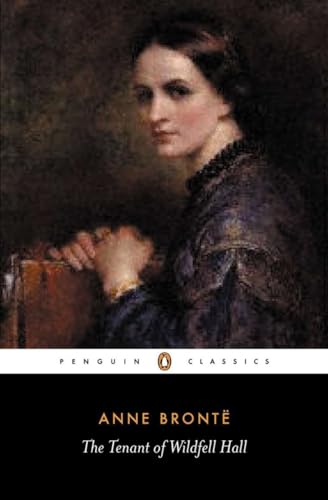
Gilbert Markham is deeply intrigued by Helen Graham, a beautiful and secretive young woman who has moved into nearby Wildfell Hall with her young son. He is quick to offer Helen his friendship, but when her reclusive behaviour becomes the subject of local gossip and speculation, Gilbert begins to wonder whether his trust in her has been misplaced. It is only when she allows Gilbert to read her diary that the truth is revealed and the shocking details of the disastrous marriage she has left behind emerge. Told with great immediacy, combined with wit and irony, The Tenant of Wildfell Hall is a powerful depiction of a woman's fight for domestic independence and creative freedom.
In her introduction Stevie Davies discusses The Tenant of Wildfell Hall as feminist testament, inspired by Anne Brontë's experiences as a governess and by the death of her brother Branwell Brontë, and examines the novel's language, biblical references and narrative styles.
Edited with an introduction and notes by Stevie Davis
Die Inhaltsangabe kann sich auf eine andere Ausgabe dieses Titels beziehen.
Über die Autorin bzw. den Autor
Anne Brontë was born in 1820, the youngest of the Brontë family. She was educated at home in the Yorkshire village of Howarth, and later held two positions as a governess, difficult experiences which inspired her first novel, Agnes Grey, in 1847. This was followed by The Tenant of Wildfell Hall in 1848. Anne died of tuberculosis in 1849, aged twenty-nine.
Von der hinteren Coverseite
The mysterious new tenant of Wildfell Hall is a strong-minded woman who keeps her own counsel. Helen 'Graham' - exiled with her child to the desolate moorland mansion, adopting an assumed name and earning her living as a painter - has returned to Wildfell Hall in flight from a disastrous marriage. Narrated by her neighbour Gilbert Markham, and in the pages of her own diary, the novel portrays Helen's eloquent struggle for independence at a time when the law and society defined a married woman as her husband's property.
Auszug. © Genehmigter Nachdruck. Alle Rechte vorbehalten.
The Tenant of Wildfell Hall
By Anne BrontePenguin Books
Copyright © 1996 Anne BronteAll right reserved.
ISBN: 0140434747
Chapter One
You must go back with me to the autumn of 1827.
My father, as you know, was a sort of gentleman farmer in ?shire; andI, by his express desire, succeeded him in the same quiet occupation,not very willingly, for ambition urged me to higher aims, andself-conceit assured me that, in disregarding its voice, I was buryingmy talent in the earth, and hiding my light under a bushel. My motherhad done her utmost to persuade me that I was capable of greatachievements; but my father, who thought ambition was the surest road toruin, and change but another word for destruction, would listen to noscheme for bettering either my own condition or that of my fellowmortals. He assured me it was all rubbish, and exhorted me, with hisdying breath, to continue in the good old way, to follow his steps, andthose of his father before him, and let my highest ambition be, to walkhonestly through the world, looking neither to the right hand nor to theleft, and to transmit the paternal acres to my children in, at least, asflourishing a condition as he left them to me.
"Well! ? an honest and industrious farmer is one of the most usefulmembers of society; and if I devote my talents to the cultivation of myfarm, and the improvement of agriculture in general, I shall therebybenefit, not only my own immediate connections and dependants, but, insome degree, mankind at large: hence I shall not have lived in vain."
With such reflections as these, I was endeavouring to console myself, asI plodded home from the fields, one cold, damp, cloudy evening towardsthe close of October. But the gleam of a bright red fire through theparlour window had more effect in cheering my spirits, and rebuking mythankless repinings, than all the sage reflections and good resolutionsI had forced my mind to frame; for I was young then, remember? onlyfour-and-twenty ? and had not acquired half the rule over my own spiritthat I now possess ? trifling as that may be.
However, that haven of bliss must not be entered till I had exchanged mymiry boots for a clean pair of shoes, and my rough surtout for arespectable coat, and made myself generally presentable before decentsociety; for my mother, with all her kindness, was vastly particular oncertain points.
In ascending to my room, I was met upon the stairs by a smart, prettygirl of nineteen, with a tidy, dumpy figure, a round face, bright,blooming cheeks, glossy, clustering curls, and little merry brown eyes.I need not tell you this was my sister Rose. She is, I know, a comelymatron still, and, doubtless, no less lovely ? in your eyes ? than onthe happy day you first beheld her. Nothing told me then that she, a fewyears hence, would be the wife of one entirely unknown to me as yet, butdestined, hereafter, to become a closer friend than even herself, moreintimate than that unmannerly lad of seventeen, by whom I was collaredin the passage, on coming down, and well-nigh jerked off my equilibrium,and who, in correction for his impudence, received a resounding whackover the sconce, which, however, sustained no serious injury from theinfliction; as, besides being more than commonly thick, it was protectedby a redundant shock of short, reddish curls, that my mother calledauburn.
On entering the parlour, we found that honoured lady seated in herarm-chair at the fireside, working away at her knitting, according toher usual custom, when she had nothing else to do. She had swept thehearth, and made a bright blazing fire for our reception; the servanthad just brought in the tea-tray; and Rose was producing the sugar-basinand tea-caddy from the cupboard in the black oak sideboard, that shonelike polished ebony in the cheerful parlour twilight.
"Well! here they both are," cried my mother, looking round upon uswithout retarding the motion of her nimble fingers and glitteringneedles. "Now shut the door, and come to the fire, while Rose gets thetea ready; I'm sure you must be starved, ? and tell me what you've beenabout all day. I like to know what my children have been about."
"I've been breaking in the grey colt ? no easy business that?directing the ploughing of the last wheat stubble ? for the plough-boyhas not the sense to direct himself ? and carrying out a plan for theextensive and efficient draining of the low meadowlands."
"That's my brave boy! ? and Fergus, what have you been doing?"
"Badger-baiting."
And here he proceeded to give a particular account of his sport, and therespective traits of prowess evinced by the badger and the dogs; mymother pretending to listen with deep attention, and watching hisanimated countenance with a degree of maternal admiration I thoughthighly disproportioned to its object.
"It's time you should be doing something else, Fergus," said I, as soonas a momentary pause in his narration allowed me to get in a word.
"What can I do?" replied he; "my mother won't let me go to sea or enterthe army; and I'm determined to do nothing else ? except make myselfsuch a nuisance to you all that you will be thankful to get rid of me onany terms."
Our parent soothingly stroked his stiff, short curls. He growled, andtried to look sulky, and then we all took our seats at the table inobedience to the thrice-repeated summons of Rose.
"Now take your tea," said she; "and I'll tell you what I've been doing.I've been to call on the Wilsons; and it's a thousand pities you didn'tgo with me, Gilbert, for Eliza Millward was there!"
"Well! what of her?"
"Oh, nothing! ? I'm not going to tell you about her; ? only that she'sa nice, amusing little thing, when she is in a merry humour, and Ishouldn't mind calling her?"
"Hush, hush, my dear! your brother has no such idea!" whispered mymother earnestly, holding up her finger.
"Well," resumed Rose; "I was going to tell you an important piece ofnews I heard there ? I've been bursting with it ever since. You know itwas reported a month ago that somebody was going to take Wildfell Hall? and ? what do you think? It has actually been inhabited above aweek! ? and we never knew!"
"Impossible!" cried my mother.
"Preposterous!!!" shrieked Fergus.
"It has indeed! ? and by a single lady!"
"Good gracious, my dear, the place is in ruins!"
"She has had two or three rooms made habitable; and there she lives, allalone ? except an old woman for a servant!"
"Oh, dear! ? that spoils it ? I'd hoped she was a witch," observedFergus, while carving his inch-thick slice of bread and butter.
"Nonsense, Fergus! But isn't it strange, mamma?"
"Strange! I can hardly believe it."
"But you may believe it; for Jane Wilson has seen her. She went with hermother, who, of course, when she heard of a stranger being in theneighbourhood, would be on pins and needles till she had seen her andgot all she could out of her. She is called Mrs. Graham, and she is inmourning ? not widow's weeds, but slightish mourning ? and she isquite young, they say ? not above five or six and twenty ? but soreserved! They tried all they could to find out who she was, and whereshe came from, and all about her, but neither Mrs. Wilson, with herpertinacious and impertinent home-thrusts, nor Miss Wilson, with herskilful maneuvering, could manage to elicit a single satisfactoryanswer, or even a casual remark, or chance expression calculated toallay their curiosity, or throw the faintest ray of light upon herhistory, circumstances, or connections. Moreover, she was barely civilto them, and evidently better pleased to say 'good-bye' than 'how do youdo.' But Eliza Millward says her father intends to call upon her soon,to...
„Über diesen Titel“ kann sich auf eine andere Ausgabe dieses Titels beziehen.
Weitere beliebte Ausgaben desselben Titels

Suchergebnisse für The Tenant of Wildfell Hall (Penguin Classics)

Foto des Verkäufers
The Tenant of Wildfell Hall (Penguin Classics)
Anbieter: Zoom Books Company, Lynden, WA, USA
Verkäuferbewertung 5 von 5 Sternen

Zustand: very_good. Book is in very good condition and may include minimal underlining highlighting. The book can also include "From the library of" labels. May not contain miscellaneous items toys, dvds, etc. . We offer 100% money back guarantee and 24 7 customer service. Bestandsnummer des Verkäufers ZBV.0140434747.VG
Gebraucht kaufen
EUR 6,78
Versand gratis
Versand innerhalb von USA
Versand innerhalb von USA
Anzahl: 1 verfügbar
Beispielbild für diese ISBN
The Tenant of Wildfell Hall (Penguin Classics)
Verlag:
Penguin Classics (edition Reprint), 1996
ISBN 10: 0140434747
ISBN 13: 9780140434743
Gebraucht
Paperback
Anbieter: BooksRun, Philadelphia, PA, USA
Verkäuferbewertung 5 von 5 Sternen
Paperback. Zustand: Fair. Reprint. The item might be beaten up but readable. May contain markings or highlighting, as well as stains, bent corners, or any other major defect, but the text is not obscured in any way. Bestandsnummer des Verkäufers 0140434747-7-1
Gebraucht kaufen
EUR 7,14
Versand gratis
Versand innerhalb von USA
Versand innerhalb von USA
Anzahl: 2 verfügbar
Foto des Verkäufers
The Tenant of Wildfell Hall (Penguin Classics)
Anbieter: Greenworld Books, Arlington, TX, USA
Verkäuferbewertung 5 von 5 Sternen
Zustand: very_good. Fast Free Shipping â" Very Good condition book with a firm cover and clean pages. Shows normal use and some light wear or limited notes markings. A solid, nice copy to enjoy. Bestandsnummer des Verkäufers GWV.0140434747.VG
Gebraucht kaufen
EUR 7,48
Versand gratis
Versand innerhalb von USA
Versand innerhalb von USA
Anzahl: 1 verfügbar
Foto des Verkäufers
The Tenant of Wildfell Hall (Penguin Classics)
Anbieter: 2nd Life Books, Burlington, NJ, USA
Verkäuferbewertung 5 von 5 Sternen
Zustand: very_good. Used book in very good condition. May have some minor wear. May NOT include discs, or access code or other supplemental material. Ships directly from Amazon and is eligible for Prime or super saver FREE shipping. We ship Monday-Saturday and respond to inquiries within 24 hours. Bestandsnummer des Verkäufers BXM.D76V
Gebraucht kaufen
EUR 4,38
EUR 3,51 Versand
Versand innerhalb von USA
Versand innerhalb von USA
Anzahl: 1 verfügbar
Foto des Verkäufers
The Tenant of Wildfell Hall (Penguin Classics)
Anbieter: -OnTimeBooks-, Phoenix, AZ, USA
Verkäuferbewertung 5 von 5 Sternen
Zustand: very_good. Gently read. May have name of previous ownership, or ex-library edition. Binding tight; spine straight and smooth, with no creasing; covers clean and crisp. Minimal signs of handling or shelving. 100% GUARANTEE! Shipped with delivery confirmation, if you're not satisfied with purchase please return item! Ships USPS Media Mail. Bestandsnummer des Verkäufers OTV.0140434747.VG
Gebraucht kaufen
EUR 7,91
Versand gratis
Versand innerhalb von USA
Versand innerhalb von USA
Anzahl: 1 verfügbar
Beispielbild für diese ISBN
The Tenant of Wildfell Hall (Penguin Classics)
Anbieter: Indiana Book Company, Marion, IN, USA
Verkäuferbewertung 5 von 5 Sternen
Zustand: Good. Ships same or next business day with delivery confirmation. Good condition. May or may not contain highlighting. Expedited shipping available. Bestandsnummer des Verkäufers 1000011382516-1430
Gebraucht kaufen
EUR 5,20
EUR 2,85 Versand
Versand innerhalb von USA
Versand innerhalb von USA
Anzahl: 3 verfügbar
Beispielbild für diese ISBN
The Tenant of Wildfell Hall (Penguin Classics)
Verlag:
Penguin Classics (edition Reprint), 1996
ISBN 10: 0140434747
ISBN 13: 9780140434743
Gebraucht
Paperback
Anbieter: BooksRun, Philadelphia, PA, USA
Verkäuferbewertung 5 von 5 Sternen
Paperback. Zustand: Very Good. Reprint. It's a well-cared-for item that has seen limited use. The item may show minor signs of wear. All the text is legible, with all pages included. It may have slight markings and/or highlighting. Bestandsnummer des Verkäufers 0140434747-8-1
Gebraucht kaufen
EUR 8,38
Versand gratis
Versand innerhalb von USA
Versand innerhalb von USA
Anzahl: 1 verfügbar
Foto des Verkäufers
The Tenant of Wildfell Hall (Penguin Classics)
Anbieter: Zoom Books East, Glendale Heights, IL, USA
Verkäuferbewertung 5 von 5 Sternen
Zustand: very_good. Book is in very good condition and may include minimal underlining highlighting. The book can also include "From the library of" labels. May not contain miscellaneous items toys, dvds, etc. . We offer 100% money back guarantee and 24 7 customer service. Bestandsnummer des Verkäufers ZEV.0140434747.VG
Gebraucht kaufen
EUR 8,92
Versand gratis
Versand innerhalb von USA
Versand innerhalb von USA
Anzahl: 1 verfügbar
Beispielbild für diese ISBN
Tenant of Wildfell Hall (Revised)
Verlag:
Penguin Group June 1996, 1996
ISBN 10: 0140434747
ISBN 13: 9780140434743
Gebraucht
Trade Paperback
Anbieter: The Bibliophile, Dover, OH, USA
Verkäuferbewertung 5 von 5 Sternen
Trade Paperback. Zustand: Used - Good. Bestandsnummer des Verkäufers 45073
Gebraucht kaufen
EUR 6,45
EUR 3,95 Versand
Versand innerhalb von USA
Versand innerhalb von USA
Anzahl: 1 verfügbar
Foto des Verkäufers
The Tenant of Wildfell Hall (Penguin Classics)
Anbieter: MERS Goodwill, Saint Louis, MO, USA
Verkäuferbewertung 5 von 5 Sternen
Zustand: acceptable. Used - Acceptable: All pages and the cover are intact, but shrink wrap, dust covers, or boxed set case may be missing. Pages may include limited notes, highlighting, or minor water damage but the text is readable. Pages may include limited notes and highlighting, but the text cannot be obscured or unreadable. Any access codes or passwords originally included with the book may be expired, used or no longer valid. Image is stock photo and cover art edition may be different than pictured. Bestandsnummer des Verkäufers MERV.0140434747.A
Gebraucht kaufen
EUR 8,15
EUR 3,51 Versand
Versand innerhalb von USA
Versand innerhalb von USA
Anzahl: 1 verfügbar