
Verwandte Artikel zu The Charterhouse of Parma (Penguin Classics)
Inhaltsangabe
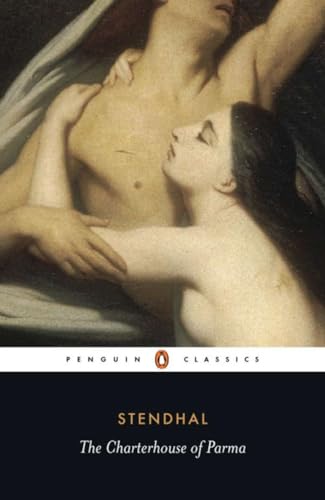
Headstrong and naïve, the young Italian aristocrat Fabrizio del Dongo is determined to defy the wrath of his right-wing father and go to war to fight for Napoleon. He stumbles on the Battle of Waterloo, ill-prepared, yet filled with enthusiasm for war and glory. Finally heeding advice, Fabrizio sneaks back to Milan, only to become embroiled in a series of amorous exploits, fuelled by his impetuous nature and the political chicanery of his aunt Gina and her wily lover. Judged by Balzac to be the most important French novel of its time, The Charterhouse of Parma is a compelling novel of extravagance and daring, blending the intrigues of the Italian court with the romance and excitement of youth.
Die Inhaltsangabe kann sich auf eine andere Ausgabe dieses Titels beziehen.
Über die Autorin bzw. den Autor
Henri Marie Beyle (1783-1842) had a post in the Ministry of War and followed Napoleon's campaigns before retiring to Italy. Here, as 'Stendhal', he began writing on art, music and travel. He later wrote novels, literary criticism, and various biographical and autobiographical works.
John Sturrock is Consulting Editor for the London Review of Books, a literary critic, travel writer, and translator. His translations for Penguin include novels by Stendhal and Hugo, one volume of the new Proust translation: Sodom and Gomorrah, and most recently (with Jeremy Harding) a volume of Rimbaud's poems and letters (0140448020).
Von der hinteren Coverseite
The Charterhouse of Parma (1839) is a compelling novel of passion and daring, of prisons and heroic escape, of political chicanery and sublime personal courage. Set at the beginning of the nineteenth century, amidst the golden landscapes of northern Italy, it traces the joyous but ill-starred amorous exploits of a handsome young aristocrat called Fabrice del Dongo, and of his incomparable aunt Gina, her suitor Prime Minister Mosca, and Clelia, a heroine of ethereal beauty and earthly passion. The great achievement of The Charterhouse of Parma is to conjure up the excitement and romance of youth while never losing sight of the harsh realities which beset the pursuit of happiness, nor the humour and patient irony with which these must be viewed. This new translation captures Stendhal's narrative verve, while the Introduction explores the novel's reception and the reasons for its enduring popularity and power.
Auszug. © Genehmigter Nachdruck. Alle Rechte vorbehalten.
Milan in 1796
On May 15, 1796, General Bonaparte entered Milan at the head of that young army which had lately crossed the Lodi bridge and taught the world that after so many centuries Caesar and Alexander had a successor. The miracles of valor and genius Italy had witnessed in a few months wakened a slumbering nation: just eight days before the French arrived, the Milanese still regarded them as no more than a band of brigands who habitually fled before the troops of His Imperial and Royal Majesty: at least so they were told three times a week by a little news-sheet the size of a man's hand, printed on dirty paper.
In the Middle Ages, republican Lombards had displayed a valor equal to that of the French, and were entitled to see their city utterly razed by the German emperors. Since they had become loyal subjects, their chief concern was to print sonnets on tiny pink taffeta handkerchiefs for the weddings of a young lady belonging to some rich or noble family. Two or three years after that great event in her life, the same young lady would take a cavaliere servente: sometimes the name of the cicisbeo chosen by the husband's family occupied an honorable place in the marriage contract. It was a far cry from such effeminate manners to the deep emotions produced by the French army's unexpected arrival. Soon new and impassioned standards of behavior were observed. On May 15, 1796, a whole nation realized that whatever it had hitherto respected was sovereignly absurd and on occasion odious. The departure of the last Austrian regiment marked the fall of the old ideas: risking one's life became fashionable; happiness depended, after centuries of insipidity, upon loving one's country with a passion, upon seeking out heroic actions to perform. People had been plunged into darkness by the persistence of the jealous despotism of Charles V and Philip II; they pulled down their statues and were forthwith flooded with light. For the last fifty years, even as the Encyclopédie and Voltaire were exploding in France, the monks had adjured the good people of Milan that learning to read, or learning anything at all, was a worthless effort, and that by promptly paying one's tithe to the curé and by offering him a faithful account of all one's petty sins, a fine place in paradise was virtually assured. To complete the enfeeblement of this people once so argumentative and so bold, Austria had sold them cheap the privilege of not supplying recruits to her army.
In 1796 the Milanese army consisted of twenty-four wretches in red uniforms who guarded the city with the help of four magnificent regiments of Hungarian grenadiers. Moral freedom was extreme, but passion extremely rare; moreover, aside from the nuisance of having to tell one's curé everything (or be ruined even in this world), the good people of Milan were still subject to certain minor monarchical restrictions which continued to vex them. For instance the Archduke, who resided in Milan and governed in the name of his cousin the Emperor, had conceived the lucrative notion of speculating in wheat. Consequently, no peasant could sell his crop until His Highness's granaries were full.
In May 1796, three days after the entry of the French, a young miniaturist named Gros, slightly mad and subsequently famous, arrived with the army and overheard talk in the great Caffè dei Servi (fashionable at the time) of the exploits of the Archduke, who happened to be extremely fat. Snatching up the list of ices stamped on a sheet of coarse yellow paper, he drew on the back a French soldier thrusting his bayonet into the obese Archduke's belly: instead of blood out poured an incredible quantity of grain. The idea of caricature or cartoon was unknown in this nation of wary despotism. The sketch Gros had left on the table of the Caffé dei Servi seemed a miracle from Heaven; it was printed overnight, and twenty thousand copies were sold the next day.
That same day, notices were posted of a war-tax of six million levied for the needs of the French army, which, having just won six battles and conquered twenty provinces, lacked only shoes, jackets, caps, and trousers.
So much pleasure and happiness poured into Lombardy with these Frenchmen, however ill-dressed, that only the priests and certain noblemen remarked this burden of six million, soon followed by many others. These French soldiers laughed and sang all day long; most were not yet twenty-five, and at twenty-eight their commanding general was accounted the oldest man in his army. Such youth, such gaiety, such free and easy ways offered a fine answer to the furious imprecations of the monks who for six months had preached that the French were monsters under orders, on pain of death, to burn down everything and cut off everyone's head; to which end, each regiment marched with a guillotine in its front ranks.
Throughout the countryside French soldiers could be seen dandling babies at farmhouse doors, and almost every evening some drummer scraping his fiddle would improvise a ball. Since French contredanses were far too intricate for the soldiers, who scarcely knew them themselves, to teach the local girls, it was the latter who showed the young Frenchmen the monferrina, the saltarello, and other Italian dances.
The officers had been billeted on the rich as often as possible; they were in great need of recuperation. For instance, a certain Lieutenant Robert was assigned to the Marchesa del Dongo's palace, which this unscrupulous young conscript entered with one scudo (worth six francs) as his sole wealth, having just received his pay at Piacenza. After crossing the Lodi bridge, he had stripped a handsome Austrian officer killed by a cannonball of a magnificent pair of brand-new nankeen trousers, and never had a garment been so timely. His officer's epaulettes were of wool, and the ragged fabric of his jacket was patched with the lining from its sleeves to hold the pieces together; sadder still, the soles of his shoes consisted of scraps of visors, similarly gleaned from the battlefield the other side of Lodi bridge. These extempore soles were quite visibly tied to the uppers of his shoes with bits of string, so that when the major-domo appeared in Lieutenant Robert's bedroom to invite him to dine with the Signora Marchesa, the officer was mortally embarrassed. He and his orderly spent the two hours until this fatal dinner attempting to patch the jacket and to conceal the lamentable pieces of string with black ink. At last the dreadful moment arrived. "I never felt so uncomfortable in all my life," Lieutenant Robert told me; "the ladies expected me to terrify them, and I was trembling much more than they. I glanced at my shoes and could not imagine how to walk gracefully. The Marchesa del Dongo," he added, "was then in the prime of her beauty: you have seen her yourself--those fine eyes of an angelic sweetness, that lovely dark-blond hair which so perfectly framed the oval of her charming face. In my bedroom hung a Salomé after da Vinci which seemed her portrait. Thank God I was so overcome by this divine beauty that I forgot how I was dressed. For two years I had seen nothing but ugliness and misery in the mountains around Genoa: I ventured to mention my rapture to her.
"But I had too much sense to waste my time on compliments. Even as I was turning my phrases, I noticed that the marble dining-hall was filled with lackeys and footmen dressed in what then seemed to me the height of magnificence. You realize, these wretches wore not only fine shoes, but silver buckles! Out of the corner of my eye I saw them all staring stupidly at my jacket, and perhaps at my shoes as well, which stabbed me to the heart. I might have terrorized every one of them with a word, but how to put them in their place without running the risk of alarming the ladies? For the...
„Über diesen Titel“ kann sich auf eine andere Ausgabe dieses Titels beziehen.
Suchergebnisse für The Charterhouse of Parma (Penguin Classics)

Foto des Verkäufers
The Charterhouse of Parma (Penguin Classics)
Anbieter: Greenworld Books, Arlington, TX, USA
Verkäuferbewertung 5 von 5 Sternen

Zustand: very_good. Fast Free Shipping â" Very Good condition book with a firm cover and clean pages. Shows normal use and some light wear or limited notes markings. A solid, nice copy to enjoy. Bestandsnummer des Verkäufers GWV.0140449663.VG
Gebraucht kaufen
EUR 6,19
Versand gratis
Versand innerhalb von USA
Versand innerhalb von USA
Anzahl: 1 verfügbar
Beispielbild für diese ISBN
The Charterhouse of Parma
Anbieter: ThriftBooks-Dallas, Dallas, TX, USA
Verkäuferbewertung 5 von 5 Sternen
Paperback. Zustand: Good. No Jacket. Pages can have notes/highlighting. Spine may show signs of wear. ~ ThriftBooks: Read More, Spend Less. Bestandsnummer des Verkäufers G0140449663I3N00
Gebraucht kaufen
EUR 6,87
Versand gratis
Versand innerhalb von USA
Versand innerhalb von USA
Anzahl: 1 verfügbar
Foto des Verkäufers
Charterhouse of Parma
Anbieter: GreatBookPrices, Columbia, MD, USA
Verkäuferbewertung 5 von 5 Sternen
Zustand: good. May show signs of wear, highlighting, writing, and previous use. This item may be a former library book with typical markings. No guarantee on products that contain supplements Your satisfaction is 100% guaranteed. Twenty-five year bookseller with shipments to over fifty million happy customers. Bestandsnummer des Verkäufers 4230826-5
Gebraucht kaufen
EUR 7,68
EUR 2,36 Versand
Versand innerhalb von USA
Versand innerhalb von USA
Anzahl: 4 verfügbar
Beispielbild für diese ISBN
The Charterhouse of Parma
Verlag:
Penguin Publishing Group, 2007
ISBN 10: 0140449663
ISBN 13: 9780140449662
Gebraucht
Softcover
Anbieter: Better World Books, Mishawaka, IN, USA
Verkäuferbewertung 5 von 5 Sternen
Zustand: Good. Former library copy. Pages intact with minimal writing/highlighting. The binding may be loose and creased. Dust jackets/supplements are not included. Includes library markings. Stock photo provided. Product includes identifying sticker. Better World Books: Buy Books. Do Good. Bestandsnummer des Verkäufers GRP15315310
Gebraucht kaufen
EUR 10,11
Versand gratis
Versand innerhalb von USA
Versand innerhalb von USA
Anzahl: 1 verfügbar
Beispielbild für diese ISBN
The Charterhouse of Parma (Penguin Classics)
Anbieter: One Planet Books, Columbia, MO, USA
Verkäuferbewertung 4 von 5 Sternen

paperback. Zustand: Good. Revised. Ships in a BOX from Central Missouri! May not include working access code. Will not include dust jacket. Has used sticker(s) and some writing and/or highlighting. UPS shipping for most packages, (Priority Mail for AK/HI/APO/PO Boxes). Bestandsnummer des Verkäufers 000858546U
Gebraucht kaufen
EUR 6,88
EUR 3,56 Versand
Versand innerhalb von USA
Versand innerhalb von USA
Anzahl: 4 verfügbar
Foto des Verkäufers
Charterhouse of Parma
Anbieter: GreatBookPrices, Columbia, MD, USA
Verkäuferbewertung 5 von 5 Sternen
Zustand: New. Bestandsnummer des Verkäufers 4230826-n
Neu kaufen
EUR 10,53
EUR 2,36 Versand
Versand innerhalb von USA
Versand innerhalb von USA
Anzahl: 3 verfügbar
Beispielbild für diese ISBN
The Charterhouse of Parma Format: Paperback
Anbieter: INDOO, Avenel, NJ, USA
Verkäuferbewertung 5 von 5 Sternen
Zustand: New. Bestandsnummer des Verkäufers 9780140449662
Neu kaufen
EUR 12,97
Versand gratis
Versand innerhalb von USA
Versand innerhalb von USA
Anzahl: Mehr als 20 verfügbar
Foto des Verkäufers
Charterhouse of Parma
Anbieter: GreatBookPrices, Columbia, MD, USA
Verkäuferbewertung 5 von 5 Sternen
Zustand: As New. Unread book in perfect condition. Bestandsnummer des Verkäufers 4230826
Gebraucht kaufen
EUR 10,63
EUR 2,36 Versand
Versand innerhalb von USA
Versand innerhalb von USA
Anzahl: 3 verfügbar
Foto des Verkäufers
The Charterhouse of Parma (Paperback)
Verlag:
Penguin Books Ltd, London, 2006
ISBN 10: 0140449663
ISBN 13: 9780140449662
Neu
Paperback
Erstausgabe
Anbieter: Grand Eagle Retail, Bensenville, IL, USA
Verkäuferbewertung 5 von 5 Sternen
Paperback. Zustand: new. Paperback. A new translation of Stendhal's masterpiece chronicling the fortunes of Febrice del Dongo at an Italian court in post-Napoleonic France.Headstrong and naive, the young Italian aristocrat Fabrizio del Dongo is determined to defy the wrath of his right-wing father and go to war to fight for Napoleon. He stumbles on the Battle of Waterloo, ill-prepared, yet filled with enthusiasm for war and glory. Finally heeding advice, Fabrizio sneaks back to Milan, only to become embroiled in a series of amorous exploits, fuelled by his impetuous nature and the political chicanery of his aunt Gina and her wily lover. Judged by Balzac to be the most important French novel of its time, The Charterhouse of Parma is a compelling novel of extravagance and daring, blending the intrigues of the Italian court with the romance and excitement of youth. Headstrong and naive, the young Italian aristocrat Fabrizio del Dongo is determined to defy the wrath of his right-wing father and go to war to fight for Napoleon. He stumbles on the Battle of Waterloo, ill-prepared, yet filled with enthusiasm for war and glory. This work blends the intrigues of the Italian court with the excitement of youth. Shipping may be from multiple locations in the US or from the UK, depending on stock availability. Bestandsnummer des Verkäufers 9780140449662
Beispielbild für diese ISBN
The Charterhouse of Parma Format: Paperback
Anbieter: INDOO, Avenel, NJ, USA
Verkäuferbewertung 5 von 5 Sternen
Zustand: As New. Unread copy in mint condition. Bestandsnummer des Verkäufers RH9780140449662
Gebraucht kaufen
EUR 13,07
Versand gratis
Versand innerhalb von USA
Versand innerhalb von USA
Anzahl: Mehr als 20 verfügbar