
Inhaltsangabe
The acclaimed Pelican Shakespeare series edited by A. R. Braunmuller and Stephen Orgel
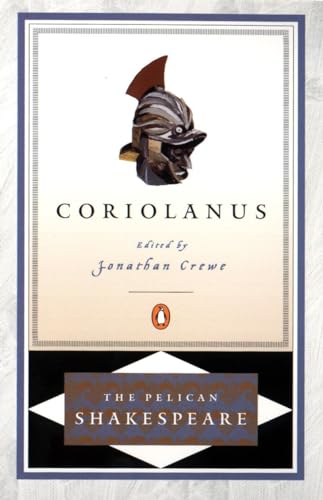
The legendary Pelican Shakespeare series features authoritative and meticulously researched texts paired with scholarship by renowned Shakespeareans. Each book includes an essay on the theatrical world of Shakespeare’s time, an introduction to the individual play, and a detailed note on the text used. Updated by general editors Stephen Orgel and A. R. Braunmuller, these easy-to-read editions incorporate over thirty years of Shakespeare scholarship undertaken since the original series, edited by Alfred Harbage, appeared between 1956 and 1967. With definitive texts and illuminating essays, the Pelican Shakespeare will remain a valued resource for students, teachers, and theater professionals for many years to come.
For more than seventy years, Penguin has been the leading publisher of classic literature in the English-speaking world. With more than 1,700 titles, Penguin Classics represents a global bookshelf of the best works throughout history and across genres and disciplines. Readers trust the series to provide authoritative texts enhanced by introductions and notes by distinguished scholars and contemporary authors, as well as up-to-date translations by award-winning translators.
Die Inhaltsangabe kann sich auf eine andere Ausgabe dieses Titels beziehen.
Über die Autorinnen und Autoren
A. R. Braunmuller is Professor of English and Comparative Literature at the University of California at Los Angeles, where he teaches courses on English and European drama from 1500 to the present. He has written critical volumes on George Peele and George Chapman and has edited plays in both the Oxford (King John) and Cambridge (Macbeth) series of Shakespeare editions. He is also general editor of The New Cambridge Shakespeare.
William Shakespeare was born to John Shakespeare and Mary Arden in late April 1564 in Stratford-upon-Avon. He wrote about 38 plays (the precise number is uncertain), many of which are regarded as the most exceptional works of drama ever produced, including Romeo and Juliet (1595), Henry V (1599), Hamlet (1601), Othello (1604), King Lear (1606) and Macbeth (1606), as well as a collection of 154 sonnets, which number among the most profound and influential love poetry in English. Shakespeare died in Stratford in 1616.
Auszug. © Genehmigter Nachdruck. Alle Rechte vorbehalten.
Act 1 Scene 1 running scene 1
Enter a company of mutinous Citizens, with staves, clubs and other weapons
FIRST CITIZEN Before we proceed any further, hear me speak.
ALL Speak, speak.
FIRST CITIZEN You are all resolved rather to die than to famish?
ALL Resolved, resolved.
FIRST CITIZEN First, you know Caius Martius is chief enemy to the people.
ALL We know't, we know't.
FIRST CITIZEN Let us kill him, and we'll have corn at our own price. Is't a verdict?
ALL No more talking on't: let it be done: away, away.
SECOND CITIZEN One word, good citizens.
FIRST CITIZEN We are accounted poor citizens, the patricians good: what authority surfeits on would relieve us. If they would yield us but the superfluity while it were wholesome, we might guess they relieved us humanely: but they think we are too dear: the leanness that afflicts us, the object of our misery, is as an inventory to particularize their abundance: our sufferance is a gain to them. Let us revenge this with our pikes, ere we become rakes. For the gods know, I speak this in hunger for bread, not in thirst for revenge.
SECOND CITIZEN Would you proceed especially against Caius Martius?
ALL Against him first: he's a very dog to the commonalty.
SECOND CITIZEN Consider you what services he has done for his country?
FIRST CITIZEN Very well, and could be content to give him good report for't, but that he pays himself with being proud.
ALL Nay, but speak not maliciously.
FIRST CITIZEN I say unto you, what he hath done famously, he did it to that end: though soft-conscienced men can be content to say it was for his country, he did it to please his mother and to be partly proud, which he is, even to the altitude of his virtue.
SECOND CITIZEN What he cannot help in his nature, you account a vice in him. You must in no way say he is covetous.
FIRST CITIZEN If I must not, I need not be barren of accusations: he hath faults, with surplus, to tire in repetition.
Shouts within
What shouts are these? The other side o'th'city is risen: why stay we prating here? To th'Capitol!
ALL Come, come.
FIRST CITIZEN Soft, who comes here?
Enter Menenius Agrippa
SECOND CITIZEN Worthy Menenius Agrippa, one that hath always loved the people.
FIRST CITIZEN He's one honest enough: would all the rest were so!
MENENIUS What work's, my countrymen, in hand? Where go you
With bats and clubs? The matter, speak, I pray you.
SECOND CITIZEN Our business is not unknown to th'senate: they have had inkling this fortnight what we intend to do, which now we'll show 'em in deeds. They say poor suitors have strong breaths: they shall know we have strong arms too.
MENENIUS Why, masters, my good friends, mine honest neighbours,
Will you undo yourselves?
SECOND CITIZEN We cannot, sir, we are undone already.
MENENIUS I tell you, friends, most charitable care
Have the patricians of you. For your wants,
Your suffering in this dearth, you may as well
Strike at the heaven with your staves as lift them
Against the Roman state, whose course will on
The way it takes, cracking ten thousand curbs
Of more strong link asunder than can ever
Appear in your impediment. For the dearth,
The gods, not the patricians, make it, and
Your knees to them, not arms, must help. Alack,
You are transported by calamity
Thither where more attends you, and you slander
The helms o'th'state, who care for you like fathers,
When you curse them as enemies.
SECOND CITIZEN Care for us? True, indeed, they ne'er cared for us yet. Suffer us to famish, and their store-houses crammed with grain: make edicts for usury, to support usurers: repeal daily any wholesome act established against the rich, and provide more piercing statutes daily, to chain up and restrain the poor. If the wars eat us not up, they will: and there's all the love they bear us.
MENENIUS Either you must
Confess yourselves wondrous malicious,
Or be accused of folly. I shall tell you
A pretty tale: it may be you have heard it,
But since it serves my purpose, I will venture
To stale't a little more.
SECOND CITIZEN Well, I'll hear it, sir: yet you must not think to fob off our disgrace with a tale: but, an't please you, deliver.
MENENIUS There was a time when all the body's members
Rebelled against the belly, thus accused it:
That only like a gulf it did remain
I'th'midst o'th'body, idle and unactive,
Still cupboarding the viand, never bearing
Like labour with the rest, where th'other instruments
Did see and hear, devise, instruct, walk, feel,
And, mutually participate, did minister
Unto the appetite and affection common
Of the whole body. The belly answered-
SECOND CITIZEN Well, sir, what answer made the belly?
MENENIUS Sir, I shall tell you: with a kind of smile,
Which ne'er came from the lungs, but even thus -
For look you, I may make the belly smile
As well as speak - it tauntingly replied
To th'discontented members, the mutinous parts
That envied his receipt: even so most fitly
As you malign our senators for that
They are not such as you.
SECOND CITIZEN Your belly's answer: what?
The kingly crownèd head, the vigilant eye,
The counsellor heart, the arm our soldier,
Our steed the leg, the tongue our trumpeter,
With other muniments and petty helps
In this our fabric, if that they-
MENENIUS What then?
Fore me, this fellow speaks! What then? What then?
SECOND CITIZEN Should by the cormorant belly be restrained,
Who is the sink o'th'body-
MENENIUS Well, what then?
SECOND CITIZEN The former agents, if they did complain,
What could the belly answer?
MENENIUS I will tell you,
If you'll bestow a small - of what you have little -
Patience awhile, you'st hear the belly's answer.
SECOND CITIZEN You're long about it.
MENENIUS Note me this, good friend:
Your most grave belly was deliberate,
Not rash like his accusers, and thus answered:
'True is it, my incorporate friends,' quoth he,
'That I receive the general food at first
Which you do live upon: and fit it is,
Because I am the storehouse and the shop
Of the whole body. But, if you do remember,
I send it through the rivers of your blood
Even to the court, the heart, to th'seat o'th'brain,
And through the cranks and offices of man,
The strongest nerves and small inferior veins
From me receive that natural competency
Whereby they live. And though that all at once' -
You, my good friends, this says the belly, mark me-
SECOND CITIZEN Ay, sir, well, well.
MENENIUS 'Though all at once cannot
See what I do deliver out to each,
Yet I can make my audit up, that all
From me do back receive the flour of all,
And leave me but the bran.' What say you to't?
SECOND CITIZEN It was an answer: how apply you this?
MENENIUS The senators of Rome are this good belly,
And you the mutinous members: for examine
Their counsels and their cares, digest things rightly
Touching the weal o'th'common, you shall find
No public benefit which you receive
But it proceeds or comes from them to you
And no way from yourselves. What do you think,
You, the great toe of this assembly?
SECOND CITIZEN I the great toe? Why the great toe?
MENENIUS For that, being one o'th'lowest, basest, poorest
Of this most wise rebellion, thou goest foremost:
Thou rascal, that art...
„Über diesen Titel“ kann sich auf eine andere Ausgabe dieses Titels beziehen.
Weitere beliebte Ausgaben desselben Titels

Suchergebnisse für Coriolanus (Revised Edition) (The Pelican Shakespeare)

Beispielbild für diese ISBN
Coriolanus (The Pelican Shakespeare)
Verlag:
Penguin Publishing Group, 1999
ISBN 10: 0140714731
ISBN 13: 9780140714739
Gebraucht
Softcover
Anbieter: World of Books (was SecondSale), Montgomery, IL, USA
Verkäuferbewertung 5 von 5 Sternen

Zustand: Good. Item in good condition and has highlighting/writing on text. Used texts may not contain supplemental items such as CDs, info-trac etc. Bestandsnummer des Verkäufers 00099752644
Gebraucht kaufen
EUR 3,90
Versand gratis
Versand innerhalb von USA
Versand innerhalb von USA
Anzahl: 2 verfügbar
Beispielbild für diese ISBN
Coriolanus (The Pelican Shakespeare)
Verlag:
Penguin Publishing Group, 1999
ISBN 10: 0140714731
ISBN 13: 9780140714739
Gebraucht
Softcover
Anbieter: World of Books (was SecondSale), Montgomery, IL, USA
Verkäuferbewertung 5 von 5 Sternen
Zustand: Acceptable. Item in acceptable condition! Textbooks may not include supplemental items i.e. CDs, access codes etc. Bestandsnummer des Verkäufers 00097649413
Gebraucht kaufen
EUR 3,90
Versand gratis
Versand innerhalb von USA
Versand innerhalb von USA
Anzahl: 2 verfügbar
Foto des Verkäufers
Coriolanus (The Pelican Shakespeare)
Verlag:
Penguin Publishing Group, 1999
ISBN 10: 0140714731
ISBN 13: 9780140714739
Gebraucht
Softcover
Anbieter: Zoom Books East, Glendale Heights, IL, USA
Verkäuferbewertung 5 von 5 Sternen
Zustand: acceptable. Book is in acceptable condition and shows signs of wear. Book may also include underlining highlighting. The book can also include "From the library of" labels. May not contain miscellaneous items toys, dvds, etc. . We offer 100% money back guarantee and 24 7 customer service. Bestandsnummer des Verkäufers ZEV.0140714731.A
Gebraucht kaufen
EUR 3,91
Versand gratis
Versand innerhalb von USA
Versand innerhalb von USA
Anzahl: 1 verfügbar
Beispielbild für diese ISBN
Coriolanus (The Pelican Shakespeare)
Verlag:
Penguin Publishing Group (edition New), 1999
ISBN 10: 0140714731
ISBN 13: 9780140714739
Gebraucht
Paperback
Anbieter: BooksRun, Philadelphia, PA, USA
Verkäuferbewertung 5 von 5 Sternen
Paperback. Zustand: Fair. New. The item might be beaten up but readable. May contain markings or highlighting, as well as stains, bent corners, or any other major defect, but the text is not obscured in any way. Bestandsnummer des Verkäufers 0140714731-7-1
Gebraucht kaufen
EUR 4,29
Versand gratis
Versand innerhalb von USA
Versand innerhalb von USA
Anzahl: 1 verfügbar
Foto des Verkäufers
Coriolanus (The Pelican Shakespeare)
Verlag:
Penguin Publishing Group, 1999
ISBN 10: 0140714731
ISBN 13: 9780140714739
Gebraucht
Softcover
Anbieter: Greenworld Books, Arlington, TX, USA
Verkäuferbewertung 5 von 5 Sternen
Zustand: good. Fast Free Shipping â" Good condition. It may show normal signs of use, such as light writing, highlighting, or library markings, but all pages are intact and the book is fully readable. A solid, complete copy that's ready to enjoy. Bestandsnummer des Verkäufers GWV.0140714731.G
Gebraucht kaufen
EUR 4,36
Versand gratis
Versand innerhalb von USA
Versand innerhalb von USA
Anzahl: 1 verfügbar
Beispielbild für diese ISBN
Coriolanus (The Pelican Shakespeare)
Anbieter: HPB-Diamond, Dallas, TX, USA
Verkäuferbewertung 5 von 5 Sternen
Paperback. Zustand: Very Good. Connecting readers with great books since 1972! Used books may not include companion materials, and may have some shelf wear or limited writing. We ship orders daily and Customer Service is our top priority! Bestandsnummer des Verkäufers S_422025050
Gebraucht kaufen
EUR 2,29
EUR 3,22 Versand
Versand innerhalb von USA
Versand innerhalb von USA
Anzahl: 1 verfügbar
Beispielbild für diese ISBN
Coriolanus (The Pelican Shakespeare)
Anbieter: HPB-Emerald, Dallas, TX, USA
Verkäuferbewertung 5 von 5 Sternen
Paperback. Zustand: Very Good. Connecting readers with great books since 1972! Used books may not include companion materials, and may have some shelf wear or limited writing. We ship orders daily and Customer Service is our top priority! Bestandsnummer des Verkäufers S_442875452
Gebraucht kaufen
EUR 2,29
EUR 3,22 Versand
Versand innerhalb von USA
Versand innerhalb von USA
Anzahl: 1 verfügbar
Beispielbild für diese ISBN
Coriolanus (The Pelican Shakespeare)
Anbieter: Half Price Books Inc., Dallas, TX, USA
Verkäuferbewertung 5 von 5 Sternen
Paperback. Zustand: Very Good. Connecting readers with great books since 1972! Used books may not include companion materials, and may have some shelf wear or limited writing. We ship orders daily and Customer Service is our top priority! Bestandsnummer des Verkäufers S_471537815
Gebraucht kaufen
EUR 2,66
EUR 3,00 Versand
Versand innerhalb von USA
Versand innerhalb von USA
Anzahl: 1 verfügbar
Beispielbild für diese ISBN
Coriolanus (The Pelican Shakespeare)
Anbieter: HPB-Ruby, Dallas, TX, USA
Verkäuferbewertung 5 von 5 Sternen
Paperback. Zustand: Good. Connecting readers with great books since 1972! Used books may not include companion materials, and may have some shelf wear or limited writing. We ship orders daily and Customer Service is our top priority! Bestandsnummer des Verkäufers S_304759903
Gebraucht kaufen
EUR 2,47
EUR 3,22 Versand
Versand innerhalb von USA
Versand innerhalb von USA
Anzahl: 1 verfügbar
Beispielbild für diese ISBN
Coriolanus (The Pelican Shakespeare)
Anbieter: HPB-Ruby, Dallas, TX, USA
Verkäuferbewertung 5 von 5 Sternen
Paperback. Zustand: Very Good. Connecting readers with great books since 1972! Used books may not include companion materials, and may have some shelf wear or limited writing. We ship orders daily and Customer Service is our top priority! Bestandsnummer des Verkäufers S_463229045
Gebraucht kaufen
EUR 2,66
EUR 3,22 Versand
Versand innerhalb von USA
Versand innerhalb von USA
Anzahl: 1 verfügbar