
Inhaltsangabe
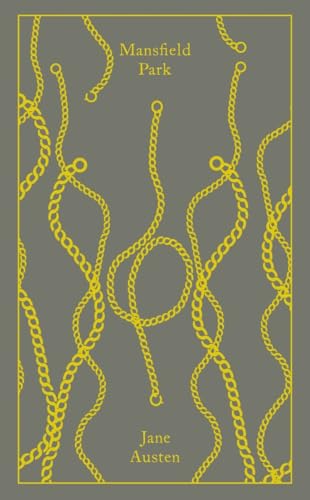
Part of Penguin's beautiful hardback Clothbound Classics series, designed by the award-winning Coralie Bickford-Smith, these delectable and collectible editions are bound in high-quality colourful, tactile cloth with foil stamped into the design.
Taken from the poverty of her parents' home in Portsmouth, Fanny Price is brought up with her rich cousins at Mansfield Park, acutely aware of her humble rank and with her cousin Edmund as her sole ally. During her uncle's absence in Antigua, the Crawford's arrive in the neighbourhood bringing with them the glamour of London life and a reckless taste for flirtation. Mansfield Park is considered Jane Austen's first mature work and, with its quiet heroine and subtle examination of social position and moral integrity, one of her most profound.
Die Inhaltsangabe kann sich auf eine andere Ausgabe dieses Titels beziehen.
Über die Autorin bzw. den Autor
Jane Austen, the daughter of a clergyman, was born in Hampshire in 1775, and later lived in Bath and the village of Chawton. As a child and teenager, she wrote brilliantly witty stories for her family's amusement, as well as a novella, Lady Susan. Her first published novel was Sense and Sensibility, which appeared in 1811 and was soon followed by Pride and Prejudice, Mansfield Park and Emma. Austen died in 1817, and Persuasion and Northanger Abbey were published posthumously in 1818.
Von der hinteren Coverseite
Taken from the poverty of her parents' home in Portsmouth, Fanny Price is brought up with her rich cousins at Mansfield Park, acutely aware of her humble rank and with her cousin Edmund as her sole ally. During her uncle's absence in Antigua, the Crawford's arrive in the neighbourhood bringing with them the glamour of London life.
Auszug. © Genehmigter Nachdruck. Alle Rechte vorbehalten.
Chapter I
About thirty years ago Miss Maria Ward, of Huntingdon,with only seven thousand pounds, had the good luckto captivate Sir Thomas Bertram, of Mansfield Park,in the county of Northampton, and to be thereby raisedto the rank of a baronet's lady, with all the comfortsand consequences of an handsome house and large income.All Huntingdon exclaimed on the greatness of the match,and her uncle, the lawyer, himself, allowed her to be at leastthree thousand pounds short of any equitable claim to it.She had two sisters to be benefited by her elevation;and such of their acquaintance as thought Miss Ward and MissFrances quite as handsome as Miss Maria, did not scrupleto predict their marrying with almost equal advantage.But there certainly are not so many men of large fortunein the world as there are pretty women to deserve them.Miss Ward, at the end of half a dozen years, foundherself obliged to be attached to the Rev. Mr. Norris,a friend of her brother-in-law, with scarcely anyprivate fortune, and Miss Frances fared yet worse.Miss Ward's match, indeed, when it came to the point,was not contemptible: Sir Thomas being happily ableto give his friend an income in the living of Mansfield;and Mr. and Mrs. Norris began their career of conjugalfelicity with very little less than a thousand a year.But Miss Frances married, in the common phrase,to disoblige her family, and by fixing on a lieutenantof marines, without education, fortune, or connexions,did it very thoroughly. She could hardly have madea more untoward choice. Sir Thomas Bertram had interest,which, from principle as well as pride—from a generalwish of doing right, and a desire of seeing all that wereconnected with him in situations of respectability,he would have been glad to exert for the advantageof Lady Bertram's sister; but her husband's professionwas such as no interest could reach; and before hehad time to devise any other method of assisting them,an absolute breach between the sisters had taken place.It was the natural result of the conduct of each party,and such as a very imprudent marriage almost always produces.To save herself from useless remonstrance, Mrs. Price neverwrote to her family on the subject till actually married.Lady Bertram, who was a woman of very tranquil feelings,and a temper remarkably easy and indolent, would havecontented herself with merely giving up her sister,and thinking no more of the matter; but Mrs. Norrishad a spirit of activity, which could not be satisfiedtill she had written a long and angry letter to Fanny,to point out the folly of her conduct, and threatenher with all its possible ill consequences. Mrs. Price,in her turn, was injured and angry; and an answer,which comprehended each sister in its bitterness, and bestowedsuch very disrespectful reflections on the pride of SirThomas as Mrs. Norris could not possibly keep to herself,put an end to all intercourse between them for a considerableperiod.
Their homes were so distant, and the circles in which theymoved so distinct, as almost to preclude the means of everhearing of each other's existence during the elevenfollowing years, or, at least, to make it very wonderfulto Sir Thomas that Mrs. Norris should ever have itin her power to tell them, as she now and then did,in an angry voice, that Fanny had got another child.By the end of eleven years, however, Mrs. Price could nolonger afford to cherish pride or resentment, or to lose oneconnexion that might possibly assist her. A large and stillincreasing family, an husband disabled for active service,but not the less equal to company and good liquor, and avery small income to supply their wants, made her eagerto regain the friends she had so carelessly sacrificed;and she addressed Lady Bertram in a letter which spokeso much contrition and despondence, such a superfluityof children, and such a want of almost everything else,as could not but dispose them all to a reconciliation.She was preparing for her ninth lying-in; and afterbewailing the circumstance, and imploring their countenanceas sponsors to the expected child, she could not concealhow important she felt they might be to the futuremaintenance of the eight already in being. Her eldestwas a boy of ten years old, a fine spirited fellow,who longed to be out in the world; but what could she do?Was there any chance of his being hereafter useful to SirThomas in the concerns of his West Indian property?No situation would be beneath him—or what did Sir Thomasthink of Woolwich? or how could a boy be sent out tothe East?
The letter was not unproductive. It re-establishedpeace and kindness. Sir Thomas sent friendlyadvice and professions, Lady Bertram dispatchedmoney and baby-linen, and Mrs. Norris wrote the letters.
Such were its immediate effects, and within a twelvemontha more important advantage to Mrs. Price resulted from it.Mrs. Norris was often observing to the others that shecould not get her poor sister and her family out ofher head, and that, much as they had all done for her,she seemed to be wanting to do more; and at length shecould not but own it to be her wish that poor Mrs. Priceshould be relieved from the charge and expense of one childentirely out of her great number. "What if they wereamong them to undertake the care of her eldest daughter,a girl now nine years old, of an age to require moreattention than her poor mother could possibly give?The trouble and expense of it to them would be nothing,compared with the benevolence of the action." Lady Bertramagreed with her instantly. "I think we cannot do better,"said she; "let us send for the child."
Sir Thomas could not give so instantaneous and unqualifieda consent. He debated and hesitated;—it was a serious charge;—a girl so brought up must be adequately provided for,or there would be cruelty instead of kindness in takingher from her family. He thought of his own four children—of his two sons—of cousins in love, etc.;—but no soonerhad he deliberately begun to state his objections,than Mrs. Norris interrupted him with a reply to them all,whether stated or not.
"My dear Sir Thomas, I perfectly comprehend you, and dojustice to the generosity and delicacy of your notions,which indeed are quite of a piece with your general conduct;and I entirely agree with you in the main as to the proprietyof doing everything one could by way of providing for achild one had in a manner taken into one's own hands;and I am sure I should be the last person in the world towithhold my mite upon such an occasion. Having no childrenof my own, who should I look to in any little matter Imay ever have to bestow, but the children of my sisters?—and I am sure Mr. Norris is too just—but you know I ama woman of few words and professions. Do not let usbe frightened from a good deed by a trifle. Give a girlan education, and introduce her properly into the world,and ten to one but she has the means of settling well,without farther expense to anybody. A niece of ours,Sir Thomas, I may say, or at least of yours, would notgrow up in this neighbourhood without many advantages.I don't say she would be so handsome as her cousins.I dare say she would not; but she would be introduced intothe society of this country under such very favourablecircumstances as, in all human probability, would get hera creditable establishment. You are thinking of your sons—but do not you know that, of all things upon earth,that is the least likely to happen, brought up as theywould be, always together like brothers and sisters?It is morally impossible. I never knew an instance of it.It is, in fact, the only sure way of providing againstthe connexion. Suppose her a pretty girl, and seen by Tomor Edmund for the first time seven years hence, and I daresay there would be mischief. The very idea of her havingbeen suffered to grow up at a distance from us all in povertyand neglect, would be...
„Über diesen Titel“ kann sich auf eine andere Ausgabe dieses Titels beziehen.
Weitere beliebte Ausgaben desselben Titels

Suchergebnisse für Mansfield Park: (Classics hardcover)

Beispielbild für diese ISBN
Mansfield Park
Anbieter: Hawking Books, Edgewood, TX, USA
Verkäuferbewertung 4 von 5 Sternen

Zustand: Good. Good Condition. **Has lots of writing/highlighting**. Gift inscription inside cover. Five star seller - Buy with confidence! Bestandsnummer des Verkäufers X0141197706X3
Gebraucht kaufen
EUR 6,12
Versand gratis
Versand innerhalb von USA
Versand innerhalb von USA
Anzahl: 2 verfügbar
Beispielbild für diese ISBN
Mansfield Park
Anbieter: ThriftBooks-Dallas, Dallas, TX, USA
Verkäuferbewertung 5 von 5 Sternen

Hardcover. Zustand: Fair. No Jacket. Readable copy. Pages may have considerable notes/highlighting. ~ ThriftBooks: Read More, Spend Less. Bestandsnummer des Verkäufers G0141197706I5N00
Gebraucht kaufen
EUR 6,29
Versand gratis
Versand innerhalb von USA
Versand innerhalb von USA
Anzahl: 1 verfügbar
Beispielbild für diese ISBN
Mansfield Park Classics Hardco
Anbieter: World of Books (was SecondSale), Montgomery, IL, USA
Verkäuferbewertung 5 von 5 Sternen
Zustand: Good. Item in good condition. Textbooks may not include supplemental items i.e. CDs, access codes etc. Bestandsnummer des Verkäufers 00102443926
Gebraucht kaufen
EUR 8,05
Versand gratis
Versand innerhalb von USA
Versand innerhalb von USA
Anzahl: 2 verfügbar
Beispielbild für diese ISBN
Mansfield Park
Anbieter: HPB Inc., Dallas, TX, USA
Verkäuferbewertung 5 von 5 Sternen
Hardcover. Zustand: Very Good. Connecting readers with great books since 1972! Used books may not include companion materials, and may have some shelf wear or limited writing. We ship orders daily and Customer Service is our top priority! Bestandsnummer des Verkäufers S_466175890
Gebraucht kaufen
EUR 7,36
EUR 3,30 Versand
Versand innerhalb von USA
Versand innerhalb von USA
Anzahl: 1 verfügbar
Foto des Verkäufers
Mansfield Park
Anbieter: Greenworld Books, Arlington, TX, USA
Verkäuferbewertung 5 von 5 Sternen
Zustand: like_new. Fast Free Shipping â" Excellent condition book with clean cover and pages. Barely handled, with minimal wear. An outstanding copy, close to enjoy! Bestandsnummer des Verkäufers GWV.0141197706.LN
Gebraucht kaufen
EUR 11,83
Versand gratis
Versand innerhalb von USA
Versand innerhalb von USA
Anzahl: 1 verfügbar
Beispielbild für diese ISBN
Mansfield Park
Anbieter: Half Price Books Inc., Dallas, TX, USA
Verkäuferbewertung 5 von 5 Sternen
hardcover. Zustand: Very Good. Connecting readers with great books since 1972! Used books may not include companion materials, and may have some shelf wear or limited writing. We ship orders daily and Customer Service is our top priority! Bestandsnummer des Verkäufers S_463907101
Gebraucht kaufen
EUR 11,32
EUR 3,07 Versand
Versand innerhalb von USA
Versand innerhalb von USA
Anzahl: 1 verfügbar
Foto des Verkäufers
Mansfield Park: (Classics Hardcover)
Anbieter: BoundlessBookstore, Wallingford, Vereinigtes Königreich
Verkäuferbewertung 5 von 5 Sternen
Zustand: Good. VG condition book without dust jacket. Boards are clean with little wear. Book has clean and bright contents. Bestandsnummer des Verkäufers 9999-99997408655
Gebraucht kaufen
EUR 7,53
EUR 8,10 Versand
Versand von Vereinigtes Königreich nach USA
Versand von Vereinigtes Königreich nach USA
Anzahl: 1 verfügbar
Beispielbild für diese ISBN
Mansfield Park
Anbieter: Lakeside Books, Benton Harbor, MI, USA
Verkäuferbewertung 5 von 5 Sternen
Zustand: New. Brand New! Not Overstocks or Low Quality Book Club Editions! Direct From the Publisher! We're not a giant, faceless warehouse organization! We're a small town bookstore that loves books and loves it's customers! Buy from Lakeside Books! Bestandsnummer des Verkäufers OTF-S-9780141197708
Neu kaufen
EUR 15,59
EUR 3,51 Versand
Versand innerhalb von USA
Versand innerhalb von USA
Anzahl: Mehr als 20 verfügbar
Foto des Verkäufers
Mansfield Park
Anbieter: GreatBookPrices, Columbia, MD, USA
Verkäuferbewertung 5 von 5 Sternen
Zustand: New. Bestandsnummer des Verkäufers 12687452-n
Neu kaufen
EUR 16,80
EUR 2,32 Versand
Versand innerhalb von USA
Versand innerhalb von USA
Anzahl: 14 verfügbar
Foto des Verkäufers
Mansfield Park (Hardback or Cased Book)
Anbieter: BargainBookStores, Grand Rapids, MI, USA
Verkäuferbewertung 5 von 5 Sternen
Hardback or Cased Book. Zustand: New. Mansfield Park. Book. Bestandsnummer des Verkäufers BBS-9780141197708