
Verwandte Artikel zu Emma: Ed. w. an Introd. and Notes by Fiona Stafford...
Inhaltsangabe
'Her masterpiece, mixing the sparkle of her early books with a deep sensibility' Robert McCrum, Observer
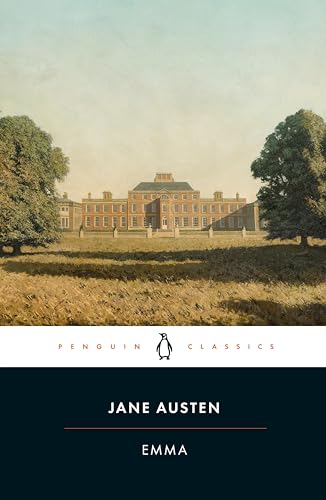
Although described by Jane Austen as a character 'whom no one but myself will much like', the irrepressible Emma Woodhouse is one of her most beloved heroines. Clever, rich and beautiful, she sees no need for marriage, but loves interfering in the romantic lives of others, until her matchmaking plans unravel, with consequences that she never expected. Jane Austen's novel of youthful exuberance and gradual self-knowledge is a brilliant, sparkling comic masterpiece.
Edited with an Introduction by FIONA STAFFORD
Die Inhaltsangabe kann sich auf eine andere Ausgabe dieses Titels beziehen.
Über die Autorin bzw. den Autor
Jane Austen, the daughter of a clergyman, was born in Hampshire in 1775, and later lived in Bath and the village of Chawton. As a child and teenager, she wrote brilliantly witty stories for her family's amusement, as well as a novella, Lady Susan. Her first published novel was Sense and Sensibility, which appeared in 1811 and was soon followed by Pride and Prejudice, Mansfield Park and Emma. Austen died in 1817, and Persuasion and Northanger Abbey were published posthumously in 1818.
Von der hinteren Coverseite
Emma Woodhouse, handsome, clever, rich - and fiercely independent - is perfectly content with her life and sees no need for either love or marriage. Nothing, however, delights her more than interfering in the romantic lives of others.
Auszug. © Genehmigter Nachdruck. Alle Rechte vorbehalten.
Chapter I
Emma Woodhouse, handsome, clever, and rich, with a comfortable homeand happy disposition, seemed to unite some of the best blessingsof existence; and had lived nearly twenty-one years in the worldwith very little to distress or vex her.
She was the youngest of the two daughters of a most affectionate,indulgent father; and had, in consequence of her sister's marriage,been mistress of his house from a very early period. Her motherhad died too long ago for her to have more than an indistinctremembrance of her caresses; and her place had been suppliedby an excellent woman as governess, who had fallen little shortof a mother in affection.
Sixteen years had Miss Taylor been in Mr. Woodhouse's family,less as a governess than a friend, very fond of both daughters,but particularly of Emma. Between them it was more the intimacyof sisters. Even before Miss Taylor had ceased to hold the nominaloffice of governess, the mildness of her temper had hardly allowedher to impose any restraint; and the shadow of authority beingnow long passed away, they had been living together as friend andfriend very mutually attached, and Emma doing just what she liked;highly esteeming Miss Taylor's judgment, but directed chiefly byher own.
The real evils, indeed, of Emma's situation were the power of havingrather too much her own way, and a disposition to think a littletoo well of herself; these were the disadvantages which threatenedalloy to her many enjoyments. The danger, however, was at presentso unperceived, that they did not by any means rank as misfortuneswith her.
Sorrow came—a gentle sorrow—but not at all in the shape of anydisagreeable consciousness.—Miss Taylor married. It was MissTaylor's loss which first brought grief. It was on the wedding-dayof this beloved friend that Emma first sat in mournful thoughtof any continuance. The wedding over, and the bride-people gone,her father and herself were left to dine together, with no prospectof a third to cheer a long evening. Her father composed himselfto sleep after dinner, as usual, and she had then only to sitand think of what she had lost.
The event had every promise of happiness for her friend. Mr. Westonwas a man of unexceptionable character, easy fortune, suitable age,and pleasant manners; and there was some satisfaction in consideringwith what self-denying, generous friendship she had always wishedand promoted the match; but it was a black morning's work for her.The want of Miss Taylor would be felt every hour of every day.She recalled her past kindness—the kindness, the affection of sixteenyears—how she had taught and how she had played with her from fiveyears old—how she had devoted all her powers to attach and amuseher in health—and how nursed her through the various illnessesof childhood. A large debt of gratitude was owing here; but theintercourse of the last seven years, the equal footing and perfectunreserve which had soon followed Isabella's marriage, on theirbeing left to each other, was yet a dearer, tenderer recollection.She had been a friend and companion such as few possessed: intelligent,well-informed, useful, gentle, knowing all the ways of the family,interested in all its concerns, and peculiarly interested in herself,in every pleasure, every scheme of hers—one to whom she could speakevery thought as it arose, and who had such an affection for heras could never find fault.
How was she to bear the change?—It was true that her friend wasgoing only half a mile from them; but Emma was aware that great mustbe the difference between a Mrs. Weston, only half a mile from them,and a Miss Taylor in the house; and with all her advantages,natural and domestic, she was now in great danger of sufferingfrom intellectual solitude. She dearly loved her father, but hewas no companion for her. He could not meet her in conversation,rational or playful.
The evil of the actual disparity in their ages (and Mr. Woodhouse hadnot married early) was much increased by his constitution and habits;for having been a valetudinarian all his life, without activityof mind or body, he was a much older man in ways than in years;and though everywhere beloved for the friendliness of his heartand his amiable temper, his talents could not have recommended himat any time.
Her sister, though comparatively but little removed by matrimony,being settled in London, only sixteen miles off, was much beyondher daily reach; and many a long October and November evening mustbe struggled through at Hartfield, before Christmas brought the nextvisit from Isabella and her husband, and their little children,to fill the house, and give her pleasant society again.
Highbury, the large and populous village, almost amounting to a town,to which Hartfield, in spite of its separate lawn, and shrubberies,and name, did really belong, afforded her no equals. The Woodhouseswere first in consequence there. All looked up to them. She hadmany acquaintance in the place, for her father was universally civil,but not one among them who could be accepted in lieu of MissTaylor for even half a day. It was a melancholy change; and Emmacould not but sigh over it, and wish for impossible things,till her father awoke, and made it necessary to be cheerful.His spirits required support. He was a nervous man, easily depressed;fond of every body that he was used to, and hating to part with them;hating change of every kind. Matrimony, as the origin of change,was always disagreeable; and he was by no means yet reconciledto his own daughter's marrying, nor could ever speak of her butwith compassion, though it had been entirely a match of affection,when he was now obliged to part with Miss Taylor too; and fromhis habits of gentle selfishness, and of being never able tosuppose that other people could feel differently from himself,he was very much disposed to think Miss Taylor had done as sada thing for herself as for them, and would have been a great dealhappier if she had spent all the rest of her life at Hartfield.Emma smiled and chatted as cheerfully as she could, to keep himfrom such thoughts; but when tea came, it was impossible for himnot to say exactly as he had said at dinner,
"Poor Miss Taylor!—I wish she were here again. What a pity itis that Mr. Weston ever thought of her!"
"I cannot agree with you, papa; you know I cannot. Mr. Weston is sucha good-humoured, pleasant, excellent man, that he thoroughly deservesa good wife;—and you would not have had Miss Taylor live with usfor ever, and bear all my odd humours, when she might have a house of her own?"
"A house of her own!—But where is the advantage of a house of her own?This is three times as large.—And you have never any odd humours,my dear."
"How often we shall be going to see them, and they coming to seeus!—We shall be always meeting! We must begin; we must go and paywedding visit very soon."
"My dear, how am I to get so far? Randalls is such a distance.I could not walk half so far."
"No, papa, nobody thought of your walking. We must go in the carriage,to be sure."
"The carriage! But James will not like to put the horses to forsuch a little way;—and where are the poor horses to be while weare paying our visit?"
"They are to be put into Mr. Weston's stable, papa. You know wehave settled all that already. We talked it all over with Mr. Westonlast night. And as for James, you may be very sure he will always likegoing to Randalls, because of his daughter's being housemaid there.I only doubt whether he will ever take us anywhere else. That wasyour doing, papa. You got Hannah that good place. Nobody thoughtof Hannah till you mentioned her—James is so obliged to you!"
"I am very glad I did think of her. It was very lucky, for I wouldnot have had poor...
„Über diesen Titel“ kann sich auf eine andere Ausgabe dieses Titels beziehen.
Suchergebnisse für Emma: Ed. w. an Introd. and Notes by Fiona Stafford...

Foto des Verkäufers
Emma (Penguin Classics)
Anbieter: Dream Books Co., Denver, CO, USA
Verkäuferbewertung 5 von 5 Sternen

Zustand: acceptable. This copy has clearly been enjoyedâ"expect noticeable shelf wear and some minor creases to the cover. Binding is strong, and all pages are legible. May contain previous library markings or stamps. Bestandsnummer des Verkäufers 4EKGY3007O0G_ns
Gebraucht kaufen
EUR 5,07
Versand gratis
Versand innerhalb von USA
Versand innerhalb von USA
Anzahl: 2 verfügbar
Beispielbild für diese ISBN
Emma (Penguin Classics)
Verlag:
Penguin Classics (edition Reissue), 2003
ISBN 10: 0141439580
ISBN 13: 9780141439587
Gebraucht
Paperback
Anbieter: BooksRun, Philadelphia, PA, USA
Verkäuferbewertung 5 von 5 Sternen
Paperback. Zustand: Fair. Reissue. The item might be beaten up but readable. May contain markings or highlighting, as well as stains, bent corners, or any other major defect, but the text is not obscured in any way. Bestandsnummer des Verkäufers 0141439580-7-1
Gebraucht kaufen
EUR 5,29
Versand gratis
Versand innerhalb von USA
Versand innerhalb von USA
Anzahl: 1 verfügbar
Foto des Verkäufers
Emma (Penguin Classics)
Anbieter: ZBK Books, Carlstadt, NJ, USA
Verkäuferbewertung 5 von 5 Sternen
Zustand: good. Fast & Free Shipping â" Good condition. It may show normal signs of use, such as light writing, highlighting, or library markings, but all pages are intact and the book is fully readable. A solid, complete copy that's ready to enjoy. Bestandsnummer des Verkäufers ZWV.0141439580.G
Gebraucht kaufen
EUR 5,73
Versand gratis
Versand innerhalb von USA
Versand innerhalb von USA
Anzahl: 1 verfügbar
Foto des Verkäufers
Emma (Penguin Classics)
Anbieter: Goodwill Books, Hillsboro, OR, USA
Verkäuferbewertung 5 von 5 Sternen
Zustand: acceptable. Fairly worn, but readable and intact. If applicable: Dust jacket, disc or access code may not be included. Bestandsnummer des Verkäufers GICWV.0141439580.A
Gebraucht kaufen
EUR 2,55
EUR 3,55 Versand
Versand innerhalb von USA
Versand innerhalb von USA
Anzahl: 1 verfügbar
Foto des Verkäufers
Emma (Penguin Classics)
Anbieter: Greenworld Books, Arlington, TX, USA
Verkäuferbewertung 5 von 5 Sternen
Zustand: very_good. Fast Free Shipping â" Very Good condition book with a firm cover and clean pages. Shows normal use and some light wear or limited notes markings. A solid, nice copy to enjoy. Bestandsnummer des Verkäufers GWV.0141439580.VG
Gebraucht kaufen
EUR 6,16
Versand gratis
Versand innerhalb von USA
Versand innerhalb von USA
Anzahl: 1 verfügbar
Beispielbild für diese ISBN
Emma
Anbieter: ThriftBooks-Dallas, Dallas, TX, USA
Verkäuferbewertung 5 von 5 Sternen
Paperback. Zustand: Fair. No Jacket. Readable copy. Pages may have considerable notes/highlighting. ~ ThriftBooks: Read More, Spend Less. Bestandsnummer des Verkäufers G0141439580I5N00
Gebraucht kaufen
EUR 6,19
Versand gratis
Versand innerhalb von USA
Versand innerhalb von USA
Anzahl: 8 verfügbar
Beispielbild für diese ISBN
Emma
Anbieter: ThriftBooks-Atlanta, AUSTELL, GA, USA
Verkäuferbewertung 5 von 5 Sternen
Paperback. Zustand: Fair. No Jacket. Readable copy. Pages may have considerable notes/highlighting. ~ ThriftBooks: Read More, Spend Less. Bestandsnummer des Verkäufers G0141439580I5N00
Gebraucht kaufen
EUR 6,19
Versand gratis
Versand innerhalb von USA
Versand innerhalb von USA
Anzahl: 7 verfügbar
Beispielbild für diese ISBN
Emma
Anbieter: ThriftBooks-Reno, Reno, NV, USA
Verkäuferbewertung 5 von 5 Sternen
Paperback. Zustand: Fair. No Jacket. Former library book; Readable copy. Pages may have considerable notes/highlighting. ~ ThriftBooks: Read More, Spend Less. Bestandsnummer des Verkäufers G0141439580I5N10
Gebraucht kaufen
EUR 6,19
Versand gratis
Versand innerhalb von USA
Versand innerhalb von USA
Anzahl: 1 verfügbar
Beispielbild für diese ISBN
Emma
Anbieter: ThriftBooks-Phoenix, Phoenix, AZ, USA
Verkäuferbewertung 5 von 5 Sternen
Paperback. Zustand: Good. No Jacket. Pages can have notes/highlighting. Spine may show signs of wear. ~ ThriftBooks: Read More, Spend Less. Bestandsnummer des Verkäufers G0141439580I3N00
Gebraucht kaufen
EUR 6,19
Versand gratis
Versand innerhalb von USA
Versand innerhalb von USA
Anzahl: 5 verfügbar
Beispielbild für diese ISBN
Emma
Anbieter: ThriftBooks-Atlanta, AUSTELL, GA, USA
Verkäuferbewertung 5 von 5 Sternen
Paperback. Zustand: Fair. No Jacket. Former library book; Readable copy. Pages may have considerable notes/highlighting. ~ ThriftBooks: Read More, Spend Less. Bestandsnummer des Verkäufers G0141439580I5N10
Gebraucht kaufen
EUR 6,19
Versand gratis
Versand innerhalb von USA
Versand innerhalb von USA
Anzahl: 2 verfügbar