
Verwandte Artikel zu Typhoon and Other Stories (Penguin Classics)
Inhaltsangabe
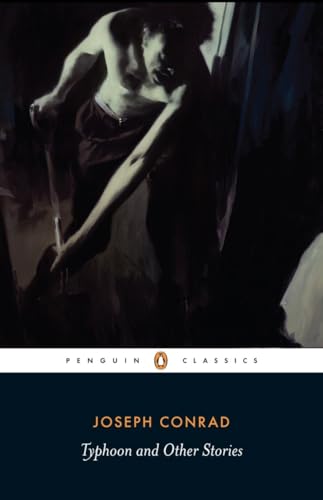
In these four stories, written between 1900 and 1902, Joseph Conrad bid gradual farewell to his adventurous life at sea and began to confront the more daunting complexities of life on land in the twentieth century. In 'Typhoon' Conrad reveals, in the steadfast courage of an undemonstrative captain and the imaginative readiness of his young first mate, the differences between instinct and intelligence in a partnership vital to human survival. 'Falk', the companion sea-story, contrasts, as Conrad once put it, 'common sentimentalism with the frank standpoint of a more or less primitive man', a man with a conscience, however, about the girl he desires. In one of the 'land-stories' Conrad explores the utter isolation of an East European emigrant in England; in the other, the plight of a woman ironically trapped by the unwitting alliance of two retired widowers - each blind in his own way.
Die Inhaltsangabe kann sich auf eine andere Ausgabe dieses Titels beziehen.
Über die Autorin bzw. den Autor
Joseph Conrad (originally Józef Teodor Konrad Nalecz Korzeniowski) was born in the Ukraine in 1857 and grew up under Tsarist autocracy. In 1896 he settled in Kent, where he produced within fifteen years such modern classics as Youth, Heart of Darkness, Lord Jim, Typhoon, Nostromo, The Secret Agent and Under Western Eyes. He continued to write until his death in 1924.
Von der hinteren Coverseite
Four classic stories of the sea by Joseph Conrad: "Typhoon," "Amy Foster," "Falk," and "Tomorrow"
These powerful stories, as Conrad critic Paul Kirschner has observed, present "a chiaroscuro of sea and land life in an alternating rhythm of hope and despair." In "Typhoon," a storm upends a captain's complacency, hurling him and his crew into a terrifying battle with nature. "Amy Foster" tells the story of an Eastern European immigrant shipwrecked off the coast of England, and his ultimately doomed love affair with the dim-witted Amy Foster. In "Falk," the protagonist harbors a terrible secret that inhibits his ability to confront the woman he loves and find the wife he longs for. And in "Tomorrow," the son of a retired sea captain, who has been waiting years for his boy to come home, finally returns, but only because he is destitute and needs money.
Auszug. © Genehmigter Nachdruck. Alle Rechte vorbehalten.
I
Captain MacWhirr, of the steamer Nan-Shan, had a physiognomy that, in the order of material appearances, was the exact counterpart of his mind: it presented no marked characteristics of firmness or stupidity; it had no pronounced characteristics whatever; it was simply ordinary, irresponsive, and unruffled.
The only thing his aspect might have been said to suggest, at times, was bashfulness; because he would sit, in business offices ashore, sunburnt and smiling faintly, with downcast eyes. When he raised them, they were perceived to be direct in their glance and of blue colour. His hair was fair and extremely fine, clasping from temple to temple the bald dome of his skull in a clamp as of fluffy silk. The hair of his face, on the contrary, carroty and flaming, resembled a growth of copper wire clipped short to the line of the lip; while, no matter how close he shaved, fiery metallic gleams passed, when he moved his head, over the surface of his cheeks. He was rather below the medium height, a bit round-shouldered, and so sturdy of limb that his clothes always looked a shade too tight for his arms and legs. As if unable to grasp what is due to the difference of latitudes, he wore a brown bowler hat, a complete suit of a brownish hue, and clumsy black boots. These harbour togs gave to his thick figure an air of stiff and uncouth smartness. A thin silver watch-chain looped his waistcoat, and he never left his ship for the shore without clutching in his powerful, hairy fist an elegant umbrella of the very best quality, but generally unrolled. Young Jukes, the chief mate, attending his commander to the gangway, would sometimes venture to say, with the greatest gentleness, “Allow me, sir,”—and possessing himself of the umbrella deferentially, would elevate the ferule, shake the folds, twirl a neat furl in a jiffy, and hand it back; going through the performance with a face of such portentous gravity, that Mr. Solomon Rout, the chief engineer, smoking his morning cigar over the skylight, would turn away his head in order to hide a smile. “Oh! aye! The blessed gamp. . . . Thank ’ee, Jukes, thank ’ee,” would mutter Captain MacWhirr heartily, without looking up.
Having just enough imagination to carry him through each successive day, and no more, he was tranquilly sure of himself; and from the very same cause he was not in the least conceited. It is your imaginative superior who is touchy, overbearing, and difficult to please; but every ship Captain MacWhirr commanded was the floating abode of harmony and peace. It was, in truth, as impossible for him to take a flight of fancy as it would be for a watchmaker to put together a chronometer with nothing except a two-pound hammer and a whip-saw in the way of tools. Yet the uninteresting lives of men so entirely given to the actuality of the bare existence have their mysterious side. It was impossible in Captain MacWhirr’s case, for instance, to understand what under heaven could have induced that perfectly satisfactory son of a petty grocer in Belfast to run away to sea. And yet he had done that very thing at the age of fifteen. It was enough, when you thought it over, to give you the idea of an immense, potent, and invisible hand thrust into the ant-heap of the earth, laying hold of shoulders, knocking heads together, and setting the unconscious faces of the multitude towards inconceivable goals and in undreamt-of directions.
His father never really forgave him for this undutiful stupidity. “We could have got on without him,” he used to say later on, “but there’s the business. And he an only son too!” His mother wept very much after his disappearance. As it had never occurred to him to leave word behind, he was mourned over for dead till, after eight months, his first letter arrived from Talcahuano. It was short, and contained the statement: “We had very fine weather on our passage out.” But evidently, in the writer’s mind, the only important intelligence was to the effect that his captain had, on the very day of writing, entered him regularly on the ship’s articles as Ordinary Seaman. “Because I can do the work,” he explained. The mother again wept copiously, while the remark, “Tom’s an ass,” expressed the emotions of the father. He was a corpulent man, with a gift for sly chaffing, which to the end of his life he exercised in his intercourse with his son, a little pityingly, as if upon a half-witted person.
MacWhirr’s visits to his home were necessarily rare, and in the course of years he despatched other letters to his parents, informing them of his successive promotions and of his movements upon the vast earth. In these missives could be found sentences like this: “The heat here is very great.” Or: “On Christmas day at 4 p.m. we fell in with some icebergs.” The old people ultimately became acquainted with a good many names of ships, and with the names of the skippers who commanded them—with the names of Scots and English shipowners—with the names of seas, oceans, straits, promontories—with outlandish names of lumber-ports, of rice-ports, of cotton-ports—with the names of islands—with the name of their son’s young woman. She was called Lucy. It did not suggest itself to him to mention whether he thought the name pretty. And then they died.
The great day of MacWhirr’s marriage came in due course, following shortly upon the great day when he got his first command.
All these events had taken place many years before the morning when, in the chart-room of the steamer Nan-Shan, he stood confronted by the fall of a barometer he had no reason to distrust. The fall—taking into account the excellence of the instrument, the time of the year, and the ship’s position on the terrestrial globe8—was of a nature ominously prophetic; but the red face of the man betrayed no sort of inward disturbance. Omens were as nothing to him, and he was unable to discover the message of a prophecy till the fulfilment had brought it home to his very door. “That’s a fall, and no mistake,” he thought. “There must be some uncommonly dirty weather knocking about.”
The Nan-Shan was on her way from the southward to the treaty port of Fu-chau, with some cargo in her lower holds, and two hundred Chinese coolies returning to their village homes in the province of Fo-kien, after a few years of work in various tropical colonies. The morning was fine, the oily sea heaved without a sparkle, and there was a queer white misty patch in the sky like a halo of the sun. The fore-deck, packed with Chinamen, was full of sombre clothing, yellow faces, and pigtails, sprinkled over with a good many naked shoulders, for there was no wind, and the heat was close. The coolies lounged, talked, smoked, or stared over the rail; some, drawing water over the side, sluiced each other; a few slept on hatches, while several small parties of six sat on their heels surrounding iron trays with plates of rice and tiny teacups; and every single Celestial of them was carrying with him all he had in the world—a wooden chest with a ringing lock and brass on the corners, containing the savings of his labours: some clothes of ceremony, sticks of incense, a little opium maybe, bits of nameless rubbish of conventional value, and a small hoard of silver dollars, toiled for in coal lighters, won in gambling-houses or in petty trading, grubbed out of earth, sweated out in mines, on railway lines, in deadly jungle, under heavy burdens—amassed patiently, guarded with care, cherished fiercely.
A cross swell had set in from the direction of Formosa Channel about ten o’clock, without disturbing these passengers much, because the Nan-Shan, with her flat...
„Über diesen Titel“ kann sich auf eine andere Ausgabe dieses Titels beziehen.
Suchergebnisse für Typhoon and Other Stories (Penguin Classics)

Foto des Verkäufers
Typhoon and Other Stories (Penguin Classics)
Anbieter: -OnTimeBooks-, Phoenix, AZ, USA
Verkäuferbewertung 5 von 5 Sternen

Zustand: good. A copy that has been read, remains in good condition. All pages are intact, and the cover is intact. The spine and cover show signs of wear. Pages can include notes and highlighting and show signs of wear, and the copy can include "From the library of" labels or previous owner inscriptions. 100% GUARANTEE! Shipped with delivery confirmation, if you're not satisfied with purchase please return item! Ships via media mail. Bestandsnummer des Verkäufers OTV.014144195X.G
Gebraucht kaufen
EUR 7,73
Versand gratis
Versand innerhalb von USA
Versand innerhalb von USA
Anzahl: 1 verfügbar
Beispielbild für diese ISBN
Typhoon and Other Stories
Anbieter: ThriftBooks-Dallas, Dallas, TX, USA
Verkäuferbewertung 5 von 5 Sternen
Paperback. Zustand: As New. No Jacket. Pages are clean and are not marred by notes or folds of any kind. ~ ThriftBooks: Read More, Spend Less. Bestandsnummer des Verkäufers G014144195XI2N00
Gebraucht kaufen
EUR 8,14
Versand gratis
Versand innerhalb von USA
Versand innerhalb von USA
Anzahl: 1 verfügbar
Beispielbild für diese ISBN
Typhoon and Other Stories
Verlag:
Penguin Publishing Group, 2007
ISBN 10: 014144195X
ISBN 13: 9780141441955
Gebraucht
Softcover
Anbieter: Better World Books: West, Reno, NV, USA
Verkäuferbewertung 5 von 5 Sternen
Zustand: Very Good. Former library copy. Pages intact with possible writing/highlighting. Binding strong with minor wear. Dust jackets/supplements may not be included. Includes library markings. Stock photo provided. Product includes identifying sticker. Better World Books: Buy Books. Do Good. Bestandsnummer des Verkäufers GRP82984206
Gebraucht kaufen
EUR 8,33
Versand gratis
Versand innerhalb von USA
Versand innerhalb von USA
Anzahl: 1 verfügbar
Beispielbild für diese ISBN
Typhoon and Other Stories
Verlag:
Penguin Publishing Group, 2007
ISBN 10: 014144195X
ISBN 13: 9780141441955
Gebraucht
Softcover
Anbieter: Better World Books, Mishawaka, IN, USA
Verkäuferbewertung 5 von 5 Sternen
Zustand: Good. Pages intact with minimal writing/highlighting. The binding may be loose and creased. Dust jackets/supplements are not included. Stock photo provided. Product includes identifying sticker. Better World Books: Buy Books. Do Good. Bestandsnummer des Verkäufers 3128477-6
Gebraucht kaufen
EUR 8,33
Versand gratis
Versand innerhalb von USA
Versand innerhalb von USA
Anzahl: 1 verfügbar
Foto des Verkäufers
Typhoon and Other Stories (Penguin Classics)
Anbieter: Greenworld Books, Arlington, TX, USA
Verkäuferbewertung 5 von 5 Sternen
Zustand: good. Fast Free Shipping â" Good condition. It may show normal signs of use, such as light writing, highlighting, or library markings, but all pages are intact and the book is fully readable. A solid, complete copy that's ready to enjoy. Bestandsnummer des Verkäufers GWV.014144195X.G
Gebraucht kaufen
EUR 8,36
Versand gratis
Versand innerhalb von USA
Versand innerhalb von USA
Anzahl: 1 verfügbar
Foto des Verkäufers
Typhoon and Other Stories
Anbieter: GreatBookPrices, Columbia, MD, USA
Verkäuferbewertung 5 von 5 Sternen
Zustand: New. Bestandsnummer des Verkäufers 5145615-n
Neu kaufen
EUR 10,12
EUR 2,26 Versand
Versand innerhalb von USA
Versand innerhalb von USA
Anzahl: 5 verfügbar
Foto des Verkäufers
Typhoon and Other Stories
Anbieter: Rarewaves USA, HEBRON, KY, USA
Verkäuferbewertung 5 von 5 Sternen
Paperback. Zustand: New. In these four stories, written between 1900 and 1902, Joseph Conrad bid gradual farewell to his adventurous life at sea and began to confront the more daunting complexities of life on land in the twentieth century. In 'Typhoon' Conrad reveals, in the steadfast courage of an undemonstrative captain and the imaginative readiness of his young first mate, the differences between instinct and intelligence in a partnership vital to human survival. 'Falk', the companion sea-story, contrasts, as Conrad once put it, 'common sentimentalism with the frank standpoint of a more or less primitive man', a man with a conscience, however, about the girl he desires. In one of the 'land-stories' Conrad explores the utter isolation of an East European emigrant in England; in the other, the plight of a woman ironically trapped by the unwitting alliance of two retired widowers - each blind in his own way. Bestandsnummer des Verkäufers LU-9780141441955
Foto des Verkäufers
Typhoon and Other Stories
Anbieter: GreatBookPrices, Columbia, MD, USA
Verkäuferbewertung 5 von 5 Sternen
Zustand: As New. Unread book in perfect condition. Bestandsnummer des Verkäufers 5145615
Gebraucht kaufen
EUR 10,72
EUR 2,26 Versand
Versand innerhalb von USA
Versand innerhalb von USA
Anzahl: 5 verfügbar
Beispielbild für diese ISBN
Typhoon and Other Stories Format: Paperback
Anbieter: INDOO, Avenel, NJ, USA
Verkäuferbewertung 5 von 5 Sternen
Zustand: As New. Unread copy in mint condition. Bestandsnummer des Verkäufers RH9780141441955
Gebraucht kaufen
EUR 13,05
Versand gratis
Versand innerhalb von USA
Versand innerhalb von USA
Anzahl: Mehr als 20 verfügbar
Foto des Verkäufers
Typhoon and Other Stories
Anbieter: Rarewaves.com USA, London, LONDO, Vereinigtes Königreich
Verkäuferbewertung 5 von 5 Sternen
Paperback. Zustand: New. In these four stories, written between 1900 and 1902, Joseph Conrad bid gradual farewell to his adventurous life at sea and began to confront the more daunting complexities of life on land in the twentieth century. In 'Typhoon' Conrad reveals, in the steadfast courage of an undemonstrative captain and the imaginative readiness of his young first mate, the differences between instinct and intelligence in a partnership vital to human survival. 'Falk', the companion sea-story, contrasts, as Conrad once put it, 'common sentimentalism with the frank standpoint of a more or less primitive man', a man with a conscience, however, about the girl he desires. In one of the 'land-stories' Conrad explores the utter isolation of an East European emigrant in England; in the other, the plight of a woman ironically trapped by the unwitting alliance of two retired widowers - each blind in his own way. Bestandsnummer des Verkäufers LU-9780141441955
Neu kaufen
EUR 13,06
Versand gratis
Versand von Vereinigtes Königreich nach USA
Versand von Vereinigtes Königreich nach USA
Anzahl: 3 verfügbar