
Verwandte Artikel zu The Friendship Factor: Helping Our Children Navigate...
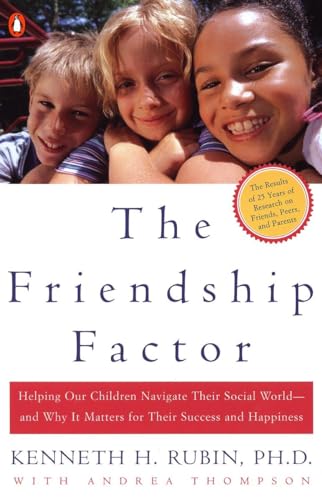
The Friendship Factor: Helping Our Children Navigate Their Social World--and Why It Matters for Their Success and Happiness - Softcover
Inhaltsangabe
Based on twenty-five years of research on friendship, Dr. Kenneth H. Rubin reveals the importance of children's social development to their emotional and intellectual growth—and future success. In The Friendship Factor he uses vivid case studies to differentiate normal development from potential problems and real distress, exploring how to:
Distinguish between a solitary child and a lonely child
Encourage the development of "popularity-as-likability," not "dominance"
Help an easily angered child be less aggressive
Increase a child's social ability with specific skills and strategies
Die Inhaltsangabe kann sich auf eine andere Ausgabe dieses Titels beziehen.
Über die Autorin bzw. den Autor
Kenneth H. Rubin, Ph.D., an internationally renowned researcher in child development, is a Professor in the Department of Human Development and Director of the Center for Children, Relationships, and Culture at the University of Maryland. Featured in publications such as Parents Magazine, Parenting, Redbook, and The New York Times Sunday Magazine, he has also appeared on television shows such as 20/20. Dr. Rubin is the father of two grown children and lives with his wife in north Potomac, Maryland.
Andrea Thompson is a freelance writer.
Auszug. © Genehmigter Nachdruck. Alle Rechte vorbehalten.
You, Your Child, and Your Child's Friends
What Parents Should Know About Children's Social Lives
Once upon a time, a child's world of peers tended to be misunderstood, undervalued, or even largely ignored. A generation or two ago, mothers and fathers didn't worry all that much about their children's social lives. While parents genuinely hoped for the best, as long as a child wasn't getting into fistfights and his school grades stayed decent, the friendships he formed or didn't form were not a matter of great interest. Teachers and other adults who worked with children likewise remained largely silent on the subject of peer relationships.
That picture has changed. Today it's not unusual, for example, for a child to be referred for professional help not only because of failing grades or an inability to pay attention in class, but because of bullying and other aggressive behaviors. The gloves are off. Most parents are attuned to subtler indications of social and emotional difficulty as well-recognizing when a child has few friends or the friendships don't last, or she seems to feel disliked by other kids.
This changing picture is all to the good. From my own experiences in the world of child-development research, I can state unequivocally: Your child's friendships are tremendously significant. At times in the passage from toddler to teenager, his friends may take center stage. More, perhaps, than any other individuals, they will have the power to cause your child to feel truly happy or absolutely miserable; more even than Mom and Dad, your child's friends may be the people he turns to for feedback on how to get through the day.
But friends are critical not only because having them makes life more pleasant. Our research has demonstrated powerful connections between how well a child fares socially and how successful she is in other areas of life. We know, for instance, that:
* Children, especially good friends, help one another think things through more clearly and competently.
* From one another, they learn lessons about what's right and wrong, about loyalty, and about what happens if you hurt someone's feelings or betray someone's trust.
* The better able children are to form good, sustaining friendships and to be accepted and valued within their peer groups, the more apt they are to do well in school-and, in the long run, in life.
So yes, friends do matter; it is appropriate to pay attention to that aspect of your child's growth and development, and to think about what you can do to promote it. From my talks with parents, however, I know that this worthwhile focus can often lead to troublesome thoughts:
"When the children in her first-grade class are playing, my daughter seems to be kind of an outsider. I wonder if she does something that turns off other kids."
"My daughter is miserable because she's not in the popular clique in her school. I wish I could help her feel better about the whole thing."
"My sweet, funny, bright thirteen-year-old hangs out with a group of boys whom I find cocky and obnoxious. He acts that way, too, when he's with them. And I don't like it!"
These are typical of comments I've heard from parents countless times. Perhaps one of them strikes a responsive chord in you, or maybe you have a different worry. I would guess, in any case, that something about your child's life among other children is causing you grief or at least raising some level of concern:
* Why isn't she being invited on more playdates?
* Why is he always being teased by other kids?
* Why is she so quiet and sullen when she gets home from school?
* What does he do when he's out with his friends? Where do they go?
When it comes to our children's friendships and peer associations, there seems to be a kind of cloud cover of unease hanging over our collective parental mind. I believe there are a number of identifiable, modern-day explanations for this. Here's why mothers and fathers may feel uncomfortable when they consider their children's social lives:
Almost from the cradle on, today's children are called upon to make social connections. Whereas children of an earlier generation rarely got together with peers other than siblings, cousins, or neighborhood kids before formally entering school in kindergarten, many of today's infants are with groups of other infants for eight or more hours a day. Two- and three-year-olds are now meeting their agemates in settings that essentially compel them to get along well with others and even to make difficult decisions about whom they want to be friends with and whom they don't. Furthermore, they will remain in age-segregated groups longer than children have done at any previous point in history, in their schoolrooms and in all the extracurricular venues they go to as soon as school is out.
Learning to live comfortably in the company of peers is a necessary requirement for your child, a critical challenge that begins at a very early age and will continue for many years.
Parents and children don't spend a great deal of time together anymore.
Said one parent, "My mother was always there when my brothers and I came home from school. My dad arrived at six o'clock on the dot every evening. Dinner was at six-thirty on the dot. I wouldn't say that we were a cheery, happy little family all the time. But my folks were always around, we were always around, and that was true right until the time I went off to college." Her own son and daughter, in contrast, each entered day care at the age of eighteen months. Now, as fourth and fifth graders, both children have, according to their mom, "a laundry list of things they do after school and on the weekends. Their father and I feel like chauffeurs. Sometimes I think we're all ships that pass in the night."
It's a familiar story. In a culture in which more women than ever are working, more are remaining in the workforce after having children, and more are single parents-and in which both mothers and fathers are working longer hours than ever-we simply don't see as much of our children. Family members can indeed feel like ships that pass in the night. Mothers and fathers can feel more like chauffeurs than like parents, or at least have an uncomfortable sense that they are on the periphery of their children's day-to-day lives. In a competitive world, parents want their children to keep pace with their peers.
A father whose two young sons were involved in soccer in the fall and Little League in the spring said, "I sometimes wish they had a more laid-back kind of life, more like I had as a kid. But being on teams is good for them. Not only because it's fun and it's exercise, but because it helps them set goals and learn to compete. And they're growing up into a tough, expensive, aggressive world." Besides, he added, "all the kids they know are involved in these activities, so they sort of have to be, too."
Like this dad, many parents perceive that their children are entering a winner-take-all society. They want them to keep up with the children down the block, the children in their school, the unknown children on the other side of the country who are doing things in fourth grade that they (or their parents) hope will get them into a particular college years down the road or prepare them for a particular career. Parents feel the pressure; children feel the pressure.
Parents perceive the social world their children live in as being fraught with difficulties, even dangers, they themselves never had to face when they were in school.
Parents' sense of being out of touch with their kids is not simply a result of spending limited time with them. Said the mother of two preteens: "My kids live in a hugely more complicated world than my friends and I did when we were their age. It's like a foreign territory!" She explained, "I know about raves, club drugs,...
„Über diesen Titel“ kann sich auf eine andere Ausgabe dieses Titels beziehen.
Suchergebnisse für The Friendship Factor: Helping Our Children Navigate...

Beispielbild für diese ISBN
The Friendship Factor: Helping Our Children Navigate Their Social World--and Why It Matters for Their Success and Happiness
Verlag:
Penguin Publishing Group, 2003
ISBN 10: 0142001899
ISBN 13: 9780142001899
Gebraucht
Softcover
Anbieter: World of Books (was SecondSale), Montgomery, IL, USA
Verkäuferbewertung 5 von 5 Sternen

Zustand: Good. Item in good condition. Textbooks may not include supplemental items i.e. CDs, access codes etc. Bestandsnummer des Verkäufers 00091767631
Gebraucht kaufen
EUR 4,61
Versand gratis
Versand innerhalb von USA
Versand innerhalb von USA
Anzahl: 1 verfügbar
Beispielbild für diese ISBN
The Friendship Factor: Helping Our Children Navigate Their Social World--and Why It Matters for Their Success and Happiness
Verlag:
Penguin Publishing Group, 2003
ISBN 10: 0142001899
ISBN 13: 9780142001899
Gebraucht
Softcover
Anbieter: World of Books (was SecondSale), Montgomery, IL, USA
Verkäuferbewertung 5 von 5 Sternen
Zustand: Very Good. Item in very good condition! Textbooks may not include supplemental items i.e. CDs, access codes etc. Bestandsnummer des Verkäufers 00104413097
Gebraucht kaufen
EUR 4,61
Versand gratis
Versand innerhalb von USA
Versand innerhalb von USA
Anzahl: 1 verfügbar
Beispielbild für diese ISBN
The Friendship Factor: Helping Our Children Navigate Their Social World--and Why It Matters for Their Success and Happiness
Verlag:
Penguin Publishing Group (edition Reissue), 2003
ISBN 10: 0142001899
ISBN 13: 9780142001899
Gebraucht
Paperback
Anbieter: BooksRun, Philadelphia, PA, USA
Verkäuferbewertung 5 von 5 Sternen
Paperback. Zustand: Very Good. Reissue. It's a well-cared-for item that has seen limited use. The item may show minor signs of wear. All the text is legible, with all pages included. It may have slight markings and/or highlighting. Bestandsnummer des Verkäufers 0142001899-8-1
Gebraucht kaufen
EUR 4,62
Versand gratis
Versand innerhalb von USA
Versand innerhalb von USA
Anzahl: 1 verfügbar
Beispielbild für diese ISBN
The Friendship Factor: Helping Our Children Navigate Their Social World--and Why It Matters for Their Success and Happiness
Verlag:
Penguin Publishing Group (edition Reissue), 2003
ISBN 10: 0142001899
ISBN 13: 9780142001899
Gebraucht
Paperback
Anbieter: BooksRun, Philadelphia, PA, USA
Verkäuferbewertung 5 von 5 Sternen
Paperback. Zustand: Fair. Reissue. The item might be beaten up but readable. May contain markings or highlighting, as well as stains, bent corners, or any other major defect, but the text is not obscured in any way. Bestandsnummer des Verkäufers 0142001899-7-18-13
Gebraucht kaufen
EUR 4,81
Versand gratis
Versand innerhalb von USA
Versand innerhalb von USA
Anzahl: 1 verfügbar
Beispielbild für diese ISBN
The Friendship Factor: Helping Our Children Navigate Their Social World--and Why It Matters for Their Success and Happiness
Verlag:
Penguin Publishing Group (edition Reissue), 2003
ISBN 10: 0142001899
ISBN 13: 9780142001899
Gebraucht
Paperback
Anbieter: BooksRun, Philadelphia, PA, USA
Verkäuferbewertung 5 von 5 Sternen
Paperback. Zustand: Very Good. Reissue. It's a well-cared-for item that has seen limited use. The item may show minor signs of wear. All the text is legible, with all pages included. It may have slight markings and/or highlighting. Bestandsnummer des Verkäufers 0142001899-11-1
Gebraucht kaufen
EUR 5,15
Versand gratis
Versand innerhalb von USA
Versand innerhalb von USA
Anzahl: 1 verfügbar
Beispielbild für diese ISBN
The Friendship Factor: Helping Our Children Navigate Their Social World--and Why It Matters for Their Success and Happiness
Verlag:
Penguin Publishing Group (edition Reissue), 2003
ISBN 10: 0142001899
ISBN 13: 9780142001899
Gebraucht
Paperback
Anbieter: BooksRun, Philadelphia, PA, USA
Verkäuferbewertung 5 von 5 Sternen
Paperback. Zustand: Very Good. Reissue. It's a well-cared-for item that has seen limited use. The item may show minor signs of wear. All the text is legible, with all pages included. It may have slight markings and/or highlighting. Bestandsnummer des Verkäufers 0142001899-11-18
Gebraucht kaufen
EUR 5,17
Versand gratis
Versand innerhalb von USA
Versand innerhalb von USA
Anzahl: 1 verfügbar
Beispielbild für diese ISBN
The Friendship Factor: Helping Our Children Navigate Their Social World--And Why It Matters for Their Success and Happiness
Verlag:
Penguin Publishing Group, 2003
ISBN 10: 0142001899
ISBN 13: 9780142001899
Gebraucht
Paperback
Anbieter: ThriftBooks-Dallas, Dallas, TX, USA
Verkäuferbewertung 5 von 5 Sternen
Paperback. Zustand: Good. No Jacket. Pages can have notes/highlighting. Spine may show signs of wear. ~ ThriftBooks: Read More, Spend Less. Bestandsnummer des Verkäufers G0142001899I3N00
Gebraucht kaufen
EUR 6,30
Versand gratis
Versand innerhalb von USA
Versand innerhalb von USA
Anzahl: 1 verfügbar
Beispielbild für diese ISBN
The Friendship Factor: Helping Our Children Navigate Their Social World--and Why It Matters for Their Success and Happiness
Verlag:
Penguin Publishing Group, 2003
ISBN 10: 0142001899
ISBN 13: 9780142001899
Gebraucht
Softcover
Anbieter: Wonder Book, Frederick, MD, USA
Verkäuferbewertung 5 von 5 Sternen
Zustand: Good. Good condition. A copy that has been read but remains intact. May contain markings such as bookplates, stamps, limited notes and highlighting, or a few light stains. Bestandsnummer des Verkäufers B01A-04538
Gebraucht kaufen
EUR 6,42
Versand gratis
Versand innerhalb von USA
Versand innerhalb von USA
Anzahl: 1 verfügbar
Beispielbild für diese ISBN
The Friendship Factor: Helping Our Children Navigate Their Social World--and Why It Matters for Their Success and Happiness
Anbieter: World of Books Inc, Montgomery, IL, USA
Verkäuferbewertung 4 von 5 Sternen

Paperback. Zustand: Very Good. Based on twenty-five years of research on friendship, Dr. Kenneth H. Rubin reveals the importance of children's social development to their emotional and intellectual growth?and future success. In The Friendship Factor he uses vivid case studies to differentiate normal development from potential problems and real distress, exploring how to:Distinguish between a solitary child and a lonely childEncourage the development of "popularity-as-likability," not "dominance"Help an easily angered child be less aggressiveIncrease a child's social ability with specific skills and strategies. Bestandsnummer des Verkäufers CIN0142001899VG
Gebraucht kaufen
EUR 6,45
Versand gratis
Versand innerhalb von USA
Versand innerhalb von USA
Anzahl: 1 verfügbar
Beispielbild für diese ISBN
The Friendship Factor: Helping Our Children Navigate Their Social World--and Why It Matters for Their Success and Happiness
Anbieter: World of Books Inc, Montgomery, IL, USA
Verkäuferbewertung 4 von 5 Sternen
Paperback. Zustand: Good. Based on twenty-five years of research on friendship, Dr. Kenneth H. Rubin reveals the importance of children's social development to their emotional and intellectual growth?and future success. In The Friendship Factor he uses vivid case studies to differentiate normal development from potential problems and real distress, exploring how to:Distinguish between a solitary child and a lonely childEncourage the development of "popularity-as-likability," not "dominance"Help an easily angered child be less aggressiveIncrease a child's social ability with specific skills and strategies. Bestandsnummer des Verkäufers CIN0142001899G
Gebraucht kaufen
EUR 6,45
Versand gratis
Versand innerhalb von USA
Versand innerhalb von USA
Anzahl: 1 verfügbar