
Verwandte Artikel zu The Story of Lucy Gault
Inhaltsangabe
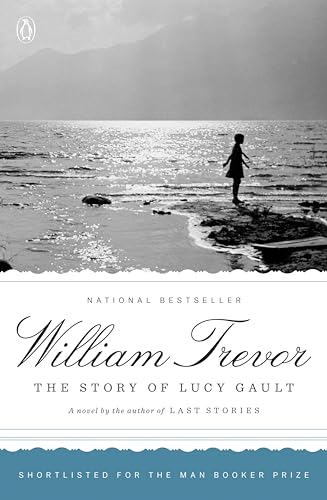
A novel set in Ireland in the 1920s charts the progress of a young girl whose entire life seems to be falling apart when the threat of arson and violence drives the family from their country home. Reprint.
Die Inhaltsangabe kann sich auf eine andere Ausgabe dieses Titels beziehen.
Über die Autorinnen und Autoren
William Trevor was born in Mitchelstown, County Cork, and spent his childhood in provincial Ireland. He studied at Trinity College, Dublin. He is the author of twenty-nine books, including Felicia’s Journey, which won the Whitbread Book of the Year Award and was made into a motion picture, and The Story of Lucy Gault, which was shortlisted for both the Man Booker Prize and the Whitbread Fiction Prize. In 1996 he was the recipient of the Lannan Award for Fiction. In 2001, he won the Irish Times Literature Prize for fiction. Two of his books were chosen by The New York Times as best books of the year, and his short stories appeared regularly in The New Yorker. In 1997, he was named Honorary Commander of the British Empire.
William Trevor is the author of twenty-nine books, including Felicia’s Journey, which won the Whitbread Book of the Year Award and was made into a motion picture. In 1996 he was the recipient of the Lannan Award for Fiction. In 2001, he won theIrish Times Literature Prize for fiction. Two of his books were chosen by The New York Times as best books of the year, and his short stories appear regularly in theNew Yorker. In 1997, he was named Honorary Commander of the British Empire. He lives in Devon, England.
Auszug. © Genehmigter Nachdruck. Alle Rechte vorbehalten.
Captain Everard Gault wounded the boy in the right shoulder on the night of June the twenty-first, nineteen twenty-one. Aiming above the trespassers' heads in the darkness, he fired the single shot from an upstairs window and then watched the three figures scuttling off, the wounded one assisted by his companions.
They had come to fire the house, their visit expected because they had been before. On that occasion they had come later, in the early morning, just after one. The sheepdogs had seen them off, but within a week the dogs lay poisoned in the yard and Captain Gault knew that the intruders would be back. 'We're stretched at the barracks, sir,' Sergeant Talty had said when he came out from Enniseala. 'Oh, stretched shocking, Captain.' Lahardane wasn't the only house under threat; every week somewhere went up, no matter how the constabulary were spread. 'Please God, there'll be an end to it,' Sergeant Talty said, and went away. Martial law prevailed, since the country was in a state of unrest, one that amounted to war. No action was taken about the poisoning of the dogs.
When daylight came on the morning after the shooting, blood could be seen on the sea pebbles of the turn-around in front of the house. Two petrol tins were found behind a tree. The pebbles were raked, a couple of bucketfuls that had been discoloured in the accident taken away.
Captain Gault thought it would be all right then: a lesson had been learnt. He wrote to Father Morrissey in Enniseala, asking him to pass on his sympathy and his regret if the priest happened to hear who it was who'd been wounded. He had not sought to inflict an injury, only to make it known that a watch was being kept. Father Morrissey wrote back. He was always the wild one in that family, he concluded his comments on the event, but there was an awkwardness about his letter, about the choice of phrases and of words, as if he found it difficult to comment on what had occurred, as if he didn't understand that neither death nor injury had been intended. He had passed the message on, he wrote, but no acknowledgement had come back from the family he referred to.
Captain Gault had been wounded himself. For six years, since he had come back an invalid from the trenches, he had carried fragments of shrapnel in his body, and they would always be there now. His injury at that time had brought his military career to an end: he would remain forever a captain, which was intensely a disappointment, since he had always imagined achieving much higher rank. But he was not, in other ways, a disappointed man. There was the great solace of his happy marriage, of the child his wife, Heloise, had borne him, of his house. There was no other place he might more happily have lived than beneath the slated roof of its three grey storeys, the stone softened by the white woodwork of the windows and the delicate fanlight above a white hall door. Flanking it on its right was the wide high archway of a cobbled yard, with cobbled passageways leading to an apple orchard and a garden. One half of the circle on to which the front rooms looked out was the gravel sweep; the other was a raised lawn that was separated from steeply rising woods by a curve of blue hydrangeas. The upstairs rooms at the back had a view of the sea as far as the sea's horizon.
The origins of the Gaults in Ireland had centuries ago misted over. Previously of Norfolk - so it was believed within the family, although without much certainty - they had settled first of all in the far western reaches of County Cork. A soldier of fortune had established their modest dynasty, lying low there for reasons that were not known. Some time in the early eighteenth century the family had moved east, respectable and well-to-do by then, one son or another of each generation continuing the family's army connection. The land at Lahardane was purchased; the building of the house began. The long, straight avenue was made, lines of chestnut trees planted along it on either side, the woodlands of the glen laid out. Later generations planted the orchard, with stock from County Armagh; the garden, kept small, was created bit by bit. In 1769 Lord Townshend, the Lord Lieutenant, stayed at Lahardane; in 1809 Daniel O'Connell did when there wasn't a bedroom unoccupied at the Stuarts' Dromana. History touched the place in that way; but as well-remembered, as often talked about, were births and marriages and deaths, domestic incidents, changes and additions to this room or that, occasions of anger or reconciliation. Suffering a stroke, a Gault in 1847 lay afflicted for three years yet not insensible. There was a disastrous six months of card-playing in 1872 during which field after field was lost to the neighbouring O'Reillys. There was the diphtheria outbreak that spread so rapidly and so tragically in 1901, sparing only the present Everard Gault and his brother in a family of five. Above the writing-desk in the drawing-room there was a portrait of a distant ancestor whose identity had been unknown for as long as anyone of the present could remember: a spare, solemn countenance where it was not whiskered, blue unemphatic eyes. It was the only portrait in the house, although since photography had begun there were albums that included the images of relatives and friends as well as those of the Gaults of Lahardane.
All this - the house and the remnants of the pasture land, the seashore below the pale clay cliffs, the walk along it to the fishing village of Kilauran, the avenue over which the high branches of the chestnut trees now met - was as much part of Everard Gault as the features of his face were, the family traits that quite resembled a few of those in the drawing-room portrait, the smooth dark hair. Tall and straight-backed, a man who hid nothing of himself, slight in his ambitions now, he had long ago accepted that his destiny was to keep in good heart what had been his inheritance, to attract bees to his hives, to root up his failing apple trees and replace them. He swept the chimneys of his house himself, could repoint its mortar and replace its window glass. Creeping about on its roof, he repaired in the lead the small perforations that occurred from time to time, the Seccotine he squeezed into them effective for a while.
In many of these tasks he was assisted by Henry, a slow-moving, heavily made man who rarely, in daytime, removed the hat from his head. Years ago Henry had married into the gate-lodge, of which he and Bridget were now the sole occupants, since no children had been born to them and Bridget's parents were no longer alive. Her father, with two men under him, had looked after the horses and seen to all that Henry on his own now saw to in the yard and the fields. Her mother had worked in the house, her grandmother before that. Bridget was as thickset as her husband, with strong wide shoulders and a capable manner: the kitchen was wholly in her charge. The bedroom maid, Kitty Teresa, assisted Heloise Gault in what had once been the duties of several indoor servants; old Hannah walked over from Kilauran once a week to wash the clothes and sheets and tablecloths, and to scrub the tiles of the hall and the stone floors at the back. The style of the past was no longer possible at Lahardane. The long avenue passed through the land that had become the O'Reillys' at the card table, when the Gaults of that time had been left with pasture enough only to support a modest herd of Friesians.
Three days after the shooting in the night Heloise Gault read the letter that had come from Father Morrissey, then turned it over and read it again. She was a slender, slightly built woman in her late thirties, her long fair hair arranged in a style that complemented her features, imbuing a demure beauty with a hint of severity that was constantly contradicted by her smile. But her smile had not been much in evidence since the...
„Über diesen Titel“ kann sich auf eine andere Ausgabe dieses Titels beziehen.
Suchergebnisse für The Story of Lucy Gault

Beispielbild für diese ISBN
The Story of Lucy Gault: A Novel
Anbieter: Orion Tech, Kingwood, TX, USA
Verkäuferbewertung 5 von 5 Sternen

paperback. Zustand: Fair. Bestandsnummer des Verkäufers 014200331X-4-31410523
Gebraucht kaufen
EUR 3,96
Versand gratis
Versand innerhalb von USA
Versand innerhalb von USA
Anzahl: 1 verfügbar
Beispielbild für diese ISBN
The Story of Lucy Gault: A Novel
Anbieter: World of Books (was SecondSale), Montgomery, IL, USA
Verkäuferbewertung 5 von 5 Sternen
Paperback. Zustand: Good. "The Story of Lucy Gault . . once read, will never be forgotten."--The Washington Post Book World "Trevor was our twentieth century Chekov."--Wall Street Journal The stunning novel from highly acclaimed author William Trevor is a brilliant, subtle, and moving story of love, guilt, and forgiveness. The Gault family leads a life of privilege in early 1920s Ireland, but the threat of violence leads the parents of nine-year-old Lucy to decide to leave for England, her mother's home. Lucy cannot bear the thought of leaving Lahardane, their country house with its beautiful land and nearby beach, and a dog she has befriended. On the day before they are to leave, Lucy runs away, hoping to convince her parents to stay. Instead, she sets off a series of tragic misunderstandings that affect all of Lahardane's inhabitants for the rest of their lives. Bestandsnummer des Verkäufers 00094496930
Gebraucht kaufen
EUR 3,97
Versand gratis
Versand innerhalb von USA
Versand innerhalb von USA
Anzahl: Mehr als 20 verfügbar
Beispielbild für diese ISBN
The Story of Lucy Gault: A Novel
Anbieter: World of Books (was SecondSale), Montgomery, IL, USA
Verkäuferbewertung 5 von 5 Sternen
Paperback. Zustand: Fair. "The Story of Lucy Gault . . once read, will never be forgotten."--The Washington Post Book World "Trevor was our twentieth century Chekov."--Wall Street Journal The stunning novel from highly acclaimed author William Trevor is a brilliant, subtle, and moving story of love, guilt, and forgiveness. The Gault family leads a life of privilege in early 1920s Ireland, but the threat of violence leads the parents of nine-year-old Lucy to decide to leave for England, her mother's home. Lucy cannot bear the thought of leaving Lahardane, their country house with its beautiful land and nearby beach, and a dog she has befriended. On the day before they are to leave, Lucy runs away, hoping to convince her parents to stay. Instead, she sets off a series of tragic misunderstandings that affect all of Lahardane's inhabitants for the rest of their lives. Bestandsnummer des Verkäufers 00101726587
Gebraucht kaufen
EUR 3,97
Versand gratis
Versand innerhalb von USA
Versand innerhalb von USA
Anzahl: 3 verfügbar
Foto des Verkäufers
The Story of Lucy Gault: A Novel
Verlag:
Penguin Publishing Group, 2003
ISBN 10: 014200331X
ISBN 13: 9780142003312
Gebraucht
Softcover
Anbieter: Dream Books Co., Denver, CO, USA
Verkäuferbewertung 5 von 5 Sternen
Zustand: acceptable. This copy has clearly been enjoyedâ"expect noticeable shelf wear and some minor creases to the cover. Binding is strong, and all pages are legible. May contain previous library markings or stamps. Bestandsnummer des Verkäufers DBV.014200331X.A
Gebraucht kaufen
EUR 3,98
Versand gratis
Versand innerhalb von USA
Versand innerhalb von USA
Anzahl: 1 verfügbar
Beispielbild für diese ISBN
The Story of Lucy Gault: A Novel
Verlag:
Penguin Publishing Group, 2003
ISBN 10: 014200331X
ISBN 13: 9780142003312
Gebraucht
Softcover
Anbieter: BookHolders, Towson, MD, USA
Verkäuferbewertung 5 von 5 Sternen
Zustand: Fair. [ No Hassle 30 Day Returns ][ Ships Daily ] [ Underlining/Highlighting: NONE ] [ Writing: NONE ] [ Torn pages: YES ] [ Edition: First ] Publisher: Penguin Books Pub Date: 8/26/2003 Binding: Paperback Pages: 227 First edition. Bestandsnummer des Verkäufers 6713751
Gebraucht kaufen
EUR 4,36
Versand gratis
Versand innerhalb von USA
Versand innerhalb von USA
Anzahl: 1 verfügbar
Beispielbild für diese ISBN
The Story of Lucy Gault: A Novel
Verlag:
Penguin Books (edition Reprint), 2003
ISBN 10: 014200331X
ISBN 13: 9780142003312
Gebraucht
Paperback
Anbieter: BooksRun, Philadelphia, PA, USA
Verkäuferbewertung 5 von 5 Sternen
Paperback. Zustand: Very Good. Reprint. It's a well-cared-for item that has seen limited use. The item may show minor signs of wear. All the text is legible, with all pages included. It may have slight markings and/or highlighting. Bestandsnummer des Verkäufers 014200331X-11-1
Gebraucht kaufen
EUR 4,39
Versand gratis
Versand innerhalb von USA
Versand innerhalb von USA
Anzahl: 3 verfügbar
Beispielbild für diese ISBN
The Story of Lucy Gault: A Novel
Verlag:
Penguin Publishing Group (edition Reprint), 2003
ISBN 10: 014200331X
ISBN 13: 9780142003312
Gebraucht
Paperback
Anbieter: BooksRun, Philadelphia, PA, USA
Verkäuferbewertung 5 von 5 Sternen
Paperback. Zustand: Fair. Reprint. The item might be beaten up but readable. May contain markings or highlighting, as well as stains, bent corners, or any other major defect, but the text is not obscured in any way. Bestandsnummer des Verkäufers 014200331X-7-1
Gebraucht kaufen
EUR 4,41
Versand gratis
Versand innerhalb von USA
Versand innerhalb von USA
Anzahl: 1 verfügbar
Beispielbild für diese ISBN
The Story of Lucy Gault: A Novel
Verlag:
Penguin Publishing Group (edition Reprint), 2003
ISBN 10: 014200331X
ISBN 13: 9780142003312
Gebraucht
Paperback
Anbieter: BooksRun, Philadelphia, PA, USA
Verkäuferbewertung 5 von 5 Sternen
Paperback. Zustand: Fair. Reprint. The item might be beaten up but readable. May contain markings or highlighting, as well as stains, bent corners, or any other major defect, but the text is not obscured in any way. Bestandsnummer des Verkäufers 014200331X-7-18
Gebraucht kaufen
EUR 4,49
Versand gratis
Versand innerhalb von USA
Versand innerhalb von USA
Anzahl: 1 verfügbar
Foto des Verkäufers
The Story of Lucy Gault: A Novel
Verlag:
Penguin Publishing Group, 2003
ISBN 10: 014200331X
ISBN 13: 9780142003312
Gebraucht
Softcover
Anbieter: Greenworld Books, Arlington, TX, USA
Verkäuferbewertung 5 von 5 Sternen
Zustand: good. Fast Free Shipping â" Good condition. It may show normal signs of use, such as light writing, highlighting, or library markings, but all pages are intact and the book is fully readable. A solid, complete copy that's ready to enjoy. Bestandsnummer des Verkäufers GWV.014200331X.G
Gebraucht kaufen
EUR 5,30
Versand gratis
Versand innerhalb von USA
Versand innerhalb von USA
Anzahl: 1 verfügbar
Beispielbild für diese ISBN
The Story of Lucy Gault: A Novel
Anbieter: HPB-Ruby, Dallas, TX, USA
Verkäuferbewertung 5 von 5 Sternen
Paperback. Zustand: Very Good. Connecting readers with great books since 1972! Used books may not include companion materials, and may have some shelf wear or limited writing. We ship orders daily and Customer Service is our top priority! Bestandsnummer des Verkäufers S_451354964
Gebraucht kaufen
EUR 2,31
EUR 3,36 Versand
Versand innerhalb von USA
Versand innerhalb von USA
Anzahl: 1 verfügbar