
Verwandte Artikel zu Freedom Evolves
Inhaltsangabe
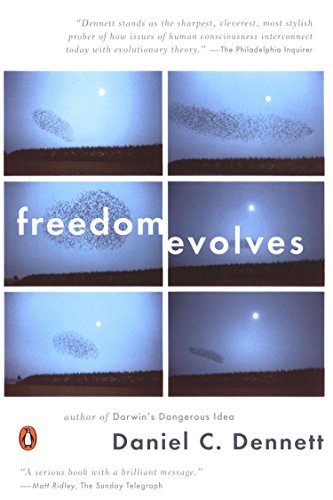
Can there be freedom and free will in a deterministic world? Renowned philosopher Daniel Dennett emphatically answers “yes!” Using an array of provocative formulations, Dennett sets out to show how we alone among the animals have evolved minds that give us free will and morality. Weaving a richly detailed narrative, Dennett explains in a series of strikingly original
arguments—drawing upon evolutionary biology, cognitive neuroscience, economics, and philosophy—that far from being an enemy of traditional explorations of freedom, morality, and meaning, the evolutionary perspective can be an indispensable ally. In Freedom Evolves, Dennett seeks to place ethics on the foundation it deserves: a realistic, naturalistic, potentially unified vision of our place in nature.
Die Inhaltsangabe kann sich auf eine andere Ausgabe dieses Titels beziehen.
Über die Autorin bzw. den Autor
Daniel C. Dennett, the author of Freedom Evolves (Viking) and Darwin's Dangerous Idea, is University Professor and Austin B. Fletcher Professor of Philosophy, and Director of the Center for Cognitive Studies at Tufts University. He lives with his wife in North Andover, Massachusetts, and has a daughter, a son, and a grandson. He was born in Boston in 1942, the son of a historian by the same name, and received his BA in philosophy from Harvard in 1963. He then went to Oxford to work with Gilbert Ryle, under whose supervision he completed his D.Phil. in philosophy in 1965. He taught at U.C. Irvine from 1965 to 1971, when he moved to Tufts, where he has taught ever since, aside from periods visiting at Harvard, Pittsburgh, Oxford, and the Ecole Normal Superieure in Paris. His first book, Content and Consciousness, published in 1969, followed by Brainstorms (1978), Elbow Room (1984), The Intentional Stance (1987), Consciousness Explained (1991), Darwin's Dangerous Idea (1995), and Kinds of Minds (1996). He coedited The Mind's I with Douglas Hofstadter in 1981. He is the author of more than a hundred scholarly articles on various aspects on the mind, published in journals ranging from Artificial Intelligence and Behavioral and Brain Sciences to Poetics Today and the Journal of Aesthetics and Art Criticism. His most recent book is Brainchildren: A Collection of Essays 1984–1996 (MIT Press and Penguin, 1998).He gave the John Locke Lectures at Oxford in 1983, the Gavin David Young Lectures at Adelaide, Australia, in 1985, and the Tanner Lecture at Michigan in 1986, among many others. He has received two Guggenheim Fellowships, a Fulbright Fellowship, and a Fellowship at the Center for Advanced Studies in Behavioral Science. He was elected to the American Academy of Arts and Sciences in 1987.
Auszug. © Genehmigter Nachdruck. Alle Rechte vorbehalten.
One widespread tradition has it that we human beings are responsible agents, captains of our fate, because what we really are are souls, immaterial and immortal clumps of Godstuff that inhabit and control our material bodies rather like spectral puppeteers. It is our souls that are the source of all meaning, and the locus of all our suffering, our joy, our glory and shame. But this idea of immaterial souls, capable of defying the laws of physics, has outlived its credibility thanks to the advance of the natural sciences. Many people think the implications of this are dreadful: We don't really have "free will" and nothing really matters. The aim of this book is to show why they are wrong.
Learning What We Are
Sì, abbiamo un anima. Ma è fatta di tanti piccoli robot.
Yes, we have a soul. But it's made of lots of tiny robots.
—Giulio Giorelli
We don't have to have immaterial souls of the old-fashioned sort in order to live up to our hopes; our aspirations as moral beings whose acts and lives matter do not depend at all on our having minds that obey a different physics from the rest of nature. The self-understanding we can gain from science can help us put our moral lives on a new and better foundation, and once we understand what our freedom consists in, we will be much better prepared to protect it against the genuine threats that are so regularly misidentified.
A student of mine who went into the Peace Corps to avoid serving in the Vietnam War later told me about his efforts on behalf of a tribe living deep in the Brazilian forest. I asked him if he had been required to tell them about the conflict between the USA and the USSR. Not at all, he replied. There would have been no point in it. They had never heard of either America or the Soviet Union. In fact, they had never even heard of Brazil! It was still possible in the 1960s for a human being to live in a nation, and be subject to its laws, without the slightest knowledge of that fact. If we find this astonishing, it is because we human beings, unlike all other species on the planet, are knowers. We are the only ones who have figured out what we are, and where we are, in this great universe. And we're even beginning to figure out how we got here.
These quite recent discoveries about who we are and how we got here are unnerving, to say the least. What you are is an assemblage of roughly a hundred trillion cells, of thousands of different sorts. The bulk of these cells are "daughters" of the egg cell and sperm cell whose union started you, but they are actually outnumbered by the trillions of bacterial hitchhikers from thousands of different lineages stowed away in your body (Hooper et al. 1998). Each of your host cells is a mindless mechanism, a largely autonomous micro-robot. It is no more conscious than your bacterial guests are. Not a single one of the cells that compose you knows who you are, or cares.
Each trillion-robot team is gathered together in a breathtakingly efficient regime that has no dictator but manages to keep itself organized to repel outsiders, banish the weak, enforce iron rules of discipline—and serve as the headquarters of one conscious self, one mind. These communities of cells are fascistic in the extreme, but your interests and values have little or nothing to do with the limited goals of the cells that compose you—fortunately. Some people are gentle and generous, others are ruthless; some are pornographers and others devote their lives to the service of God. It has been tempting over the ages to imagine that these striking differences must be due to the special features of some extra thing (a soul) installed somehow in the bodily headquarters. We now know that tempting as this idea still is, it is not supported in the slightest by anything we have learned about our biology in general and our brains in particular. The more we learn about how we have evolved, and how our brains work, the more certain we are becoming that there is no such extra ingredient. We are each made of mindless robots and nothing else, no non-physical, non-robotic ingredients at all. The differences among people are all due to the way their particular robotic teams are put together, over a lifetime of growth and experience. The difference between speaking French and speaking Chinese is a difference in the organization of the working parts, and so are all the other differences of knowledge and personality.
Since I am conscious and you are conscious, we must have conscious selves that are somehow composed of these strange little parts. How can this be? To see how such an extraordinary composition job could be accomplished, we need to look at the history of the design processes that did all the work, the evolution of human consciousness. We also need to see how these souls made of cellular robots actually do endow us with the important powers and resultant obligations that traditional immaterial souls were supposed to endow us with (by unspecified magic). Trading in a supernatural soul for a natural soul— is this a good bargain? What do we give up and what do we gain? People jump to fearful conclusions about this that are hugely mistaken. I propose to prove this by tracing the growth of freedom on our planet from its earliest beginnings at the dawn of life. What kinds of freedom? Different kinds will emerge as the story unfolds.
Four and a half billion years ago, the planet Earth was formed, and it was utterly without life. And so it stayed for perhaps half a billion years, until the first simple life-forms emerged, and then for the next three billion years or so, the planet's oceans teemed with life, but it was all blind and deaf. Simple cells multiplied, engulfing each other, exploiting each other in a thousand ways, but oblivious to the world beyond their membranes. Then finally much larger, more complex cells evolved—eukaryotes—still clueless and robotic, but with enough internal machinery to begin to specialize. So it continued for a few hundred million more years, the time it took for the algorithms of evolution to stumble upon good ways for these cells and their daughters and granddaughters to band together into multicellular organisms composed of millions, billions, and (eventually) trillions of cells, each doing its particular mechanical routine, but now yoked into specialized service, as part of an eye or an ear or a lung or a kidney. These organisms (not the individual team members composing them) had become long-distance knowers, able to spy supper trying to appear inconspicuous in the middle distance, able to hear danger threatening from afar. But still, even these whole organisms knew not what they were. Their instincts guaranteed that they tried to mate with the right sorts, and flock with the right sorts, but just as those Brazilians didn't know they were Brazilians, no bison has ever known it's a bison.
In just one species, our species, a new trick evolved: language. It has provided us a broad highway of knowledge-sharing, on every topic. Conversation unites us, in spite of our different languages. We can all know quite a lot about what it is like to be a Vietnamese fisherman or a Bulgarian taxi driver, an eighty-year-old nun or a five-year-old boy blind from birth, a chess master or a prostitute. No matter how different from one another we people are, scattered around the globe, we can explore our differences and communicate about them. No matter how similar to one another bison are, standing shoulder to shoulder in a herd, they cannot know much of anything about their similarities, let alone their differences, because they can't compare notes. They can have similar experiences, side by side, but they really can't share experiences the way we do.
Even in our species, it has taken thousands of years of communication for us to begin to find the keys to our own...
„Über diesen Titel“ kann sich auf eine andere Ausgabe dieses Titels beziehen.
Suchergebnisse für Freedom Evolves

Foto des Verkäufers
Freedom Evolves
Verlag:
Penguin Publishing Group, 2004
ISBN 10: 0142003840
ISBN 13: 9780142003848
Gebraucht
Softcover
Anbieter: Zoom Books East, Glendale Heights, IL, USA
Verkäuferbewertung 5 von 5 Sternen

Zustand: good. Book is in good condition and may include underlining highlighting and minimal wear. The book can also include "From the library of" labels. May not contain miscellaneous items toys, dvds, etc. . We offer 100% money back guarantee and 24 7 customer service. Bestandsnummer des Verkäufers ZEV.0142003840.G
Gebraucht kaufen
EUR 4,20
Versand gratis
Versand innerhalb von USA
Versand innerhalb von USA
Anzahl: 1 verfügbar
Beispielbild für diese ISBN
Freedom Evolves
Anbieter: World of Books (was SecondSale), Montgomery, IL, USA
Verkäuferbewertung 5 von 5 Sternen
Paperback. Zustand: Good. Can there be freedom and free will in a deterministic world? Renowned philosopher Daniel Dennett emphatically answers "yes!" Using an array of provocative formulations, Dennett sets out to show how we alone among the animals have evolved minds that give us free will and morality. Weaving a richly detailed narrative, Dennett explains in a series of strikingly originalarguments--drawing upon evolutionary biology, cognitive neuroscience, economics, and philosophy--that far from being an enemy of traditional explorations of freedom, morality, and meaning, the evolutionary perspective can be an indispensable ally. In Freedom Evolves, Dennett seeks to place ethics on the foundation it deserves: a realistic, naturalistic, potentially unified vision of our place in nature. Bestandsnummer des Verkäufers 00096294999
Gebraucht kaufen
EUR 4,23
Versand gratis
Versand innerhalb von USA
Versand innerhalb von USA
Anzahl: 4 verfügbar
Beispielbild für diese ISBN
Freedom Evolves
Anbieter: World of Books (was SecondSale), Montgomery, IL, USA
Verkäuferbewertung 5 von 5 Sternen
Paperback. Zustand: Fair. Can there be freedom and free will in a deterministic world? Renowned philosopher Daniel Dennett emphatically answers "yes!" Using an array of provocative formulations, Dennett sets out to show how we alone among the animals have evolved minds that give us free will and morality. Weaving a richly detailed narrative, Dennett explains in a series of strikingly originalarguments--drawing upon evolutionary biology, cognitive neuroscience, economics, and philosophy--that far from being an enemy of traditional explorations of freedom, morality, and meaning, the evolutionary perspective can be an indispensable ally. In Freedom Evolves, Dennett seeks to place ethics on the foundation it deserves: a realistic, naturalistic, potentially unified vision of our place in nature. Bestandsnummer des Verkäufers 00093939991
Gebraucht kaufen
EUR 4,23
Versand gratis
Versand innerhalb von USA
Versand innerhalb von USA
Anzahl: 4 verfügbar
Beispielbild für diese ISBN
Freedom Evolves
Verlag:
Penguin Publishing Group (edition Reprint), 2004
ISBN 10: 0142003840
ISBN 13: 9780142003848
Gebraucht
Paperback
Anbieter: BooksRun, Philadelphia, PA, USA
Verkäuferbewertung 5 von 5 Sternen
Paperback. Zustand: Very Good. Reprint. It's a well-cared-for item that has seen limited use. The item may show minor signs of wear. All the text is legible, with all pages included. It may have slight markings and/or highlighting. Bestandsnummer des Verkäufers 0142003840-11-18
Gebraucht kaufen
EUR 5,13
Versand gratis
Versand innerhalb von USA
Versand innerhalb von USA
Anzahl: 2 verfügbar
Foto des Verkäufers
Freedom Evolves
Verlag:
Penguin Publishing Group, 2004
ISBN 10: 0142003840
ISBN 13: 9780142003848
Gebraucht
Softcover
Anbieter: Zoom Books East, Glendale Heights, IL, USA
Verkäuferbewertung 5 von 5 Sternen
Zustand: very_good. Book is in very good condition and may include minimal underlining highlighting. The book can also include "From the library of" labels. May not contain miscellaneous items toys, dvds, etc. . We offer 100% money back guarantee and 24 7 customer service. Bestandsnummer des Verkäufers ZEV.0142003840.VG
Gebraucht kaufen
EUR 5,18
Versand gratis
Versand innerhalb von USA
Versand innerhalb von USA
Anzahl: 1 verfügbar
Beispielbild für diese ISBN
Freedom Evolves
Anbieter: World of Books Inc, Montgomery, IL, USA
Verkäuferbewertung 4 von 5 Sternen

Paperback. Zustand: Fair. Can there be freedom and free will in a deterministic world? Renowned philosopher Daniel Dennett emphatically answers "yes!" Using an array of provocative formulations, Dennett sets out to show how we alone among the animals have evolved minds that give us free will and morality. Weaving a richly detailed narrative, Dennett explains in a series of strikingly originalarguments--drawing upon evolutionary biology, cognitive neuroscience, economics, and philosophy--that far from being an enemy of traditional explorations of freedom, morality, and meaning, the evolutionary perspective can be an indispensable ally. In Freedom Evolves, Dennett seeks to place ethics on the foundation it deserves: a realistic, naturalistic, potentially unified vision of our place in nature. Bestandsnummer des Verkäufers CIN0142003840A
Gebraucht kaufen
EUR 6,06
Versand gratis
Versand innerhalb von USA
Versand innerhalb von USA
Anzahl: 4 verfügbar
Beispielbild für diese ISBN
Freedom Evolves
Anbieter: World of Books Inc, Montgomery, IL, USA
Verkäuferbewertung 4 von 5 Sternen
Paperback. Zustand: Good. Can there be freedom and free will in a deterministic world? Renowned philosopher Daniel Dennett emphatically answers "yes!" Using an array of provocative formulations, Dennett sets out to show how we alone among the animals have evolved minds that give us free will and morality. Weaving a richly detailed narrative, Dennett explains in a series of strikingly originalarguments--drawing upon evolutionary biology, cognitive neuroscience, economics, and philosophy--that far from being an enemy of traditional explorations of freedom, morality, and meaning, the evolutionary perspective can be an indispensable ally. In Freedom Evolves, Dennett seeks to place ethics on the foundation it deserves: a realistic, naturalistic, potentially unified vision of our place in nature. Bestandsnummer des Verkäufers CIN0142003840G
Gebraucht kaufen
EUR 6,06
Versand gratis
Versand innerhalb von USA
Versand innerhalb von USA
Anzahl: 4 verfügbar
Beispielbild für diese ISBN
Freedom Evolves
Anbieter: ThriftBooks-Dallas, Dallas, TX, USA
Verkäuferbewertung 5 von 5 Sternen
Paperback. Zustand: Good. No Jacket. Pages can have notes/highlighting. Spine may show signs of wear. ~ ThriftBooks: Read More, Spend Less. Bestandsnummer des Verkäufers G0142003840I3N00
Gebraucht kaufen
EUR 6,12
Versand gratis
Versand innerhalb von USA
Versand innerhalb von USA
Anzahl: 1 verfügbar
Beispielbild für diese ISBN
Freedom Evolves
Verlag:
Penguin Publishing Group, 2004
ISBN 10: 0142003840
ISBN 13: 9780142003848
Gebraucht
Softcover
Anbieter: Better World Books: West, Reno, NV, USA
Verkäuferbewertung 5 von 5 Sternen
Zustand: Good. Pages intact with minimal writing/highlighting. The binding may be loose and creased. Dust jackets/supplements are not included. Stock photo provided. Product includes identifying sticker. Better World Books: Buy Books. Do Good. Bestandsnummer des Verkäufers 4772497-6
Gebraucht kaufen
EUR 6,16
Versand gratis
Versand innerhalb von USA
Versand innerhalb von USA
Anzahl: 1 verfügbar
Beispielbild für diese ISBN
Freedom Evolves
Verlag:
Penguin Publishing Group, 2004
ISBN 10: 0142003840
ISBN 13: 9780142003848
Gebraucht
Softcover
Anbieter: Better World Books, Mishawaka, IN, USA
Verkäuferbewertung 5 von 5 Sternen
Zustand: Good. Pages intact with minimal writing/highlighting. The binding may be loose and creased. Dust jackets/supplements are not included. Stock photo provided. Product includes identifying sticker. Better World Books: Buy Books. Do Good. Bestandsnummer des Verkäufers 4772497-6
Gebraucht kaufen
EUR 6,16
Versand gratis
Versand innerhalb von USA
Versand innerhalb von USA
Anzahl: 5 verfügbar