
Verwandte Artikel zu Committed: A Love Story
Inhaltsangabe
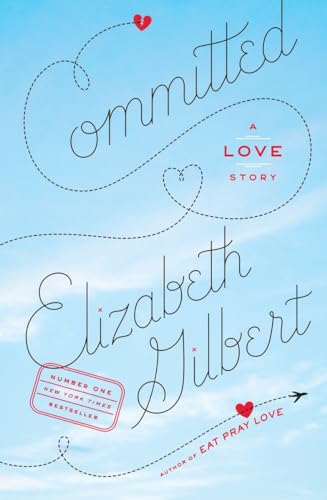
The #1 New York Times bestselling follow-up to Eat, Pray, Love--an intimate and erudite celebration of love—from the author of Big Magic: Creative Living Beyond Fear.
At the end of her memoir Eat, Pray, Love, Elizabeth Gilbert fell in love with Felipe, a Brazilian living in Indonesia. The couple swore eternal love, but also swore (as skittish divorce survivors) never to marry. However, providence intervened in the form of a U.S. government ultimatum: get married, or Felipe could never enter America again. Told with Gilbert's trademark humor and intelligence, this fascinating meditation on compatibility and fidelity chronicles Gilbert's complex and sometimes frightening journey into second marriage, and will enthrall the millions of readers who made Eat, Pray, Love a number one bestseller.Die Inhaltsangabe kann sich auf eine andere Ausgabe dieses Titels beziehen.
Über die Autorin bzw. den Autor
Elizabeth Gilbert is the #1 New York Times bestselling author of Big Magic, Eat Pray Love, and The Signature of All Things, as well as several other internationally bestselling books of fiction and nonfiction. She has been a finalist for the National Book Award, the National Book Critics Circle Award, and the PEN/Hemingway Award. Her latest novel, City of Girls, comes out in June, 2019.
Auszug. © Genehmigter Nachdruck. Alle Rechte vorbehalten.
CHAPTER TWO
Marriage and Expectation
A man can be happy with any woman as long as he does not love her.
—Oscar Wilde
A little girl found me that day.
Felipe and I had arrived in this particular village after an overnight journey from Hanoi on a loud, dirty, Soviet-era train. I can’t rightly remember now why we went to this specific town, but I think some young Danish backpackers had recommended it to us. In any case, after the loud, dirty train journey, there had been a long, loud, dirty bus ride. The bus had finally dropped us off in a staggeringly beautiful place that teetered on the border with China—remote and verdant and wild. We found a hotel and when I stepped out alone to explore the town, to try to shake the stiffness of travel out of my legs, the little girl approached me.
She was twelve years old, I would learn later, but tinier than any American twelve-year-old I’d ever met. She was exceptionally beautiful. Her skin was dark and healthy, her hair glossy and braided, her compact body all sturdy and confident in a short woolen tunic. Though it was summertime and the days were sultry, her calves were wrapped in brightly colored wool leggings. Her feet tapped restlessly in plastic Chinese sandals. She had been hanging around our hotel for some time—I had spotted her when we were checking in—and now, when I stepped
out of the place alone, she approached me full-on.
“What’s your name?” she asked.
“I’m Liz. What’s your name?”
“I’m Mai,” she said, “and I can write it down for you so you can learn how to spell it properly.”
“You certainly speak good English,” I complimented her.
She shrugged. “Of course. I practice often with tourists. Also, I speak Vietnamese, Chinese, and some Japanese.”
“What?” I joked. “No French?”
“Un peu,” she replied with a sly glance. Then she demanded, “Where are you from, Liz?”
“I’m from America,” I said. Then, trying to be funny, since obviously she was from right there, I asked, “And where are you from, Mai?”
She immediately saw my funny and raised it. “I am from my mother’s belly,” she replied, instantly causing me to fall in love with her.
Indeed, Mai was from Vietnam, but I realized later she would never have called herself Vietnamese. She was Hmong—a member of a small, proud, isolated ethnic minority (what anthropologists call “an original people”) who inhabit the highest mountain peaks of Vietnam, Thailand, Laos, and China. Kurdish-like, the Hmong have never really belonged to any of the countries in which they live. They remain some of the world’s most spectacularly independent people—nomads, storytellers, warriors, natural-born anticonformists, and a terrible bane to any nation that has ever tried to control them.
To understand the unlikelihood of the Hmong’s continued existence on this planet you have to imagine what it would be like if, for instance, the Mohawk were still living in upstate New York exactly as they had for centuries, dressing in traditional clothing, speaking their own language, and absolutely refusing to assimilate. Stumbling on a Hmong village like this one, then, in the early years of the twenty-first century is an anachronistic wonder. Their culture provides a vanishingly rare window into an older version of the human experience. All of which is to say, if you want to know what your family was like four thousand years ago, they were probably something like the Hmong.
“Hey, Mai,” I said. “Would you like to be my translator today?”
“Why?” she asked.
The Hmong are a famously direct people, so I laid it out directly: “I need to talk to some of the women in your village about their marriages.”
“Why?” she demanded again.
“Because I’m getting married soon, and I would like some advice.”
“You’re too old to be getting married,” Mai observed, kindly.
“Well, my boyfriend is old, too,” I replied. “He’s fifty-five years old.”
She looked at me closely, let out a low whistle, and said, “Well. Lucky him.”
I’m not sure why Mai decided to help me that day. Curiosity? Boredom? The hope that I would pass her some cash? (Which, of course, I did.) But regardless of her motive, she did agree. Soon enough, after a steep march over a nearby hillside, we arrived at Mai’s stone house, which was tiny, soot-darkened, lit only by a few small windows, and nestled in one of the prettiest river valleys you could ever imagine. Mai led me inside and introduced me around to a group of women, all of them weaving, cooking, or cleaning. Of all the women, it was Mai’s grandmother whom I found most immediately intriguing. She was the laughingest, happiest, four-foot-tall toothless granny I’d ever seen in my life. What’s more, she thought me hilarious. Every single thing about me seemed to crack her up beyond measure. She put a tall Hmong hat on my head, pointed at me, and laughed. She stuck a tiny Hmong baby into my arms, pointed at me, and laughed. She draped me in a gorgeous Hmong textile, pointed at me, and laughed.
I had no problem with any of this, by the way. I had long ago learned that when you are the giant, alien visitor to a remote and foreign culture it is sort of your job to become an object of ridicule. It’s the least you can do, really, as a polite guest. Soon more women—neighbors and relations—poured into the house. They also showed me their weavings, stuck their hats on my head, crammed my arms full of their babies, pointed at me, and laughed.
As Mai explained, her whole family—almost a dozen of them in total—lived in this one-room home. Everyone slept on the floor together. The kitchen was on one side and the wood stove for winter was on the other side. Rice and corn were stored in a loft above the kitchen, while pigs, chickens, and water buffalo were kept close by at all times. There was only one private space in the whole house and it wasn’t much bigger than a broom closet. This, as I learned later in my reading, was where the newest bride and groom in any family were allowed to sleep alone together for the first few months of their marriage in order to get their sexual explorations out of the way in private. After that initial experience of privacy, though, the young couple joins the rest of the family again, sleeping with everyone else on the floor for the rest of their lives.
“Did I tell you that my father is dead?” Mai asked as she was showing me around.
“I’m sorry to hear that,” I said. “When did it happen?”
“Four years ago.”
“How did he die, Mai?”
“He died,” she said coolly, and that settled it. Her father had died of death. The way people used to die, I suppose, before we knew very much about why or how. “When he died, we ate the water buffalo at his funeral.” At this memory, her face flashed a complicated array of emotions: sadness at the loss of her father, pleasure at the remembrance of how good the water buffalo had tasted.
“Is your mother lonely?”
Mai shrugged.
It was hard to imagine loneliness here. Just as it was impossible to imagine where in this crowded domestic arrangement you might find the happier twin sister of loneliness: privacy. Mai and her mother lived in constant closeness with so many people. I was struck—not for the first time in...
„Über diesen Titel“ kann sich auf eine andere Ausgabe dieses Titels beziehen.
Suchergebnisse für Committed: A Love Story

Beispielbild für diese ISBN
Committed: A Love Story
Anbieter: World of Books (was SecondSale), Montgomery, IL, USA
Verkäuferbewertung 5 von 5 Sternen

Paperback. Zustand: Fair. The #1 New York Times bestselling follow-up to Eat, Pray, Love--an intimate and erudite celebration of love--from the author of Big Magic At the end of her memoir Eat, Pray, Love, Elizabeth Gilbert fell in love with Felipe, a Brazilian living in Indonesia. The couple swore eternal love, but also swore (as skittish divorce survivors) never to marry. However, providence intervened in the form of a U.S. government ultimatum: get married, or Felipe could never enter America again. Told with Gilbert's trademark humor and intelligence, this fascinating meditation on compatibility and fidelity chronicles Gilbert's complex and sometimes frightening journey into second marriage, and will enthrall the millions of readers who made Eat, Pray, Love a number one bestseller. Bestandsnummer des Verkäufers 00082832328
Gebraucht kaufen
EUR 3,76
Versand gratis
Versand innerhalb von USA
Versand innerhalb von USA
Anzahl: 10 verfügbar
Beispielbild für diese ISBN
Committed: A Love Story
Anbieter: World of Books (was SecondSale), Montgomery, IL, USA
Verkäuferbewertung 5 von 5 Sternen
Paperback. Zustand: Good. The #1 New York Times bestselling follow-up to Eat, Pray, Love--an intimate and erudite celebration of love--from the author of Big Magic At the end of her memoir Eat, Pray, Love, Elizabeth Gilbert fell in love with Felipe, a Brazilian living in Indonesia. The couple swore eternal love, but also swore (as skittish divorce survivors) never to marry. However, providence intervened in the form of a U.S. government ultimatum: get married, or Felipe could never enter America again. Told with Gilbert's trademark humor and intelligence, this fascinating meditation on compatibility and fidelity chronicles Gilbert's complex and sometimes frightening journey into second marriage, and will enthrall the millions of readers who made Eat, Pray, Love a number one bestseller. Bestandsnummer des Verkäufers 00094504696
Gebraucht kaufen
EUR 3,76
Versand gratis
Versand innerhalb von USA
Versand innerhalb von USA
Anzahl: Mehr als 20 verfügbar
Beispielbild für diese ISBN
Committed: A Love Story
Anbieter: Gulf Coast Books, Cypress, TX, USA
Verkäuferbewertung 5 von 5 Sternen
Paperback. Zustand: Fair. Bestandsnummer des Verkäufers 0143118706-4-18857488
Gebraucht kaufen
EUR 3,77
Versand gratis
Versand innerhalb von USA
Versand innerhalb von USA
Anzahl: 1 verfügbar
Beispielbild für diese ISBN
Committed: A Love Story
Anbieter: Orion Tech, Kingwood, TX, USA
Verkäuferbewertung 5 von 5 Sternen
Paperback. Zustand: Fair. Bestandsnummer des Verkäufers 0143118706-4-18495150
Gebraucht kaufen
EUR 3,77
Versand gratis
Versand innerhalb von USA
Versand innerhalb von USA
Anzahl: 1 verfügbar
Beispielbild für diese ISBN
Committed: A Love Story
Anbieter: Your Online Bookstore, Houston, TX, USA
Verkäuferbewertung 5 von 5 Sternen
Paperback. Zustand: Very Good. Bestandsnummer des Verkäufers 0143118706-2-18977587
Gebraucht kaufen
EUR 3,77
Versand gratis
Versand innerhalb von USA
Versand innerhalb von USA
Anzahl: 1 verfügbar
Foto des Verkäufers
Committed: A Love Story
Anbieter: 3Brothers Bookstore, Egg harbor township, NJ, USA
Verkäuferbewertung 5 von 5 Sternen
Zustand: very_good. Cover may have light wear, pages in very good condition and binding is sturdy; may have other light shelf wear or creases. May have notes or highlighting. Bestandsnummer des Verkäufers EVV.0143118706.VG
Gebraucht kaufen
EUR 3,91
Versand gratis
Versand innerhalb von USA
Versand innerhalb von USA
Anzahl: 1 verfügbar
Foto des Verkäufers
Committed: A Love Story
Anbieter: Zoom Books East, Glendale Heights, IL, USA
Verkäuferbewertung 5 von 5 Sternen
Zustand: good. Book is in good condition and may include underlining highlighting and minimal wear. The book can also include "From the library of" labels. May not contain miscellaneous items toys, dvds, etc. . We offer 100% money back guarantee and 24 7 customer service. Bestandsnummer des Verkäufers ZEV.0143118706.G
Gebraucht kaufen
EUR 4,06
Versand gratis
Versand innerhalb von USA
Versand innerhalb von USA
Anzahl: 2 verfügbar
Foto des Verkäufers
Committed: A Love Story
Anbieter: Zoom Books East, Glendale Heights, IL, USA
Verkäuferbewertung 5 von 5 Sternen
Zustand: acceptable. Book is in acceptable condition and shows signs of wear. Book may also include underlining highlighting. The book can also include "From the library of" labels. May not contain miscellaneous items toys, dvds, etc. . We offer 100% money back guarantee and 24 7 customer service. Bestandsnummer des Verkäufers ZEV.0143118706.A
Gebraucht kaufen
EUR 4,06
Versand gratis
Versand innerhalb von USA
Versand innerhalb von USA
Anzahl: 1 verfügbar
Foto des Verkäufers
Committed: A Love Story
Anbieter: Zoom Books East, Glendale Heights, IL, USA
Verkäuferbewertung 5 von 5 Sternen
Zustand: very_good. Book is in very good condition and may include minimal underlining highlighting. The book can also include "From the library of" labels. May not contain miscellaneous items toys, dvds, etc. . We offer 100% money back guarantee and 24 7 customer service. Bestandsnummer des Verkäufers ZEV.0143118706.VG
Gebraucht kaufen
EUR 4,06
Versand gratis
Versand innerhalb von USA
Versand innerhalb von USA
Anzahl: 2 verfügbar
Beispielbild für diese ISBN
Committed: A Love Story
Verlag:
Riverhead Books (edition Reprint), 2011
ISBN 10: 0143118706
ISBN 13: 9780143118701
Gebraucht
Paperback
Anbieter: BooksRun, Philadelphia, PA, USA
Verkäuferbewertung 5 von 5 Sternen
Paperback. Zustand: Very Good. Reprint. It's a well-cared-for item that has seen limited use. The item may show minor signs of wear. All the text is legible, with all pages included. It may have slight markings and/or highlighting. Bestandsnummer des Verkäufers 0143118706-11-1
Gebraucht kaufen
EUR 4,39
Versand gratis
Versand innerhalb von USA
Versand innerhalb von USA
Anzahl: 3 verfügbar