
Verwandte Artikel zu You Can't Touch My Hair: And Other Things I Still...
Inhaltsangabe
A NEW YORK TIMES BEST SELLER • “A must-read...Phoebe Robinson discusses race and feminism in such a funny, real, and specific way, it penetrates your brain and stays with you.”—Ilana Glazer, co-creator and co-star of Broad City
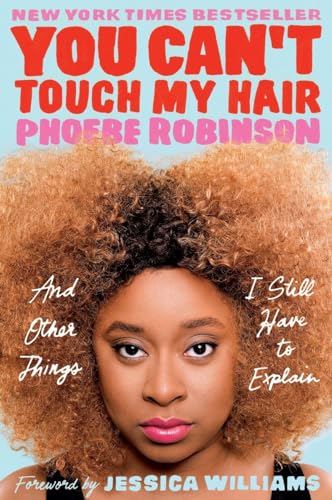
A hilarious and timely essay collection about race, gender, and pop culture from comedy superstar and 2 Dope Queens podcaster Phoebe Robinson
Being a black woman in America means contending with old prejudices and fresh absurdities every day. Comedian Phoebe Robinson has experienced her fair share over the years: she's been unceremoniously relegated to the role of “the black friend,” as if she is somehow the authority on all things racial; she's been questioned about her love of U2 and Billy Joel (“isn’t that...white people music?”); she's been called “uppity” for having an opinion in the workplace; she's been followed around stores by security guards; and yes, people do ask her whether they can touch her hair all. the. time. Now, she's ready to take these topics to the page—and she’s going to make you laugh as she’s doing it.
Using her trademark wit alongside pop-culture references galore, Robinson explores everything from why Lisa Bonet is “Queen. Bae. Jesus,” to breaking down the terrible nature of casting calls, to giving her less-than-traditional advice to the future female president, and demanding that the NFL clean up its act, all told in the same conversational voice that launched her podcast, 2 Dope Queens, to the top spot on iTunes. As personal as it is political, You Can't Touch My Hair examines our cultural climate and skewers our biases with humor and heart, announcing Robinson as a writer on the rise.
One of Glamour's “Top 10 Books of 2016”
Die Inhaltsangabe kann sich auf eine andere Ausgabe dieses Titels beziehen.
Über die Autorin bzw. den Autor
Phoebe Robinson is a stand-up comedian, actress, and the New York Times bestselling author of Everything's Trash, But It's Okay and You Can't Touch My Hair. Most recently, she and Jessica Williams turned their hit WNYC Studios podcast, 2 Dope Queens, into four one-hour HBO specials. Robinson has appeared on The Late Show with Stephen Colbert, Late Night with Seth Meyers, Conan, Broad City, Search Party, The Daily Show, and the Todayshow; she was also a staff writer on the final season of Portlandia. When not working in TV, she's the host of the critically acclaimed WNYC Studios interview podcast Sooo Many White Guys. She recently made her feature film debut in the Netflix comedy Ibiza.
Von der hinteren Coverseite
A NEW YORK TIMES BEST SELLER • “A must-read...Phoebe Robinson discusses race and feminism in such a funny, real, and specific way, it penetrates your brain and stays with you.”―Ilana Glazer, co-creator and co-star of Broad City
A hilarious and timely essay collection about race, gender, and pop culture from comedy superstar and 2 Dope Queens podcaster Phoebe Robinson
Being a black woman in America means contending with old prejudices and fresh absurdities every day. Comedian Phoebe Robinson has experienced her fair share over the years: she's been unceremoniously relegated to the role of “the black friend,” as if she is somehow the authority on all things racial; she's been questioned about her love of U2 and Billy Joel (“isn’t that...white people music?”); she's been called “uppity” for having an opinion in the workplace; she's been followed around stores by security guards; and yes, people do ask her whether they can touch her hair all. the. time. Now, she's ready to take these topics to the page―and she’s going to make you laugh as she’s doing it.
Using her trademark wit alongside pop-culture references galore, Robinson explores everything from why Lisa Bonet is “Queen. Bae. Jesus,” to breaking down the terrible nature of casting calls, to giving her less-than-traditional advice to the future female president, and demanding that the NFL clean up its act, all told in the same conversational voice that launched her podcast, 2 Dope Queens, to the top spot on iTunes. As personal as it is political, You Can't Touch My Hair examines our cultural climate and skewers our biases with humor and heart, announcing Robinson as a writer on the rise.
Auszug. © Genehmigter Nachdruck. Alle Rechte vorbehalten.
***This excerpt is from an advance uncorrected copy proof***
Copyright © 2016 Phoebe Robinson
FOREWORD
Work wife (n): That person at your job (same or op- posite sex) that takes the place of your “at home” spouse while you are at work (this is not a sexual rela- tionship). You talk with, connect to, and relate to this person as good as or better than you do your “at home” spouse with regards to all things work-related. (Source: www.UrbanDictionary.com)
Phoebe Robinson is my work wife. We’ve been official for about two years now, ever since we met on a field piece I was shooting for The Daily Show, which led to us starting our live show and podcast, 2 Dope Queens. Even though our careers keep us busy, I am happy to report that our relation- ship is still going strong. Phoebe still texts me pictures of Bono about once a week and asks me if I would “smash” him. (My answer is still, “Fuck no, never in a million years.”) She still refers to me as either her Oprah or her Gayle depending on what kind of day we are having. She still tells terrible dudes at bars that insist on having shitty conversations with us to Please buzz off. I’m in my thirties. She always says, My eggs are dying. I don’t have time to hang out with any- body that I don’t want to. Fair enough. And even though Phoebe is only thirty-one, and I am twenty-six, she still insists on giving me the most weathered advice possible, as if she has seen some shit. Advice like: “Doggy style is a great position to have sex in, that way you can have a little bit of you time. You can get some work done, you can think about your taxes or about what groceries you need to get tomorrow. . . .” She somehow manages to say this with all of the wisdom and strength of Cicely Tyson. That’s Phoebe, though.
When I first met Phoebe, she introduced herself to me, but she didn’t even have to—I had already known about her because she was a black lady involved with Upright Citizens Brigade, who also mostly dated white dudes. I could blame my previous knowledge of her on the fact that UCB is a small community, but I ain’t gotta lie to kick it. I had low-key stalked her before meeting her that day. Anyway, she didn’t pick up any red flags from me, so she invited me to cohost her monthly live show, “Blaria,” at UCB. Our first show together was like a great first date. I found out onstage that night that Phoebe was able to vocalize things that were deeply important to me. That being a black woman and a feminist is a full-time job. Like, #fuckthepatriarchy even though we both usually date white dudes who look vitamin D deficient and probably burn in the sun too easily. That black lives do matter. And that we You Can’t Touch My Hair both think that Carrie Bradshaw was a fucking stupid idiot for breaking up with Aiden for Mr. Big. Like, really? The man is a carpenter; he could literally make her furniture. And he even bought the apartment next door to hers so he could com- bine the two. The man wanted to MacGyver her living space! I think I can speak on behalf of all straight women every- where when I say, “Hi, hello! Sign me up for that, please!” Clearly, Phoebe and I were bonding at a rapid pace and, after the show, I knew that being friends with and performing with Phoebe Robinson was good for my soul and I wanted to continue to do that as much as I could. This is how our podcast 2 Dope Queens was born.
Phoebe’s ability to talk about the importance of bell hooks as well as her dreams of hooking up with Colin Firth are a part of what makes her so wonderful. She is a badass black feminist and somehow manages to stay #woke while not taking herself too seriously. She is delightfully petty in that way that leaves us giggling and talking shit about everyone around us when we go out for drinks. And she is brilliant onstage. Even with all of the comedy shows that we have done together, Phoebe still manages to surprise me and make me laugh until I pee on myself a little bit by accident. She is one of my best friends, and I am so excited that you bought this book and are about to spend time with one of my favorite people on this frequently shitty little miserable planet that we call Earth.
Last New Year’s Eve, my boyfriend and I did shrooms and talked about the lovely texture of the couch while we watched the ball drop in Times Square on TV. After the countdown, I asked my boyfriend what his New Year’s resolution was. He said, “I think it’s to be more like Phoebe.” So I thought about all of Phoebe’s qualities for a second—her brilliance, her strong values, her beauty, her humor, and her strength. All of those things are what makes Phoebe wonderful. Not only is she my work wife, she’s my shero. “Hell yeah,” I said. “I want to be more like Phoebe, too.”
—Jessica Williams
INTRODUCTION
The other day, I was thinking about the first time someone of a different race gave me a lady boner. It was more than seventeen years ago—February 24th, 1999, to be exact—and I was watching the GRAMMYs. Let me give you a little bit of background about myself during this time. I was a fourteen- year-old movie nerd and an “everything school-related” slacker. I’d often refer to myself as a “tomboy,” until I learned that liking and watching sports but not actually being good at them does not make you a tomboy, it makes you a human. So, yes, I was a fourteen-year-old sports and movie lovin’ person/nerd, who thought that watching award shows was the bomb.tumblr.com, probably because I’d never won anything myself. So seeing people at the height of their artistic achievements was the ultimate fantasyland for me: I cried along with Hilary Swank as she graciously accepted a best actress Oscar for her performance in Boys Don’t Cry. I pretended I was up there with Lauryn Hill when she did a touching and intimate rendition of “To Zion” right before snagging a GRAMMY for Album of the Year. And I laughed when Italian actor Roberto Benigni (‘memba him?), who was so overjoyed at winning the Oscar for Best Foreign Language Film, that he walked on the backs of people’s seats to get to the stage. Award shows gave me hope that maybe I would also do something equally as impressive with my life, that I could have a future outside of Cleveland, Ohio. Nothing against the Cleve, but I just had a feeling something cool outside those city limits awaited me. Watching these awards shows was my way of preparing for my future successes, I told myself, and was way more inter- esting than, say, studying for chemistry class. And in my eyes, there was truly no greater award show than the 1999 GRAMMYs. During this golden age of pop culture achieve- ments, Hill was the belle of the ball, Madonna was killing it in her “Ray of Light, earth mother phase,” and Will Smith won Best Rap Solo Performance for “Gettin’ Jiggy wit It.”
I know. Looking back on it now, it’s kind of ridic.edu that out of all the songs nominated, including Hill’s “Lost Ones” and Jay Z’s “Hard Knock Life (Ghetto Anthem),” that Smith won Best Rap Solo Performance. But the ’90s were full of bad choices, OK? Like guys in boy bands wearing golf visors when they weren’t golfing, the movie Battlefield Earth, Lou Bega and his “Mambo No. 5” bullshit, pizza bagels, the Gulf War, Utah Jazz point guard John Stockton wearing short shorts on the basketball court, and me spending three weeks trying to memorize the lyrics...
„Über diesen Titel“ kann sich auf eine andere Ausgabe dieses Titels beziehen.
Suchergebnisse für You Can't Touch My Hair: And Other Things I Still...

Beispielbild für diese ISBN
You Can't Touch My Hair: And Other Things I Still Have to Explain
Anbieter: NW Book Rescue, Hubbard, OR, USA
Verkäuferbewertung 2 von 5 Sternen

paperback. Zustand: Good. Good clean copy. Minimal signs of wear. Any images shown are stock photographs and product may differ from what is shown. Bestandsnummer des Verkäufers SFRC-20260731-0014-368K-5A0183
Gebraucht kaufen
EUR 4,04
Versand gratis
Versand innerhalb von USA
Versand innerhalb von USA
Anzahl: 1 verfügbar
Beispielbild für diese ISBN
You Can't Touch My Hair: And Other Things I Still Have to Explain
Anbieter: World of Books (was SecondSale), Montgomery, IL, USA
Verkäuferbewertung 5 von 5 Sternen

Paperback. Zustand: Good. A NEW YORK TIMESBEST SELLER."A must-read.Phoebe Robinson discusses race and feminism in such a funny, real, and specific way, it penetrates your brain and stays with you."-Ilana Glazer, co-creator and co-star ofBroad City A hilarious and timely essay collection about race, gender, and pop culture from upcoming comedy superstar and 2 Dope Queens podcasterPhoebe Robinson Being a black woman in America means contending with old prejudices and fresh absurdities every day. Comedian PhoebeRobinson has experienced her fair share over the years: she's been unceremoniously relegated to the role of "the black friend," as if she is somehow the authority on all things racial; she's been questioned about her love of U2 and Billy Joel ("isn't that . . . white people music?"); she's been called "uppity" for having an opinion in the workplace; she's been followed around stores by security guards; and yes, people do ask her whether they can touch her hair all. the. time. Now, she's ready to take these topics to the page-and she's going to make you laugh as she's doing it. Using her trademark wit alongside pop-culture references galore, Robinson explores everything from why Lisa Bonet is "Queen. Bae. Jesus," to breaking down the terrible nature of casting calls, to giving her less-than-traditional advice to the future female president, and demanding that the NFL clean up its act, all told in the same conversational voice that launched her podcast, 2 Dope Queens, to the top spot on iTunes. As personal as it is political, You Can't Touch My Hair examines our cultural climate and skewers our biases with humor and heart, announcing Robinson as a writer on the rise. Featured on Refinery 29's list of"The Best Books Of 2016 So Far". Bestandsnummer des Verkäufers 00052501067
Gebraucht kaufen
EUR 4,05
Versand gratis
Versand innerhalb von USA
Versand innerhalb von USA
Anzahl: Mehr als 20 verfügbar
Foto des Verkäufers
You Can't Touch My Hair: And Other Things I Still Have to Explain
Anbieter: Zoom Books East, Glendale Heights, IL, USA
Verkäuferbewertung 5 von 5 Sternen
Zustand: very_good. Book is in very good condition and may include minimal underlining highlighting. The book can also include "From the library of" labels. May not contain miscellaneous items toys, dvds, etc. . We offer 100% money back guarantee and 24 7 customer service. Bestandsnummer des Verkäufers ZEV.0143129201.VG
Gebraucht kaufen
EUR 4,06
Versand gratis
Versand innerhalb von USA
Versand innerhalb von USA
Anzahl: 1 verfügbar
Foto des Verkäufers
You Can't Touch My Hair: And Other Things I Still Have to Explain
Anbieter: Zoom Books East, Glendale Heights, IL, USA
Verkäuferbewertung 5 von 5 Sternen
Zustand: good. Book is in good condition and may include underlining highlighting and minimal wear. The book can also include "From the library of" labels. May not contain miscellaneous items toys, dvds, etc. . We offer 100% money back guarantee and 24 7 customer service. Bestandsnummer des Verkäufers ZEV.0143129201.G
Gebraucht kaufen
EUR 4,06
Versand gratis
Versand innerhalb von USA
Versand innerhalb von USA
Anzahl: 2 verfügbar
Foto des Verkäufers
You Can't Touch My Hair: And Other Things I Still Have to Explain
Anbieter: Zoom Books Company, Lynden, WA, USA
Verkäuferbewertung 5 von 5 Sternen
Zustand: very_good. Book is in very good condition and may include minimal underlining highlighting. The book can also include "From the library of" labels. May not contain miscellaneous items toys, dvds, etc. . We offer 100% money back guarantee and 24 7 customer service. Bestandsnummer des Verkäufers ZBV.0143129201.VG
Gebraucht kaufen
EUR 4,06
Versand gratis
Versand innerhalb von USA
Versand innerhalb von USA
Anzahl: 1 verfügbar
Foto des Verkäufers
You Can't Touch My Hair: And Other Things I Still Have to Explain
Anbieter: 3Brothers Bookstore, Egg harbor township, NJ, USA
Verkäuferbewertung 5 von 5 Sternen
Zustand: acceptable. Books may contain multiple pages with notes and highlighting. Supplements such as Access Codes, Cd's, etc. are not guaranteed with used book purchases. Bestandsnummer des Verkäufers EVV.0143129201.A
Gebraucht kaufen
EUR 4,11
Versand gratis
Versand innerhalb von USA
Versand innerhalb von USA
Anzahl: 1 verfügbar
Beispielbild für diese ISBN
You Can't Touch My Hair: And Other Things I Still Have to Explain
Anbieter: More Than Words, Waltham, MA, USA
Verkäuferbewertung 5 von 5 Sternen
Zustand: Good. A sound copy with only light wear. Overall a solid copy at a great price! Bestandsnummer des Verkäufers BOS-I-12g-01837
Gebraucht kaufen
EUR 0,92
EUR 3,56 Versand
Versand innerhalb von USA
Versand innerhalb von USA
Anzahl: 1 verfügbar
Beispielbild für diese ISBN
You Can't Touch My Hair: And Other Things I Still Have to Explain
Anbieter: More Than Words, Waltham, MA, USA
Verkäuferbewertung 5 von 5 Sternen
Zustand: Very Good. . . All orders guaranteed and ship within 24 hours. Before placing your order for please contact us for confirmation on the book's binding. Check out our other listings to add to your order for discounted shipping. Bestandsnummer des Verkäufers WAL-M-2b-002657
Gebraucht kaufen
EUR 0,92
EUR 3,56 Versand
Versand innerhalb von USA
Versand innerhalb von USA
Anzahl: 1 verfügbar
Beispielbild für diese ISBN
You Can't Touch My Hair: And Other Things I Still Have to Explain
Verlag:
Plume (edition Illustrated), 2016
ISBN 10: 0143129201
ISBN 13: 9780143129202
Gebraucht
Paperback
Anbieter: BooksRun, Philadelphia, PA, USA
Verkäuferbewertung 5 von 5 Sternen
Paperback. Zustand: Very Good. Illustrated. It's a well-cared-for item that has seen limited use. The item may show minor signs of wear. All the text is legible, with all pages included. It may have slight markings and/or highlighting. Bestandsnummer des Verkäufers 0143129201-8-1
Gebraucht kaufen
EUR 4,59
Versand gratis
Versand innerhalb von USA
Versand innerhalb von USA
Anzahl: 1 verfügbar
Beispielbild für diese ISBN
You Can't Touch My Hair: And Other Things I Still Have to Explain
Anbieter: BookHolders, Towson, MD, USA
Verkäuferbewertung 5 von 5 Sternen
Zustand: Fair. [ No Hassle 30 Day Returns ][ Ships Daily ] [ Underlining/Highlighting: NONE ] [ Writing: NONE ] [ Edition: First ] [ Water Damage: SLIGHT, doesn't affect use ] Publisher: Penguin Pub Date: 10/4/2016 Binding: Paperback Pages: 320 First edition. Bestandsnummer des Verkäufers 6969859
Gebraucht kaufen
EUR 5,01
Versand gratis
Versand innerhalb von USA
Versand innerhalb von USA
Anzahl: 1 verfügbar