
Verwandte Artikel zu Dark Star Rising: Magick and Power in the Age of Trump
Inhaltsangabe
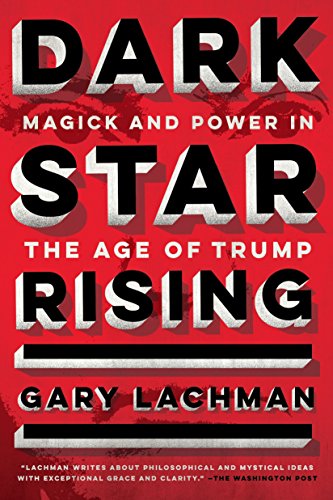
Within the concentric circles of Trump's regime lies an unseen culture of occultists, power-seekers, and mind-magicians whose influence is on the rise. In this unparalleled account, historian Gary Lachman examines the influence of occult and esoteric philosophy on the unexpected rise of the alt-right.
Did positive thinking and mental science help put Donald Trump in the White House? And are there any other hidden powers of the mind and thought at work in today's world politics? In Dark Star Rising: Magick and Power in the Age of Trump, historian and cultural critic Gary Lachman takes a close look at the various magical and esoteric ideas that are impacting political events across the globe. From New Thought and Chaos Magick to the far-right esotericism of Julius Evola and the Traditionalists, Lachman follows a trail of mystic clues that involve, among others, Norman Vincent Peale, domineering gurus and demagogues, Ayn Rand, Pepe the Frog, Rene Schwaller de Lubicz, synarchy, the Alt-Right, meme magic, and Vladimir Putin and his postmodern Rasputin. Come take a drop down the rabbit hole of occult politics in the twenty-first century and find out the post-truths and alternative facts surrounding the 45th President of the United States with one of the leading writers on esotericism and its influence on modern culture.
Die Inhaltsangabe kann sich auf eine andere Ausgabe dieses Titels beziehen.
Über die Autorin bzw. den Autor
Gary Lachman is the author of many books on consciousness, culture, and the Western esoteric tradition, including The Secret Teachers of the Western World; Beyond the Robot: The Life and Work of Colin Wilson; Rudolf Steiner: An Introduction to His Life and Work; In Search of P. D. Ouspensky; A Secret History of Consciousness; Politics and the Occult; and The Quest for Hermes Trismegistus. He writes for several journals in the US and UK and lectures on his work in the US, UK, and Europe. His books have been translated into more than a dozen languages and he has appeared in several radio and television documentaries. He is assistant professor in Transformative Studies at the California Institute of Integral Studies. A founding member of the rock group Blondie, he was inducted into the Rock and Roll Hall of Fame in 2006. He can be reached at GaryLachman.co.uk
Auszug. © Genehmigter Nachdruck. Alle Rechte vorbehalten.
Chapter One
"I'm a Winner"
Billionaire Donald J. Trump's victory in the November 2016 U.S. presidential election came as a surprise to many, but surely not to Trump. "I am a winner," he said throughout his campaign, and it seems he was right. Winning is important for Trump; as more than one commentator has pointed out, it's no exaggeration to say that it is practically the only important thing for him. As he wrote in his self-help book The Art of the Deal, designed to help its readers become winners too, "I'm the first to admit that I am very competitive and that I'll do nearly anything within legal bounds to win." Most people who know Trump would agree with this self-assessment, although some might suspect that when necessary, he wouldn't be averse to stretching the acceptable boundaries of achieving success just a bit.
But business is one thing. Surely politics is another. Or is it? Trump's victory left many reeling and set the political pundits pondering on the reasons for his upset. Scrambling for answers, they looked to white middle-class dissatisfaction, Russian intervention, and Hillary Clinton's bad reputation, among other things, for clues. But one sure contribution to Trump's ascendancy must be his positive self-image, his certainty that, as he told his supporters over and over, he is a winner and that he will get what he wants. "People may not always think big themselves," Trump tells his readers, "but they can still get very excited by those who do."
Trump is one of those who do. He thinks big. There is nothing small about him. From Trump Tower to his aborted plans to build the largest building in the world to his massive Atlantic City casino, practically everything Trump turned his hand to was on a large scale, driven by a desire, with him from an early age, to "make a statement . . . to build something monumental," to take on what he called the "big challenge."
What accounts for this strident self-confidence, this unshakable assurance of success and driving need to stand out from the mediocre many? Narcissism, megalomania, egomania, selfishness, insensitivity to others, and other personality traits have been offered as explanations for Trump's unswerving optimism and self-belief. To be sure, Trump's psychological profile can accommodate these characteristics and more; as I will try to show, he strikes me as an example of what the writer Colin Wilson called a "Right Man," someone who under no circumstances will admit to being wrong, and who will stop at practically nothing to get his way. But in the flurry of news reports, articles, posts, and tweets that followed in the wake of Trump's victory, one possible reason that could account for Trump's perpetually upbeat demeanor rose out of the mass of sound bites and caught my attention. According to some reports, Trump's at times ruthless belief in his own powers and abilities may lie in his interest in an obscure and somewhat "magical" philosophy known as New Thought, Mental Science, or, as it is sometimes also called, "the power of positive thinking."
Trump's mentor in positive thinking was the man who popularized the phrase, the Reverend Norman Vincent Peale. In 1952, Peale's book The Power of Positive Thinking appeared and immediately became a success, spending ninety-eight weeks at the top of the New York Times bestseller list and making its author a wealthy man. It is still a healthy seller in the self-help and self-improvement market. Peale read earlier New Thought writers such as Ernest Holmes, Charles Fillmore, and Napoleon Hill and absorbed their fundamental insight, that the mind can influence reality directly, or, as its most basic formula has it, "thoughts are causative." This means that by merely thinking we can change the world around us. If that isn't magical, I don't know what is.
Peale took this idea and, as the historian of New Thought Mitch Horowitz put it, "reprocessed mind-power teachings through scriptural language and lessons." According to Peale, one could achieve both spiritual and material success in life-he believed that contrary to much ancient wisdom the two are not mutually exclusive-and thinking positively was the way to do it. Trump started attending Peale's sermons as a boy in the 1950s and he took this message to heart. Later he transferred it to the bank.
Peale played a large role in Trump's life. His parents attended Peale's services at the Marble Collegiate Church on New York's Fifth Avenue and Trump himself was a familiar face among the parishioners there for more than fifty years. Trump was married to his first wife, Ivana Zeln’kov‡, at the church, and rumor had it that he met his second wife, the model Marla Maples, there too. Trump denied this but he did admit to seeing Marla at the services often. In any case, his marriage to Marla was performed in the church by Peale's successor, the Reverend Arthur Caliandro.
Peale's doctrine of "positive thinking" appealed to Fred Trump, Donald's father, another successful businessman, who said that there was "nobody else like Peale," an estimate Donald agreed with. Trump admitted to two mentors in his life: one was his father, the other was Peale. Given Trump's great respect for his father, this was admiration indeed. Trump called Peale "a great preacher and a great public speaker" and admitted that after hearing one of his sermons he could have "sat there for another hour." What religious or spiritual import Trump absorbed from Peale's sermons is debatable, but Trump was clearly impressed by the Reverend's "speaking ability" and "thought process."
What did Peale speak of? What were his thoughts about? Mainly about success, in the world of the spirit, yes, but in the material one even more. As Gwenda Blair, a biographer of the Trump family, said in a podcast, Trump's obsession with winning may be rooted in the kind of this-worldly advice he absorbed at Peale's sermons. The idea that winning was everything was brought home in those Sunday services. "That's a very Norman Vincent Peale notion," Blair said, "that notion of success above all."
If Trump thought highly of Peale, the admiration was mutual. In 1983, to congratulate him on the opening of Trump Tower, a fifty-eight-story multimillion-dollar contribution to Manhattan's skyline, Peale sent Trump a note predicting that he would be "America's greatest builder." Peale was always impressed by successful people and effective self-promoters, and he was drawn to Trump after seeing him on television. What Peale may have thought of Trump's political success is unknown-he died in 1993-but given that he backed Republicans throughout his life we can imagine. Richard Nixon sought solace at Peale's church after losing the 1960 election to John F. Kennedy, and was later consoled by Peale during the height of the Watergate scandal; Ronald Reagan was a fan too. With Trump in the White House, the idea of being "America's greatest builder" takes on a new meaning.
Trump took Peale's teachings as a kind of scripture and suggested that he won the approval of his mentor. "He thought I was his greatest student of all time," Trump, no practitioner of false modesty, reported. Peale taught Trump to think only of the best outcomes-to, in the words of an old song, "accentuate the positive, and eliminate the negative." "The mind," Trump believed,...
„Über diesen Titel“ kann sich auf eine andere Ausgabe dieses Titels beziehen.
Suchergebnisse für Dark Star Rising: Magick and Power in the Age of Trump

Beispielbild für diese ISBN
Dark Star Rising: Magick and Power in the Age of Trump
Verlag:
Penguin Publishing Group, 2018
ISBN 10: 0143132067
ISBN 13: 9780143132066
Gebraucht
Paperback
Anbieter: World of Books (was SecondSale), Montgomery, IL, USA
Verkäuferbewertung 5 von 5 Sternen

Paperback. Zustand: Good. Within the concentric circles of Trump's regime lies an unseen culture of occultists, power-seekers, and mind-magicians whose influence is on the rise. In this unparalleled account, historian Gary Lachman examines the influence of occult and esoteric philosophy on the unexpected rise of the alt-right. Did positive thinking and mental science help put Donald Trump in the White House? And are there any other hidden powers of the mind and thought at work in today's world politics? In Dark Star Rising: Magick and Power in the Age of Trump, historian and cultural critic Gary Lachman takes a close look at the various magical and esoteric ideas that are impacting political events across the globe. From New Thought and Chaos Magick to the far-right esotericism of Julius Evola and the Traditionalists, Lachman follows a trail of mystic clues that involve, among others, Norman Vincent Peale, domineering gurus and demagogues, Ayn Rand, Pepe the Frog, Rene Schwaller de Lubicz, synarchy, the Alt-Right, meme magic, and Vladimir Putin and his postmodern Rasputin. Come take a drop down the rabbit hole of occult politics in the twenty-first century and find out the post-truths and alternative facts surrounding the 45th President of the United States with one of the leading writers on esotericism and its influence on modern culture. Bestandsnummer des Verkäufers 00110368487
Gebraucht kaufen
EUR 12,75
Versand gratis
Versand innerhalb von USA
Versand innerhalb von USA
Anzahl: 2 verfügbar
Beispielbild für diese ISBN
Dark Star Rising: Magick and Power in the Age of Trump
Anbieter: medimops, Berlin, Deutschland
Verkäuferbewertung 5 von 5 Sternen
Zustand: good. Befriedigend/Good: Durchschnittlich erhaltenes Buch bzw. Schutzumschlag mit Gebrauchsspuren, aber vollständigen Seiten. / Describes the average WORN book or dust jacket that has all the pages present. Bestandsnummer des Verkäufers M00143132067-G
Gebraucht kaufen
EUR 7,20
EUR 10,00 Versand
Versand von Deutschland nach USA
Versand von Deutschland nach USA
Anzahl: 1 verfügbar
Foto des Verkäufers
Dark Star Rising : Magick and Power in the Age of Trump
Anbieter: GreatBookPrices, Columbia, MD, USA
Verkäuferbewertung 5 von 5 Sternen
Zustand: New. Bestandsnummer des Verkäufers 30023760-n
Neu kaufen
EUR 20,87
EUR 2,32 Versand
Versand innerhalb von USA
Versand innerhalb von USA
Anzahl: 1 verfügbar
Foto des Verkäufers
Dark Star Rising: Magick and Power in the Age of Trump (Paperback or Softback)
Verlag:
Tarcherperigee 5/29/2018, 2018
ISBN 10: 0143132067
ISBN 13: 9780143132066
Neu
Paperback or Softback
Anbieter: BargainBookStores, Grand Rapids, MI, USA
Verkäuferbewertung 5 von 5 Sternen
Paperback or Softback. Zustand: New. Dark Star Rising: Magick and Power in the Age of Trump. Book. Bestandsnummer des Verkäufers BBS-9780143132066
Foto des Verkäufers
Dark Star Rising
Verlag:
J.P.Tarcher,U.S./Perigee Bks.,U.S., US, 2018
ISBN 10: 0143132067
ISBN 13: 9780143132066
Neu
Paperback
Anbieter: Rarewaves USA, HEBRON, KY, USA
Verkäuferbewertung 5 von 5 Sternen
Paperback. Zustand: New. Bestandsnummer des Verkäufers LU-9780143132066
Neu kaufen
EUR 24,50
Versand gratis
Versand innerhalb von USA
Versand innerhalb von USA
Anzahl: Mehr als 20 verfügbar
Foto des Verkäufers
Dark Star Rising : Magick and Power in the Age of Trump
Anbieter: GreatBookPrices, Columbia, MD, USA
Verkäuferbewertung 5 von 5 Sternen
Zustand: As New. Unread book in perfect condition. Bestandsnummer des Verkäufers 30023760
Gebraucht kaufen
EUR 22,62
EUR 2,32 Versand
Versand innerhalb von USA
Versand innerhalb von USA
Anzahl: 1 verfügbar
Beispielbild für diese ISBN
Dark Star Rising: Magick and Power in the Age of Trump
Anbieter: California Books, Miami, FL, USA
Verkäuferbewertung 5 von 5 Sternen
Zustand: New. Bestandsnummer des Verkäufers I-9780143132066
Neu kaufen
EUR 25,36
Versand gratis
Versand innerhalb von USA
Versand innerhalb von USA
Anzahl: Mehr als 20 verfügbar
Foto des Verkäufers
Dark Star Rising
Verlag:
J.P.Tarcher,U.S./Perigee Bks.,U.S., US, 2018
ISBN 10: 0143132067
ISBN 13: 9780143132066
Neu
Paperback
Anbieter: Rarewaves.com USA, London, LONDO, Vereinigtes Königreich
Verkäuferbewertung 5 von 5 Sternen
Paperback. Zustand: New. Bestandsnummer des Verkäufers LU-9780143132066
Neu kaufen
EUR 28,59
Versand gratis
Versand von Vereinigtes Königreich nach USA
Versand von Vereinigtes Königreich nach USA
Anzahl: Mehr als 20 verfügbar
Beispielbild für diese ISBN
Dark Star Rising
Print-on-DemandAnbieter: PBShop.store UK, Fairford, GLOS, Vereinigtes Königreich
Verkäuferbewertung 5 von 5 Sternen
PAP. Zustand: New. New Book. Delivered from our UK warehouse in 4 to 14 business days. THIS BOOK IS PRINTED ON DEMAND. Established seller since 2000. Bestandsnummer des Verkäufers L0-9780143132066
Neu kaufen
EUR 27,63
EUR 4,83 Versand
Versand von Vereinigtes Königreich nach USA
Versand von Vereinigtes Königreich nach USA
Anzahl: Mehr als 20 verfügbar
Beispielbild für diese ISBN
Dark Star Rising: Magick and Power in the Age of Trump
Verlag:
J.P.Tarcher,U.S./Perigee Bks.,U.S., 2018
ISBN 10: 0143132067
ISBN 13: 9780143132066
Neu
Softcover
Anbieter: Kennys Bookshop and Art Galleries Ltd., Galway, GY, Irland
Verkäuferbewertung 5 von 5 Sternen
Zustand: New. 2018. Paperback. . . . . . Bestandsnummer des Verkäufers V9780143132066
Neu kaufen
EUR 26,50
EUR 9,50 Versand
Versand von Irland nach USA
Versand von Irland nach USA
Anzahl: Mehr als 20 verfügbar