
Verwandte Artikel zu Library Research Models: A Guide to Classification,...
Inhaltsangabe
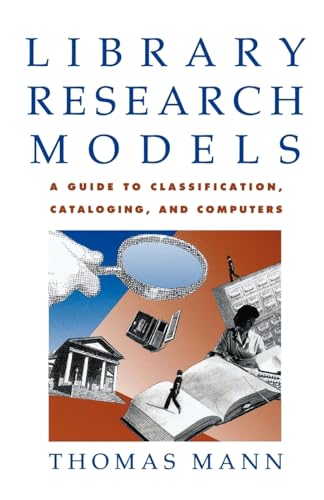
Most researchers, even with computers, find only a fraction of the sources available to them. As Library of Congress reference librarian Thomas Mann explains, researchers tend to work within one or another mental framework that limits their basic perception of the universe of knowledge available to them. Some, for example, use a subject-disciplinary method which leads them to a specific list of sources on a particular subject. But, Mann points out, while this method allows students and researchers to find more specialized sources, it is also limiting--they may not realize that works of interest to their own subject appear within the literature of many other disciplines. A researcher looking through anthropology journals, for example, might not discover that the MLA International Bibliography provides the best coverage of folklore journals. In Library Research Models, Mann examines the several alternative mental models people use to approach the task of research, and demonstrates new, more effective ways of finding information. Drawing on actual examples gleaned from 15 years' experience in helping thousands of researchers, he not only shows the full range of search options possible, but also illuminates the inevitable tradeoffs and losses of access that occur when researchers limit themselves to a specific method. In two chapters devoted to computers he examines the use of electronic resources and reveals their value in providing access to a wide range of sources as well as their disadvantages: what people are not getting when they rely solely on computer searches; why many sources will probably never be in databases; and what the options are for searching beyond computers. Thomas Mann's A Guide to Library Research Methods was widely praised as a definitive manual of library research. Ronald Gross, author of The Independent Scholar's Handbook called it "the savviest such guide I have ever seen--bracingly irreverent
Die Inhaltsangabe kann sich auf eine andere Ausgabe dieses Titels beziehen.
Über die Autorin bzw. den Autor
German novelist, short story author, social commentator, philanthropist, essayist, and 1929 Nobel Prize in Literature winner Paul Thomas Mann lived from 6 June 1875 to 12 August 1955. His sardonic and highly symbolic epic novels and novellas are renowned for their understanding of the minds of artists and intellectuals. He incorporated modernized versions of German and Biblical tales, as well as concepts from Friedrich Nietzsche, Arthur Schopenhauer, and Johann Wolfgang von Goethe, in his analysis and critique of the European and German spirit. In his first book, Buddenbrooks, Mann-a member of the Hanseatic Mann family-depicted his clan and social status. Three of Heinrich Mann's six children, Erika Mann, Klaus Mann, and Golo Mann, all went on to become well-known German writers, as did his older brother Heinrich Mann, a radical writer. Mann escaped to Switzerland in 1933, the year Adolf Hitler took office. He relocated to the United States in 1939 when World War II began, then went back to Switzerland in 1952. One of the most well-known authors of the so-called Exilliteratur, German writing produced in exile by individuals opposed to the Hitler government, is Mann.
„Über diesen Titel“ kann sich auf eine andere Ausgabe dieses Titels beziehen.
Suchergebnisse für Library Research Models: A Guide to Classification,...

Beispielbild für diese ISBN
Library Research Models: A Guide to Classification, Cataloging, and Computers
Verlag:
Oxford University Press, 1994
ISBN 10: 019509395X
ISBN 13: 9780195093957
Gebraucht
Softcover
Anbieter: World of Books (was SecondSale), Montgomery, IL, USA
Verkäuferbewertung 5 von 5 Sternen

Zustand: Acceptable. Item in acceptable condition! Textbooks may not include supplemental items i.e. CDs, access codes etc. Bestandsnummer des Verkäufers 00105215530
Gebraucht kaufen
EUR 5,16
Versand gratis
Versand innerhalb von USA
Versand innerhalb von USA
Anzahl: 1 verfügbar
Beispielbild für diese ISBN
Library Research Models: A Guide to Classification, Cataloging, and Computers
Verlag:
Oxford University Press (edition Revised ed.), 1994
ISBN 10: 019509395X
ISBN 13: 9780195093957
Gebraucht
Paperback
Anbieter: BooksRun, Philadelphia, PA, USA
Verkäuferbewertung 5 von 5 Sternen
Paperback. Zustand: Very Good. Revised ed. It's a well-cared-for item that has seen limited use. The item may show minor signs of wear. All the text is legible, with all pages included. It may have slight markings and/or highlighting. Bestandsnummer des Verkäufers 019509395X-11-1
Gebraucht kaufen
EUR 5,17
Versand gratis
Versand innerhalb von USA
Versand innerhalb von USA
Anzahl: 1 verfügbar
Beispielbild für diese ISBN
Library Research Models: A Guide to Classification, Cataloging, and Computers
Verlag:
Oxford University Press, 1994
ISBN 10: 019509395X
ISBN 13: 9780195093957
Gebraucht
Softcover
Anbieter: Wonder Book, Frederick, MD, USA
Verkäuferbewertung 5 von 5 Sternen
Zustand: Very Good. Very Good condition. A copy that may have a few cosmetic defects. May also contain light spine creasing or a few markings such as an owner's name, short gifter's inscription or light stamp. Bestandsnummer des Verkäufers B09B-00691
Gebraucht kaufen
EUR 6,32
Versand gratis
Versand innerhalb von USA
Versand innerhalb von USA
Anzahl: 2 verfügbar
Beispielbild für diese ISBN
Library Research Models : A Guide to Classification, Cataloging, and Computers
Verlag:
Oxford University Press, Incorporated, 1994
ISBN 10: 019509395X
ISBN 13: 9780195093957
Gebraucht
Softcover
Anbieter: Better World Books, Mishawaka, IN, USA
Verkäuferbewertung 5 von 5 Sternen
Zustand: Very Good. Pages intact with possible writing/highlighting. Binding strong with minor wear. Dust jackets/supplements may not be included. Stock photo provided. Product includes identifying sticker. Better World Books: Buy Books. Do Good. Bestandsnummer des Verkäufers 322854-75
Gebraucht kaufen
EUR 6,46
Versand gratis
Versand innerhalb von USA
Versand innerhalb von USA
Anzahl: 1 verfügbar
Beispielbild für diese ISBN
Library Research Models : A Guide to Classification, Cataloging, and Computers
Verlag:
Oxford University Press, Incorporated, 1994
ISBN 10: 019509395X
ISBN 13: 9780195093957
Gebraucht
Softcover
Anbieter: Better World Books, Mishawaka, IN, USA
Verkäuferbewertung 5 von 5 Sternen
Zustand: Good. Former library copy. Pages intact with minimal writing/highlighting. The binding may be loose and creased. Dust jackets/supplements are not included. Includes library markings. Stock photo provided. Product includes identifying sticker. Better World Books: Buy Books. Do Good. Bestandsnummer des Verkäufers GRP59897431
Gebraucht kaufen
EUR 6,46
Versand gratis
Versand innerhalb von USA
Versand innerhalb von USA
Anzahl: 2 verfügbar
Beispielbild für diese ISBN
Library Research Models: A Guide to Classification, Cataloging, and Computers
Verlag:
Oxford University Press Inc, 1995
ISBN 10: 019509395X
ISBN 13: 9780195093957
Gebraucht
Paperback
Anbieter: World of Books Inc, Montgomery, IL, USA
Verkäuferbewertung 4 von 5 Sternen

Paperback. Zustand: Fair. Using his own public services experiences and citing widely available print and online sources, Mann explains in detail the various schemes that have been devised so far to make the universe of knowledge records predictable and comprehensible. Bestandsnummer des Verkäufers CIN019509395XA
Gebraucht kaufen
EUR 6,97
Versand gratis
Versand innerhalb von USA
Versand innerhalb von USA
Anzahl: 1 verfügbar
Beispielbild für diese ISBN
Library Research Models: A Guide to Classification, Cataloging, and Computers
Verlag:
Oxford University Press, 1994
ISBN 10: 019509395X
ISBN 13: 9780195093957
Gebraucht
paperback
Anbieter: Once Upon A Time Books, Siloam Springs, AR, USA
Verkäuferbewertung 4 von 5 Sternen
paperback. Zustand: Acceptable. This is a used book. It may contain highlighting/underlining and/or the book may show heavier signs of wear . It may also be ex-library or without dustjacket. This is a used book. It may contain highlighting/underlining and/or the book may show heavier signs of wear . It may also be ex-library or without dustjacket. Bestandsnummer des Verkäufers mon0003563433
Gebraucht kaufen
EUR 3,53
EUR 3,47 Versand
Versand innerhalb von USA
Versand innerhalb von USA
Anzahl: 1 verfügbar
Beispielbild für diese ISBN
Library Research Models: A Guide to Classification, Cataloging, and Computers
Verlag:
Oxford University Press, 1994
ISBN 10: 019509395X
ISBN 13: 9780195093957
Gebraucht
Paperback
Anbieter: ThriftBooks-Atlanta, AUSTELL, GA, USA
Verkäuferbewertung 5 von 5 Sternen
Paperback. Zustand: Very Good. No Jacket. May have limited writing in cover pages. Pages are unmarked. ~ ThriftBooks: Read More, Spend Less. Bestandsnummer des Verkäufers G019509395XI4N00
Gebraucht kaufen
EUR 7,11
Versand gratis
Versand innerhalb von USA
Versand innerhalb von USA
Anzahl: 1 verfügbar
Beispielbild für diese ISBN
Library Research Models: A Guide to Classification, Cataloging, and Computers
Verlag:
Oxford University Press, 1994
ISBN 10: 019509395X
ISBN 13: 9780195093957
Gebraucht
paperback
Anbieter: Half Price Books Inc., Dallas, TX, USA
Verkäuferbewertung 5 von 5 Sternen
paperback. Zustand: Very Good. Connecting readers with great books since 1972! Used books may not include companion materials, and may have some shelf wear or limited writing. We ship orders daily and Customer Service is our top priority! Bestandsnummer des Verkäufers S_479432612
Gebraucht kaufen
EUR 3,97
EUR 3,29 Versand
Versand innerhalb von USA
Versand innerhalb von USA
Anzahl: 1 verfügbar
Beispielbild für diese ISBN
Library Research Models: A Guide to Classification, Cataloging, and Computers
Verlag:
Oxford University Press, Usa, 1993
ISBN 10: 019509395X
ISBN 13: 9780195093957
Gebraucht
Softcover
Anbieter: Anybook.com, Lincoln, Vereinigtes Königreich
Verkäuferbewertung 5 von 5 Sternen
Zustand: Good. This is an ex-library book and may have the usual library/used-book markings inside.This book has soft covers. In good all round condition. Please note the Image in this listing is a stock photo and may not match the covers of the actual item,400grams, ISBN:9780195093957. Bestandsnummer des Verkäufers 9166772
Gebraucht kaufen
EUR 7,24
EUR 15,81 Versand
Versand von Vereinigtes Königreich nach USA
Versand von Vereinigtes Königreich nach USA
Anzahl: 1 verfügbar