
Verwandte Artikel zu Socrates, Pleasure, and Value
Inhaltsangabe
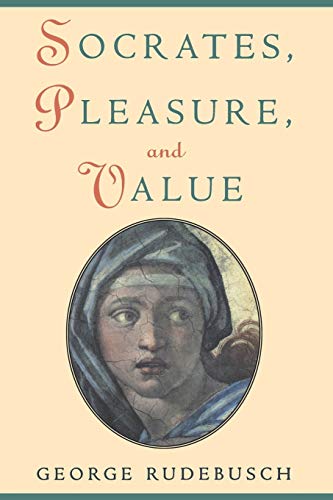
In the past quarter century, enormous philosophical attention has been paid to Plato's "Socratic" dialogues, as interpreters have sought to identify which dialogues are truly Socratic and interpret and defend the moral theories they find in those works. In spite of this intellectual energy, no consensus has emerged on the question of whether Socrates was a hedonist-whether he believed pleasure to be the good. In this study, George Rudebusch addresses this question and the textual puzzle from which it has arisen.
In the Protagoras, Plato has Socrates appeal to hedonism in order to assert his characteristic identification of virtue and knowledge. While in the Gorgias, Socrates attributes hedonism to his opponent and argues against it in defence of his own view that doing injustice is worse than suffering it. From the Apology and Crito, it is clear that Socrates believes virtue to be the supreme good. Taken together, scholars have found these texts to be incoherent and seek to account for them either in terms of the development of Plato's thinking or by denying that one or more of these texts was meant to reflect Socrates' own ethical theory.
Rudebusch argues instead that these texts do indeed fit together into a coherent moral theory as he attempts to locate Socrates' position on hedonism. He distinguishes Socrates' own hedonism from that which Socrates attacks elsewhere. Rudebusch also maintains that Socrates identifies pleasant activity with virtuous activity, describing Socrates' hedonism as one of activity, not sensation. This analysis allows for Socrates to find both virtue and pleasure to be the good, thus solving the textual puzzle and showing the power of Socratic argument in leading human beings toward the good.
Tackling some of the most fundamental debates over Socratic ethics in Plato's earlier dialogues, Socrates, Pleasure, and Value will generate renewed discussion among specialists and provide excellent reading for courses in ancient philosophy as well as ethical theory.
Die Inhaltsangabe kann sich auf eine andere Ausgabe dieses Titels beziehen.
Suchergebnisse für Socrates, Pleasure, and Value

Beispielbild für diese ISBN
Socrates Pleasure and Value
Verlag:
Oxford University Press, 2002
ISBN 10: 0195159616
ISBN 13: 9780195159615
Gebraucht
Softcover
Anbieter: World of Books (was SecondSale), Montgomery, IL, USA
Verkäuferbewertung 5 von 5 Sternen

Zustand: Very Good. Item in very good condition! Textbooks may not include supplemental items i.e. CDs, access codes etc. Bestandsnummer des Verkäufers 00110442389
Gebraucht kaufen
EUR 9,46
Versand gratis
Versand innerhalb von USA
Versand innerhalb von USA
Anzahl: 1 verfügbar
Beispielbild für diese ISBN
Socrates, Pleasure, and Value
Verlag:
Oxford University Press Inc, 2002
ISBN 10: 0195159616
ISBN 13: 9780195159615
Gebraucht
Paperback
Anbieter: World of Books Inc, Montgomery, IL, USA
Verkäuferbewertung 4 von 5 Sternen

Paperback. Zustand: Very Good. Addressing whether Socrates was a hedonist, the author examines the passages in Plato's early dialogues that are the most disputed on the topic. He maintains that Socrates identifies pleasant activity with virtuous activity, describing Socrates' hedonism as one of activity, not sensation. Bestandsnummer des Verkäufers CIN0195159616VG
Gebraucht kaufen
EUR 11,26
Versand gratis
Versand innerhalb von USA
Versand innerhalb von USA
Anzahl: 1 verfügbar
Beispielbild für diese ISBN
Socrates, Pleasure and Value
Verlag:
Oxford University Press, 1999
ISBN 10: 0195159616
ISBN 13: 9780195159615
Gebraucht
Softcover
Anbieter: Windows Booksellers, Eugene, OR, USA
Verkäuferbewertung 5 von 5 Sternen
Paperback. Thin dent in outer edge of text. Upper edge of text worn. Face of front cover worn. Otherwise pristine. 169 pp. Bestandsnummer des Verkäufers 727523
Gebraucht kaufen
EUR 7,20
EUR 6,55 Versand
Versand innerhalb von USA
Versand innerhalb von USA
Anzahl: 1 verfügbar
Beispielbild für diese ISBN
Socrates, Pleasure, and Value
Anbieter: Murphy-Brookfield Books, Iowa City SE, IA, USA
Verkäuferbewertung 4 von 5 Sternen
Trade Paperback. Zustand: Fine. Bestandsnummer des Verkäufers 325960
Gebraucht kaufen
EUR 13,50
EUR 4,80 Versand
Versand innerhalb von USA
Versand innerhalb von USA
Anzahl: 1 verfügbar
Beispielbild für diese ISBN
Socrates, Pleasure, and Value (eng)
Print-on-DemandAnbieter: Brook Bookstore On Demand, Napoli, NA, Italien
Verkäuferbewertung 5 von 5 Sternen
Zustand: new. Questo è un articolo print on demand. Bestandsnummer des Verkäufers 5f52321871f1c43831f1043eccc44b7c
Neu kaufen
EUR 41,54
EUR 5,50 Versand
Versand von Italien nach USA
Versand von Italien nach USA
Anzahl: Mehr als 20 verfügbar
Foto des Verkäufers
Socrates, Pleasure, and Value
Anbieter: GreatBookPrices, Columbia, MD, USA
Verkäuferbewertung 5 von 5 Sternen
Zustand: New. Bestandsnummer des Verkäufers 640227-n
Neu kaufen
EUR 47,42
EUR 2,31 Versand
Versand innerhalb von USA
Versand innerhalb von USA
Anzahl: Mehr als 20 verfügbar
Beispielbild für diese ISBN
Socrates, Pleasure, and Value
Print-on-DemandAnbieter: PBShop.store US, Wood Dale, IL, USA
Verkäuferbewertung 5 von 5 Sternen
PAP. Zustand: New. New Book. Shipped from UK. THIS BOOK IS PRINTED ON DEMAND. Established seller since 2000. Bestandsnummer des Verkäufers L0-9780195159615
Neu kaufen
EUR 51,57
Versand gratis
Versand innerhalb von USA
Versand innerhalb von USA
Anzahl: Mehr als 20 verfügbar
Foto des Verkäufers
Socrates, Pleasure, and Value
Verlag:
Oxford University Press Inc, US, 2002
ISBN 10: 0195159616
ISBN 13: 9780195159615
Neu
Paperback
Anbieter: Rarewaves.com USA, London, LONDO, Vereinigtes Königreich
Verkäuferbewertung 5 von 5 Sternen
Paperback. Zustand: New. In the past quarter century, enormous philosophical attention has been paid to Plato's "Socratic" dialogues, as interpreters have sought to identify which dialogues are truly Socratic and interpret and defend the moral theories they find in those works. In spite of this intellectual energy, no consensus has emerged on the question of whether Socrates was a hedonist-whether he believed pleasure to be the good. In this study, George Rudebusch addresses this question and the textual puzzle from which it has arisen. In the Protagoras, Plato has Socrates appeal to hedonism in order to assert his characteristic identification of virtue and knowledge. While in the Gorgias, Socrates attributes hedonism to his opponent and argues against it in defence of his own view that doing injustice is worse than suffering it. From the Apology and Crito, it is clear that Socrates believes virtue to be the supreme good. Taken together, scholars have found these texts to be incoherent and seek to account for them either in terms of the development of Plato's thinking or by denying that one or more of these texts was meant to reflect Socrates' own ethical theory. Rudebusch argues instead that these texts do indeed fit together into a coherent moral theory as he attempts to locate Socrates' position on hedonism. He distinguishes Socrates' own hedonism from that which Socrates attacks elsewhere. Rudebusch also maintains that Socrates identifies pleasant activity with virtuous activity, describing Socrates' hedonism as one of activity, not sensation. This analysis allows for Socrates to find both virtue and pleasure to be the good, thus solving the textual puzzle and showing the power of Socratic argument in leading human beings toward the good. Tackling some of the most fundamental debates over Socratic ethics in Plato's earlier dialogues, Socrates, Pleasure, and Value will generate renewed discussion among specialists and provide excellent reading for courses in ancient philosophy as well as ethical theory. Bestandsnummer des Verkäufers LU-9780195159615
Neu kaufen
EUR 51,96
Versand gratis
Versand von Vereinigtes Königreich nach USA
Versand von Vereinigtes Königreich nach USA
Anzahl: Mehr als 20 verfügbar
Beispielbild für diese ISBN
Socrates, Pleasure and Value
Anbieter: Kennys Bookshop and Art Galleries Ltd., Galway, GY, Irland
Verkäuferbewertung 5 von 5 Sternen
Zustand: New. Addressing whether Socrates was a hedonist, the author examines the passages in Plato's early dialogues that are the most disputed on the topic. He maintains that Socrates identifies pleasant activity with virtuous activity, describing Socrates' hedonism as one of activity, not sensation. Num Pages: 192 pages, notes, bibliography, indexes. BIC Classification: HPCA; HPQ. Category: (P) Professional & Vocational. Dimension: 235 x 156 x 14. Weight in Grams: 309. . 2002. Paperback. . . . . Bestandsnummer des Verkäufers V9780195159615
Neu kaufen
EUR 42,76
EUR 9,50 Versand
Versand von Irland nach USA
Versand von Irland nach USA
Anzahl: Mehr als 20 verfügbar
Foto des Verkäufers
Socrates, Pleasure, and Value
Verlag:
Oxford University Press, 2002
ISBN 10: 0195159616
ISBN 13: 9780195159615
Gebraucht
Softcover
Anbieter: GreatBookPrices, Columbia, MD, USA
Verkäuferbewertung 5 von 5 Sternen
Zustand: As New. Unread book in perfect condition. Bestandsnummer des Verkäufers 640227
Gebraucht kaufen
EUR 50,59
EUR 2,31 Versand
Versand innerhalb von USA
Versand innerhalb von USA
Anzahl: Mehr als 20 verfügbar