
Verwandte Artikel zu Globalization and the National Security State
Inhaltsangabe
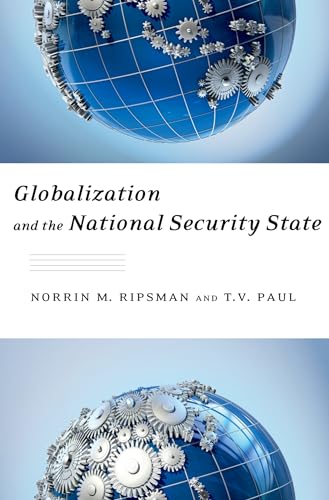
Argues that despited effects of globalization, weak and powerful states have continued to pursue traditional nation-state security strategies and nation-states are not in decline
Die Inhaltsangabe kann sich auf eine andere Ausgabe dieses Titels beziehen.
Über die Autorin bzw. den Autor
Norrin Ripsman is Associate Professor of Political Science at Concordia University in Montreal.
T.V. Paul is James McGill Professor of International Relations at McGill University.
„Über diesen Titel“ kann sich auf eine andere Ausgabe dieses Titels beziehen.
Suchergebnisse für Globalization and the National Security State

Beispielbild für diese ISBN
Globalization and the National Security State
Verlag:
Oxford University Press, 2010
ISBN 10: 0195393910
ISBN 13: 9780195393910
Gebraucht
Paperback
Anbieter: ThriftBooks-Atlanta, AUSTELL, GA, USA
Verkäuferbewertung 5 von 5 Sternen

Paperback. Zustand: Very Good. No Jacket. May have limited writing in cover pages. Pages are unmarked. ~ ThriftBooks: Read More, Spend Less. Bestandsnummer des Verkäufers G0195393910I4N00
Gebraucht kaufen
EUR 13,54
Versand gratis
Versand innerhalb von USA
Versand innerhalb von USA
Anzahl: 1 verfügbar
Beispielbild für diese ISBN
Globalization and the National Security State
Verlag:
Oxford University Press, 2010
ISBN 10: 0195393910
ISBN 13: 9780195393910
Gebraucht
Softcover
Anbieter: Mobilis Books, Geneva, FL, USA
Verkäuferbewertung 4 von 5 Sternen

Zustand: Very Good. In the past two decades, many have posited a correlation between the spread of globalization and the decline of the nation-state. In the realm of national security, advocates of the globalization thesis have argued that states' power has diminished relative to transnational governmental institutions, NGOs, and transnational capitalism. Initially, they pointed to declines in both global military spending (which has risen dramatically in recent years) and interstate war. But are these trends really indicative of the decline of nation-state's role as a guarantor of national security? In Globalization and the National Security State, T. V. Paul and Norrin M. Ripsman test the proposition against the available evidence and find that the globalization school has largely gotten it wrong. The decline in interstate warfare can largely be attributed to the end of the Cold War, not globalization. Moreover, great powers (the US, China, and Russia) continue to pursue traditional nation-state strategies. Regional security arrangements like the EU and ASEAN have not achieved much, and weak states--the ones most impacted by the turmoil generated by globalization--are far more traditional in their approaches to national security, preferring to rely on their own resources rather than those of regional and transnational institutions. This is a bold argument, and Paul and Ripsman amass a considerable amount of evidence for their claims. It cuts against a major movement in international relations scholarship, and is sure to generate controversy. Bestandsnummer des Verkäufers 1077
Gebraucht kaufen
EUR 9,04
EUR 5,27 Versand
Versand innerhalb von USA
Versand innerhalb von USA
Anzahl: 1 verfügbar
Beispielbild für diese ISBN
Globalization and the National Security State
Verlag:
Oxford University Press, Incorporated, 2010
ISBN 10: 0195393910
ISBN 13: 9780195393910
Gebraucht
Softcover
Anbieter: Better World Books: West, Reno, NV, USA
Verkäuferbewertung 5 von 5 Sternen
Zustand: Very Good. Former library copy. Pages intact with possible writing/highlighting. Binding strong with minor wear. Dust jackets/supplements may not be included. Includes library markings. Stock photo provided. Product includes identifying sticker. Better World Books: Buy Books. Do Good. Bestandsnummer des Verkäufers 11954061-20
Gebraucht kaufen
EUR 14,45
Versand gratis
Versand innerhalb von USA
Versand innerhalb von USA
Anzahl: 1 verfügbar
Beispielbild für diese ISBN
Globalization and the National Security State
Verlag:
Oxford University Press, Incorporated, 2010
ISBN 10: 0195393910
ISBN 13: 9780195393910
Gebraucht
Softcover
Anbieter: Better World Books Ltd, Dunfermline, Vereinigtes Königreich
Verkäuferbewertung 5 von 5 Sternen
Zustand: Very Good. Former library copy. Pages intact with possible writing/highlighting. Binding strong with minor wear. Dust jackets/supplements may not be included. Includes library markings. Stock photo provided. Product includes identifying sticker. Better World Books: Buy Books. Do Good. Bestandsnummer des Verkäufers 11954061-20
Gebraucht kaufen
EUR 11,71
EUR 5,81 Versand
Versand von Vereinigtes Königreich nach USA
Versand von Vereinigtes Königreich nach USA
Anzahl: 1 verfügbar
Beispielbild für diese ISBN
Globalization and the National Security State
Verlag:
Oxford University Press, 2010
ISBN 10: 0195393910
ISBN 13: 9780195393910
Gebraucht
Soft cover
Anbieter: Cotswolds Rare Books, OXFORDSHIRE, Vereinigtes Königreich
Verkäuferbewertung 5 von 5 Sternen
Soft cover. Zustand: As New. As brand new. Bestandsnummer des Verkäufers 745H
Gebraucht kaufen
EUR 8,08
EUR 29,19 Versand
Versand von Vereinigtes Königreich nach USA
Versand von Vereinigtes Königreich nach USA
Anzahl: 1 verfügbar
Beispielbild für diese ISBN
Globalization and the National Security State (eng)
Print-on-DemandAnbieter: Brook Bookstore On Demand, Napoli, NA, Italien
Verkäuferbewertung 5 von 5 Sternen
Zustand: new. Questo è un articolo print on demand. Bestandsnummer des Verkäufers b6a9361e834755535bee13365d336338
Neu kaufen
EUR 41,47
EUR 5,50 Versand
Versand von Italien nach USA
Versand von Italien nach USA
Anzahl: Mehr als 20 verfügbar
Beispielbild für diese ISBN
Globalization and the National Security State
Anbieter: GreatBookPrices, Columbia, MD, USA
Verkäuferbewertung 5 von 5 Sternen
Zustand: New. Bestandsnummer des Verkäufers 8536712-n
Neu kaufen
EUR 47,24
EUR 2,32 Versand
Versand innerhalb von USA
Versand innerhalb von USA
Anzahl: Mehr als 20 verfügbar
Beispielbild für diese ISBN
Globalization and the National Security State
Verlag:
Oxford University Press 2010-03-18, 2010
ISBN 10: 0195393910
ISBN 13: 9780195393910
Neu
Paperback
Anbieter: Chiron Media, Wallingford, Vereinigtes Königreich
Verkäuferbewertung 5 von 5 Sternen
Paperback. Zustand: New. Brand new book, sourced directly from publisher. Dispatch time is 6-7 days from our warehouse. Book will be sent in robust, secure packaging to ensure it reaches you securely. Bestandsnummer des Verkäufers 6666-IUK-9780195393910
Neu kaufen
EUR 44,61
EUR 5,80 Versand
Versand von Vereinigtes Königreich nach USA
Versand von Vereinigtes Königreich nach USA
Anzahl: Mehr als 20 verfügbar
Beispielbild für diese ISBN
Globalization and the National Security State
Print-on-DemandAnbieter: PBShop.store US, Wood Dale, IL, USA
Verkäuferbewertung 5 von 5 Sternen
PAP. Zustand: New. New Book. Shipped from UK. THIS BOOK IS PRINTED ON DEMAND. Established seller since 2000. Bestandsnummer des Verkäufers L0-9780195393910
Neu kaufen
EUR 52,42
Versand gratis
Versand innerhalb von USA
Versand innerhalb von USA
Anzahl: Mehr als 20 verfügbar
Foto des Verkäufers
Globalization and the National Security State
Verlag:
Oxford University Press, 2010
ISBN 10: 0195393910
ISBN 13: 9780195393910
Gebraucht
Softcover
Anbieter: GreatBookPrices, Columbia, MD, USA
Verkäuferbewertung 5 von 5 Sternen
Zustand: As New. Unread book in perfect condition. Bestandsnummer des Verkäufers 8536712
Gebraucht kaufen
EUR 50,51
EUR 2,32 Versand
Versand innerhalb von USA
Versand innerhalb von USA
Anzahl: Mehr als 20 verfügbar