
Verwandte Artikel zu Intelligence: A Very Short Introduction (Very Short...
Intelligence: A Very Short Introduction (Very Short Introductions) - Softcover
Buch 256 von 406: Very Short Introductions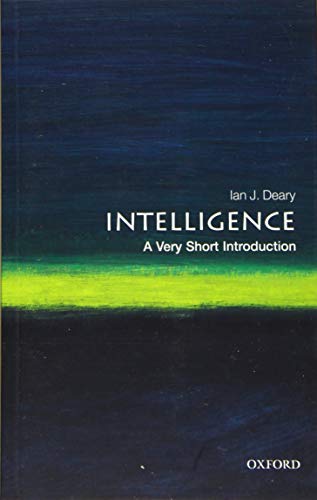
Inhaltsangabe
Some people are cleverer than others. This everyday observation is the subject of an academic field that is often portrayed as confused and controversial, when in fact, the field of intelligence holds some of psychology's best-replicated findings. This Very Short Introduction describes what psychologists have discovered about how and why people differ in their thinking powers. Drawing on large scale data Ian Deary considers how many types of intelligence there are, and how intelligence changes with age. Along the way he tackles some of the most burning questions surrounding intelligence, such as whether larger brains are cleverer, and how genes and environments contribute to people's intelligence differences. He also considers the new field of cognitive epidemiology, which draws links between intelligence and better health, less illness, and longer life, and asks whether intelligence is increasing. In this new edition Deary also addresses the controversial question of whether men and women differ in intelligence. Throughout he provides a clear description of the data we can use to answer these questions and more. ABOUT THE SERIES: The Very Short Introductions series from Oxford University Press contains hundreds of titles in almost every subject area. These pocket-sized books are the perfect way to get ahead in a new subject quickly. Our expert authors combine facts, analysis, perspective, new ideas, and enthusiasm to make interesting and challenging topics highly readable.
Die Inhaltsangabe kann sich auf eine andere Ausgabe dieses Titels beziehen.
Über die Autorin bzw. den Autor
Ian Deary is Professor of Differential Psychology at the University of Edinburgh. He practised psychiatry in London and Edinburgh before moving to academic psychology, where his principal research interests include human mental abilities, the effects of ageing and medical conditions on mental skills, and the impact of cognitive ability on people's lives. He is Director of the Lothian Birth Cohort studies and is an elected Fellow of the British Academy, the Royal Society of Edinburgh, the Academy of Medical Sciences, the Royal College of Psychiatrists, and the Royal College of Physicians of Edinburgh. He is the author of several books, including Looking Down on Human Intelligence: From Psychometrics to the Brain (OUP, 2000), and is the winner of several international awards for his research on human intelligence and personality.
„Über diesen Titel“ kann sich auf eine andere Ausgabe dieses Titels beziehen.
Suchergebnisse für Intelligence: A Very Short Introduction (Very Short...

Beispielbild für diese ISBN
Intelligence: A Very Short Introduction
Verlag:
Oxford University Press, 2020
ISBN 10: 019879620X
ISBN 13: 9780198796206
Gebraucht
Paperback
Anbieter: WorldofBooks, Goring-By-Sea, WS, Vereinigtes Königreich
Verkäuferbewertung 5 von 5 Sternen

Paperback. Zustand: Very Good. The book has been read, but is in excellent condition. Pages are intact and not marred by notes or highlighting. The spine remains undamaged. Bestandsnummer des Verkäufers GOR010784248
Gebraucht kaufen
EUR 4,53
EUR 6,63 Versand
Versand von Vereinigtes Königreich nach USA
Versand von Vereinigtes Königreich nach USA
Anzahl: 5 verfügbar
Beispielbild für diese ISBN
Intelligence: A Very Short Introduction
Verlag:
Oxford University Press, 2020
ISBN 10: 019879620X
ISBN 13: 9780198796206
Gebraucht
Paperback
Anbieter: WorldofBooks, Goring-By-Sea, WS, Vereinigtes Königreich
Verkäuferbewertung 5 von 5 Sternen
Paperback. Zustand: Fine. Bestandsnummer des Verkäufers GOR010548625
Gebraucht kaufen
EUR 4,53
EUR 6,63 Versand
Versand von Vereinigtes Königreich nach USA
Versand von Vereinigtes Königreich nach USA
Anzahl: 1 verfügbar
Beispielbild für diese ISBN
Intelligence: A Very Short Introduction (Very Short Introductions)
Anbieter: Lakeside Books, Benton Harbor, MI, USA
Verkäuferbewertung 5 von 5 Sternen
Zustand: New. Brand New! Not Overstocks or Low Quality Book Club Editions! Direct From the Publisher! We're not a giant, faceless warehouse organization! We're a small town bookstore that loves books and loves it's customers! Buy from Lakeside Books! Bestandsnummer des Verkäufers OTF-S-9780198796206
Neu kaufen
EUR 8,15
EUR 3,56 Versand
Versand innerhalb von USA
Versand innerhalb von USA
Anzahl: Mehr als 20 verfügbar
Foto des Verkäufers
Intelligence : A Very Short Introduction
Anbieter: GreatBookPrices, Columbia, MD, USA
Verkäuferbewertung 5 von 5 Sternen
Zustand: New. Bestandsnummer des Verkäufers 37628708-n
Neu kaufen
EUR 9,38
EUR 2,36 Versand
Versand innerhalb von USA
Versand innerhalb von USA
Anzahl: Mehr als 20 verfügbar
Beispielbild für diese ISBN
Intelligence: A Very Short Introduction
Verlag:
Oxford University Press, 2020
ISBN 10: 019879620X
ISBN 13: 9780198796206
Gebraucht
Paperback
Anbieter: World of Books (was SecondSale), Montgomery, IL, USA
Verkäuferbewertung 5 von 5 Sternen
Paperback. Zustand: Good. Some people are cleverer than others. This everyday observation is the subject of an academic field that is often portrayed as confused and controversial, when in fact, the field of intelligence holds some of psychology's best-replicated findings.This Very Short Introduction describes what psychologists have discovered about how and why people differ in their thinking powers. Drawing on large scale data Ian Deary considers how many types of intelligence there are, and how intelligence changes with age. Along the way he tackles some of the most burning questions surrounding intelligence, such as whether larger brains are cleverer, and how genes and environments contribute to people's intelligence differences. He also considers the new field of cognitive epidemiology, which draws links between intelligence and better health, less illness, and longer life, and asks whether intelligence is increasing. In this new edition Deary also addresses the controversial question of whether men and women differ in intelligence. Throughout he provides a clear description of the data we can use to answer these questions and more.ABOUT THE SERIES: The Very Short Introductions series from Oxford University Press contains hundreds of titles in almost every subject area. These pocket-sized books are the perfect way to get ahead in a new subject quickly. Our expert authors combine facts, analysis, perspective, new ideas, and enthusiasm to make interesting and challenging topics highly readable. Bestandsnummer des Verkäufers 00106015958
Gebraucht kaufen
EUR 11,79
Versand gratis
Versand innerhalb von USA
Versand innerhalb von USA
Anzahl: 1 verfügbar
Beispielbild für diese ISBN
Intelligence: A Very Short Introduction
Verlag:
Oxford University Press, 2020
ISBN 10: 019879620X
ISBN 13: 9780198796206
Gebraucht
paperback
Anbieter: Books From California, Simi Valley, CA, USA
Verkäuferbewertung 4 von 5 Sternen

paperback. Zustand: Very Good. Bestandsnummer des Verkäufers mon0003997969
Gebraucht kaufen
EUR 7,45
EUR 4,45 Versand
Versand innerhalb von USA
Versand innerhalb von USA
Anzahl: 1 verfügbar
Foto des Verkäufers
Intelligence : A Very Short Introduction
Verlag:
Oxford University Press, 2020
ISBN 10: 019879620X
ISBN 13: 9780198796206
Gebraucht
Softcover
Anbieter: GreatBookPrices, Columbia, MD, USA
Verkäuferbewertung 5 von 5 Sternen
Zustand: As New. Unread book in perfect condition. Bestandsnummer des Verkäufers 37628708
Gebraucht kaufen
EUR 10,28
EUR 2,36 Versand
Versand innerhalb von USA
Versand innerhalb von USA
Anzahl: Mehr als 20 verfügbar
Beispielbild für diese ISBN
Intelligence: A Very Short Introduction Format: Paperback
Anbieter: INDOO, Avenel, NJ, USA
Verkäuferbewertung 5 von 5 Sternen
Zustand: New. Brand New. Bestandsnummer des Verkäufers 9780198796206
Neu kaufen
EUR 13,42
Versand gratis
Versand innerhalb von USA
Versand innerhalb von USA
Anzahl: Mehr als 20 verfügbar
Beispielbild für diese ISBN
Intelligence: A Very Short Introduction
Verlag:
Oxford University Press, 2020
ISBN 10: 019879620X
ISBN 13: 9780198796206
Gebraucht
Paperback
Anbieter: World of Books Inc, Montgomery, IL, USA
Verkäuferbewertung 4 von 5 Sternen
Paperback. Zustand: Good. Some people are cleverer than others. This everyday observation is the subject of an academic field that is often portrayed as confused and controversial, when in fact, the field of intelligence holds some of psychology's best-replicated findings.This Very Short Introduction describes what psychologists have discovered about how and why people differ in their thinking powers. Drawing on large scale data Ian Deary considers how many types of intelligence there are, and how intelligence changes with age. Along the way he tackles some of the most burning questions surrounding intelligence, such as whether larger brains are cleverer, and how genes and environments contribute to people's intelligence differences. He also considers the new field of cognitive epidemiology, which draws links between intelligence and better health, less illness, and longer life, and asks whether intelligence is increasing. In this new edition Deary also addresses the controversial question of whether men and women differ in intelligence. Throughout he provides a clear description of the data we can use to answer these questions and more.ABOUT THE SERIES: The Very Short Introductions series from Oxford University Press contains hundreds of titles in almost every subject area. These pocket-sized books are the perfect way to get ahead in a new subject quickly. Our expert authors combine facts, analysis, perspective, new ideas, and enthusiasm to make interesting and challenging topics highly readable. Bestandsnummer des Verkäufers CIN019879620XG
Gebraucht kaufen
EUR 13,63
Versand gratis
Versand innerhalb von USA
Versand innerhalb von USA
Anzahl: 1 verfügbar
Beispielbild für diese ISBN
Intelligence: A Very Short Introduction (Very Short Introductions)
Anbieter: Majestic Books, Hounslow, Vereinigtes Königreich
Verkäuferbewertung 4 von 5 Sternen
Zustand: New. pp. 184. Bestandsnummer des Verkäufers 369498916
Neu kaufen
EUR 6,06
EUR 7,69 Versand
Versand von Vereinigtes Königreich nach USA
Versand von Vereinigtes Königreich nach USA
Anzahl: 2 verfügbar