
Verwandte Artikel zu Not a Chimp: The Hunt to Find the Genes That Make Us...
Inhaltsangabe
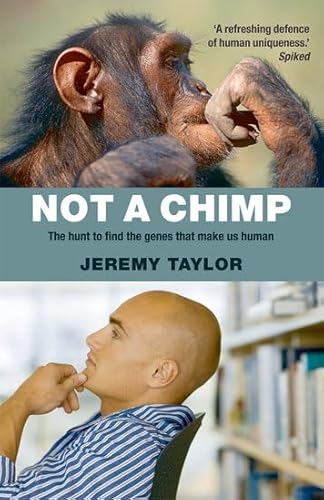
A fascinating account of the genes that make us human--and make us far different from our nearest evolutionary relative, the chimpanzee
Die Inhaltsangabe kann sich auf eine andere Ausgabe dieses Titels beziehen.
Über die Autorin bzw. den Autor
Jeremy Taylor is a science documentary film producer. His films have been aired as part of the televisions series "Nova" and the BBC's "Horizon," as well as on the Discovery Channel and National Geographic television.
„Über diesen Titel“ kann sich auf eine andere Ausgabe dieses Titels beziehen.
Suchergebnisse für Not a Chimp: The Hunt to Find the Genes That Make Us...

Beispielbild für diese ISBN
Not a Chimp: The Hunt to Find the Genes That Make Us Human
Verlag:
Oxford University Press, 2010
ISBN 10: 0199227799
ISBN 13: 9780199227792
Gebraucht
Paperback
Anbieter: World of Books (was SecondSale), Montgomery, IL, USA
Verkäuferbewertung 5 von 5 Sternen

Paperback. Zustand: Good. Humans are primates, and our closest relatives are the other African apes - chimpanzees closest of all. With the mapping of the human genome, and that of the chimp, a direct comparison of the differences between the two, letter by letter along the billions of As, Gs, Cs, and Ts of the DNA code, has led to the widely vaunted claim that we differ from chimps by a mere 1.6% of our genetic code. A mere hair's breadth genetically! To a rather older tradition of anthropomorphizing chimps, trying to get them to speak, dressing them up for 'tea parties', was added the stamp of genetic confirmation. It also began an international race to find that handful of genes that make up the difference - the genes that make us uniquely human. But what does that 1.6% really mean? And should it really lead us to consider extending limited human rights to chimps, as some have suggested? Are we, after all, just chimps with a few genetic tweaks? Is our language and our technology just an extension of the grunts and ant-collecting sticks of chimps? In this book, Jeremy Taylor sketches the picture that is emerging from cutting edge research in genetics, animal behaviour, and other fields. The indications are that the so-called 1.6% is much larger and leads to profound differences between the two species. We shared a common ancestor with chimps some 6-7 million years ago, but we humans have been racing away ever since. One in ten of our genes, says Taylor, has undergone evolution in the past 40,000 years! Some of the changes that happened since we split from chimpanzees are to genes that control the way whole orchestras of other genes are switched on and off, and where. Taylor shows, using studies of certain genes now associated with speech and with brain development and activity, that the story looks to be much more complicated than we first thought. This rapidly changing and exciting field has recently discovered a host of genetic mechanisms that make us different from other apes. As Taylor points out, for too long we have let our sentimentality for chimps get in the way of our understanding. Chimps use tools, but so do crows. Certainly chimps are our closest genetic relatives. But relatively small differences in genetic code can lead to profound differences in cognition and behaviour. Our abilities give us the responsibility to protect and preserve the natural world, including endangered primates. But for the purposes of human society and human concepts such as rights, let's not pretend that chimps are humans uneducated and undressed. We've changed a lot in those 12 million years. Bestandsnummer des Verkäufers 00097196555
Gebraucht kaufen
EUR 5,86
Versand gratis
Versand innerhalb von USA
Versand innerhalb von USA
Anzahl: 1 verfügbar
Beispielbild für diese ISBN
Not a Chimp: The Hunt to Find the Genes That Make Us Human
Verlag:
Oxford University Press, 2010
ISBN 10: 0199227799
ISBN 13: 9780199227792
Gebraucht
Paperback
Anbieter: World of Books (was SecondSale), Montgomery, IL, USA
Verkäuferbewertung 5 von 5 Sternen
Paperback. Zustand: Very Good. Humans are primates, and our closest relatives are the other African apes - chimpanzees closest of all. With the mapping of the human genome, and that of the chimp, a direct comparison of the differences between the two, letter by letter along the billions of As, Gs, Cs, and Ts of the DNA code, has led to the widely vaunted claim that we differ from chimps by a mere 1.6% of our genetic code. A mere hair's breadth genetically! To a rather older tradition of anthropomorphizing chimps, trying to get them to speak, dressing them up for 'tea parties', was added the stamp of genetic confirmation. It also began an international race to find that handful of genes that make up the difference - the genes that make us uniquely human. But what does that 1.6% really mean? And should it really lead us to consider extending limited human rights to chimps, as some have suggested? Are we, after all, just chimps with a few genetic tweaks? Is our language and our technology just an extension of the grunts and ant-collecting sticks of chimps? In this book, Jeremy Taylor sketches the picture that is emerging from cutting edge research in genetics, animal behaviour, and other fields. The indications are that the so-called 1.6% is much larger and leads to profound differences between the two species. We shared a common ancestor with chimps some 6-7 million years ago, but we humans have been racing away ever since. One in ten of our genes, says Taylor, has undergone evolution in the past 40,000 years! Some of the changes that happened since we split from chimpanzees are to genes that control the way whole orchestras of other genes are switched on and off, and where. Taylor shows, using studies of certain genes now associated with speech and with brain development and activity, that the story looks to be much more complicated than we first thought. This rapidly changing and exciting field has recently discovered a host of genetic mechanisms that make us different from other apes. As Taylor points out, for too long we have let our sentimentality for chimps get in the way of our understanding. Chimps use tools, but so do crows. Certainly chimps are our closest genetic relatives. But relatively small differences in genetic code can lead to profound differences in cognition and behaviour. Our abilities give us the responsibility to protect and preserve the natural world, including endangered primates. But for the purposes of human society and human concepts such as rights, let's not pretend that chimps are humans uneducated and undressed. We've changed a lot in those 12 million years. Bestandsnummer des Verkäufers 00092130300
Gebraucht kaufen
EUR 5,86
Versand gratis
Versand innerhalb von USA
Versand innerhalb von USA
Anzahl: 1 verfügbar
Beispielbild für diese ISBN
Not a Chimp : The Hunt to Find the Genes That Make Us Human
Verlag:
Oxford University Press, Incorporated, 2010
ISBN 10: 0199227799
ISBN 13: 9780199227792
Gebraucht
Softcover
Anbieter: Better World Books, Mishawaka, IN, USA
Verkäuferbewertung 5 von 5 Sternen
Zustand: Good. Former library copy. Pages intact with minimal writing/highlighting. The binding may be loose and creased. Dust jackets/supplements are not included. Includes library markings. Stock photo provided. Product includes identifying sticker. Better World Books: Buy Books. Do Good. Bestandsnummer des Verkäufers GRP78042635
Gebraucht kaufen
EUR 6,57
Versand gratis
Versand innerhalb von USA
Versand innerhalb von USA
Anzahl: 2 verfügbar
Beispielbild für diese ISBN
Not a Chimp : The Hunt to Find the Genes That Make Us Human
Verlag:
Oxford University Press, Incorporated, 2010
ISBN 10: 0199227799
ISBN 13: 9780199227792
Gebraucht
Softcover
Anbieter: Better World Books, Mishawaka, IN, USA
Verkäuferbewertung 5 von 5 Sternen
Zustand: Very Good. Former library copy. Pages intact with possible writing/highlighting. Binding strong with minor wear. Dust jackets/supplements may not be included. Includes library markings. Stock photo provided. Product includes identifying sticker. Better World Books: Buy Books. Do Good. Bestandsnummer des Verkäufers GRP85639627
Gebraucht kaufen
EUR 6,57
Versand gratis
Versand innerhalb von USA
Versand innerhalb von USA
Anzahl: 1 verfügbar
Beispielbild für diese ISBN
Not a Chimp: The Hunt to Find the Genes That Make Us Human
Verlag:
Oxford University Press, 2010
ISBN 10: 0199227799
ISBN 13: 9780199227792
Gebraucht
Paperback
Anbieter: World of Books Inc, Montgomery, IL, USA
Verkäuferbewertung 4 von 5 Sternen

Paperback. Zustand: Very Good. Humans are primates, and our closest relatives are the other African apes - chimpanzees closest of all. With the mapping of the human genome, and that of the chimp, a direct comparison of the differences between the two, letter by letter along the billions of As, Gs, Cs, and Ts of the DNA code, has led to the widely vaunted claim that we differ from chimps by a mere 1.6% of our genetic code. A mere hair's breadth genetically! To a rather older tradition of anthropomorphizing chimps, trying to get them to speak, dressing them up for 'tea parties', was added the stamp of genetic confirmation. It also began an international race to find that handful of genes that make up the difference - the genes that make us uniquely human. But what does that 1.6% really mean? And should it really lead us to consider extending limited human rights to chimps, as some have suggested? Are we, after all, just chimps with a few genetic tweaks? Is our language and our technology just an extension of the grunts and ant-collecting sticks of chimps? In this book, Jeremy Taylor sketches the picture that is emerging from cutting edge research in genetics, animal behaviour, and other fields. The indications are that the so-called 1.6% is much larger and leads to profound differences between the two species. We shared a common ancestor with chimps some 6-7 million years ago, but we humans have been racing away ever since. One in ten of our genes, says Taylor, has undergone evolution in the past 40,000 years! Some of the changes that happened since we split from chimpanzees are to genes that control the way whole orchestras of other genes are switched on and off, and where. Taylor shows, using studies of certain genes now associated with speech and with brain development and activity, that the story looks to be much more complicated than we first thought. This rapidly changing and exciting field has recently discovered a host of genetic mechanisms that make us different from other apes. As Taylor points out, for too long we have let our sentimentality for chimps get in the way of our understanding. Chimps use tools, but so do crows. Certainly chimps are our closest genetic relatives. But relatively small differences in genetic code can lead to profound differences in cognition and behaviour. Our abilities give us the responsibility to protect and preserve the natural world, including endangered primates. But for the purposes of human society and human concepts such as rights, let's not pretend that chimps are humans uneducated and undressed. We've changed a lot in those 12 million years. Bestandsnummer des Verkäufers CIN0199227799VG
Gebraucht kaufen
EUR 7,70
Versand gratis
Versand innerhalb von USA
Versand innerhalb von USA
Anzahl: 1 verfügbar
Beispielbild für diese ISBN
Not a Chimp: The Hunt to Find the Genes That Make Us Human
Verlag:
Oxford University Press, 2010
ISBN 10: 0199227799
ISBN 13: 9780199227792
Gebraucht
Paperback
Anbieter: World of Books Inc, Montgomery, IL, USA
Verkäuferbewertung 4 von 5 Sternen
Paperback. Zustand: Good. Humans are primates, and our closest relatives are the other African apes - chimpanzees closest of all. With the mapping of the human genome, and that of the chimp, a direct comparison of the differences between the two, letter by letter along the billions of As, Gs, Cs, and Ts of the DNA code, has led to the widely vaunted claim that we differ from chimps by a mere 1.6% of our genetic code. A mere hair's breadth genetically! To a rather older tradition of anthropomorphizing chimps, trying to get them to speak, dressing them up for 'tea parties', was added the stamp of genetic confirmation. It also began an international race to find that handful of genes that make up the difference - the genes that make us uniquely human. But what does that 1.6% really mean? And should it really lead us to consider extending limited human rights to chimps, as some have suggested? Are we, after all, just chimps with a few genetic tweaks? Is our language and our technology just an extension of the grunts and ant-collecting sticks of chimps? In this book, Jeremy Taylor sketches the picture that is emerging from cutting edge research in genetics, animal behaviour, and other fields. The indications are that the so-called 1.6% is much larger and leads to profound differences between the two species. We shared a common ancestor with chimps some 6-7 million years ago, but we humans have been racing away ever since. One in ten of our genes, says Taylor, has undergone evolution in the past 40,000 years! Some of the changes that happened since we split from chimpanzees are to genes that control the way whole orchestras of other genes are switched on and off, and where. Taylor shows, using studies of certain genes now associated with speech and with brain development and activity, that the story looks to be much more complicated than we first thought. This rapidly changing and exciting field has recently discovered a host of genetic mechanisms that make us different from other apes. As Taylor points out, for too long we have let our sentimentality for chimps get in the way of our understanding. Chimps use tools, but so do crows. Certainly chimps are our closest genetic relatives. But relatively small differences in genetic code can lead to profound differences in cognition and behaviour. Our abilities give us the responsibility to protect and preserve the natural world, including endangered primates. But for the purposes of human society and human concepts such as rights, let's not pretend that chimps are humans uneducated and undressed. We've changed a lot in those 12 million years. Bestandsnummer des Verkäufers CIN0199227799G
Gebraucht kaufen
EUR 7,70
Versand gratis
Versand innerhalb von USA
Versand innerhalb von USA
Anzahl: 1 verfügbar
Foto des Verkäufers
Not a Chimp: The Hunt to Find the Genes that Make Us Human
Verlag:
Oxford University Press, 2010
ISBN 10: 0199227799
ISBN 13: 9780199227792
Gebraucht
Softcover
Anbieter: -OnTimeBooks-, Phoenix, AZ, USA
Verkäuferbewertung 5 von 5 Sternen
Zustand: very_good. Gently read. May have name of previous ownership, or ex-library edition. Binding tight; spine straight and smooth, with no creasing; covers clean and crisp. Minimal signs of handling or shelving. 100% GUARANTEE! Shipped with delivery confirmation, if you're not satisfied with purchase please return item! Ships USPS Media Mail. Bestandsnummer des Verkäufers OTV.0199227799.VG
Gebraucht kaufen
EUR 10,06
Versand gratis
Versand innerhalb von USA
Versand innerhalb von USA
Anzahl: 1 verfügbar
Beispielbild für diese ISBN
Not a Chimp: The Hunt to Find the Genes that Make Us Human
Verlag:
Oxford University Press, USA, 2010
ISBN 10: 0199227799
ISBN 13: 9780199227792
Gebraucht
Paperback
Anbieter: Book House in Dinkytown, IOBA, Minneapolis, MN, USA
Verkäuferbewertung 5 von 5 Sternen
Paperback. Zustand: Very Good+. Spine is uncreased, binding tight and sturdy, text also very good. Shelfwear is very minor. Ships from Dinkytown in Minneapolis, Minnesota. Bestandsnummer des Verkäufers 163233
Gebraucht kaufen
EUR 6,39
EUR 5,80 Versand
Versand innerhalb von USA
Versand innerhalb von USA
Anzahl: 1 verfügbar
Beispielbild für diese ISBN
Not a Chimp: The Hunt to Find the Genes that Make Us Human
Verlag:
Oxford University Press, 2010
ISBN 10: 0199227799
ISBN 13: 9780199227792
Gebraucht
Paperback
Anbieter: Prior Books Ltd, Cheltenham, Vereinigtes Königreich
Verkäuferbewertung 5 von 5 Sternen
Paperback. Zustand: Very Good. First Paperback Edition. A very good copy, firm and square, strong joints, no splits, just a trifle rubbed. Contents tight and clean; no pen-marks. Not from a library so no such stamps or labels. Thus a tidy book in presentable condition. Bestandsnummer des Verkäufers 098971
Gebraucht kaufen
EUR 3,69
EUR 26,27 Versand
Versand von Vereinigtes Königreich nach USA
Versand von Vereinigtes Königreich nach USA
Anzahl: 1 verfügbar
Beispielbild für diese ISBN
Not a Chimp: The Hunt to Find the Genes that Make Us Human
Anbieter: GoldBooks, Denver, CO, USA
Verkäuferbewertung 5 von 5 Sternen
Paperback. Zustand: new. New Copy. Customer Service Guaranteed. Bestandsnummer des Verkäufers 68M70_26_0199227799
Neu kaufen
EUR 59,14
EUR 4,91 Versand
Versand innerhalb von USA
Versand innerhalb von USA
Anzahl: 1 verfügbar