
Verwandte Artikel zu America's Snake: The Rise and Fall of the Timber...
Inhaltsangabe
There’s no sound quite like it, or as viscerally terrifying: the ominous rattle of the timber rattlesnake. It’s a chilling shorthand for imminent danger, and a reminder of the countless ways that nature can suddenly snuff us out.
Yet most of us have never seen a timber rattler. Though they’re found in thirty-one states, and near many major cities, in contemporary America timber rattlesnakes are creatures mostly of imagination and innate fear.
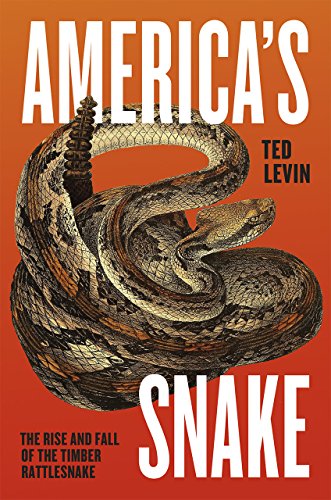
Ted Levin aims to change that with America’s Snake, a portrait of the timber rattlesnake, its place in America’s pantheon of creatures and in our own frontier history—and of the heroic efforts to protect it against habitat loss, climate change, and the human tendency to kill what we fear. Taking us from labs where the secrets of the snake’s evolutionary history are being unlocked to far-flung habitats whose locations are fiercely protected by biologists and dedicated amateur herpetologists alike, Levin paints a picture of a fascinating creature: peaceable, social, long-lived, and, despite our phobias, not inclined to bite. The timber rattler emerges here as emblematic of America and also, unfortunately, of the complicated, painful struggles involved in protecting and preserving the natural world.
A wonderful mix of natural history, travel writing, and exemplary journalism, America’s Snake is loaded with remarkable characters—none more so than the snake at its heart: frightening, perhaps; endangered, certainly; and unquestionably unforgettable.
Yet most of us have never seen a timber rattler. Though they’re found in thirty-one states, and near many major cities, in contemporary America timber rattlesnakes are creatures mostly of imagination and innate fear.
Ted Levin aims to change that with America’s Snake, a portrait of the timber rattlesnake, its place in America’s pantheon of creatures and in our own frontier history—and of the heroic efforts to protect it against habitat loss, climate change, and the human tendency to kill what we fear. Taking us from labs where the secrets of the snake’s evolutionary history are being unlocked to far-flung habitats whose locations are fiercely protected by biologists and dedicated amateur herpetologists alike, Levin paints a picture of a fascinating creature: peaceable, social, long-lived, and, despite our phobias, not inclined to bite. The timber rattler emerges here as emblematic of America and also, unfortunately, of the complicated, painful struggles involved in protecting and preserving the natural world.
A wonderful mix of natural history, travel writing, and exemplary journalism, America’s Snake is loaded with remarkable characters—none more so than the snake at its heart: frightening, perhaps; endangered, certainly; and unquestionably unforgettable.
Die Inhaltsangabe kann sich auf eine andere Ausgabe dieses Titels beziehen.
Über die Autorinnen und Autoren
A former Bronx Zoo zoologist, Ted Levin is the author of Blood Brook: A Naturalist’s Home Ground, Backtracking: The Way of the Naturalist, and Liquid Land: A Journey through the Everglades, which won the Burroughs Medal in 2004. He has written for Sports Illustrated, Audubon, National Wildlife, National Geographic Traveler, and other publications.
A former Bronx Zoo zoologist, Ted Levin is the author of Blood Brook: A Naturalist's Home Ground, Backtracking: The Way of the Naturalist, and Liquid Land: A Journey through the Everglades, which won the Burroughs Medal in 2004. He has written for Sports Illustrated, Audubon, National Wildlife, National Geographic Traveler, and other publications.
Auszug. © Genehmigter Nachdruck. Alle Rechte vorbehalten.
America's Snake
The Rise and Fall of the Timber Rattlesnake
By Ted Levin, Alexandra WestrichThe University of Chicago Press
Copyright © 2016 The University of Chicago
All rights reserved.
ISBN: 978-0-226-04064-6All rights reserved.
Contents
Etymology,
Prologue,
1 An Introduction to Crotalus horridus,
Part One. Egress: The Dangers of Leaving Home,
2 A Quirky Subculture,
3 Quasimodo in the Blue Hills,
4 Live Free or Die,
5 Zero at the Bone,
6 A Long, Muscular Tube,
Interlude: High Summer: On the Trail with Timber Rattlesnakes,
7 The Dangers of Being Male,
8 The Dangers of Being Female,
9 A Commodity of Rattlesnakes: Snakes Today, Bibles Tomorrow,
Part Two. Ingress: The Dangers of Coming Home,
10 Chaos of Rocks,
11 Among Rattlesnakes,
12 Into the Abyss,
13 The Very Last Rattlesnake,
Epilogue: The Ambiguous World of the Timber Rattlesnake,
Acknowledgments,
Bibliography,
Index,
CHAPTER 1
An Introduction to Crotalus horridus
She strongly resembles America in this, that she is beautiful in youth and her beauty increaseth with her age, her tongue also is blue and forked as the lightning, and her abode is among impenetrable rocks.
BENJAMIN FRANKLIN
I have seen timber rattlesnakes before, mostly on the sun-baked talus of western Vermont — dark, with vague markings, or mustard-colored and distinctly banded to merge into the forest floor, but never an incandescent yellow one in the Northeast. The snake stretches out in the morning light, basking on the stone foundation of a building preempted by trees in a forested hillside in western New York. Chocolate-colored bands stain the yellow areas and loop its body from head to vent; the tail is as black as obsidian. And like most timber rattlesnakes I've seen, this one is content. No rattling. No threatening coil. No retreat. Not so much as a glance in my direction. Lidless eyes focus on the all or nothing of a New York morning, golden spheres each slashed by a vertical black pupil — eyes of the night.
At fifty-two inches and just over three and a half pounds, Hank is big. Of all the rattlesnakes I've encountered in the Northeast, only Travis, Hank's hillside neighbor, a black morph recumbent beneath the overhang of a bramble a quarter of a mile away, is bigger: fifty-two inches, four and a half pounds, and thick as the sweet spot on a baseball bat.
I'm in the field with Rulon Clark, a Utah native who completed his doctorate at Cornell University in nearby Ithaca with a dissertation on the communal habits of timber rattlesnakes and is now assistant professor in the biology department at San Diego State University. Although it was once widely believed that snakes led rudimentary lives of solitude, Clark discovered that timber rattlesnakes lead surprisingly rich social lives. Because they dwell in a different temporal realm than people, very slow and methodical, rattlesnakes live within a formerly unmapped wilderness of patience.
To understand timber rattlesnakes, you must learn to think like them, which means spending an inordinate amount of time on the ledges and in the woods. And you must also be a master of technology. According to Clark,
Rattlesnakes have adapted to live in such a way that they do things more slowly than we do. We're too quick for them in some ways; we don't recognize important things that could be going on. You really have to either be very patient or set up experiments in such a way that you see results regardless of your timescale.
During the six years that he studied rattlesnakes in Pennsylvania and New York, Clark unveiled a sisterhood of snakes, in which female timber rattlesnakes from the same litter entwined with each other more than with unrelated females, the first demonstration of kin recognition for any species of snake. In fact, Clark determined that female littermates separated for two years after birth immediately (in snake time) recognized each other.
As a child, Rulon Clark was attracted to non-fleeing predators (like rattlesnakes) and sponsored public feedings with his menagerie of reptiles and arthropods. "I had tolerant parents," he recalls. I had tolerant parents as well, but their level of tolerance was governed by the social codes of suburban Long Island. They accepted my boyhood passion for bringing home snakes, and would find me whenever anything unusual happened in a terrarium. Once my father prevented a garter snake from consuming its own young by tapping the snake on the head with the buckle on the dog's leash. My parents would likely have drawn the line against keeping a venomous pet, but since Long Island timber rattlesnakes had already been extirpated, this never became an issue.
Through the years, Clark's boyhood obsession grew. He examined eleven hundred timber rattlesnake museum specimens from collections all over the United States, and summarizing their dietary information made him an expert in the identification of half-digested mammal parts. "Don't let anyone tell you that you can't get practical skills out of a PhD."
Clark's audience also grew. The March 2005 issue of Natural History featured his essay "The Social Lives of Rattlesnakes," which was how I tracked him down. The week before I arrived in Ithaca, David Attenborough and a BBC film crew had visited Clark to film the hunting strategy of a wild timber rattlesnake (essentially waiting) for the final episode of the landmark two-part series Life in Cold Blood.
When I google "Rulon Clark" I find newspaper stories about pregnant rattlesnakes sun-bathing at a picnic area along a major highway in south-central New York. Clark advised the state to close the rest area until the snakes either give birth (sometime in late summer) or are relocated to an alternative basking site. When asked if the snakes pose a threat to travelers, Clark responded, "People are more likely to be killed by a drunken driver veering into the rest area than they are by a basking rattlesnake."
Radio-tracking enables Clark to eavesdrop on timber rattlesnakes during the four or five months when they're away from the den and fanning out for miles across the countryside. Earthly pulses and species-specific biorhythms, formerly understood only by the snakes themselves, govern the movement of these reptiles. Using a remote-sensor video, Clark films rattlesnakes as they wait hours, or even days, to ambush the small mammals that are their principal food. He learns where they eat, when they eat, what they eat, and how they eat, as well as what they do between meals (lounge and digest and eventually wander to their next ambush station). Clark's work dispels myths, confirms scientific speculation, and illuminates unknown aspects of rattlesnake behavior. It also adds a sense of wonder to the forested hillsides of the Northeast, a glimpse into the secret life of a reptile whose continued presence is a marvel of adaptation and concealment, for timber rattlesnakes are the very last of a short list of potentially dangerous pre-Columbian predators that still survive in the twenty-first century on the virtual (and sometimes real) doorstep of the urban Northeast.
* * *
Rattlesnakes belong to the subfamily Crotalinae, the pitvipers, of the family Viperidae, perhaps the most advanced family of reptiles in the world. Of the approximately three hundred species of viperids, one hundred ninety-nine are pitvipers, the most advanced of the vipers. And rattlesnakes, the most recently evolved of the pitvipers,...
„Über diesen Titel“ kann sich auf eine andere Ausgabe dieses Titels beziehen.
Suchergebnisse für America's Snake: The Rise and Fall of the Timber...

Beispielbild für diese ISBN
America's Snake. The Rise and Fall of the Timber Rattlesnake.
Verlag:
The University of Chicago Press, Chicago, IL, 2016
ISBN 10: 022604064X
ISBN 13: 9780226040646
Gebraucht
Hardcover
Anbieter: Sam's Books, St. Petersburg, FL, USA
Verkäuferbewertung 5 von 5 Sternen

hardcover. Zustand: Very Good. Zustand des Schutzumschlags: very good. Alexandra Westrich (illustrator). Octavo, red cloth/orange boards, xxvi, 481 pp. Illustrations. Light edge wear on cover and dust jacket. Small red ink dot on bottom edge of a few pages. Bestandsnummer des Verkäufers 14567
Gebraucht kaufen
EUR 10,85
EUR 3,95 Versand
Versand innerhalb von USA
Versand innerhalb von USA
Anzahl: 1 verfügbar
Beispielbild für diese ISBN
America's Snake: The Rise and Fall of the Timber Rattlesnake
Verlag:
University of Chicago Press, 2016
ISBN 10: 022604064X
ISBN 13: 9780226040646
Gebraucht
Hardcover
Anbieter: Midtown Scholar Bookstore, Harrisburg, PA, USA
Verkäuferbewertung 5 von 5 Sternen
Hardcover. Zustand: Very Good. HARDCOVER Very Good - Crisp, clean, unread book with some shelfwear/edgewear, may have a remainder mark - NICE Standard-sized. Bestandsnummer des Verkäufers M022604064XZ2
Gebraucht kaufen
EUR 14,39
EUR 5,27 Versand
Versand innerhalb von USA
Versand innerhalb von USA
Anzahl: 1 verfügbar
Beispielbild für diese ISBN
America's Snake: The Rise and Fall of the Timber Rattlesnake
Verlag:
University of Chicago Press, 2016
ISBN 10: 022604064X
ISBN 13: 9780226040646
Gebraucht
Hardcover
Anbieter: World of Books (was SecondSale), Montgomery, IL, USA
Verkäuferbewertung 5 von 5 Sternen
Zustand: Good. Item in good condition. Textbooks may not include supplemental items i.e. CDs, access codes etc. Bestandsnummer des Verkäufers 00106787967
Gebraucht kaufen
EUR 20,95
Versand gratis
Versand innerhalb von USA
Versand innerhalb von USA
Anzahl: 1 verfügbar
Beispielbild für diese ISBN
America's Snake: The Rise and Fall of the Timber Rattlesnake
Verlag:
University of Chicago Press, 2016
ISBN 10: 022604064X
ISBN 13: 9780226040646
Gebraucht
Hardcover
Anbieter: A Squared Books (Don Dewhirst), South Lyon, MI, USA
Verkäuferbewertung 5 von 5 Sternen
hardcover. Zustand: As New. Zustand des Schutzumschlags: Very Good. Chicago, 2016; orange cloth covered boards; red spine; minimal shelf wear; very good illustrated jacket with front flap creased; 8vo, 7 3/4" to 9 3/4" tall; Interior is clean and unmarked; 481 pages. Bestandsnummer des Verkäufers SKU1165691
Gebraucht kaufen
EUR 16,12
EUR 5,70 Versand
Versand innerhalb von USA
Versand innerhalb von USA
Anzahl: 1 verfügbar
Beispielbild für diese ISBN
America's Snake: The Rise and Fall of the Timber Rattlesnake
Verlag:
University Of Chicago Press, Chicago, 2016
ISBN 10: 022604064X
ISBN 13: 9780226040646
Gebraucht
Hardcover
Anbieter: Emily's Books, Brainerd, MN, USA
Verkäuferbewertung 5 von 5 Sternen
Hard Cover. Zustand: Very Good. Zustand des Schutzumschlags: Very Good. This is a nice clean book with light wear and the dust jacket has light wear and is in a high quality Demco protector. Size: 8vo - over 7¾" - 9¾" tall. Bestandsnummer des Verkäufers 049491
Gebraucht kaufen
EUR 18,05
EUR 4,35 Versand
Versand innerhalb von USA
Versand innerhalb von USA
Anzahl: 1 verfügbar
Beispielbild für diese ISBN
America's Snake : The Rise and Fall of the Timber Rattlesnake
Verlag:
University of Chicago Press, 2016
ISBN 10: 022604064X
ISBN 13: 9780226040646
Gebraucht
Hardcover
Anbieter: Better World Books, Mishawaka, IN, USA
Verkäuferbewertung 5 von 5 Sternen
Zustand: Good. Pages intact with minimal writing/highlighting. The binding may be loose and creased. Dust jackets/supplements are not included. Stock photo provided. Product includes identifying sticker. Better World Books: Buy Books. Do Good. Bestandsnummer des Verkäufers 17780155-6
Gebraucht kaufen
EUR 24,94
Versand gratis
Versand innerhalb von USA
Versand innerhalb von USA
Anzahl: 1 verfügbar
Foto des Verkäufers
America's Snake: The Rise and Fall of the Timber Rattlesnake
Verlag:
University of Chicago Press, 2016
ISBN 10: 022604064X
ISBN 13: 9780226040646
Gebraucht
Hardcover
Anbieter: Browsing Is Arousing, Middlebury, VT, USA
Verkäuferbewertung 4 von 5 Sternen

Zustand: Very Good. Hardcover in a bright dust jacket, 481 pages. A portrait of the timber rattlesnake, its place in America?s pantheon of creatures and in our own frontier history?and of the heroic efforts to protect it against habitat loss, climate change, and the human tendency to kill what we fear. Taking us from labs where the secrets of the snake?s evolutionary history are being unlocked to far-flung habitats whose locations are fiercely protected by biologists and dedicated amateur herpetologists alike, Levin paints a picture of a fascinating creature: peaceable, social, long-lived, and, despite our phobias, not inclined to bite. The timber rattler emerges here as emblematic of America and also, unfortunately, of the complicated, painful struggles involved in protecting and preserving the natural world. Clean copy. Record # 472086. Bestandsnummer des Verkäufers 472086
Gebraucht kaufen
EUR 22,61
EUR 6,15 Versand
Versand innerhalb von USA
Versand innerhalb von USA
Anzahl: 1 verfügbar
Beispielbild für diese ISBN
America's Snake Format: Hardcover
Anbieter: INDOO, Avenel, NJ, USA
Verkäuferbewertung 5 von 5 Sternen
Zustand: New. Brand New. Bestandsnummer des Verkäufers 9780226040646
Neu kaufen
EUR 29,26
Versand gratis
Versand innerhalb von USA
Versand innerhalb von USA
Anzahl: Mehr als 20 verfügbar
Foto des Verkäufers
America's Snake : The Rise and Fall of the Timber Rattlesnake
Anbieter: GreatBookPrices, Columbia, MD, USA
Verkäuferbewertung 5 von 5 Sternen
Zustand: New. Bestandsnummer des Verkäufers 25082633-n
Neu kaufen
EUR 39,71
EUR 2,32 Versand
Versand innerhalb von USA
Versand innerhalb von USA
Anzahl: 2 verfügbar
Beispielbild für diese ISBN
America's Snake
Anbieter: PBShop.store US, Wood Dale, IL, USA
Verkäuferbewertung 5 von 5 Sternen
HRD. Zustand: New. New Book. Shipped from UK. Established seller since 2000. Bestandsnummer des Verkäufers WG-9780226040646