Inhaltsangabe
Barack Obama has called him “one of my favorite philosophers.” John McCain wrote that he is “a paragon of clarity about the costs of a good war.” Andrew Sullivan has said, “We need Niebuhr now more than ever.” For a theologian who died in 1971, Reinhold Niebuhr is maintaining a remarkably high profile in the twenty-first century.
In Why Niebuhr Now? acclaimed historian John Patrick Diggins tackles the complicated question of why, at a time of great uncertainty about America’s proper role in the world, leading politicians and thinkers are turning to Niebuhr for answers. Diggins begins by clearly and carefully working through Niebuhr’s theology, which focuses less on God’s presence than his absence—and the ways that absence abets the all-too-human sin of pride. He then shows how that theology informed Niebuhr’s worldview, leading him to be at the same time a strong opponent of fascism and communism and a leading advocate for humility and caution in foreign policy.
Turning to the present, Diggins highlights what he argues is a misuse of Niebuhr’s legacy on both the right and the left: while neoconservatives distort Niebuhr’s arguments to support their call for an endless war on terror in the name of stopping evil, many liberal interventionists conveniently ignore Niebuhr’s fundamental doubts about power. Ultimately, Niebuhr’s greatest lesson is that, while it is our duty to struggle for good, we must at the same time be wary of hubris, remembering the limits of our understanding.
The final work from a distinguished writer who spent his entire career reflecting on America’s history and promise, Why Niebuhr Now? is a compact and perceptive book that will be the starting point for all future discussions of Niebuhr.
Die Inhaltsangabe kann sich auf eine andere Ausgabe dieses Titels beziehen.
Über die Autorin bzw. den Autor
John Patrick Diggins (1935–2009) was distinguished professor at the City University of New York and the author of many books, including Eugene O’Neill’s America and The Promise of Pragmatism, both published by the University of Chicago Press.
Auszug. © Genehmigter Nachdruck. Alle Rechte vorbehalten.
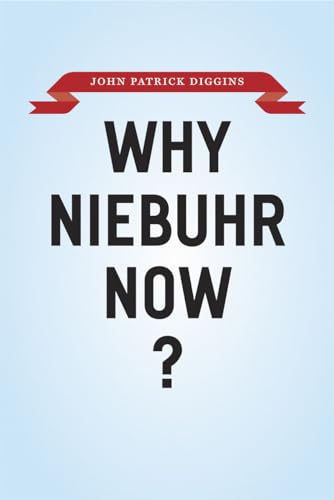
Why Niebuhr Now?
By JOHN PATRICK DIGGINSTHE UNIVERSITY OF CHICAGO PRESS
Copyright © 2011 The University of ChicagoAll right reserved.
ISBN: 978-0-226-14883-0
Contents
FOREWORD by Robert Huberty...............................................viiACKNOWLEDGMENTS..........................................................xiINTRODUCTION What We Can Learn from Reinhold Niebuhr.....................11 "Seek with Groans": The Making of a Theologian.........................112 Religion: "A Recipe for Decadence".....................................353 The Closing of the European Mind.......................................474 The Opening of the American Mind.......................................775 The Cunning of American History........................................956 God Is Dead—Long Live Religion!..................................109NOTES....................................................................119INDEX....................................................................129
Chapter One
"Seek with Groans": The Making of a Theologian
Reinhold Niebuhr often denied that he was a theologian, calling himself instead an academic "circuit rider" who would bring the insights of Christianity to those who scorned it. Early in life he questioned whether he was a Christian, and colleagues and followers would speculate on whether he believed in or prayed to God. Such curiosities speak to Niebuhr's modesty more than to his identity. Niebuhr's lifelong doubts about his religious vocation link him to Blaise Pascal, the seventeenth-century French Catholic philosopher who would "seek with groans," searching for truth and God while lamenting that he could find neither through reason.
Niebuhr believed with other thinkers that to be skeptical about God is not only a matter of honesty but a necessity for a good Christian. Even Sidney Hook, the atheist who sided with the philosopher of pragmatism John Dewey against Niebuhr, could not help but acknowledge that he was in the presence of a mind as humble as it was profound. "There must be something extremely paradoxical in the thought of Reinhold Niebuhr," wrote Hook, "to make so many who are so far apart in their own allegiances feel so akin to him."
THE 1920S AND THE CRISIS OF LIBERAL CHRISTIANITY
Reinhold Niebuhr was born in Wright City, Missouri, in 1892, the son of a German immigrant father who became a rural Protestant minister. The father, Gustav, was a scholarly evangelical who showed little interest in the Social Gospel reform movement roiling American Protestantism during the Progressive era. Reinhold studied at his father's alma mater, Eden Theological Seminary, near Saint Louis, where he worked to overcome the limitations of his German background and to master English. By the time he entered Yale Divinity School in 1913, he was convinced that religion must be grounded in human needs and experience, not in supernatural revelation. With the philosopher William James, he understood the truth of religion to lie within the human capacity to experience it. He also agreed with Pascal's dictum that genuine religion is always a struggle between belief and unbelief, and this capacity to doubt the illusions of certainty would become central to Niebuhr's religious vocation and to his political convictions as well.
Niebuhr first grappled with politics at the outbreak of World War I. In a 1915 student essay, "The Paradox of Patriotism," he echoed James's 1906 essay "The Moral Equivalent of War" in arguing that despite its undoubted brutality war afforded the individual opportunities to show courage and selflessness. With America's entry into the war in 1917, the son of the German immigrant even participated in the Wilson administration's campaign against "disloyalty," succumbing to the president's fervent call to prosecute "a war to end all wars." But the political compromises of the Paris Peace Conference caused Niebuhr to become disillusioned with the promises of Wilsonian liberalism, and in the early 1920s, while many American intellectuals were bidding farewell to politics, he grew ever more engaged in it.
After the injustices of World War I and the cynicism of the peace settlement, the world looked different. Faith in the unseen was devastated by what was all too apparent: the slaughter and pestilence of trench warfare, civilian starvation, and the betrayal of Wilson's pledge to "make the world safe for democracy." History no longer seemed to dramatize a story of progress and perfectibility; it appeared cruel and vindictive. Rejecting the high hopes of the politicians of the prewar period and the then-prevailing liberal Protestantism of its clerics and academics, Niebuhr set out to develop a new approach to Christianity for a modern world that could no longer believe in historical progress or rational order, a religion fit for an age of anxiety, for man's despairing predicament in a meaningless world.
The young Niebuhr was invited to serve as pastor of Bethel Evangelical Church in Detroit, and it was here that he discovered the harshness of industrial society, the toil of the laboring classes and the complacency of the propertied. When Bruce Barton, the advertising agency pioneer, wrote a best seller, The Man Nobody Knows (1925), that described Jesus as the first successful publicist and a role model for modern business executives, Niebuhr responded with a blistering review in the Christian Century, denouncing the industrialists' professions of piety and lamenting the culture of consumption that was overwhelming middle-class America. It was but one in a growing number of articles Niebuhr would write challenging the nation's political apathy and moral indifference to social wrongs.
A charismatic speaker with a growing reputation, Niebuhr was much in demand. He chafed at his church duties and welcomed invitations from across the country to preach on religion and society. He upset members of his congregation by inviting union leaders to speak from the pulpit and wrote articles attacking the benevolence of Detroit's own Henry Ford. In 1928, after thirteen years at Bethel, he accepted a teaching position at Union Theological Seminary, a center for liberal Christianity in New York City.
Mention the name Reinhold Niebuhr today and what comes to mind is a Cold War liberal who denounced the menace of communism. Niebuhr did indeed do that in the 1940s and 1950s, but decades earlier, before the rise of Hitler and Stalin, the theologian was at war with America itself. It was a war he would lose, as would fascists, communists, and anyone else who dared challenge America's political culture of striving and success. "To be rich is glorious!" China's Deng Xiaoping once declared. Niebuhr would hardly be surprised by the pronouncement of the Communist Party leader. A century earlier, in Democracy in America, the French visitor Alexis de Tocqueville had described how commerce overcomes culture. Tocqueville did not need the term "consumer capitalism" to give an account of Americans kept in a constant state of agitation by the pursuit of material happiness and its "petty pleasures." The "equality and precariousness of their social condition," he wrote, had made Americans into strivers consumed by "a restless and insatiable vanity" and a "taste for physical comfort."
By the mid-1920s America was further confirming Tocqueville's impressions. F. Scott Fitzgerald's The Great Gatsby appeared in 1925, and what troubled Niebuhr the theologian was precisely what haunted...
„Über diesen Titel“ kann sich auf eine andere Ausgabe dieses Titels beziehen.
Weitere beliebte Ausgaben desselben Titels

Suchergebnisse für Why Niebuhr Now?

Beispielbild für diese ISBN
Why Niebuhr Now?
Verlag:
University of Chicago Press, 2011
ISBN 10: 0226148831
ISBN 13: 9780226148830
Gebraucht
Hardcover
Anbieter: World of Books (was SecondSale), Montgomery, IL, USA
Verkäuferbewertung 5 von 5 Sternen

Zustand: Good. Item in good condition. Textbooks may not include supplemental items i.e. CDs, access codes etc. Bestandsnummer des Verkäufers 00090232884
Gebraucht kaufen
EUR 6,02
Versand gratis
Versand innerhalb von USA
Versand innerhalb von USA
Anzahl: 1 verfügbar
Beispielbild für diese ISBN
Why Niebuhr Now?
Verlag:
University of Chicago Press, 2011
ISBN 10: 0226148831
ISBN 13: 9780226148830
Gebraucht
Hardcover
Anbieter: ThriftBooks-Atlanta, AUSTELL, GA, USA
Verkäuferbewertung 5 von 5 Sternen
Hardcover. Zustand: Very Good. No Jacket. May have limited writing in cover pages. Pages are unmarked. ~ ThriftBooks: Read More, Spend Less. Bestandsnummer des Verkäufers G0226148831I4N00
Gebraucht kaufen
EUR 6,02
Versand gratis
Versand innerhalb von USA
Versand innerhalb von USA
Anzahl: 1 verfügbar
Beispielbild für diese ISBN
Why Niebuhr Now?
Verlag:
University of Chicago Press, 2011
ISBN 10: 0226148831
ISBN 13: 9780226148830
Gebraucht
Hardcover
Anbieter: ThriftBooks-Dallas, Dallas, TX, USA
Verkäuferbewertung 5 von 5 Sternen
Hardcover. Zustand: Very Good. No Jacket. May have limited writing in cover pages. Pages are unmarked. ~ ThriftBooks: Read More, Spend Less. Bestandsnummer des Verkäufers G0226148831I4N00
Gebraucht kaufen
EUR 6,02
Versand gratis
Versand innerhalb von USA
Versand innerhalb von USA
Anzahl: 1 verfügbar
Beispielbild für diese ISBN
Why Niebuhr Now?
Verlag:
University of Chicago Press, 2011
ISBN 10: 0226148831
ISBN 13: 9780226148830
Gebraucht
Hardcover
Anbieter: Better World Books, Mishawaka, IN, USA
Verkäuferbewertung 5 von 5 Sternen
Zustand: Good. Used book that is in clean, average condition without any missing pages. Bestandsnummer des Verkäufers 15494306-6
Gebraucht kaufen
EUR 6,04
Versand gratis
Versand innerhalb von USA
Versand innerhalb von USA
Anzahl: 1 verfügbar
Beispielbild für diese ISBN
Why Niebuhr Now?
Verlag:
University of Chicago Press, 2011
ISBN 10: 0226148831
ISBN 13: 9780226148830
Gebraucht
Hardcover
Anbieter: Better World Books, Mishawaka, IN, USA
Verkäuferbewertung 5 von 5 Sternen
Zustand: Very Good. Used book that is in excellent condition. May show signs of wear or have minor defects. Bestandsnummer des Verkäufers 4882709-6
Gebraucht kaufen
EUR 6,04
Versand gratis
Versand innerhalb von USA
Versand innerhalb von USA
Anzahl: 1 verfügbar
Beispielbild für diese ISBN
Why Niebuhr Now?
Verlag:
University of Chicago Press, 2011
ISBN 10: 0226148831
ISBN 13: 9780226148830
Gebraucht
Hardcover
Anbieter: Midtown Scholar Bookstore, Harrisburg, PA, USA
Verkäuferbewertung 5 von 5 Sternen
Hardcover. Zustand: Good. HARDCOVER Good - Bumped and creased book with tears to the extremities, but not affecting the text block, may have remainder mark or previous owner's name - GOOD Standard-sized. Bestandsnummer des Verkäufers M0226148831Z3
Gebraucht kaufen
EUR 3,74
EUR 5,11 shipping
Versand innerhalb von USA
Versand innerhalb von USA
Anzahl: 1 verfügbar
Beispielbild für diese ISBN
Why Niebuhr Now?
Verlag:
University of Chicago Press, 2011
ISBN 10: 0226148831
ISBN 13: 9780226148830
Gebraucht
Hardcover
Anbieter: Midtown Scholar Bookstore, Harrisburg, PA, USA
Verkäuferbewertung 5 von 5 Sternen
Hardcover. Zustand: Acceptable. Acceptable, Reading copy only, with writing/markings, bumps/creasing, and heavy wear. Standard-sized. Bestandsnummer des Verkäufers mon0000305897
Gebraucht kaufen
EUR 7,02
EUR 5,11 shipping
Versand innerhalb von USA
Versand innerhalb von USA
Anzahl: 1 verfügbar
Beispielbild für diese ISBN
Why Niebuhr Now?
Verlag:
University of Chicago Press, Chicago, 2011
ISBN 10: 0226148831
ISBN 13: 9780226148830
Gebraucht
Hardcover
Erstausgabe
Anbieter: Daedalus Books, Portland, OR, USA
Verkäuferbewertung 5 von 5 Sternen
Hardcover. Zustand: Near Fine. Zustand des Schutzumschlags: Near Fine. First Edition. A nice, bright copy. ; 5.5 X 0.7 X 8.5 inches; 136 pages. Bestandsnummer des Verkäufers 319495
Gebraucht kaufen
EUR 8,65
EUR 4,68 shipping
Versand innerhalb von USA
Versand innerhalb von USA
Anzahl: 1 verfügbar
Beispielbild für diese ISBN
Why Niebuhr Now?
Verlag:
University of Chicago Press, 2011
ISBN 10: 0226148831
ISBN 13: 9780226148830
Neu
Hardcover
Erstausgabe
Anbieter: Inga's Original Choices, Piggott, AR, USA
Verkäuferbewertung 5 von 5 Sternen
Hard Cover. Zustand: New. Zustand des Schutzumschlags: New. Stated First Edition, First Printing. A stock image [photo] is an accurate representation of the listed book's dust jacket design. Pages: xii, 136 including index. Published at $22.00 US [printed at back of dust jacket above UPC code]. Red cloth boards, white lettering. No remainder marks. By the author of The Promise of Pragmatism. Media Mail, Priority & most international shipping include free tracking information. Every book listed is located in my smoke free and climate controlled shop. All are inspected by me and will have qualities and/or flaws described. Bestandsnummer des Verkäufers 014172
Neu kaufen
EUR 10,97
EUR 5,11 shipping
Versand innerhalb von USA
Versand innerhalb von USA
Anzahl: 1 verfügbar
Beispielbild für diese ISBN
Why Niebuhr Now? Format: Hardcover
Anbieter: INDOO, Avenel, NJ, USA
Verkäuferbewertung 5 von 5 Sternen
Zustand: New. Brand New. Bestandsnummer des Verkäufers 9780226148830
Neu kaufen
EUR 26,17
Versand gratis
Versand innerhalb von USA
Versand innerhalb von USA
Anzahl: Mehr als 20 verfügbar