
Inhaltsangabe
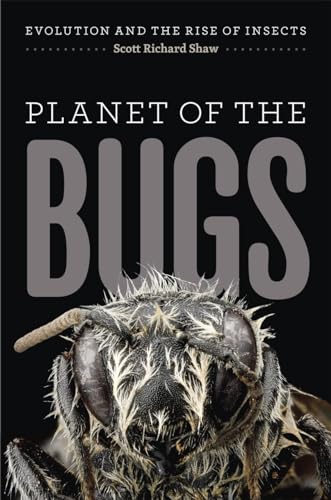
Dinosaurs, however toothy, did not rule the earth—and neither do humans. But what were and are the true potentates of our planet? Insects, says Scott Richard Shaw—millions and millions of insect species. Starting in the shallow oceans of ancient Earth and ending in the far reaches of outer space—where, Shaw proposes, insect-like aliens may have achieved similar preeminence—Planet of the Bugs spins a sweeping account of insects’ evolution from humble arthropod ancestors into the bugs we know and love (or fear and hate) today.
Leaving no stone unturned, Shaw explores how evolutionary innovations such as small body size, wings, metamorphosis, and parasitic behavior have enabled insects to disperse widely, occupy increasingly narrow niches, and survive global catastrophes in their rise to dominance. Through buggy tales by turns bizarre and comical—from caddisflies that construct portable houses or weave silken aquatic nets to trap floating debris, to parasitic wasp larvae that develop in the blood of host insects and, by storing waste products in their rear ends, are able to postpone defecation until after they emerge—he not only unearths how changes in our planet’s geology, flora, and fauna contributed to insects’ success, but also how, in return, insects came to shape terrestrial ecosystems and amplify biodiversity. Indeed, in his visits to hyperdiverse rain forests to highlight the current insect extinction crisis, Shaw reaffirms just how crucial these tiny beings are to planetary health and human survival.
In this age of honeybee die-offs and bedbugs hitching rides in the spines of library books, Planet of the Bugs charms with humor, affection, and insight into the world’s six-legged creatures, revealing an essential importance that resonates across time and space.
Leaving no stone unturned, Shaw explores how evolutionary innovations such as small body size, wings, metamorphosis, and parasitic behavior have enabled insects to disperse widely, occupy increasingly narrow niches, and survive global catastrophes in their rise to dominance. Through buggy tales by turns bizarre and comical—from caddisflies that construct portable houses or weave silken aquatic nets to trap floating debris, to parasitic wasp larvae that develop in the blood of host insects and, by storing waste products in their rear ends, are able to postpone defecation until after they emerge—he not only unearths how changes in our planet’s geology, flora, and fauna contributed to insects’ success, but also how, in return, insects came to shape terrestrial ecosystems and amplify biodiversity. Indeed, in his visits to hyperdiverse rain forests to highlight the current insect extinction crisis, Shaw reaffirms just how crucial these tiny beings are to planetary health and human survival.
In this age of honeybee die-offs and bedbugs hitching rides in the spines of library books, Planet of the Bugs charms with humor, affection, and insight into the world’s six-legged creatures, revealing an essential importance that resonates across time and space.
Die Inhaltsangabe kann sich auf eine andere Ausgabe dieses Titels beziehen.
Über die Autorinnen und Autoren
Scott Richard Shaw is professor of entomology and Insect Museum curator at the University of Wyoming, Laramie. He has discovered more than one hundred and fifty insect species, including a number of parasitic wasps named after cultural icons such as David Letterman, Jimmy Fallon, Jon Stewart, Stephen Colbert, Ellen DeGeneres, and Shakira—the last of which, Aleiodes shakirae, causes its host caterpillar to contort as if belly dancing.
Scott Richard Shaw is professor of entomology and Insect Museum curator at the University of Wyoming, Laramie. He has discovered more than one hundred and fifty insect species, including a number of parasitic wasps named after cultural icons such as David Letterman, Jimmy Fallon, Jon Stewart, Stephen Colbert, Ellen DeGeneres, and Shakira'the last of which, Aleiodes shakirae, causes its host caterpillar to contort as if belly dancing.
Auszug. © Genehmigter Nachdruck. Alle Rechte vorbehalten.
Planet of the Bugs
Evolution and the Rise of Insects
By Scott Richard ShawThe University of Chicago Press
Copyright © 2014 The University of Chicago
All rights reserved.
ISBN: 978-0-226-16361-1All rights reserved.
Contents
Prologue. Time Travel with Insects,
1. THE BUGGY PLANET,
2. RISE OF THE ARTHROPODS,
3. SILURIAN LANDFALL,
4. SIX FEET UNDER THE MOSS,
5. DANCING ON AIR,
6. PALEOZOIC HOLOCAUST,
7. TRIASSIC SPRING,
8. PICNICKING IN JURASSIC PARK,
9. CRETACEOUS BLOOM AND DOOM,
10. CENOZOIC REFLECTIONS,
Postscript. The Buggy Universe Hypothesis,
Acknowledgments,
About the Author,
Notes,
Suggested Reading,
Index,
Color gallery follows Chapter 6.,
CHAPTER 1
The Buggy Planet
It is for me a stunning fact that while the physical surface of the earth has been thoroughly explored, so that virtually every hilltop, tributary, and submarine mount has been mapped and named, the living world remains largely unknown. As few as ten percent of the species of insects and other invertebrate animals have been discovered and given scientific names.
EDWARD O. WILSON, The High Frontier
All things have a root and a top,
All events an end and a beginning;
Whoever understands correctly
What comes first and what follows
Draws nearer to Tao
BARRY HUGHART, Bridge of Birds
Earth is a very buggy planet. Nearly one million distinct living species, different kinds of insects, have been discovered and named so far. From A to Z, they overwhelm us with their diversity: ants, birdwing butterflies, cockroaches, dung beetles, earwigs, flies, grasshoppers, head lice, inchworms, June beetles, katydids, ladybugs, mantises, net-winged midges, owlflies, periodical cicadas, queen termites, royal palm bugs, sawflies, thrips, underwing moths, velvety shore bugs, webspinners, xyelid sawflies, ypsistocerine wasps, and zorapterans. But that is just the tip of the iceberg, the door to the hive. Most of the insect species haven't even been given a name, and scientists estimate that the number of different kinds of insects living in tropical forests is perhaps in the tens of millions. Whether you adore them or abhor them, their diversity and ecological success is impressive.
Insects are so successful that it's not much of an exaggeration to say that they literally rule the planet. Our egos allow us to think that we humans rule earth, with our cities, our technology, and our civilizations, but we seem to be doing more to destroy the planet than to improve it, and we are like one superabundant pest species run amok over the globe. If humans were to suddenly become extinct, the living conditions for most species would be greatly improved with only a few exceptions, such as human body lice and crab lice. On the other hand, if all the insects became extinct, in the words of Edward O. Wilson, the famous Harvard entomologist, "the terrestrial environment would collapse into chaos." Human civilizations have only recently developed over the last several thousand years. Insects have successfully coevolved with terrestrial ecosystems over the last four hundred million years. They are ecologically essential as scavengers, nutrient recyclers, and soil producers, feeding on and utilizing virtually every kind of imaginable organic material. Six-legged detritivores consume dead plants, dead animals, and animal droppings, greatly increasing the rates at which these materials biodegrade. Insects, as both predators and parasitoids, are keystone organisms that feed upon and reduce populations of other kinds of plant-feeding and scavenging insects. They are also their own worst enemies: most kinds of insects have populations that are kept in check by the feeding activities of other insects.
Over the past 120 million years, insects have coevolved and explosively diversified in tandem with the angiosperms—the dominant forms of plant diversity in modern ecosystems. They are essential as pollinators and seed-dispersers for most of the flowering plants, whose communities would be vastly diminished if all plant-associated insects were eliminated. We often tend to think of plant-feeding insects in general as pests, but I like to point out that only a miniscule small fraction (less than 1 percent) of the total number of insect species are actually significant pests. In fact, most of the plant-feeding insects should be considered beneficial for two reasons. First, they reduce the reproductive output of particular plants by putting stress on them. That sounds bad if the plant is an agricultural crop, but in a natural setting, such as a tropical forest or a mountain meadow, that plant feeding has a very desirable outcome. It prevents particular plant species from becoming superabundant and weedy, allowing vastly more species to coexist in much smaller spaces. Plant-feeding insects are a driving force in the evolution of plant community species richness, and so the extraordinary plant diversity of tropical habitats is largely due to insect diversity, not despite it. Second, but of no less importance, the majority of plant-feeding insects are themselves edible to other kinds of wildlife. Many insects are a fundamental and nutritious food source for most kinds of vertebrate species, including fish, amphibians, reptiles, birds, and most mammals, including primates and even humans. Not many organisms totally depend on humans for their continued existence, but a large part of living plants and terrestrial animals depend partly or entirely on insects for their survival.
Whether or not they rule the planet, insects certainly have largely overrun it. They can be found in abundance in virtually every kind of terrestrial habitat, from tropical rain forests to deserts, in meadows and prairies, from sea shorelines to alpine tundra and Andean páramo. Aquatic insects not only inhabit mountain streams, rivers, waterfalls, seepages, lakes, ponds, swamps, and salt marshes, but they even occupy mud puddles, sewage ponds, craters in rocks, tree holes, pitcher plant leaves, and bromeliad leaf bases more than a hundred feet above the forest floor. Semiaquatic insects exploit the force of surface tension to skate across still ponds and lakes, while the ocean water strider, genus Halobates, has been seen walking on the ocean surface hundreds of miles at sea. Clouds of millions of African migratory locusts have flown across the entire Atlantic Ocean to land in the Caribbean Islands. The insect macro-societies, ants and termites, are essential soil movers in the Amazon basin, where their biomass outweighs the biomass of vertebrates. But sheer insect abundance is not strictly a tropical phenomenon. Even near the Arctic Circle, the combined weight of biting flies and midges outweighs that of the mammals.
Insects and their relatives have evolved and adapted to some of the most extreme conditions on the planet. Stoneflies have been recorded at an elevation of 5,600 meters in the Himalayas, while subterranean species of beetles, crickets, and cockroaches have adapted to life in caves deep underground. Some aquatic stream beetles breathe across the surface of an air bubble and can stay underwater indefinitely. Brine flies, shore flies, seaweed flies, and deer flies have developed extreme tolerance for high levels of salt and live in salt marshes and salt flats and along ocean shorelines. Springtails have evolved antifreeze compounds in their blood, and some are among the most abundant organisms on sub-Antarctic islands. At high elevations worldwide,...
„Über diesen Titel“ kann sich auf eine andere Ausgabe dieses Titels beziehen.
Weitere beliebte Ausgaben desselben Titels

Suchergebnisse für Planet of the Bugs: Evolution and the Rise of Insects

Beispielbild für diese ISBN
Planet of the Bugs
Verlag:
University Of Chicago Press, 2014
ISBN 10: 022616361X
ISBN 13: 9780226163611
Gebraucht
Hardcover
Anbieter: Library House Internet Sales, Grand Rapids, OH, USA
Verkäuferbewertung 4 von 5 Sternen

Hardcover. Zustand: Good. Zustand des Schutzumschlags: Very Good. Chronicles the evolution of insects and explains how evolutionary innovations have enabled them to disperse widely, occupy narrow niches, and survive global catastrophes. --Publisher's description. Piece(s) of the spine missing. Due to age and/or environmental conditions, the pages of this book have darkened. Former library book. Mylar protector included. Please note the image in this listing is a stock photo and may not match the covers of the actual item. Ex-Library. Bestandsnummer des Verkäufers 123805147
Gebraucht kaufen
EUR 6,99
EUR 5,93 Versand
Versand innerhalb von USA
Versand innerhalb von USA
Anzahl: 1 verfügbar
Beispielbild für diese ISBN
Planet of the Bugs: Evolution and the Rise of Insects
Verlag:
University of Chicago Press September 2014, 2014
ISBN 10: 022616361X
ISBN 13: 9780226163611
Gebraucht
Hardcover
Anbieter: Gavin's Books, Santa Maria, CA, USA
Verkäuferbewertung 4 von 5 Sternen
Hardcover. Zustand: Used - Very Good. Zustand des Schutzumschlags: Very Good. Bestandsnummer des Verkäufers 211042
Gebraucht kaufen
EUR 11,36
EUR 3,39 Versand
Versand innerhalb von USA
Versand innerhalb von USA
Anzahl: 1 verfügbar
Beispielbild für diese ISBN
Planet of the Bugs: Evolution and the Rise of Insects
Anbieter: Gold Country Books, Sacramento, CA, USA
Verkäuferbewertung 4 von 5 Sternen
Hardcover. Zustand: New. Zustand des Schutzumschlags: New. New. Pristine, unmarked. 12 color plates, 31 halftones.// Shipped carefully packed in a sturdy box. Bestandsnummer des Verkäufers 020677
Neu kaufen
EUR 14,59
EUR 6,58 Versand
Versand innerhalb von USA
Versand innerhalb von USA
Anzahl: 1 verfügbar
Beispielbild für diese ISBN
Planet of the Bugs: Evolution and the Rise of Insects
Anbieter: Cycle Books LA, South el monte, CA, USA
Verkäuferbewertung 5 von 5 Sternen

hardcover. Zustand: New. Bestandsnummer des Verkäufers mon0000047483
Neu kaufen
EUR 29,75
EUR 2,54 Versand
Versand innerhalb von USA
Versand innerhalb von USA
Anzahl: 1 verfügbar
Foto des Verkäufers
Planet of the Bugs : Evolution and the Rise of Insects
Anbieter: GreatBookPrices, Columbia, MD, USA
Verkäuferbewertung 5 von 5 Sternen
Zustand: New. Bestandsnummer des Verkäufers 21439521-n
Neu kaufen
EUR 30,05
EUR 2,24 Versand
Versand innerhalb von USA
Versand innerhalb von USA
Anzahl: 5 verfügbar
Beispielbild für diese ISBN
Planet of the Bugs: Evolution and the Rise of Insects
Anbieter: Brook Bookstore On Demand, Napoli, NA, Italien
Verkäuferbewertung 3 von 5 Sternen

Zustand: new. Bestandsnummer des Verkäufers 06b906f8dcef27b02be12fa4d3e7133e
Neu kaufen
EUR 28,45
EUR 6,80 Versand
Versand von Italien nach USA
Versand von Italien nach USA
Anzahl: 4 verfügbar
Foto des Verkäufers
Planet of the Bugs : Evolution and the Rise of Insects
Verlag:
University of Chicago Press, 2014
ISBN 10: 022616361X
ISBN 13: 9780226163611
Gebraucht
Hardcover
Anbieter: GreatBookPrices, Columbia, MD, USA
Verkäuferbewertung 5 von 5 Sternen
Zustand: As New. Unread book in perfect condition. Bestandsnummer des Verkäufers 21439521
Gebraucht kaufen
EUR 33,29
EUR 2,24 Versand
Versand innerhalb von USA
Versand innerhalb von USA
Anzahl: 5 verfügbar
Beispielbild für diese ISBN
Planet of the Bugs
Anbieter: PBShop.store US, Wood Dale, IL, USA
Verkäuferbewertung 5 von 5 Sternen
HRD. Zustand: New. New Book. Shipped from UK. Established seller since 2000. Bestandsnummer des Verkäufers FW-9780226163611
Foto des Verkäufers
Planet of the Bugs
Verlag:
The University of Chicago Press, US, 2014
ISBN 10: 022616361X
ISBN 13: 9780226163611
Neu
Hardcover
Anbieter: Rarewaves.com USA, London, LONDO, Vereinigtes Königreich
Verkäuferbewertung 5 von 5 Sternen
Hardback. Zustand: New. Dinosaurs, however toothy, did not rule the earth - and neither do humans. But what were and are the true potentates of our planet? Insects, says Scott Richard Shaw - millions and millions of insects. Starting in the shallow oceans of ancient earth and ending in the far reaches of outer space - where, Shaw proposes, insect-like aliens might have achieved similar preeminence - Planet of the Bugs spins a sweeping account of insects' evolution from humble arthropod ancestors into the bugs we know and love (or fear and hate) today. Leaving no stone unturned, Shaw explores how evolutionary innovations such as small body size, wings, metamorphosis, and parasitic behavior have enabled insects to disperse widely, occupy increasingly narrow niches, and survive global catastrophes in their rise to global dominance.Through buggy tales at turns bizarre and comical - from caddisflies that construct portable houses or weave silken aquatic nets to trap floating debris, to parasitic wasp larvae that develop in the blood of host insects and, by storing waste products in their rear ends, are able to postpone defecation until after they emerge - he not only unearths how changes in our planet's geology, flora, and fauna contributed to insects' success, but also how, in return, insects came to shape terrestrial ecosystems and amplify biodiversity. Indeed, in his visits to modern earth's hyperdiverse rain forests to highlight the current insect extinction crisis, Shaw reaffirms just how critical these tiny beings are to planetary health and human survival. In this age of honeybee die-offs and bedbugs hitching rides in the spines of library books, Planet of the Bugs charms with humor, affection, and insight into the world's six-legged creatures, revealing an essential importance that resonates across time and space. Bestandsnummer des Verkäufers LU-9780226163611
Neu kaufen
EUR 37,04
Versand gratis
Versand von Vereinigtes Königreich nach USA
Versand von Vereinigtes Königreich nach USA
Anzahl: 3 verfügbar
Beispielbild für diese ISBN
Planet of the Bugs
Anbieter: PBShop.store UK, Fairford, GLOS, Vereinigtes Königreich
Verkäuferbewertung 5 von 5 Sternen
HRD. Zustand: New. New Book. Shipped from UK. Established seller since 2000. Bestandsnummer des Verkäufers FW-9780226163611
Neu kaufen
EUR 32,84
EUR 5,81 Versand
Versand von Vereinigtes Königreich nach USA
Versand von Vereinigtes Königreich nach USA
Anzahl: 5 verfügbar