
Verwandte Artikel zu The Architecture of Story: A Technical Guide for the...
The Architecture of Story: A Technical Guide for the Dramatic Writer (Chicago Guides to Writing, Editing, and Publishing) - Softcover
Buch 57 von 93: Chicago Guides to Writing, Editing, and Publishing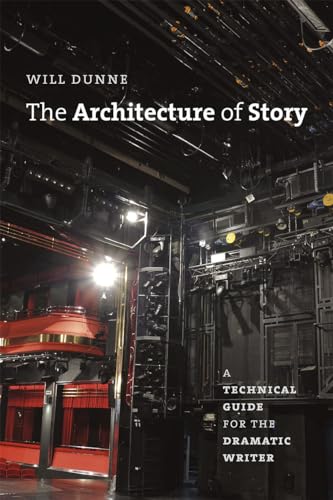
Inhaltsangabe
While successful plays tend to share certain storytelling elements, there is no single blueprint for how a play should be constructed. Instead, seasoned playwrights know how to select the right elements for their needs and organize them in a structure that best supports their particular story.
Through his workshops and book The Dramatic Writer’s Companion, Will Dunne has helped thousands of writers develop successful scripts. Now, in The Architecture of Story, he helps writers master the building blocks of dramatic storytelling by analyzing a trio of award-winning contemporary American plays: Doubt: A Parable by John Patrick Shanley, Topdog/Underdog by Suzan-Lori Parks, and The Clean House by Sarah Ruhl. Dismantling the stories and examining key components from a technical perspective enables writers to approach their own work with an informed understanding of dramatic architecture.
Each self-contained chapter focuses on one storytelling component, ranging from “Title” and “Main Event” to “Emotional Environment” and “Crisis Decision.” Dunne explores each component in detail, demonstrating how it has been successfully handled in each play and comparing and contrasting techniques. The chapters conclude with questions to help writers evaluate and improve their own scripts. The result is a nonlinear reference guide that lets writers work at their own pace and choose the topics that interest them as they develop new scripts. This flexible, interactive structure is designed to meet the needs of writers at all stages of writing and at all levels of experience.
Die Inhaltsangabe kann sich auf eine andere Ausgabe dieses Titels beziehen.
Über die Autorinnen und Autoren
Will Dunne is currently a resident playwright at Chicago Dramatists, where he develops plays and teaches workshops. He also has led over fifteen hundred workshops through his San Francisco program, served as a dramaturg at the O’Neill, and twice attended the Australian National Playwrights Conference as guest instructor. His plays, which include How I Became an Interesting Person and Hotel Desperado, have been presented in Russia, Australia, and Croatia as well as in the US.
Will Dunne is currently a resident playwright at Chicago Dramatists, where he develops plays and teaches workshops. He also has led over fifteen hundred workshops through his San Francisco program, served as a dramaturg at the O'Neill, and twice attended the Australian National Playwrights Conference as guest instructor. His plays, which include How I Became an Interesting Person and Hotel Desperado, have been presented in Russia, Australia, and Croatia as well as in the US.
Auszug. © Genehmigter Nachdruck. Alle Rechte vorbehalten.
The Architecture of Story
A Technical Guide for the Dramatic Writer
By Will DunneThe University of Chicago Press
Copyright © 2016 Will Dunne
All rights reserved.
ISBN: 978-0-226-18191-2All rights reserved.
Contents
About This Guide,
The Plays and Playwrights,
TECHNICAL CONSIDERATIONS,
Genre: Type of story,
Style: How characters and events are depicted,
Dramatic Focus: Main character and point of view,
Rules of the Game: How things work in this particular story,
Framework: Act and scene divisions, including French scenes,
Stage Directions: Instructions for staging the play,
Other Script Elements: What's in the script besides the play,
THE BIG PICTURE,
Title: Meaning and function of title,
Characters: Who causes the story to happen,
Offstage Population: Who influences the story from offstage,
Plot: Synopsis and chain of events,
Character Arcs: Character entrances, exits, and transitions,
Story Arc and Main Event: Most important thing that happens,
Subject and Theme: What the story is about,
Dialogue: Language characteristics and indigenous terms,
Visual Imagery: How images reveal story,
WORLD OF THE CHARACTERS,
Physical Realm: The setting and what's in it,
Emotional Environment: General mood or atmosphere,
Social Context: Key circumstances, values, and beliefs,
Laws and Customs: Social rules that affect behavior,
Economics: How characters are influenced by money or lack of it,
Power Structure: Who is in charge and who isn't,
Spiritual Realm: Presence or absence of the supernatural,
Backstory: The past that affects the present,
STEPS OF THE JOURNEY,
Point of Attack: How the play begins,
Inciting Event and Quest: What triggers the protagonist's dramatic journey,
Central Conflict: Key obstacles to the protagonist's success,
What's at Stake: The protagonist's reason to act,
Strategies and Tactics: How the protagonist tries to complete the quest,
Pointers and Plants: Preparation tools to engage the audience,
Reversals: Turning points in the story,
Crisis Decision: The protagonist's most difficult decision,
Climax and Resolution: Showdown and final destination,
Acknowledgments,
Footnotes,
CHAPTER 1
Technical Considerations
A dramatic script reflects certain technical decisions that the writer makes about how to present the story. Such decisions center on genre, style, and dramatic focus, as well as the rules governing how this particular story will be revealed to the audience. Other considerations include the play's framework — its division into acts and scenes — and the stage directions that run throughout the script to communicate the writer's vision of the play to those who will be involved in its production.
GENRE
Theatrical works can be organized into different genres, or categories, that reflect the writer's point of view about the story being presented. Knowing the genre can help the writer make more informed writing and marketing decisions. Genre can also help producers and audiences find the types of plays they prefer. There are two basic theatrical genres:
Comedy, a humorous story about a normal person in laughable circumstances or a laughable person in normal circumstances who experiences a significant rise in fortune. The story typically moves from unhappiness to happiness. Common characteristics: fast pace, funny situations, exaggeration, incongruity, and matters of rebirth and renewal. Examples: The Odd Couple by Neil Simon, Chinglish by David Henry Hwang, Becky Shaw by Gina Gionfriddo.
Tragedy, a serious story about a good person, usually an important and powerful one, who suffers a significant downfall due to his or her own flaws and missteps. The story typically moves from happiness to unhappiness. Common characteristics: extreme and sometimes dangerous situations, painful emotions, inevitability of failure, catharsis, and a moral lesson. Examples: Hamlet by William Shakespeare, Fences by August Wilson, Death of a Salesman by Arthur Miller.
Through the ages, other theatrical genres and subgenres have evolved as blends or subsets of these two basic types of plays. For example, while the term "drama" is used broadly to describe works written for the stage, it is also used more narrowly to indicate a genre of play:
Drama in this sense is neither a comedy nor a tragedy. It is a serious story about one or more characters at a time of flux and crisis in their lives. Common characteristics: intense conflict, strong emotions, and personal themes. Examples: A Raisin in the Sun by Lorraine Hansberry, Buried Child by Sam Shepard, The Night Alive by Conor McPherson.
Other common genres include:
Tragicomedy, as the name suggests, is a mix of sad and funny story elements. It may be a series of tragic events with a happy ending or a series of comedic events with an unhappy ending. Examples: Uncle Vanya by Anton Chekhov, Angels in America by Tony Kushner, Between Riverside and Crazy by Stephen Adly Guirgis.
Farce, a form of comedy, is designed to evoke laughter but relies more on buffoonery, physical humor, and ludicrously improbable situations. Common characteristics: extreme exaggeration, repetition, and two-dimensional characters entangled in frequent and elaborate plot twists. Examples: The Miser by Molière, What the Butler Saw by Joe Orton, Noises Off by Michael Frayn.
Melodrama is a story about good triumphing over evil. The story typically moves from happiness to unhappiness to happiness again. Common characteristics: strong plot, archetypal characters, exaggerated conflict, sensational elements, and a protagonist who is a victim of circumstances. Examples: Desire under the Elms by Eugene O'Neill, The Mousetrap by Agatha Christie, The Bells by Theresa Rebeck.
Issue play is a story organized around a social or political issue and the author's ideas about how to address it. The purpose is to arouse the audience emotionally, teach them a lesson, and provoke them to take certain new actions in their lives. Examples: Keely and Du by Jane Martin, The Laramie Project by Moises Kaufman, Fires in the Mirror by Anna Deavere Smith.
These genres can be adapted in various ways to create countless other genres and subgenres, such as black comedy, romantic comedy, satire, docudrama, historical drama, courtroom drama, fable, science fiction, fantasy, mystery/thriller, experimental drama, and more.
* DOUBT: A PARABLE
Genre: Drama
Doubt depicts the efforts of a Catholic elementary school principal to expose and expel a suspected pedophile priest. Because of the serious subject matter, intense conflict, emotional themes, and mixed outcome, the play can be classified as drama.
* TOPDOG/UNDERDOG
Genre: Tragicomedy
Topdog/Underdog explores the competition between two brothers who have been forced by social isolation and poverty to share a single furnished room. Because it combines humor with a serious theme and unhappy ending, the play can be classified as tragicomedy. According to playwright Parks, "Comedy and tragedy can exist side by side, and can exist in the same moment, which is what this play is all about."
* THE CLEAN HOUSE
Genre:...
„Über diesen Titel“ kann sich auf eine andere Ausgabe dieses Titels beziehen.
Suchergebnisse für The Architecture of Story: A Technical Guide for the...

Beispielbild für diese ISBN
The Architecture of Story: A Technical Guide for the Dramatic Writer (Chicago Guides to Writing, Editing, and Publishing)
Verlag:
University of Chicago Press, 2016
ISBN 10: 022618191X
ISBN 13: 9780226181912
Gebraucht
Paperback
Anbieter: Midtown Scholar Bookstore, Harrisburg, PA, USA
Verkäuferbewertung 5 von 5 Sternen

Paperback. Zustand: Very Good. Very Good - Crisp, clean, unread book with some shelfwear/edgewear, may have a remainder mark - NICE Standard-sized. Bestandsnummer des Verkäufers M022618191XZ2
Gebraucht kaufen
EUR 6,46
EUR 5,14 Versand
Versand innerhalb von USA
Versand innerhalb von USA
Anzahl: 1 verfügbar
Beispielbild für diese ISBN
The Architecture of Story: A Technical Guide for the Dramatic Writer (Chicago Guides to Writing, Editing, and Publishing)
Verlag:
University of Chicago Press, 2016
ISBN 10: 022618191X
ISBN 13: 9780226181912
Gebraucht
Paperback
Anbieter: Midtown Scholar Bookstore, Harrisburg, PA, USA
Verkäuferbewertung 5 von 5 Sternen
Paperback. Zustand: Acceptable. Acceptable - This is a significantly damaged book. It should be considered a reading copy only. Please order this book only if you are interested in the content and not the condition. May be ex-library. PAPERBACK Standard-sized. Bestandsnummer des Verkäufers M022618191XZ4
Gebraucht kaufen
EUR 6,93
EUR 5,14 Versand
Versand innerhalb von USA
Versand innerhalb von USA
Anzahl: 1 verfügbar
Beispielbild für diese ISBN
The Architecture of Story : A Technical Guide for the Dramatic Writer
Verlag:
University of Chicago Press, 2016
ISBN 10: 022618191X
ISBN 13: 9780226181912
Gebraucht
Softcover
Anbieter: Better World Books, Mishawaka, IN, USA
Verkäuferbewertung 5 von 5 Sternen
Zustand: Good. Pages intact with minimal writing/highlighting. The binding may be loose and creased. Dust jackets/supplements are not included. Stock photo provided. Product includes identifying sticker. Better World Books: Buy Books. Do Good. Bestandsnummer des Verkäufers 67839646-6
Gebraucht kaufen
EUR 16,61
Versand gratis
Versand innerhalb von USA
Versand innerhalb von USA
Anzahl: 1 verfügbar
Foto des Verkäufers
The Architecture of Story: A Technical Guide for the Dramatic Writer (Chicago Guides to Writing, Editing, and Publishing)
Verlag:
University of Chicago Press, 2016
ISBN 10: 022618191X
ISBN 13: 9780226181912
Gebraucht
Softcover
Anbieter: -OnTimeBooks-, Phoenix, AZ, USA
Verkäuferbewertung 5 von 5 Sternen
Zustand: good. A copy that has been read, remains in good condition. All pages are intact, and the cover is intact. The spine and cover show signs of wear. Pages can include notes and highlighting and show signs of wear, and the copy can include "From the library of" labels or previous owner inscriptions. 100% GUARANTEE! Shipped with delivery confirmation, if you're not satisfied with purchase please return item! Ships via media mail. Bestandsnummer des Verkäufers OTV.022618191X.G
Gebraucht kaufen
EUR 17,05
Versand gratis
Versand innerhalb von USA
Versand innerhalb von USA
Anzahl: 1 verfügbar
Beispielbild für diese ISBN
The Architecture of Story: A Technical Guide for the Dramatic Writer (Chicago Guides to Writing, Editing, and Publishing)
Verlag:
University of Chicago Press, 2016
ISBN 10: 022618191X
ISBN 13: 9780226181912
Gebraucht
paperback
Anbieter: Books From California, Simi Valley, CA, USA
Verkäuferbewertung 4 von 5 Sternen

paperback. Zustand: Good. Bestandsnummer des Verkäufers mon0003953435
Gebraucht kaufen
EUR 14,16
EUR 4,28 Versand
Versand innerhalb von USA
Versand innerhalb von USA
Anzahl: 1 verfügbar
Beispielbild für diese ISBN
The Architecture of Story Format: Paperback
Anbieter: INDOO, Avenel, NJ, USA
Verkäuferbewertung 5 von 5 Sternen
Zustand: New. Brand New. Bestandsnummer des Verkäufers 9780226181912
Neu kaufen
EUR 20,11
Versand gratis
Versand innerhalb von USA
Versand innerhalb von USA
Anzahl: Mehr als 20 verfügbar
Beispielbild für diese ISBN
The Architecture of Story
Anbieter: PBShop.store US, Wood Dale, IL, USA
Verkäuferbewertung 5 von 5 Sternen
PAP. Zustand: New. New Book. Shipped from UK. Established seller since 2000. Bestandsnummer des Verkäufers FW-9780226181912
Beispielbild für diese ISBN
The Architecture of Story: A Technical Guide for the Dramatic Writer (eng)
Anbieter: Brook Bookstore On Demand, Napoli, NA, Italien
Verkäuferbewertung 5 von 5 Sternen
Zustand: new. Bestandsnummer des Verkäufers e4fb39ed24bb3d5e83f4aa40644f743f
Neu kaufen
EUR 22,86
EUR 5,50 Versand
Versand von Italien nach USA
Versand von Italien nach USA
Anzahl: Mehr als 20 verfügbar
Beispielbild für diese ISBN
The Architecture of Story
Anbieter: PBShop.store UK, Fairford, GLOS, Vereinigtes Königreich
Verkäuferbewertung 5 von 5 Sternen
PAP. Zustand: New. New Book. Shipped from UK. Established seller since 2000. Bestandsnummer des Verkäufers FW-9780226181912
Neu kaufen
EUR 26,48
EUR 4,86 Versand
Versand von Vereinigtes Königreich nach USA
Versand von Vereinigtes Königreich nach USA
Anzahl: 15 verfügbar
Beispielbild für diese ISBN
The Architecture of Story: A Technical Guide for the Dramatic Writer (Chicago Guides to Writing, Editing, and Publishing)
Anbieter: Kennys Bookshop and Art Galleries Ltd., Galway, GY, Irland
Verkäuferbewertung 5 von 5 Sternen
Zustand: New. Num Pages: 224 pages, black & white illustrations. BIC Classification: CBW. Category: (G) General (US: Trade). Dimension: 229 x 152 x 23. Weight in Grams: 363. . 2016. Paperback. . . . . Bestandsnummer des Verkäufers V9780226181912
Neu kaufen
EUR 23,39
EUR 9,50 Versand
Versand von Irland nach USA
Versand von Irland nach USA
Anzahl: Mehr als 20 verfügbar