
Verwandte Artikel zu After the Beautiful: Hegel and the Philosophy of Pictorial...
Inhaltsangabe
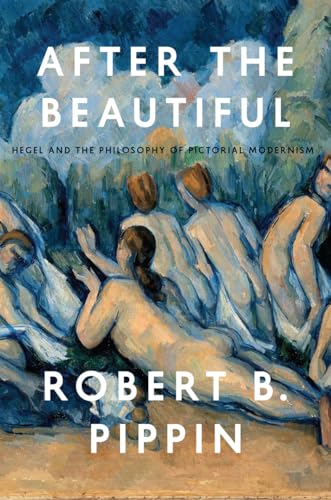
In his Berlin lectures on fine art, Hegel argued that art involves a unique form of aesthetic intelligibility—the expression of a distinct collective self-understanding that develops through historical time. Hegel’s approach to art has been influential in a number of different contexts, but in a twist of historical irony Hegel would die just before the most radical artistic revolution in history: modernism. In After the Beautiful, Robert B. Pippin, looking at modernist paintings by artists such as Édouard Manet and Paul Cézanne through Hegel’s lens, does what Hegel never had the chance to do.
While Hegel could never engage modernist painting, he did have an understanding of modernity, and in it, art—he famously asserted—was “a thing of the past,” no longer an important vehicle of self-understanding and no longer an indispensable expression of human meaning. Pippin offers a sophisticated exploration of Hegel’s position and its implications. He also shows that had Hegel known how the social institutions of his day would ultimately fail to achieve his own version of genuine equality, a mutuality of recognition, he would have had to explore a different, new role for art in modernity. After laying this groundwork, Pippin goes on to illuminate the dimensions of Hegel’s aesthetic approach in the path-breaking works of Manet, the “grandfather of modernism,” drawing on art historians T. J. Clark and Michael Fried to do so. He concludes with a look at Cézanne, the “father of modernism,” this time as his works illuminate the relationship between Hegel and the philosopher who would challenge Hegel’s account of both modernity and art—Martin Heidegger.
Elegantly inter-weaving philosophy and art history, After the Beautiful is a stunning reassessment of the modernist project. It gets at the core of the significance of modernism itself and what it means in general for art to have a history. Ultimately, it is a testament, via Hegel, to the distinctive philosophical achievements of modernist art in the unsettled, tumultuous era we have inherited.
Die Inhaltsangabe kann sich auf eine andere Ausgabe dieses Titels beziehen.
Über die Autorin bzw. den Autor
Robert B. Pippin is the Evelyn Stefansson Nef Distinguished Service Professor in the John U. Nef Committee on Social Thought, the Department of Philosophy, and the College at the University of Chicago. He is the author of several books, includingNietzsche, Psychology, and First Philosophy and Interanimations, both also published by the University of Chicago Press.
„Über diesen Titel“ kann sich auf eine andere Ausgabe dieses Titels beziehen.
Suchergebnisse für After the Beautiful: Hegel and the Philosophy of Pictorial...

Beispielbild für diese ISBN
After the Beautiful: Hegel and the Philosophy of Pictorial Modernism
Verlag:
University of Chicago Press, 2015
ISBN 10: 022632558X
ISBN 13: 9780226325583
Gebraucht
Paperback
Anbieter: Midtown Scholar Bookstore, Harrisburg, PA, USA
Verkäuferbewertung 5 von 5 Sternen

Paperback. Zustand: Good. Good - Bumped and creased book with tears to the extremities, but not affecting the text block, may have remainder mark or previous owner's name - GOOD Standard-sized. Bestandsnummer des Verkäufers M022632558XZ3
Gebraucht kaufen
EUR 6,97
EUR 5,13 Versand
Versand innerhalb von USA
Versand innerhalb von USA
Anzahl: Mehr als 20 verfügbar
Foto des Verkäufers
After the Beautiful: Hegel and the Philosophy of Pictorial Modernism
Verlag:
University of Chicago Press, 2015
ISBN 10: 022632558X
ISBN 13: 9780226325583
Gebraucht
Softcover
Anbieter: Solr Books, Lincolnwood, IL, USA
Verkäuferbewertung 5 von 5 Sternen
Zustand: acceptable. This book is in Acceptable condition. All pages are intact, but may have lots of notes, water damage or other issues and be ex library. Bestandsnummer des Verkäufers BCV.022632558X.A
Gebraucht kaufen
EUR 11,29
EUR 6,83 Versand
Versand innerhalb von USA
Versand innerhalb von USA
Anzahl: 1 verfügbar
Beispielbild für diese ISBN
After the Beautiful Format: Paperback
Anbieter: INDOO, Avenel, NJ, USA
Verkäuferbewertung 5 von 5 Sternen
Zustand: New. Brand New. Bestandsnummer des Verkäufers 9780226325583
Neu kaufen
EUR 20,70
Versand gratis
Versand innerhalb von USA
Versand innerhalb von USA
Anzahl: Mehr als 20 verfügbar
Beispielbild für diese ISBN
After the Beautiful : Hegel and the Philosophy of Pictorial Modernism
Anbieter: GreatBookPrices, Columbia, MD, USA
Verkäuferbewertung 5 von 5 Sternen
Zustand: New. Bestandsnummer des Verkäufers 23894207-n
Neu kaufen
EUR 25,66
EUR 2,26 Versand
Versand innerhalb von USA
Versand innerhalb von USA
Anzahl: 1 verfügbar
Foto des Verkäufers
After the Beautiful
Verlag:
The University of Chicago Press, US, 2015
ISBN 10: 022632558X
ISBN 13: 9780226325583
Neu
Paperback
Anbieter: Rarewaves.com USA, London, LONDO, Vereinigtes Königreich
Verkäuferbewertung 5 von 5 Sternen
Paperback. Zustand: New. In his Berlin lectures on fine art, Hegel argued that art involves a unique form of aesthetic intelligibility-the expression of a distinct collective self-understanding that develops through historical time. Hegel's approach to art has been influential in a number of different contexts, but in a twist of historical irony Hegel would die just before the most radical artistic revolution in history: modernism. In After the Beautiful, Robert B. Pippin, looking at modernist paintings by artists such as Edouard Manet and Paul Cezanne through Hegel's lens, does what Hegel never had the chance to do. While Hegel could never engage modernist painting, he did have an understanding of modernity, and in it, art-he famously asserted-was "a thing of the past," no longer an important vehicle of self-understanding and no longer an indispensable expression of human meaning. Pippin offers a sophisticated exploration of Hegel's position and its implications. He also shows that had Hegel known how the social institutions of his day would ultimately fail to achieve his own version of genuine equality, a mutuality of recognition, he would have had to explore a different, new role for art in modernity.After laying this groundwork, Pippin goes on to illuminate the dimensions of Hegel's aesthetic approach in the path-breaking works of Manet, the "grandfather of modernism," drawing on art historians T. J. Clark and Michael Fried to do so. He concludes with a look at Cezanne, the "father of modernism," this time as his works illuminate the relationship between Hegel and the philosopher who would challenge Hegel's account of both modernity and art-Martin Heidegger. Elegantly inter-weaving philosophy and art history, After the Beautiful is a stunning reassessment of the modernist project. It gets at the core of the significance of modernism itself and what it means in general for art to have a history. Ultimately, it is a testament, via Hegel, to the distinctive philosophical achievements of modernist art in the unsettled, tumultuous era we have inherited. Bestandsnummer des Verkäufers LU-9780226325583
Neu kaufen
EUR 27,99
Versand gratis
Versand von Vereinigtes Königreich nach USA
Versand von Vereinigtes Königreich nach USA
Anzahl: 2 verfügbar
Foto des Verkäufers
After the Beautiful : Hegel and the Philosophy of Pictorial Modernism
Verlag:
University of Chicago Press, 2015
ISBN 10: 022632558X
ISBN 13: 9780226325583
Gebraucht
Softcover
Anbieter: GreatBookPrices, Columbia, MD, USA
Verkäuferbewertung 5 von 5 Sternen
Zustand: As New. Unread book in perfect condition. Bestandsnummer des Verkäufers 23894207
Gebraucht kaufen
EUR 26,48
EUR 2,26 Versand
Versand innerhalb von USA
Versand innerhalb von USA
Anzahl: 3 verfügbar
Beispielbild für diese ISBN
After the Beautiful: Hegel and the Philosophy of Pictorial Modernism (eng)
Anbieter: Brook Bookstore On Demand, Napoli, NA, Italien
Verkäuferbewertung 5 von 5 Sternen
Zustand: new. Bestandsnummer des Verkäufers f213fcc74e1663eef989872b6848fe65
Neu kaufen
EUR 23,95
EUR 5,50 Versand
Versand von Italien nach USA
Versand von Italien nach USA
Anzahl: 3 verfügbar
Foto des Verkäufers
After the Beautiful
Verlag:
The University of Chicago Press, US, 2015
ISBN 10: 022632558X
ISBN 13: 9780226325583
Neu
Paperback
Anbieter: Rarewaves USA, HEBRON, KY, USA
Verkäuferbewertung 5 von 5 Sternen
Paperback. Zustand: New. In his Berlin lectures on fine art, Hegel argued that art involves a unique form of aesthetic intelligibility-the expression of a distinct collective self-understanding that develops through historical time. Hegel's approach to art has been influential in a number of different contexts, but in a twist of historical irony Hegel would die just before the most radical artistic revolution in history: modernism. In After the Beautiful, Robert B. Pippin, looking at modernist paintings by artists such as Edouard Manet and Paul Cezanne through Hegel's lens, does what Hegel never had the chance to do. While Hegel could never engage modernist painting, he did have an understanding of modernity, and in it, art-he famously asserted-was "a thing of the past," no longer an important vehicle of self-understanding and no longer an indispensable expression of human meaning. Pippin offers a sophisticated exploration of Hegel's position and its implications. He also shows that had Hegel known how the social institutions of his day would ultimately fail to achieve his own version of genuine equality, a mutuality of recognition, he would have had to explore a different, new role for art in modernity.After laying this groundwork, Pippin goes on to illuminate the dimensions of Hegel's aesthetic approach in the path-breaking works of Manet, the "grandfather of modernism," drawing on art historians T. J. Clark and Michael Fried to do so. He concludes with a look at Cezanne, the "father of modernism," this time as his works illuminate the relationship between Hegel and the philosopher who would challenge Hegel's account of both modernity and art-Martin Heidegger. Elegantly inter-weaving philosophy and art history, After the Beautiful is a stunning reassessment of the modernist project. It gets at the core of the significance of modernism itself and what it means in general for art to have a history. Ultimately, it is a testament, via Hegel, to the distinctive philosophical achievements of modernist art in the unsettled, tumultuous era we have inherited. Bestandsnummer des Verkäufers LU-9780226325583
Beispielbild für diese ISBN
After the Beautiful
Anbieter: PBShop.store UK, Fairford, GLOS, Vereinigtes Königreich
Verkäuferbewertung 5 von 5 Sternen
PAP. Zustand: New. New Book. Shipped from UK. Established seller since 2000. Bestandsnummer des Verkäufers GB-9780226325583
Neu kaufen
EUR 26,89
EUR 4,86 Versand
Versand von Vereinigtes Königreich nach USA
Versand von Vereinigtes Königreich nach USA
Anzahl: 3 verfügbar
Foto des Verkäufers
After the Beautiful (Paperback)
Verlag:
The University of Chicago Press, Chicago, IL, 2015
ISBN 10: 022632558X
ISBN 13: 9780226325583
Neu
Paperback
Anbieter: Grand Eagle Retail, Bensenville, IL, USA
Verkäuferbewertung 5 von 5 Sternen
Paperback. Zustand: new. Paperback. In his Berlin lectures on fine art, Hegel argued that art involves a unique form of aesthetic intelligibilitythe expression of a distinct collective self-understanding that develops through historical time. Hegels approach to art has been influential in a number of different contexts, but in a twist of historical irony Hegel would die just before the most radical artistic revolution in history: modernism. In After the Beautiful, Robert B. Pippin, looking at modernist paintings by artists such as Edouard Manet and Paul Cezanne through Hegels lens, does what Hegel never had the chance to do.While Hegel could never engage modernist painting, he did have an understanding of modernity, and in it, arthe famously assertedwas a thing of the past, no longer an important vehicle of self-understanding and no longer an indispensable expression of human meaning. Pippin offers a sophisticated exploration of Hegels position and its implications. He also shows that had Hegel known how the social institutions of his day would ultimately fail to achieve his own version of genuine equality, a mutuality of recognition, he would have had to explore a different, new role for art in modernity. After laying this groundwork, Pippin goes on to illuminate the dimensions of Hegels aesthetic approach in the path-breaking works of Manet, the grandfather of modernism, drawing on art historians T. J. Clark and Michael Fried to do so. He concludes with a look at Cezanne, the father of modernism, this time as his works illuminate the relationship between Hegel and the philosopher who would challenge Hegels account of both modernity and artMartin Heidegger.Elegantly inter-weaving philosophy and art history, After the Beautiful is a stunning reassessment of the modernist project. It gets at the core of the significance of modernism itself and what it means in general for art to have a history. Ultimately, it is a testament, via Hegel, to the distinctive philosophical achievements of modernist art in the unsettled, tumultuous era we have inherited. Shipping may be from multiple locations in the US or from the UK, depending on stock availability. Bestandsnummer des Verkäufers 9780226325583