
Verwandte Artikel zu Awake in the Dark: The Best of Roger Ebert: Second...
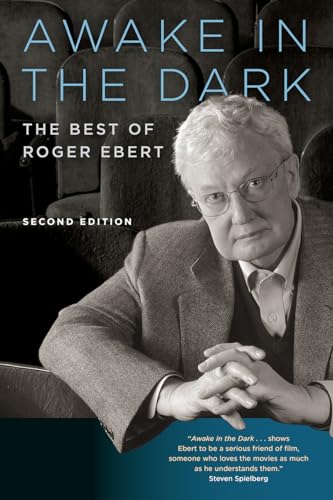
Awake in the Dark: The Best of Roger Ebert: Second Edition: The Best of Roger Ebert: Reviews, Essays, and Interviews - Softcover
Inhaltsangabe
For nearly half a century, Roger Ebert’s wide knowledge, keen judgment, prodigious energy, and sharp sense of humor made him America’s most renowned and beloved film critic. From Ebert’s Pulitzer Prize to his star on the Hollywood Walk of Fame, from his astonishing output of daily reviews to his pioneering work on television with Gene Siskel, his was a career in cinema criticism without peer.
Arriving fifty years after Ebert published his first film review in 1967, this second edition of Awake in the Dark collects Ebert’s essential writings into a single, irresistible volume. Featuring new Top Ten Lists and reviews of the years’ finest films through 2012, this edition allows both fans and film buffs to bask in the best of an extraordinary lifetime’s work. Including reviews from The Godfather to GoodFellas and interviews with everyone from Martin Scorsese to Meryl Streep, as well as showcasing some of Ebert’s most admired essays—among them a moving appreciation of John Cassavetes and a loving tribute to the virtues of black-and-white films—Ebert’s Awake in the Dark is a treasure trove not just for fans of this era-defining critic, but for anyone desiring a compulsively readable chronicle of the silver screen.
Stretching from the dramatic rise of rebel Hollywood and the heyday of the auteur to the triumph of blockbuster films such as Star Wars and Raiders of the Lost Ark, to the indie revolution that is still with us today, Awake in the Dark reveals a writer whose exceptional intelligence and daily bursts of insight and enthusiasm helped shape the way we think about the movies. But more than this, Awake in the Dark is a celebration of Ebert’s inimitable voice—a voice still cherished and missed.
Die Inhaltsangabe kann sich auf eine andere Ausgabe dieses Titels beziehen.
Über die Autorin bzw. den Autor
Roger Ebert (1942–2013) was a film critic for the Chicago Sun-Times for more than forty years. In 1975 he became the first film critic to win the Pulitzer Prize. He is the author of numerous books on film, including Scorsese by Ebert, TheGreat MoviesIII and IV, and Two Weeks in the Midday Sun: A Cannes Notebook, all published by the University of Chicago Press, as well as a memoir, Life Itself.
Auszug. © Genehmigter Nachdruck. Alle Rechte vorbehalten.
Awake in the Dark
The Best of Roger Ebert Reviews, Essays, And Interviews
By David BordwellThe University of Chicago Press
Copyright © 2017 The Ebert Company, Ltd.
All rights reserved.
ISBN: 978-0-226-46086-4All rights reserved.
Contents
Foreword, by David Bordwell,
Introduction,
Prologue: Death of a Dream Palace,
Review of La Dolce Vita,
PART 1: INTERVIEWS AND PROFILES,
PART 2: THE BEST,
PART 3: FOREIGN FILMS,
PART 4: DOCUMENTARIES,
PART 5: OVERLOOKED AND UNDERRATED,
PART 6: ESSAYS AND THINK PIECES,
PART 7: ON FILM CRITICISM,
Symposium from Film Comment,
All Thumbs, or, Is There a Future for Film Criticism? BY RICHARD CORLISS,
All Stars, or, Is There a Cure for Criticism of Film Criticism? BY ROGER EBERT,
Then Again BY RICHARD CORLISS,
Auteurism Is Alive and Well and Living in Argentina BY ANDREW SARRIS,
A Memo to Myself and Certain Other Film Critics,
Epilogue: Thoughts on the Centennial of Cinema,
Coda: On the Meaning of Life ... and Movies,
Appendix 1: Ten Best Lists, 1967–2012,
Appendix 2: More of "The Best," 2006–2012,
Notes,
Index,
CHAPTER 1
PART 1
Interviews and Profiles
INTRODUCTION
In a perfect world, movie critics would perhaps never do interviews. There is a potential conflict involved in talking with someone, even dining with them, even visiting the set of their film, and then writing a review that is intended to be objective. Many papers make a clear distinction between critics and interviewers, and at Cannes when you apply for credentials they ask if you are a "critic" or a "chronicler." I have always been both.
It was a lucky break for me, after all, that the Sun-Times had one person on the movie beat, me. I wrote the reviews and did the interviews. That allowed me to build up a more complete database of reviews than any other critic of the same period, and it also allowed me access to hundreds of directors and other film artists.
From time to time I would grumble about the workload, and indeed the Sun-Times has had many other writers involved in writing interviews, but I never wanted to give it up entirely because I was interested in talking with these people about their work. As the publicity mechanism grew more calculating, the carefree access of earlier years shrank into the Dreaded Hotel Room Interview — three minutes taped for TV in front of a poster of the movie — and these I tended to avoid. What I would not have missed were visits to the sets or locations of Sam Peckinpah, Altman, Jewison, Bergman, Fellini, Carol Reed, Henry Hathaway, dozens of others. I talked with Hitchcock, Astaire, Streep, Groucho, John Wayne, Herzog, Mitchum, both Fondas, two Hustons, Jeanne Moreau, Elizabeth Taylor, Antonioni, Mae West.
My strategy as a writer evolved during some of my early pieces for Esquire. In reaction I suppose to Rex Reed and Tom Wolfe, who did some fancy footwork for the magazine, I developed a deadpan style in which I simply observed my subjects as they spoke and behaved, and commented on them with understatement. The Lee Marvin piece is an example of this approach.
Warren Beatty
INTRODUCTION
Gene Siskel and I hosted a tribute to Warren Beatty in the 1980s at the Toronto Film Festival. Many of those he worked with agreed to appear: Arthur Penn, Robert Towne, Jerzy Kosinski, Jack Nicholson. Beatty himself did not agree to appear. He agreed to sit in the audience next to Diane Keaton and see how the tribute went, and then, when it concluded, he would see how he felt about getting up on the stage. In the event, he did mount to the stage, but to make remarks, not to answer questions.
He is protective of himself. Once I went to interview him and as I waited in a hotel room I was asked by a publicist what I thought about Beatty's new movie. I later discovered that he was sitting on the other side of a door, listening.
In Los Angeles one day I got a message from James Toback, inviting me to visit the set of his new movie Bugsy. I am customarily uninformed about films in production; I don't much read the trades and the press releases, or I would have known that Bugsy was not precisely Toback's film. He wrote it. Barry Levinson was directing it. Warren Beatty was coproducing and starring in it. I arrived at the house, was pointed up the driveway by a production assistant, walked in behind the cameras, and was seen by Beatty:
"Roger. Uh, yeah. Hi. Yeah. How are you?" This was all clearly an evasion of the question he wanted to ask, which was, what in the hell was I doing there? It was a closed set. Toback materialized and my presence was accounted for. How Toback eventually explained his invitation to Beatty is something I have never asked him.
Do I sound critical of Beatty? The fact is that I have enormous admiration for him. He has made some great films. He was personally responsible for the existence of Bonnie and Clyde, and it was his decision to trust Arthur Penn after they had gone down in flames together with their previous film, the underrated Mickey One (1965). It was Beatty who persuaded Jack Warner to give the film a proper release, although several versions exist of the story about how he did that. I am proud that as a new critic I was absolutely right about the greatness of Bonnie and Clyde at a time when much critical opinion was against it.
I don't think Beatty owes me a thing. His job is to make the movies. He can refuse to get up on the stage if he wants to, he can listen to my opinion of his movie before he talks to me, he can suggest a luncheon interview and then take me to a hot dog stand. "I want you to personally experience the best hot dogs in Burbank," he told me. I did.
SEPTEMBER 24, 1967
LONDON — No film in the last 10 years has gotten better reviews in London than Warren Beatty's Bonnie and Clyde, which opened here last week and in Chicago Friday. Beatty had all the reviews clipped out and stuck in a cardboard folder, which was resting on the coffee table in his room at the Gloucester Hotel. He kept pointing to the folder as if it was an exhibit and this was a trial.
"Hard to believe," he said. "Great reviews. Tremendous reviews. One critic called it the best American movie since 'On the Waterfront.' And you know what really hurts?"
He paused, and then continued to pace up and down the yellow carpet.
"What really hurts," he said, "is that one lousy review in the New York Times. Bosley Crowther says your movie is a glorification of violence, a cheap display of sentimental claptrap and that's that. The New York Times has spoken, hallelujah."
So Beatty, who produced and starred in Bonnie and Clyde, was getting it off his chest at last. It was the first time he had replied to Crowther's charges, although Arthur Penn, the film's director, had a succinct word or two to pronounce about Crowther last week.
The whole Bonnie and Clyde controversy is something of a rarity in American movie circles. You'd probably have to go back to Psycho to find another Hollywood film that has generated such intense debate. There's a little war going on right now in the little world of movie critics and it's beginning to look as if Crowther is getting the worst of it.
"The man at the New York Times has once again blown his tiny supply of cool," Wilfrid Sheed, Esquire's movie critic, wrote this week....
„Über diesen Titel“ kann sich auf eine andere Ausgabe dieses Titels beziehen.
Suchergebnisse für Awake in the Dark: The Best of Roger Ebert: Second...

Beispielbild für diese ISBN
Awake in the Dark: The Best of Roger Ebert: Second Edition
Verlag:
University of Chicago Press, 2017
ISBN 10: 022646086X
ISBN 13: 9780226460864
Gebraucht
Paperback
Anbieter: HPB-Diamond, Dallas, TX, USA
Verkäuferbewertung 5 von 5 Sternen

Paperback. Zustand: Very Good. Connecting readers with great books since 1972! Used books may not include companion materials, and may have some shelf wear or limited writing. We ship orders daily and Customer Service is our top priority! Bestandsnummer des Verkäufers S_448931129
Gebraucht kaufen
EUR 4,95
EUR 3,21 Versand
Versand innerhalb von USA
Versand innerhalb von USA
Anzahl: 1 verfügbar
Foto des Verkäufers
Awake in the Dark: The Best of Roger Ebert: Second Edition
Verlag:
University of Chicago Press, 2017
ISBN 10: 022646086X
ISBN 13: 9780226460864
Gebraucht
Softcover
Anbieter: Scissortail, Oklahoma City, OK, USA
Verkäuferbewertung 5 von 5 Sternen
Zustand: good. This is a pre-loved book that shows moderate signs of wear from previous reading. You may notice creases, edge wear, or a cracked spine, but it remains in solid, readable condition. Please note: -May include library or rental stickers, stamps, or markings. -Supplemental materials e.g., CDs, access codes, inserts are not guaranteed. -Box sets may not come with the original outer box. If it does, the box will not be in perfect condition. Your satisfaction is our top priority! If you have any questions or concerns about your order, please don't hesitate to reach out. Thank you for shopping with us and supporting small businessâ"happy reading! Bestandsnummer des Verkäufers STM.LKS
Gebraucht kaufen
EUR 8,50
Versand gratis
Versand innerhalb von USA
Versand innerhalb von USA
Anzahl: 1 verfügbar
Foto des Verkäufers
Awake in the Dark: The Best of Roger Ebert: Second Edition
Verlag:
University of Chicago Press, 2017
ISBN 10: 022646086X
ISBN 13: 9780226460864
Gebraucht
Softcover
Anbieter: Scissortail, Oklahoma City, OK, USA
Verkäuferbewertung 5 von 5 Sternen
Zustand: good. This is a pre-loved book that shows moderate signs of wear from previous reading. You may notice creases, edge wear, or a cracked spine, but it remains in solid, readable condition. Please note: -May include library or rental stickers, stamps, or markings. -Supplemental materials e.g., CDs, access codes, inserts are not guaranteed. -Box sets may not come with the original outer box. If it does, the box will not be in perfect condition. Your satisfaction is our top priority! If you have any questions or concerns about your order, please don't hesitate to reach out. Thank you for shopping with us and supporting small businessâ"happy reading! Bestandsnummer des Verkäufers STM.JSA
Gebraucht kaufen
EUR 8,50
Versand gratis
Versand innerhalb von USA
Versand innerhalb von USA
Anzahl: 1 verfügbar
Foto des Verkäufers
Awake in the Dark: The Best of Roger Ebert: Second Edition
Verlag:
University of Chicago Press, 2017
ISBN 10: 022646086X
ISBN 13: 9780226460864
Gebraucht
Softcover
Anbieter: Scissortail, Oklahoma City, OK, USA
Verkäuferbewertung 5 von 5 Sternen
Zustand: good. This is a pre-loved book that shows moderate signs of wear from previous reading. You may notice creases, edge wear, or a cracked spine, but it remains in solid, readable condition. Please note: -May include library or rental stickers, stamps, or markings. -Supplemental materials e.g., CDs, access codes, inserts are not guaranteed. -Box sets may not come with the original outer box. If it does, the box will not be in perfect condition. Your satisfaction is our top priority! If you have any questions or concerns about your order, please don't hesitate to reach out. Thank you for shopping with us and supporting small businessâ"happy reading! Bestandsnummer des Verkäufers STM.LKI
Gebraucht kaufen
EUR 8,50
Versand gratis
Versand innerhalb von USA
Versand innerhalb von USA
Anzahl: 1 verfügbar
Foto des Verkäufers
Awake in the Dark: The Best of Roger Ebert: Second Edition
Verlag:
University of Chicago Press, 2017
ISBN 10: 022646086X
ISBN 13: 9780226460864
Gebraucht
Softcover
Anbieter: Greenworld Books, Arlington, TX, USA
Verkäuferbewertung 5 von 5 Sternen
Zustand: good. Fast Free Shipping â" Good condition. It may show normal signs of use, such as light writing, highlighting, or library markings, but all pages are intact and the book is fully readable. A solid, complete copy that's ready to enjoy. Bestandsnummer des Verkäufers GWV.022646086X.G
Gebraucht kaufen
EUR 8,58
Versand gratis
Versand innerhalb von USA
Versand innerhalb von USA
Anzahl: 1 verfügbar
Beispielbild für diese ISBN
Awake in the Dark: The Best of Roger Ebert: Second Edition
Verlag:
University of Chicago Press, 2017
ISBN 10: 022646086X
ISBN 13: 9780226460864
Gebraucht
Paperback
Anbieter: Midtown Scholar Bookstore, Harrisburg, PA, USA
Verkäuferbewertung 5 von 5 Sternen
Paperback. Zustand: Very Good. Very Good - Crisp, clean, unread book with some shelfwear/edgewear, may have a remainder mark - NICE PAPERBACK Standard-sized. Bestandsnummer des Verkäufers M022646086XZ2
Gebraucht kaufen
EUR 3,87
EUR 5,14 Versand
Versand innerhalb von USA
Versand innerhalb von USA
Anzahl: Mehr als 20 verfügbar
Beispielbild für diese ISBN
Awake in the Dark: The Best of Roger Ebert: Second Edition
Verlag:
University of Chicago Press, 2017
ISBN 10: 022646086X
ISBN 13: 9780226460864
Gebraucht
Paperback
Anbieter: Midtown Scholar Bookstore, Harrisburg, PA, USA
Verkäuferbewertung 5 von 5 Sternen
Paperback. Zustand: Good. Good - Bumped and creased book with tears to the extremities, but not affecting the text block, may have remainder mark or previous owner's name - GOOD Standard-sized. Bestandsnummer des Verkäufers M022646086XZ3
Gebraucht kaufen
EUR 4,11
EUR 5,14 Versand
Versand innerhalb von USA
Versand innerhalb von USA
Anzahl: 7 verfügbar
Beispielbild für diese ISBN
Awake in the Dark: The Best of Roger Ebert: Second Edition
Verlag:
University of Chicago Press, 2017
ISBN 10: 022646086X
ISBN 13: 9780226460864
Gebraucht
Paperback
Anbieter: Midtown Scholar Bookstore, Harrisburg, PA, USA
Verkäuferbewertung 5 von 5 Sternen
Paperback. Zustand: Acceptable. Acceptable - This is a significantly damaged book. It should be considered a reading copy only. Please order this book only if you are interested in the content and not the condition. May be ex-library. PAPERBACK Standard-sized. Bestandsnummer des Verkäufers M022646086XZ4
Gebraucht kaufen
EUR 9,96
EUR 5,14 Versand
Versand innerhalb von USA
Versand innerhalb von USA
Anzahl: 1 verfügbar
Beispielbild für diese ISBN
Awake in the Dark Format: Paperback
Anbieter: INDOO, Avenel, NJ, USA
Verkäuferbewertung 5 von 5 Sternen
Zustand: New. Brand New. Bestandsnummer des Verkäufers 9780226460864
Neu kaufen
EUR 19,85
Versand gratis
Versand innerhalb von USA
Versand innerhalb von USA
Anzahl: Mehr als 20 verfügbar
Beispielbild für diese ISBN
Awake in the Dark
Anbieter: PBShop.store US, Wood Dale, IL, USA
Verkäuferbewertung 5 von 5 Sternen
PAP. Zustand: New. New Book. Shipped from UK. Established seller since 2000. Bestandsnummer des Verkäufers WG-9780226460864