
Verwandte Artikel zu Buddhism and Science: A Guide for the Perplexed (Buddhism...
Buddhism and Science: A Guide for the Perplexed (Buddhism and Modernity) - Hardcover
Buch 2 von 19: Buddhism and Modernity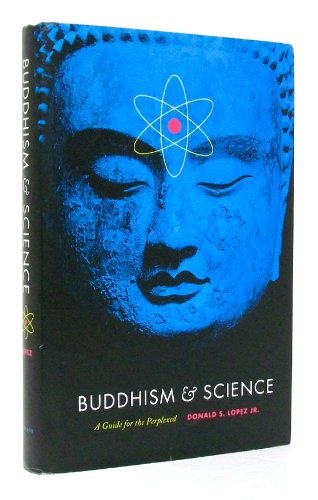
Inhaltsangabe
Beginning in the nineteenth century and continuing to the present day, both Buddhists and admirers of Buddhism have proclaimed the compatibility of Buddhism and science. Their assertions have ranged from modest claims about the efficacy of meditation for mental health to grander declarations that the Buddha himself anticipated the theories of relativity, quantum physics and the big bang more than two millennia ago.
In Buddhism and Science, Donald S. Lopez Jr. is less interested in evaluating the accuracy of such claims than in exploring how and why these two seemingly disparate modes of understanding the inner and outer universe have been so persistently linked. Lopez opens with an account of the rise and fall of Mount Meru, the great peak that stands at the center of the flat earth of Buddhist cosmography&;and which was interpreted anew once it proved incompatible with modern geography. From there, he analyzes the way in which Buddhist concepts of spiritual nobility were enlisted to support the notorious science of race in the nineteenth century. Bringing the story to the present, Lopez explores the Dalai Lama&;s interest in scientific discoveries, as well as the implications of research on meditation for neuroscience.   
 
Lopez argues that by presenting an ancient Asian tradition as compatible with&;and even anticipating&;scientific discoveries, European enthusiasts and Asian elites have sidestepped the debates on the relevance of religion in the modern world that began in the nineteenth century and still flare today. As new discoveries continue to reshape our understanding of mind and matter, Buddhism and Science will be indispensable reading for those fascinated by religion, science, and their often vexed relation.
Die Inhaltsangabe kann sich auf eine andere Ausgabe dieses Titels beziehen.
Über die Autorin bzw. den Autor
Donald S. Lopez Jr. is the Arthur E. Link Distinguished University Professor of Buddhist and Tibetan Studies in the Department of Asian Languages and Cultures at the University of Michigan. He is the author or editor of a number of books, including Prisoners of Shangri-La, The Madman&;s Middle Way, and Critical Terms for the Study of Buddhism, all published by the University of Chicago Press.
 
 
Auszug. © Genehmigter Nachdruck. Alle Rechte vorbehalten.
BUDDHISM & SCIENCE
A Guide for the Perplexed By DONALD S. LOPEZ JR.THE UNIVERSITY OF CHICAGO PRESS
Copyright © 2008 The University of ChicagoAll right reserved.
ISBN: 978-0-226-49312-1
Contents
Preface................................................ixIntroduction...........................................11 First There Is a Mountain............................392 Buddhism and the Science of Race.....................733 Two Tibetans.........................................1054 The Science of Buddhism..............................1535 The Meaning of Meditation............................197Conclusion: Measuring the Aura.........................211Notes..................................................219Index..................................................255
Chapter One
FIRST THERE IS A MOUNTAIN
On the morning of August 26, 1873, five thousand people gathered around a large platform in the town of Panadure, outside Colombo in Sri Lanka. The platform, constructed especially for the occasion, was divided into two sections. One side, with a table covered in white cloth and adorned with evergreens, was occupied by a group of Protestant clergymen. The other side was more richly decked, with tablecloths of damask and a canopy of red, white, and blue cloth. It was occupied by two hundred Buddhist monks in saffron robes. A debate would be held over the next two days. A reporter from the Ceylon Times described the scene:
The time appointed for commencing the discussion was eight o'clock in the morning, and long before that hour, thousands of natives were seen wending their way, attired in their gayest holiday suits, into the large enclosure in which stood the ample bungalow where the adversaries were to meet. By seven the green was one sea of heads.... Larger crowds may often be seen in very many places in Europe, but surely such a motley gathering as that which congregated on this occasion, can only be seen in the East. Imagine them all seated down and listening with wrapt attention to a yellow robed priest, holding forth from the platform filled with Budhist priests, clergymen, and Singhalese clad in their national costume, and your readers can form some idea-a very faint one indeed-of the heterogeneous mass that revelled in a display of Singhalese eloquence seldom heard in this country.
The coastal regions of the Buddhist kingdom of Sri Lanka had been conquered by the Portuguese in the early sixteenth century; in 1592, in order to escape the Portuguese, the royal capital was moved to Kandy in the highlands, the site of the most sacred relic on the island, a tooth of the Buddha. Roman Catholic missions were established, seeking to convert the Sinhalese in the lowlands. In 1638 the Portuguese were attacked by the Dutch, who eventually gained control of the entire island, apart from the kingdom of Kandy. They held the coastal regions until 1796, when they were displaced by the British. In the 1802 Treaty of Amiens between France and Britain, Napoleon (who controlled the Netherlands) formally ceded control of Sri Lanka to the British. By 1815, and after two bloody wars, the British controlled the entire island. Sri Lanka would remain the British crown colony of Ceylon until 1948. Under the British, a number of Protestant missions were established in the nineteenth century, seeking to convert the Buddhist populace to Christianity. They achieved a certain degree of success.
In 1862 a Buddhist monk named Gunananda founded the Society for the Propagation of Buddhism and established his own printing press, publishing pamphlets attacking Christianity. A number of Wesleyan clergymen responded to his charges, both from the pulpit and in print. And so in 1873, a public debate between Gunananda and a Christian representative, Rev. David da Silva (a Sinhalese convert), was arranged.
In their speeches (each party was allotted one hour in both the morning and the afternoon sessions each day), the adversaries sought to demonstrate the fallacies of the other's doctrines and scriptures. The Reverend da Silva spoke first, making extensive references to the Pali suttas and what the reporter from the Ceylon Times called "the abstruse metaphysics of Budha." His first target was the doctrine of no self, that the person is only an aggregation of various impermanent constituents. According to Buddhism, he said, human beings have no immortal soul and are "on a par with the frog, pig, or any other member of the brute creation." Furthermore, if there is no soul there can be no punishment for sin and no reward for virtue in the next life, and thus no motivation to seek the good and shun evil. "What villain would not exult in the idea that he is not to suffer for what he does in this life!" Thus, "no religion ever held out greater inducements to the unrighteous than Buddhism did."
The Buddhist monk Gunananda then rose to speak. He was described by the Ceylon Times reporter as "a well-made man of apparently forty five or fifty years, rather short, very intellectual looking, with eyes expressive of great distrust, and a smile which may either mean profound satisfaction or supreme contempt." He declared that Rev. da Silva's recitations of passages from the Buddhist scriptures were filled with blunders in pronunciation; there was little reason to expect that the reverend had understood something as profound as the Buddha's teachings on the nature of the person. He then began to enumerate the contradictions that occur in the Bible. He noted that in Genesis, God regrets having created man and asked whether it was the omniscient creator or the fool who regrets his deeds. In Exodus God instructs the Hebrews to mark their doors with blood so that he will know which houses to pass over as he kills the firstborn of the Egyptians; "if he were omniscient, surely this was not necessary."
In response, his Christian opponent alluded to the story of Prince Vessantara, the famed apostle of the perfection of giving, who, in one of the most poignant scenes in Buddhist literature, gave away his children and then his wife. In his next life, Prince Vessantara was reborn as Prince Siddhartha, who became the Buddha. The clergyman asked the audience, "Were these meritorious acts? Was it meritorious to break the hearts of wives and children, and bring desolation and misery to a happy home? If it were, what actions will they enumerate under the head of demerits or sins?" And so the debate continued over to the afternoon and the next day. At the conclusion of the event, Gunananda was declared the winner by the acclamation of the audience.
The debate, and the history of its representation, are fascinating, and deserve far more attention than can be provided here. But I would like to note one other exchange between the two parties, who are identified in the Ceylon Times article as "the Priest" (that is, the Buddhist monk) and "the Catechist" (that is, the Protestant clergyman). On the afternoon of the second day, Rev. da Silva described Mount Meru, the square mountain that, according to the Buddha's description, occupies the center of our universe. It is said to be 80,000 yojanas high, 80,000 yojanas wide, and 80,000 yojanas long. (A yojana was a unit for measuring distance in ancient India, derived from the distance that a pair of yoked oxen could travel in one day; it was apparently considered to be equal to approximately 16 miles in Sri Lanka in the nineteenth century.) Rev. da Silva asked, "How is it...
„Über diesen Titel“ kann sich auf eine andere Ausgabe dieses Titels beziehen.
Suchergebnisse für Buddhism and Science: A Guide for the Perplexed (Buddhism...

Foto des Verkäufers
Buddhism and Science: A Guide for the Perplexed (Buddhism and Modernity)
Verlag:
University of Chicago Press, 2008
ISBN 10: 0226493121
ISBN 13: 9780226493121
Gebraucht
Hardcover
Anbieter: Greenworld Books, Arlington, TX, USA
Verkäuferbewertung 5 von 5 Sternen

Zustand: very_good. Fast Free Shipping â" Very Good condition book with a firm cover and clean pages. Shows normal use and some light wear or limited notes markings. A solid, nice copy to enjoy. Bestandsnummer des Verkäufers GWV.0226493121.VG
Gebraucht kaufen
EUR 4,74
Versand gratis
Versand innerhalb von USA
Versand innerhalb von USA
Anzahl: 1 verfügbar
Beispielbild für diese ISBN
Buddhism and Science: A Guide for the Perplexed (Buddhism and Modernity)
Verlag:
University of Chicago Press, 2008
ISBN 10: 0226493121
ISBN 13: 9780226493121
Gebraucht
Hardcover
Anbieter: More Than Words, Waltham, MA, USA
Verkäuferbewertung 5 von 5 Sternen
Zustand: Very Good. A bright, square, and overall a nice copy. Bestandsnummer des Verkäufers BOS-C-05g-02172
Gebraucht kaufen
EUR 1,83
EUR 3,47 Versand
Versand innerhalb von USA
Versand innerhalb von USA
Anzahl: 1 verfügbar
Foto des Verkäufers
Buddhism and Science: A Guide for the Perplexed (Buddhism and Modernity)
Verlag:
University of Chicago Press, 2008
ISBN 10: 0226493121
ISBN 13: 9780226493121
Gebraucht
Hardcover
Anbieter: -OnTimeBooks-, Phoenix, AZ, USA
Verkäuferbewertung 5 von 5 Sternen
Zustand: good. A copy that has been read, remains in good condition. All pages are intact, and the cover is intact. The spine and cover show signs of wear. Pages can include notes and highlighting and show signs of wear, and the copy can include "From the library of" labels or previous owner inscriptions. 100% GUARANTEE! Shipped with delivery confirmation, if you're not satisfied with purchase please return item! Ships via media mail. Bestandsnummer des Verkäufers OTV.0226493121.G
Gebraucht kaufen
EUR 6,14
Versand gratis
Versand innerhalb von USA
Versand innerhalb von USA
Anzahl: 1 verfügbar
Beispielbild für diese ISBN
Buddhism and Science : A Guide for the Perplexed
Verlag:
University of Chicago Press, 2008
ISBN 10: 0226493121
ISBN 13: 9780226493121
Gebraucht
Hardcover
Anbieter: Better World Books, Mishawaka, IN, USA
Verkäuferbewertung 5 von 5 Sternen
Zustand: Good. Pages intact with minimal writing/highlighting. The binding may be loose and creased. Dust jackets/supplements are not included. Stock photo provided. Product includes identifying sticker. Better World Books: Buy Books. Do Good. Bestandsnummer des Verkäufers 5384405-20
Gebraucht kaufen
EUR 7,02
Versand gratis
Versand innerhalb von USA
Versand innerhalb von USA
Anzahl: 1 verfügbar
Beispielbild für diese ISBN
Buddhism & Science: A Guide for the Perplexed
Verlag:
University of Chicago Press, 2008
ISBN 10: 0226493121
ISBN 13: 9780226493121
Gebraucht
Hardcover
Anbieter: ThriftBooks-Atlanta, AUSTELL, GA, USA
Verkäuferbewertung 5 von 5 Sternen
Hardcover. Zustand: Good. No Jacket. Pages can have notes/highlighting. Spine may show signs of wear. ~ ThriftBooks: Read More, Spend Less. Bestandsnummer des Verkäufers G0226493121I3N00
Gebraucht kaufen
EUR 7,07
Versand gratis
Versand innerhalb von USA
Versand innerhalb von USA
Anzahl: 1 verfügbar
Beispielbild für diese ISBN
Buddhism & Science: A Guide for the Perplexed
Verlag:
University of Chicago Press, 2008
ISBN 10: 0226493121
ISBN 13: 9780226493121
Gebraucht
Hardcover
Anbieter: ThriftBooks-Atlanta, AUSTELL, GA, USA
Verkäuferbewertung 5 von 5 Sternen
Hardcover. Zustand: Very Good. No Jacket. May have limited writing in cover pages. Pages are unmarked. ~ ThriftBooks: Read More, Spend Less. Bestandsnummer des Verkäufers G0226493121I4N00
Gebraucht kaufen
EUR 7,07
Versand gratis
Versand innerhalb von USA
Versand innerhalb von USA
Anzahl: 1 verfügbar
Beispielbild für diese ISBN
Buddhism and Science: A Guide for the Perplexed (Buddhism and Modernity)
Verlag:
University of Chicago Press, 2008
ISBN 10: 0226493121
ISBN 13: 9780226493121
Gebraucht
Hardcover
Anbieter: Books From California, Simi Valley, CA, USA
Verkäuferbewertung 4 von 5 Sternen

Hardcover. Zustand: Good. Bestandsnummer des Verkäufers mon0004233208
Gebraucht kaufen
EUR 3,82
EUR 4,34 Versand
Versand innerhalb von USA
Versand innerhalb von USA
Anzahl: 1 verfügbar
Foto des Verkäufers
Buddhism and Science: A Guide for the Perplexed (Buddhism and Modernity)
Verlag:
University of Chicago Press, 2008
ISBN 10: 0226493121
ISBN 13: 9780226493121
Gebraucht
Hardcover
Anbieter: Goodwill of Central and Coastal Virginia, Richmond, VA, USA
Verkäuferbewertung 4 von 5 Sternen
Zustand: acceptable. Bestandsnummer des Verkäufers CCVV.0226493121.A
Gebraucht kaufen
EUR 5,89
EUR 5,00 Versand
Versand innerhalb von USA
Versand innerhalb von USA
Anzahl: 1 verfügbar
Beispielbild für diese ISBN
Buddhism and Science: A Guide for the Perplexed (Buddhism and Modernity)
Verlag:
University of Chicago Press, 2008
ISBN 10: 0226493121
ISBN 13: 9780226493121
Gebraucht
Hardcover
Anbieter: Burnt Biscuit Books, NEWNAN, GA, USA
Verkäuferbewertung 5 von 5 Sternen
hardcover. Zustand: Fair. Good minus. Some notations. HC DJ Shelving code AUB Gen stax. Bestandsnummer des Verkäufers 260122022
Gebraucht kaufen
EUR 9,98
EUR 4,35 Versand
Versand innerhalb von USA
Versand innerhalb von USA
Anzahl: 1 verfügbar