
Verwandte Artikel zu The Federal Impeachment Process: A Constitutional and...
The Federal Impeachment Process: A Constitutional and Historical Analysis, Third Edition - Softcover
Inhaltsangabe
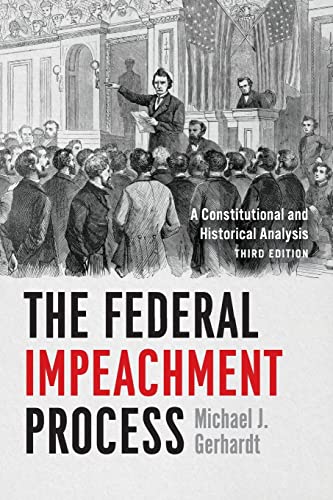
As President Trump and Congressional Democrats battle over the findings of the Mueller report, talk of impeachment is in the air. But what are the grounds for impeaching a sitting president? Who is subject to impeachment? Is impeachment effective as a safeguard against presidential misconduct? What challenges does today’s highly partisan political climate pose to the impeachment process, and what, if any, meaningful alternatives are there for handling presidential misconduct?
For more than twenty years, The Federal Impeachment Process has served as the most complete analysis of the constitutional and legal issues raised in every impeachment proceeding in American history. Impeachment, Michael J. Gerhardt shows, is an inherently political process designed to expose and remedy political crimes—serious breaches of duty or injuries to the Republic. Subject neither to judicial review nor to presidential veto, it is a unique congressional power that involves both political and constitutional considerations, including the gravity of the offense charged, the harm to the constitutional order, and the link between an official’s misconduct and duties. For this third edition, Gerhardt updates the book to cover cases since President Clinton, as well as recent scholarly debates. He discusses the issues arising from the possible impeachment of Donald Trump, including whether a sitting president may be investigated, prosecuted, and convicted for criminal misconduct or whether impeachment and conviction in Congress is the only way to sanction a sitting president; what the “Emoluments Clause” means and whether it might provide the basis for the removal of the president; whether gross incompetence may serve as the basis for impeachment; and the extent to which federal conflicts of interest laws apply to the president and other high ranking officials.
Significantly updated, this book will remain the standard work on the federal impeachment process for years to come.
Die Inhaltsangabe kann sich auf eine andere Ausgabe dieses Titels beziehen.
Über die Autorin bzw. den Autor
Michael J. Gerhardt is the Samuel Ashe Distinguished Professor of Constitutional Law at the University of North Carolina School of Law in Chapel Hill.
Auszug. © Genehmigter Nachdruck. Alle Rechte vorbehalten.
The Federal Impeachment Process
A Constitutional and Historical Analysis
By Michael J. GerhardtThe University of Chicago Press
Copyright © 2019 Michael J. Gerhardt
All rights reserved.
ISBN: 978-0-226-55483-9All rights reserved.
Contents
Preface to the Third Edition,
Acknowledgments,
PART I: THE HISTORICAL ORIGINS OF THE FEDERAL IMPEACHMENT PROCESS,
CHAPTER ONE The Impeachment Debates in the Constitutional Convention,
CHAPTER TWO The Impeachment Debates in the Ratifying Conventions,
PART II: TRENDS AND PROBLEMS IN IMPEACHMENT PROCEEDINGS,
CHAPTER THREE Impeachment Proceedings in the House of Representatives,
CHAPTER FOUR The Senate's Role in the Federal Impeachment Process,
CHAPTER FIVE Impeachment Issues Involving Congress and the Other Branches,
CHAPTER SIX Making Sense of the Federal Impeachment Process,
PART III: CLARIFYING THE CONSTITUTIONAL ASPECTS OF THE FEDERAL IMPEACHMENT PROCESS,
CHAPTER SEVEN The Scope of Impeachable Officials and Applicable Punishments,
CHAPTER EIGHT Impeachment as the Sole Means of Disciplining and Removing Impeachable Officials,
CHAPTER NINE The Scope of Impeachable Offenses,
CHAPTER TEN The Proper Procedures for Impeachment Proceedings,
CHAPTER ELEVEN Judicial Review of Impeachments,
PART IV: IMPEACHMENT REFORMS,
CHAPTER TWELVE Proposed Procedural Reforms for Judicial Impeachments,
CHAPTER THIRTEEN Proposed Statutory Changes and Constitutional Amendments to the Impeachment Process,
PART V: PRESIDENTIAL IMPEACHMENT IN THE AGE OF CLINTON AND TRUMP,
CHAPTER FOURTEEN Lessons from President Clinton's Impeachment and Acquittal,
CHAPTER FIFTEEN Impeachment and President Trump,
Notes,
Bibliography,
Bibliography Addendum,
Index,
CHAPTER 1
THE IMPEACHMENT DEBATES IN THE CONSTITUTIONAL CONVENTION
Debates about impeachment in the United States are older than the U.S. Constitution. Prior to the drafting and ratification of the federal Constitution, there were vast differences in state constitutional provisions regarding the officials who would be subject to, the timing of, grounds for, and the authorities empowered to conduct or try impeachments. These state procedures were in turn influenced by the English experience with impeachment from the thirteenth through the eighteenth centuries.
Many scholars have closely examined the history of impeachment prior to 1787. Although these studies are not all without problems, they are of limited interest to contemporary students of impeachment, because the framers established a special impeachment mechanism in the Constitution that reflected their intention to differentiate the newly proposed federal impeachment process from the English and state experiences with impeachment prior to 1787. This chapter focuses on the major discussions of impeachment among the delegates at the constitutional convention, while the next chapter examines the ratification debates about impeachment. These chapters show the basic concerns of the framers' generation regarding impeachment. Subsequent chapters use other historical material to illuminate the fundamental aspects of the federal impeachment process, particularly with respect to impeachment issues of contemporary concern.
To be sure, the debates over impeachment at the constitutional convention must be put into perspective. The convention delegates recognized that their views on the meaning of the Constitution mattered less than the opinions of the ratifiers. The convention delegates took this position because they believed that the Constitution would take effect only if the American people accepted it and that the public's only chance to review and debate the proposed Constitution occurred during ratification. To prevent their own views from dominating ratification, the delegates decided shortly after the beginning of the constitutional convention to conduct their deliberations in secret. The delegates decided not to call the "yeas" and "nays" by delegate name in order to encourage each other to speak candidly and to avoid playing to the press. Instead, the votes were recorded only by states. To make news leaks more difficult, delegates were allowed to inspect the journal of the proceedings but were not permitted to make a copy of any of its entries. The delegates also agreed that "nothing spoken in the House be printed, or otherwise published or communicated without leave." Moreover, to prevent any unauthorized entry, the convention placed sentries both inside and outside its meeting place.
These precautions ensured that the people who publicly discussed and ratified the new Constitution had no access to any of the notes on the constitutional convention. Indeed, the man who took the most copious notes of debates at the constitutional convention, James Madison, did not publish his notes until many years after the ratification of the Constitution. Madison objected for several reasons to relying on the convention debates to guide constitutional interpretation: his awareness of the framers' desire to keep the convention's proceedings secret from the ratifiers; various defects in the historical record, including his having given only an abbreviated account of the proceedings (and possibly having rewritten or revised portions of his notes after the convention); and the status of the ratifiers as the genuine sources of the Constitution's authority. Accordingly, he urged later generations to look "for the meaning of [the Constitution] not in the General Convention which proposed, but in the State Conventions which accepted and ratified it."
Nevertheless, the early debates and origins of the federal impeachment process command our attention because they are inherently interesting and provide insights into the creative process of framing the Constitution, and perhaps the general public's understanding of the Constitution's language at or around the time of the framing and ratification. The debates may help modern students of the Constitution figure out what certain words may have meant to the framers and ratifiers. If nothing else, the constitutional and ratification convention debates provide a unique glimpse into the context from which the impeachment clauses sprang.
Indeed, the historical record on the federal impeachment process is relatively clear on several matters of current interest. To begin with, all of the delegates principally involved in the impeachment debates in the constitutional convention were familiar with state impeachment procedures at that time; and the most influential speakers — Edmund Randolph, James Madison, George Mason, William Paterson, Hugh Williamson, James Wilson, Benjamin Franklin, Elbridge Gerry, Rufus King, Gouverneur Morris, Alexander Hamilton, and Charles Pinckney — were each well informed about the history of impeachment in England and their respective states. Moreover, the convention used as its model the basic features of the most popular state impeachment systems — particularly the common provision that only officers could be impeached for criminal acts in office, with removal and disqualification as the only sanctions — rather than the English practice under which the Parliament could impeach public officials and private citizens for so-called political crimes — offenses or conduct that injured the nation in some way — and, upon their convictions, impose various criminal penalties, including death.
Indeed, there were five particular issues relating to impeachment that elicited some...
„Über diesen Titel“ kann sich auf eine andere Ausgabe dieses Titels beziehen.
Suchergebnisse für The Federal Impeachment Process: A Constitutional and...

Beispielbild für diese ISBN
The Federal Impeachment Process: A Constitutional and Historical Analysis, Third Edition
Verlag:
University of Chicago Press, 2019
ISBN 10: 022655483X
ISBN 13: 9780226554839
Gebraucht
Softcover
Anbieter: World of Books (was SecondSale), Montgomery, IL, USA
Verkäuferbewertung 5 von 5 Sternen

Zustand: Very Good. Item in very good condition! Textbooks may not include supplemental items i.e. CDs, access codes etc. Bestandsnummer des Verkäufers 00108421986
Gebraucht kaufen
EUR 5,31
Versand gratis
Versand innerhalb von USA
Versand innerhalb von USA
Anzahl: 1 verfügbar
Beispielbild für diese ISBN
The Federal Impeachment Process: A Constitutional and Historical Analysis, Third Edition
Verlag:
University of Chicago Press, 2019
ISBN 10: 022655483X
ISBN 13: 9780226554839
Gebraucht
Paperback
Anbieter: Midtown Scholar Bookstore, Harrisburg, PA, USA
Verkäuferbewertung 5 von 5 Sternen
Paperback. Zustand: Very Good. Very Good - Crisp, clean, unread book with some shelfwear/edgewear, may have a remainder mark - NICE PAPERBACK Standard-sized. Bestandsnummer des Verkäufers M022655483XZ2
Gebraucht kaufen
EUR 10,29
EUR 5,17 Versand
Versand innerhalb von USA
Versand innerhalb von USA
Anzahl: 4 verfügbar
Beispielbild für diese ISBN
The Federal Impeachment Process: A Constitutional and Historical Analysis, Third Edition
Verlag:
University of Chicago Press, 2019
ISBN 10: 022655483X
ISBN 13: 9780226554839
Gebraucht
Paperback
Anbieter: Midtown Scholar Bookstore, Harrisburg, PA, USA
Verkäuferbewertung 5 von 5 Sternen
Paperback. Zustand: Good. Good - Bumped and creased book with tears to the extremities, but not affecting the text block, may have remainder mark or previous owner's name - GOOD PAPERBACK Standard-sized. Bestandsnummer des Verkäufers M022655483XZ3
Gebraucht kaufen
EUR 10,52
EUR 5,17 Versand
Versand innerhalb von USA
Versand innerhalb von USA
Anzahl: 1 verfügbar
Beispielbild für diese ISBN
The Federal Impeachment Process: A Constitutional and Historical Analysis, Third Edition
Verlag:
University of Chicago Press, 2019
ISBN 10: 022655483X
ISBN 13: 9780226554839
Gebraucht
Paperback
Anbieter: Midtown Scholar Bookstore, Harrisburg, PA, USA
Verkäuferbewertung 5 von 5 Sternen
Paperback. Zustand: Acceptable. Acceptable - This is a significantly damaged book. It should be considered a reading copy only. Please order this book only if you are interested in the content and not the condition. May be ex-library. PAPERBACK Standard-sized. Bestandsnummer des Verkäufers M022655483XZ4
Gebraucht kaufen
EUR 10,74
EUR 5,17 Versand
Versand innerhalb von USA
Versand innerhalb von USA
Anzahl: 4 verfügbar
Beispielbild für diese ISBN
TheFederalImpeachmentProcess Format: Paperback
Anbieter: INDOO, Avenel, NJ, USA
Verkäuferbewertung 5 von 5 Sternen
Zustand: New. Brand New. Bestandsnummer des Verkäufers 9780226554839
Neu kaufen
EUR 30,22
Versand gratis
Versand innerhalb von USA
Versand innerhalb von USA
Anzahl: Mehr als 20 verfügbar
Beispielbild für diese ISBN
The Federal Impeachment Process: A Constitutional and Historical Analysis, Third Edition
Anbieter: GoldBooks, Denver, CO, USA
Verkäuferbewertung 5 von 5 Sternen
Paperback. Zustand: new. New Copy. Customer Service Guaranteed. Bestandsnummer des Verkäufers 79V37_46_022655483X
Neu kaufen
EUR 33,91
EUR 4,74 Versand
Versand innerhalb von USA
Versand innerhalb von USA
Anzahl: 1 verfügbar
Beispielbild für diese ISBN
The Federal Impeachment Process: A Constitutional and Historical Analysis, Third Edition
Anbieter: Brook Bookstore On Demand, Napoli, NA, Italien
Verkäuferbewertung 5 von 5 Sternen
Zustand: new. Bestandsnummer des Verkäufers d8cea2e7a0a225e3f70cfab03082b17b
Neu kaufen
EUR 35,11
EUR 5,50 Versand
Versand von Italien nach USA
Versand von Italien nach USA
Anzahl: Mehr als 20 verfügbar
Beispielbild für diese ISBN
The Federal Impeachment Process
Anbieter: PBShop.store US, Wood Dale, IL, USA
Verkäuferbewertung 5 von 5 Sternen
PAP. Zustand: New. New Book. Shipped from UK. Established seller since 2000. Bestandsnummer des Verkäufers FW-9780226554839
Foto des Verkäufers
The Federal Impeachment Process
Verlag:
The University of Chicago Press, US, 2019
ISBN 10: 022655483X
ISBN 13: 9780226554839
Neu
Paperback
Anbieter: Rarewaves.com USA, London, LONDO, Vereinigtes Königreich
Verkäuferbewertung 5 von 5 Sternen
Paperback. Zustand: New. Twenty years after President Clinton's impeachment proceedings, talk of impeachment is again in the air. But what are the grounds for impeaching a sitting president? Who is subject to impeachment? Is impeachment effective as a safeguard against presidential misconduct? What challenges does today's highly partisan political climate pose to the impeachment process, and what, if any, meaningful alternatives are there for handling presidential misconduct? For more than twenty years, The Federal Impeachment Process has served as the most complete analysis of the constitutional and legal issues raised in every impeachment proceeding in American history. Impeachment, Michael J. Gerhardt shows, is an inherently political process designed to expose and remedy political crimes--serious breaches of duty or injuries to the Republic. Subject neither to judicial review nor to presidential veto, it is a unique congressional power that involves both political and constitutional considerations, including the gravity of the offense charged, the harm to the constitutional order, and the link between an official's misconduct and duties. For this third edition, Gerhardt updates the book to cover cases since President Clinton, as well as recent scholarly debates. He discusses the issues arising from the possible impeachment of Donald Trump, including whether a sitting president may be investigated, prosecuted, and convicted for criminal misconduct or whether impeachment and conviction in Congress is the only way to sanction a sitting president; what the "Emoluments Clause" means and whether it might provide the basis for the removal of the president; whether gross incompetence may serve as the basis for impeachment; and the extent to which federal conflicts of interest laws apply to the president and other high ranking officials. Significantly updated, this book will remain the standard work on the federal impeachment process for years to come. Bestandsnummer des Verkäufers LU-9780226554839
Neu kaufen
EUR 45,45
Versand gratis
Versand von Vereinigtes Königreich nach USA
Versand von Vereinigtes Königreich nach USA
Anzahl: Mehr als 20 verfügbar
Beispielbild für diese ISBN
The Federal Impeachment Process: A Constitutional and Historical Analysis, Third Edition
Anbieter: Kennys Bookshop and Art Galleries Ltd., Galway, GY, Irland
Verkäuferbewertung 5 von 5 Sternen
Zustand: New. 2019. 3rd edition. Paperback. . . . . . Bestandsnummer des Verkäufers V9780226554839
Neu kaufen
EUR 36,65
EUR 9,50 Versand
Versand von Irland nach USA
Versand von Irland nach USA
Anzahl: Mehr als 20 verfügbar