
Verwandte Artikel zu Recognizing the Autonomy of Nature: Theory And Practice
Inhaltsangabe
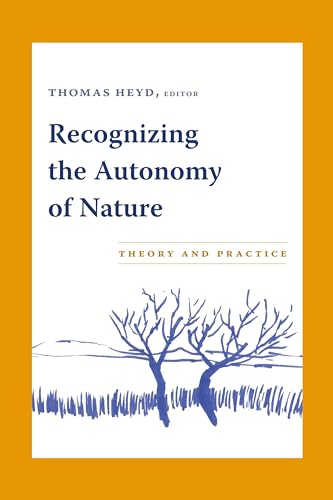
How do the ways in which we think about and describe nature shape the use and protection of the environment? Do our seemingly well-intentioned efforts in environmental conservation reflect a respect for nature or our desire to control nature's wildness? The contributors to this collection address these and other questions as they explore the theoretical and practical implications of a crucial aspect of environmental philosophy and policy-the autonomy of nature. In focusing on the recognition and meaning of nature's autonomy and linking issues of metaphysics, epistemology, ethics, and policy, the essays provide a variety of new perspectives on human relationships to nature.
The authors begin by exploring what is meant by "nature," in what sense it can be seen as autonomous, and what respect for the autonomy of nature might entail. They examine the conflicts that arise between the satisfaction of human needs (food, shelter, etc.) and the natural world. The contributors also consider whether the activities of human beings contribute to nature's autonomy. In their investigation of these issues, they not only draw on philosophy and ethics; they also discuss how the idea of nature's autonomy affects policy decisions regarding the protection of agricultural, rural, and beach areas.
The essays in the book's final section turn to management and restoration practices. The essays in this section pay close attention to how efforts at environmental protection alter or reinforce the traditional relationship between humans and nature. More specifically, the contributors examine whether management practices, as they are applied in nature conservation, actually promote the autonomy of nature, or whether they turn the environment into a "client" for policymakers.
Die Inhaltsangabe kann sich auf eine andere Ausgabe dieses Titels beziehen.
Über die Autorin bzw. den Autor
Thomas Heyd teaches philosophy at the University of Victoria in British Columbia. He is the coeditor (with John Clegg) of Aesthetics and Rock Art.
„Über diesen Titel“ kann sich auf eine andere Ausgabe dieses Titels beziehen.
Suchergebnisse für Recognizing the Autonomy of Nature: Theory And Practice

Foto des Verkäufers
Recognizing the Autonomy of Nature : Theory And Practice
Verlag:
Columbia University Press, 2005
ISBN 10: 0231136064
ISBN 13: 9780231136068
Gebraucht
Hardcover
Anbieter: GreatBookPrices, Columbia, MD, USA
Verkäuferbewertung 5 von 5 Sternen

Zustand: As New. Unread book in perfect condition. Bestandsnummer des Verkäufers 3468786
Gebraucht kaufen
EUR 98,26
EUR 2,40 Versand
Versand innerhalb von USA
Versand innerhalb von USA
Anzahl: Mehr als 20 verfügbar
Beispielbild für diese ISBN
Recognizing the Autonomy of Nature : Theory And Practice
Anbieter: GreatBookPricesUK, Woodford Green, Vereinigtes Königreich
Verkäuferbewertung 5 von 5 Sternen
Zustand: New. Bestandsnummer des Verkäufers 3468786-n
Neu kaufen
EUR 98,70
EUR 18,02 Versand
Versand von Vereinigtes Königreich nach USA
Versand von Vereinigtes Königreich nach USA
Anzahl: Mehr als 20 verfügbar
Foto des Verkäufers
Recognizing the Autonomy of Nature : Theory And Practice
Anbieter: GreatBookPrices, Columbia, MD, USA
Verkäuferbewertung 5 von 5 Sternen
Zustand: New. Bestandsnummer des Verkäufers 3468786-n
Neu kaufen
EUR 117,08
EUR 2,40 Versand
Versand innerhalb von USA
Versand innerhalb von USA
Anzahl: Mehr als 20 verfügbar
Foto des Verkäufers
Recognizing the Autonomy of Nature
Verlag:
Columbia University Press, US, 2005
ISBN 10: 0231136064
ISBN 13: 9780231136068
Neu
Hardcover
Anbieter: Rarewaves USA, HEBRON, KY, USA
Verkäuferbewertung 5 von 5 Sternen
Hardback. Zustand: New. How do the ways in which we think about and describe nature shape the use and protection of the environment? Do our seemingly well-intentioned efforts in environmental conservation reflect a respect for nature or our desire to control nature's wildness? The contributors to this collection address these and other questions as they explore the theoretical and practical implications of a crucial aspect of environmental philosophy and policy-the autonomy of nature. In focusing on the recognition and meaning of nature's autonomy and linking issues of metaphysics, epistemology, ethics, and policy, the essays provide a variety of new perspectives on human relationships to nature. The authors begin by exploring what is meant by "nature," in what sense it can be seen as autonomous, and what respect for the autonomy of nature might entail. They examine the conflicts that arise between the satisfaction of human needs (food, shelter, etc.) and the natural world. The contributors also consider whether the activities of human beings contribute to nature's autonomy.In their investigation of these issues, they not only draw on philosophy and ethics; they also discuss how the idea of nature's autonomy affects policy decisions regarding the protection of agricultural, rural, and beach areas. The essays in the book's final section turn to management and restoration practices. The essays in this section pay close attention to how efforts at environmental protection alter or reinforce the traditional relationship between humans and nature. More specifically, the contributors examine whether management practices, as they are applied in nature conservation, actually promote the autonomy of nature, or whether they turn the environment into a "client" for policymakers. Bestandsnummer des Verkäufers LU-9780231136068
Neu kaufen
EUR 119,56
Versand gratis
Versand innerhalb von USA
Versand innerhalb von USA
Anzahl: Mehr als 20 verfügbar
Foto des Verkäufers
Recognizing the Autonomy of Nature : Theory And Practice
Verlag:
Columbia University Press, 2005
ISBN 10: 0231136064
ISBN 13: 9780231136068
Gebraucht
Hardcover
Anbieter: GreatBookPricesUK, Woodford Green, Vereinigtes Königreich
Verkäuferbewertung 5 von 5 Sternen
Zustand: As New. Unread book in perfect condition. Bestandsnummer des Verkäufers 3468786
Gebraucht kaufen
EUR 104,98
EUR 18,02 Versand
Versand von Vereinigtes Königreich nach USA
Versand von Vereinigtes Königreich nach USA
Anzahl: Mehr als 20 verfügbar
Beispielbild für diese ISBN
Recognizing the Autonomy of Nature: Theory And Practice
Anbieter: Revaluation Books, Exeter, Vereinigtes Königreich
Verkäuferbewertung 5 von 5 Sternen
Hardcover. Zustand: Brand New. 230 pages. 9.00x6.00x0.50 inches. In Stock. Bestandsnummer des Verkäufers x-0231136064
Neu kaufen
EUR 123,78
EUR 12,01 Versand
Versand von Vereinigtes Königreich nach USA
Versand von Vereinigtes Königreich nach USA
Anzahl: 2 verfügbar
Foto des Verkäufers
Recognizing the Autonomy of Nature
Verlag:
Columbia University Press, US, 2005
ISBN 10: 0231136064
ISBN 13: 9780231136068
Neu
Hardcover
Anbieter: Rarewaves USA United, HEBRON, KY, USA
Verkäuferbewertung 5 von 5 Sternen
Hardback. Zustand: New. How do the ways in which we think about and describe nature shape the use and protection of the environment? Do our seemingly well-intentioned efforts in environmental conservation reflect a respect for nature or our desire to control nature's wildness? The contributors to this collection address these and other questions as they explore the theoretical and practical implications of a crucial aspect of environmental philosophy and policy-the autonomy of nature. In focusing on the recognition and meaning of nature's autonomy and linking issues of metaphysics, epistemology, ethics, and policy, the essays provide a variety of new perspectives on human relationships to nature. The authors begin by exploring what is meant by "nature," in what sense it can be seen as autonomous, and what respect for the autonomy of nature might entail. They examine the conflicts that arise between the satisfaction of human needs (food, shelter, etc.) and the natural world. The contributors also consider whether the activities of human beings contribute to nature's autonomy.In their investigation of these issues, they not only draw on philosophy and ethics; they also discuss how the idea of nature's autonomy affects policy decisions regarding the protection of agricultural, rural, and beach areas. The essays in the book's final section turn to management and restoration practices. The essays in this section pay close attention to how efforts at environmental protection alter or reinforce the traditional relationship between humans and nature. More specifically, the contributors examine whether management practices, as they are applied in nature conservation, actually promote the autonomy of nature, or whether they turn the environment into a "client" for policymakers. Bestandsnummer des Verkäufers LU-9780231136068
Neu kaufen
EUR 98,71
EUR 45,48 Versand
Versand innerhalb von USA
Versand innerhalb von USA
Anzahl: Mehr als 20 verfügbar
Foto des Verkäufers
Recognizing the Autonomy of Nature : Theory and Practice
Verlag:
Columbia University Press Nov 2005, 2005
ISBN 10: 0231136064
ISBN 13: 9780231136068
Neu
Hardcover
Anbieter: AHA-BUCH GmbH, Einbeck, Deutschland
Verkäuferbewertung 5 von 5 Sternen
Buch. Zustand: Neu. Neuware - How do the ways in which we think about and describe nature shape the use and protection of the environment Do our seemingly well-intentioned efforts in environmental conservation reflect a respect for nature or our desire to control nature's wildness The contributors to this collection address these and other questions as they explore the theoretical and practical implications of a crucial aspect of environmental philosophy and policy-the autonomy of nature. In focusing on the recognition and meaning of nature's autonomy and linking issues of metaphysics, epistemology, ethics, and policy, the essays provide a variety of new perspectives on human relationships to nature. Bestandsnummer des Verkäufers 9780231136068
Neu kaufen
EUR 122,46
EUR 35,00 Versand
Versand von Deutschland nach USA
Versand von Deutschland nach USA
Anzahl: 2 verfügbar