
Verwandte Artikel zu Social Acceleration: A New Theory of Modernity (New...
Social Acceleration: A New Theory of Modernity (New Directions in Critical Theory, Band 32) - Softcover
Buch 17 von 59: New Directions in Critical Theory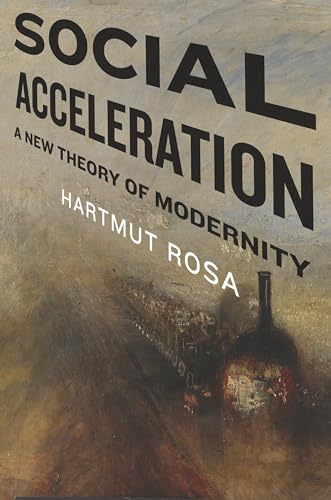
Inhaltsangabe
According to Rosa, both the structural and cultural aspects of our institutions and practices are marked by the "shrinking of the present," a decreasing time period during which expectations based on past experience reliably match the future. When this phenomenon combines with technological acceleration and the increasing pace of life, time seems to flow ever faster, making our relationships to each other and the world fluid and problematic.
Die Inhaltsangabe kann sich auf eine andere Ausgabe dieses Titels beziehen.
Über die Autorin bzw. den Autor
Hartmut Rosa is professor of sociology and political science at the Friedrich-Schiller-Universität Jena. He is the author of <i>Alienation and Acceleration: Towards a Critical Theory of Late-Modern Temporality</i> and coeditor, with William E. Scheuerman, <i>High-Speed Society: Social Acceleration, Power, and Modernity</i>.<br><br>Jonathan Trejo-Mathys (1979–2014) was assistant professor of philosophy at Boston College.
„Über diesen Titel“ kann sich auf eine andere Ausgabe dieses Titels beziehen.
Suchergebnisse für Social Acceleration: A New Theory of Modernity (New...

Beispielbild für diese ISBN
Social Acceleration: A New Theory of Modernity
Verlag:
Columbia University Press, 2015
ISBN 10: 0231148356
ISBN 13: 9780231148351
Gebraucht
Paperback
Anbieter: World of Books (was SecondSale), Montgomery, IL, USA
Verkäuferbewertung 5 von 5 Sternen

Paperback. Zustand: Very Good. Hartmut Rosa advances an account of the temporal structure of society from the perspective of critical theory. He identifies three categories of change in the tempo of modern social life: technological acceleration, evident in transportation, communication, and production; the acceleration of social change, reflected in cultural knowledge, social institutions, and personal relationships; and acceleration in the pace of life, which happens despite the expectation that technological change should increase an individual's free time. According to Rosa, both the structural and cultural aspects of our institutions and practices are marked by the "shrinking of the present," a decreasing time period during which expectations based on past experience reliably match the future. When this phenomenon combines with technological acceleration and the increasing pace of life, time seems to flow ever faster, making our relationships to each other and the world fluid and problematic. It is as if we are standing on "slipping slopes," a steep social terrain that is itself in motion and in turn demands faster lives and technology. As Rosa deftly shows, this self-reinforcing feedback loop fundamentally determines the character of modern life. Bestandsnummer des Verkäufers CIN0231148356VG
Gebraucht kaufen
EUR 20,18
Versand gratis
Versand innerhalb von USA
Versand innerhalb von USA
Anzahl: 1 verfügbar
Beispielbild für diese ISBN
Social Acceleration: A New Theory of Modernity
Verlag:
Columbia University Press, 2015
ISBN 10: 0231148356
ISBN 13: 9780231148351
Gebraucht
Paperback
Anbieter: World of Books Inc, Montgomery, IL, USA
Verkäuferbewertung 4 von 5 Sternen

Paperback. Zustand: Very Good. Hartmut Rosa advances an account of the temporal structure of society from the perspective of critical theory. He identifies three categories of change in the tempo of modern social life: technological acceleration, evident in transportation, communication, and production; the acceleration of social change, reflected in cultural knowledge, social institutions, and personal relationships; and acceleration in the pace of life, which happens despite the expectation that technological change should increase an individual's free time. According to Rosa, both the structural and cultural aspects of our institutions and practices are marked by the "shrinking of the present," a decreasing time period during which expectations based on past experience reliably match the future. When this phenomenon combines with technological acceleration and the increasing pace of life, time seems to flow ever faster, making our relationships to each other and the world fluid and problematic. It is as if we are standing on "slipping slopes," a steep social terrain that is itself in motion and in turn demands faster lives and technology. As Rosa deftly shows, this self-reinforcing feedback loop fundamentally determines the character of modern life. Bestandsnummer des Verkäufers CIN0231148356VG
Gebraucht kaufen
EUR 22,01
Versand gratis
Versand innerhalb von USA
Versand innerhalb von USA
Anzahl: 1 verfügbar
Beispielbild für diese ISBN
Social Acceleration: A New Theory of Modernity (New Directions in Critical Theory, 32)
Verlag:
Columbia University Press (edition Reprint), 2015
ISBN 10: 0231148356
ISBN 13: 9780231148351
Gebraucht
Paperback
Anbieter: BooksRun, Philadelphia, PA, USA
Verkäuferbewertung 5 von 5 Sternen
Paperback. Zustand: Very Good. Reprint. It's a well-cared-for item that has seen limited use. The item may show minor signs of wear. All the text is legible, with all pages included. It may have slight markings and/or highlighting. Bestandsnummer des Verkäufers 0231148356-10-1-NAU
Gebraucht kaufen
EUR 23,86
Versand gratis
Versand innerhalb von USA
Versand innerhalb von USA
Anzahl: 1 verfügbar
Beispielbild für diese ISBN
Social Acceleration: A New Theory of Modernity (New Directions in Critical Theory, 32)
Verlag:
Columbia University Press (edition Reprint), 2015
ISBN 10: 0231148356
ISBN 13: 9780231148351
Neu
Paperback
Anbieter: BooksRun, Philadelphia, PA, USA
Verkäuferbewertung 5 von 5 Sternen
Paperback. Zustand: New. Reprint. The item is brand new, never used or read. It's in perfect condition and may include supplements and/or access codes or come shrink-wrapped. Bestandsnummer des Verkäufers 0231148356-10-1
Beispielbild für diese ISBN
Social Acceleration
Anbieter: PBShop.store UK, Fairford, GLOS, Vereinigtes Königreich
Verkäuferbewertung 5 von 5 Sternen
PAP. Zustand: New. New Book. Shipped from UK. Established seller since 2000. Bestandsnummer des Verkäufers WI-9780231148351
Neu kaufen
EUR 30,38
EUR 5,99 Versand
Versand von Vereinigtes Königreich nach USA
Versand von Vereinigtes Königreich nach USA
Anzahl: 15 verfügbar
Foto des Verkäufers
Social Acceleration : A New Theory of Modernity
Verlag:
Columbia University Press, 2015
ISBN 10: 0231148356
ISBN 13: 9780231148351
Gebraucht
Softcover
Anbieter: GreatBookPrices, Columbia, MD, USA
Verkäuferbewertung 5 von 5 Sternen
Zustand: As New. Unread book in perfect condition. Bestandsnummer des Verkäufers 22151122
Gebraucht kaufen
EUR 34,77
EUR 2,35 Versand
Versand innerhalb von USA
Versand innerhalb von USA
Anzahl: 2 verfügbar
Foto des Verkäufers
Social Acceleration : A New Theory of Modernity
Anbieter: GreatBookPrices, Columbia, MD, USA
Verkäuferbewertung 5 von 5 Sternen
Zustand: New. Bestandsnummer des Verkäufers 22151122-n
Neu kaufen
EUR 35,03
EUR 2,35 Versand
Versand innerhalb von USA
Versand innerhalb von USA
Anzahl: 2 verfügbar
Beispielbild für diese ISBN
Social Acceleration
Anbieter: PBShop.store US, Wood Dale, IL, USA
Verkäuferbewertung 5 von 5 Sternen
PAP. Zustand: New. New Book. Shipped from UK. Established seller since 2000. Bestandsnummer des Verkäufers WI-9780231148351
Beispielbild für diese ISBN
Social Acceleration: A New Theory of Modernity (New Directions in Critical Theory)
Verlag:
Columbia University Press June 2015, 2015
ISBN 10: 0231148356
ISBN 13: 9780231148351
Neu
Paper Back
Anbieter: Eighth Day Books, LLC, Wichita, KS, USA
Verkäuferbewertung 4 von 5 Sternen
Paper Back. Zustand: New. Bestandsnummer des Verkäufers 117046
Neu kaufen
EUR 33,92
EUR 5,30 Versand
Versand innerhalb von USA
Versand innerhalb von USA
Anzahl: 3 verfügbar
Beispielbild für diese ISBN
Social Acceleration (Paperback)
Verlag:
Columbia University Press, New York, 2015
ISBN 10: 0231148356
ISBN 13: 9780231148351
Neu
Paperback
Anbieter: Grand Eagle Retail, Bensenville, IL, USA
Verkäuferbewertung 5 von 5 Sternen
Paperback. Zustand: new. Paperback. Hartmut Rosa advances an account of the temporal structure of society from the perspective of critical theory. He identifies three categories of change in the tempo of modern social life: technological acceleration, evident in transportation, communication, and production; the acceleration of social change, reflected in cultural knowledge, social institutions, and personal relationships; and acceleration in the pace of life, which happens despite the expectation that technological change should increase an individual's free time.According to Rosa, both the structural and cultural aspects of our institutions and practices are marked by the "shrinking of the present," a decreasing time period during which expectations based on past experience reliably match the future. When this phenomenon combines with technological acceleration and the increasing pace of life, time seems to flow ever faster, making our relationships to each other and the world fluid and problematic. It is as if we are standing on "slipping slopes," a steep social terrain that is itself in motion and in turn demands faster lives and technology. As Rosa deftly shows, this self-reinforcing feedback loop fundamentally determines the character of modern life. Hartmut Rosa advances an account of the temporal structure of society from the perspective of critical theory. He identifies in particular three categories of change in the tempo of modern social life: technological acceleration, evident in transportation, communication, and production; the acceleration of social change, reflected in cultural knowledge, social institutions, and personal relationships; and acceleration in the pace of life, which happens despite the expectation that technological change should increase an individual's free time.According to Rosa, both the structural and cultural aspects of our institutions and practices are marked by the "shrinking of the present," a decreasing time period during which expectations based on past experience reliably match future results and events. When this phenomenon combines with technological acceleration and the increasing pace of life, time seems to flow ever faster, making our relationships to each other and the world fluid and problematic. It is as if we are standing on "slipping slopes," a steep social terrain that is itself in motion and in turn demands faster lives and technology. As Rosa deftly shows, this self-reinforcing feedback loop fundamentally determines the character of modern life. Shipping may be from multiple locations in the US or from the UK, depending on stock availability. Bestandsnummer des Verkäufers 9780231148351