
Verwandte Artikel zu Dying: A Transition (End-of-Life Care)
Inhaltsangabe
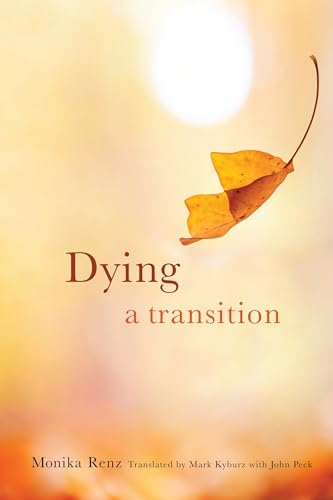
This book introduces a process-based, patient-centered approach to palliative care that substantiates an indication-oriented treatment and radical reconsideration of our transition to death. Drawing on decades of work with terminally ill cancer patients and a trove of research on near-death experiences, Monika Renz encourages practitioners to not only safeguard patients' dignity as they die but also take stock of their verbal, nonverbal, and metaphorical cues as they progress, helping to personalize treatment and realize a more peaceful death.
Renz divides dying into three parts: pre-transition, transition, and post-transition. As we die, all egoism and ego-centered perception fall away, bringing us to another state of consciousness, a different register of sensitivity, and an alternative dimension of spiritual connectedness. As patients pass through these stages, they offer nonverbal signals that indicate their gradual withdrawal from everyday consciousness. This transformation explains why emotional and spiritual issues become enhanced during the dying process. Relatives and practitioners are often deeply impressed and feel a sense of awe. Fear and struggle shift to trust and peace; denial melts into acceptance. At first, family problems and the need for reconciliation are urgent, but gradually these concerns fade. By delineating these processes, Renz helps practitioners grow more cognizant of the changing emotions and symptoms of the patients under their care, enabling them to respond with the utmost respect for their patients' dignity.
Die Inhaltsangabe kann sich auf eine andere Ausgabe dieses Titels beziehen.
Über die Autorin bzw. den Autor
Monika Renz is a practicing psychotherapist, music therapist, theologian, and spiritual caregiver and has been head of the psycho-oncology unit at St. Gallen Cantonal Hospital, Switzerland, since 1998. She holds a Ph.D. in psychopathology and in theology/spirituality. An international lecturer and the author of several books, her research focuses on dying, spirituality, and spiritual care and can be found at www.monikarenz.ch.
„Über diesen Titel“ kann sich auf eine andere Ausgabe dieses Titels beziehen.
Suchergebnisse für Dying: A Transition (End-of-Life Care)

Foto des Verkäufers
Dying : A Transition
Anbieter: GreatBookPrices, Columbia, MD, USA
Verkäuferbewertung 5 von 5 Sternen

Zustand: New. Bestandsnummer des Verkäufers 23458334-n
Neu kaufen
EUR 34,35
EUR 2,35 Versand
Versand innerhalb von USA
Versand innerhalb von USA
Anzahl: 1 verfügbar
Beispielbild für diese ISBN
Dying
Anbieter: PBShop.store US, Wood Dale, IL, USA
Verkäuferbewertung 5 von 5 Sternen
HRD. Zustand: New. New Book. Shipped from UK. Established seller since 2000. Bestandsnummer des Verkäufers WI-9780231170888
Foto des Verkäufers
Dying : A Transition
Verlag:
Columbia University Press, 2015
ISBN 10: 0231170882
ISBN 13: 9780231170888
Gebraucht
Hardcover
Anbieter: GreatBookPrices, Columbia, MD, USA
Verkäuferbewertung 5 von 5 Sternen
Zustand: As New. Unread book in perfect condition. Bestandsnummer des Verkäufers 23458334
Gebraucht kaufen
EUR 37,53
EUR 2,35 Versand
Versand innerhalb von USA
Versand innerhalb von USA
Anzahl: 1 verfügbar
Foto des Verkäufers
Dying
Verlag:
Columbia University Press, US, 2015
ISBN 10: 0231170882
ISBN 13: 9780231170888
Neu
Hardcover
Anbieter: Rarewaves USA, HEBRON, KY, USA
Verkäuferbewertung 5 von 5 Sternen
Hardback. Zustand: New. This book introduces a process-based, patient-centered approach to palliative care that substantiates an indication-oriented treatment and radical reconsideration of our transition to death. Drawing on decades of work with terminally ill cancer patients and a trove of research on near-death experiences, Monika Renz encourages practitioners to not only safeguard patients' dignity as they die but also take stock of their verbal, nonverbal, and metaphorical cues as they progress, helping to personalize treatment and realize a more peaceful death. Renz divides dying into three parts: pre-transition, transition, and post-transition. As we die, all egoism and ego-centered perception fall away, bringing us to another state of consciousness, a different register of sensitivity, and an alternative dimension of spiritual connectedness. As patients pass through these stages, they offer nonverbal signals that indicate their gradual withdrawal from everyday consciousness. This transformation explains why emotional and spiritual issues become enhanced during the dying process. Relatives and practitioners are often deeply impressed and feel a sense of awe.Fear and struggle shift to trust and peace; denial melts into acceptance. At first, family problems and the need for reconciliation are urgent, but gradually these concerns fade. By delineating these processes, Renz helps practitioners grow more cognizant of the changing emotions and symptoms of the patients under their care, enabling them to respond with the utmost respect for their patients' dignity. Bestandsnummer des Verkäufers LU-9780231170888
Neu kaufen
EUR 46,01
Versand gratis
Versand innerhalb von USA
Versand innerhalb von USA
Anzahl: Mehr als 20 verfügbar
Beispielbild für diese ISBN
Dying
Anbieter: PBShop.store UK, Fairford, GLOS, Vereinigtes Königreich
Verkäuferbewertung 5 von 5 Sternen
HRD. Zustand: New. New Book. Shipped from UK. Established seller since 2000. Bestandsnummer des Verkäufers WI-9780231170888
Neu kaufen
EUR 42,18
EUR 4,90 Versand
Versand von Vereinigtes Königreich nach USA
Versand von Vereinigtes Königreich nach USA
Anzahl: 1 verfügbar
Beispielbild für diese ISBN
Dying: A Transition
Anbieter: Kennys Bookshop and Art Galleries Ltd., Galway, GY, Irland
Verkäuferbewertung 5 von 5 Sternen
Zustand: New. Translation of: Hineubergehen: was beim Sterben geschieht. 2014. Translator(s): Kyburz, Mark. Series: End of Life Care: A Series. Num Pages: 176 pages. BIC Classification: JKSG; MBP; MQCL9. Category: (P) Professional & Vocational. Dimension: 149 x 264 x 19. Weight in Grams: 312. . 2015. Hardcover. . . . . Bestandsnummer des Verkäufers V9780231170888
Neu kaufen
EUR 37,61
EUR 9,50 Versand
Versand von Irland nach USA
Versand von Irland nach USA
Anzahl: 1 verfügbar
Foto des Verkäufers
Dying: A Transition (Hardback or Cased Book)
Verlag:
Columbia University Press 10/6/2015, 2015
ISBN 10: 0231170882
ISBN 13: 9780231170888
Neu
Hardcover
Anbieter: BargainBookStores, Grand Rapids, MI, USA
Verkäuferbewertung 5 von 5 Sternen
Hardback or Cased Book. Zustand: New. Dying: A Transition. Book. Bestandsnummer des Verkäufers BBS-9780231170888
Foto des Verkäufers
Dying : A Transition
Anbieter: GreatBookPricesUK, Woodford Green, Vereinigtes Königreich
Verkäuferbewertung 5 von 5 Sternen
Zustand: New. Bestandsnummer des Verkäufers 23458334-n
Neu kaufen
EUR 34,27
EUR 17,68 Versand
Versand von Vereinigtes Königreich nach USA
Versand von Vereinigtes Königreich nach USA
Anzahl: 1 verfügbar
Beispielbild für diese ISBN
Dying: A Transition
Anbieter: Kennys Bookstore, Olney, MD, USA
Verkäuferbewertung 5 von 5 Sternen
Zustand: New. Translation of: Hineubergehen: was beim Sterben geschieht. 2014. Translator(s): Kyburz, Mark. Series: End of Life Care: A Series. Num Pages: 176 pages. BIC Classification: JKSG; MBP; MQCL9. Category: (P) Professional & Vocational. Dimension: 149 x 264 x 19. Weight in Grams: 312. . 2015. Hardcover. . . . . Books ship from the US and Ireland. Bestandsnummer des Verkäufers V9780231170888
Neu kaufen
EUR 48,03
EUR 9,36 Versand
Versand innerhalb von USA
Versand innerhalb von USA
Anzahl: 1 verfügbar
Beispielbild für diese ISBN
Dying A Transition
Anbieter: Revaluation Books, Exeter, Vereinigtes Königreich
Verkäuferbewertung 5 von 5 Sternen
Hardcover. Zustand: Brand New. 164 pages. 8.50x5.50x0.50 inches. In Stock. Bestandsnummer des Verkäufers __0231170882
Neu kaufen
EUR 45,98
EUR 11,78 Versand
Versand von Vereinigtes Königreich nach USA
Versand von Vereinigtes Königreich nach USA
Anzahl: 1 verfügbar