
Verwandte Artikel zu The UberReader: Selected Works of Avital Ronell
Inhaltsangabe
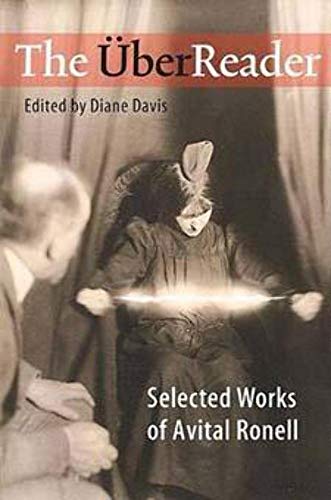
Avital Ronell has put together what must be one of the most remarkable critical oeuvres of our era. . . . Zeugmatically yoking the slang of pop culture with philosophical analysis, forcing the confrontation of high literature and technology or drug culture, Avital Ronell produces sentences that startle, irritate, illuminate. At once hilarious and refractory, her books are like no others.?--Jonathan Culler, Diacritics_x000B__x000B_For twenty years Avital Ronell has stood at the forefront of the confrontation between literary study and European philosophy. She has tirelessly investigated the impact of technology on thinking and writing, with groundbreaking work on Heidegger, dependency and drug rhetoric, intelligence and artificial intelligence, and the obsession with testing. Admired for her insights and breadth of field, she has attracted a wide readership by writing with guts, candor, and wit. _x000B_Coyly alluding to Nietzsches gay science,? The ÃœberReader presents a solid introduction to Avital Ronells later oeuvre. It includes at least one selection from each of her books, two classic selections from a collection of her early essays (Finitudes Score), previously uncollected interviews and essays, and some of her most powerful published and unpublished talks. An introduction by Diane Davis surveys Ronells career and the critical response to it thus far. _x000B_With its combination of brevity and power, this Ronell primer? will be immensely useful to scholars, students, and teachers throughout the humanities, but particularly to graduate and undergraduate courses in contemporary theory. Avital Ronell has put together what must be one of the most remarkable critical oeuvres of our era. . . . Zeugmatically yoking the slang of pop culture with philosophical analysis, forcing the confrontation of high literature and technology or drug culture, Avital Ronell produces sentences that startle, irritate, illuminate. At once hilarious and refractory, her books are like no others."--Jonathan Culler, Diacritics
Die Inhaltsangabe kann sich auf eine andere Ausgabe dieses Titels beziehen.
Über die Autorinnen und Autoren
Avital Ronell is a professor of German, comparative literature, and English at New York University, where she directs the Research in Trauma & Violence project. She is author of Dictations: On Haunted Writing,The Telephone Book, Crack Wars,Finitude's Score,Stupidity, and The Test Drive. Diane Davis is an associate professor of rhetoric at the University of Texas at Austin. She is the author of Breaking Up [at] Totality: A Rhetoric of Laughter.
Avital Ronell is a professor of German, comparative literature, and English at New York University, where she directs the Research in Trauma & Violence project. She is author of Dictations: On Haunted Writing, The Telephone Book, Crack Wars, Finitude's Score, Stupidity, and The Test Drive. Diane Davis is an associate professor of rhetoric at the University of Texas at Austin. She is the author of Breaking Up [at] Totality: A Rhetoric of Laughter.
Avital Ronell is a professor of German, comparative literature, and English at New York University, where she codirects Transdisciplinary Studies in Trauma and Violence.
Auszug. © Genehmigter Nachdruck. Alle Rechte vorbehalten.
The berReader
Selected Works of AVITAL RONELLBy AVITAL RONELLUniversity of Illinois Press
Copyright © 2008 Board of Trustees of the University of IllinoisAll right reserved.
ISBN: 978-0-252-07311-3
Contents
Acknowledgments................................................................................................................................................xvIntroduction Diane DavisPART I The Call of Technology.................................................................................................................................51. Delay Call Forwarding.......................................................................................................................................382. Support Our Tropes: Reading Desert Storm....................................................................................................................633. TraumaTV: Twelve Steps Beyond the Pleasure Principle........................................................................................................894. State of the Art: Julia Scher's Disinscription of National SecurityPART II Freedom and Obligation: Minority Report on Children, Addicts, Outlaws, and Ghosts.....................................................................1015. On the Unrelenting Creepiness of Childhood: Lyotard, Kid-Tested.............................................................................................1286. Toward a Narcoanalysis......................................................................................................................................1417. Deviant Payback: The Aims of Valerie Solanas................................................................................................................1458. Preface to DictationsPART III Psyche-Soma: The Finite Body.........................................................................................................................1619. A Note on the Failure of Man's Custodianship................................................................................................................16810. The Disappearance and Returns of the Idiot.................................................................................................................18811. The Philosophical Code: Dennis Cooper's Pacific RimPART IV Danke! et Adieu: On Hookups and Breakups..............................................................................................................20512. The Sacred Alien: Heidegger's Reading of Hlderlin's "Andenken"............................................................................................22713. On Friendship; Or, Kathy Goes to Hell......................................................................................................................24014. Loving Your EnemyPART V The Fading Empire of Cognition.........................................................................................................................25915. Slow Learner...............................................................................................................................................29316. The Experimental Disposition: Nietzsche's Discovery of America (Or, Why the Present Administration Sees Everything in Terms of a Test).....................30717. Koan Practice or Taking Down the Test......................................................................................................................32418. "Is It Happening?".........................................................................................................................................329Index
Introduction
Diane Davis
Gustave Flaubert once said "the worth of a book can be judged by the strength of the punches it gives and the length of time it takes you to recover from them." According to this calculus of evaluation, typically reserved for literary texts, Avital Ronell's exceptionally hard hitters are works of inestimable value. It's not unusual to take tiny hits in a critical work that advances a specific position or viewpoint; however, the distinguishing feature of the Ronellian punch is that it's the effect of no positive knowledge claim. Ronell's critical texts operate not as formal arguments but as the obliteration of any possible argumentative ground, and that's what delivers the KO blow.
Each of Aristotle's twenty-eight general topoi or commonplace strategies of argumentation-argument from opposites or analytic division or cause and effect, etc.-presumes some steady ground, some prior knowledge against which to push off. And indeed, Ronell's texts are seductively oriented around sites of apparent familiarity: who doesn't suppose s/he knows a little something about the telephone, drugs, writing, opera, or military maneuvers? But rather than building an argument or inquiry on that potential point of stasis, Ronell's texts abruptly dissolve it, generating such a tight zoom on the putative object of knowledge that it slips from your appropriative grasp, withdrawing into a foreign space. The telephone Ronell analzyes, for example, turns out to be something unfamiliar, unlocatable, uncanny-not an originary site at all but a haunted one, a presence that cannot be situated securely within the present. The destabilizing force of Ronell's extreme close-ups institutes a break, an interruption in inherited meaning. And the punch takes place in this feat of ironic destruction, in or as this devastating withdrawal of understanding that leaves you with no recourse to anything like counterargument. "Nevertheless," Ronell reminds us, "interruption may always be a sign of life." Inasmuch as the deracinating suspension is also an opening, it aligns itself with futurity and the sober potentiality of Nietzsche's "open sea." Ronell's punch is simultaneously her gift: wherever knowing falters, thinking and reading can begin.
* * *
The editor's introduction is typically responsible for situating the force and significance of an author within a philosophical, political, or historical framework. Anyone familiar with Avital Ronell's oeuvre will, however, appreciate my dilemma: How to situate a writer whose signature move is to sweep away the grounds by which one might do so? How to locate on an intellectual map these texts devoted to radical remappings, including those urged by "literature and psychoanalysis but also by the logic of teletopical incursions that has supplanted ground and grounding"? I have no excuse, nothing to say for myself about what follows except that attending faithfully to a body of work like this one may mean breaking here and there with generic expectations.
Brief Overview
Ronell's work has a sharp ironic edge and is, in this sense, reminiscent of the works and inroads of the great German ironists. Although she likes her theory "with a French accent" and is considered one of America's leading deconstructionists, she is first of all a Germanist whose approach and perspective owes a great deal to her studies in German philosophy, music, and literature. She often claims to have a dusty philological side, and indeed her work is, we might say, solidly grounded in this rich tradition, many of the underlying histories and presumptions of which she nonetheless disrupts-an effect of what she calls her "irreverent type of reverence." Ronell's intellectual trajectories are extremely complex, and one finds in her work an extraordinary confluence of several distinct scholarly traditions: it's tempting to...
„Über diesen Titel“ kann sich auf eine andere Ausgabe dieses Titels beziehen.
Suchergebnisse für The UberReader: Selected Works of Avital Ronell

Beispielbild für diese ISBN
The UberReader: SELECTED WORKS OF AVITAL RONELL
Verlag:
University of Illinois Press, 2007
ISBN 10: 0252073118
ISBN 13: 9780252073113
Gebraucht
Paperback
Anbieter: Midtown Scholar Bookstore, Harrisburg, PA, USA
Verkäuferbewertung 5 von 5 Sternen

Paperback. Zustand: Good. Good - Bumped and creased book with tears to the extremities, but not affecting the text block, may have remainder mark or previous owner's name - GOOD Standard-sized. Bestandsnummer des Verkäufers M0252073118Z3
Gebraucht kaufen
EUR 7,76
EUR 5,35 Versand
Versand innerhalb von USA
Versand innerhalb von USA
Anzahl: 1 verfügbar
Beispielbild für diese ISBN
The UberReader: SELECTED WORKS OF AVITAL RONELL
Verlag:
University of Illinois Press, 2007
ISBN 10: 0252073118
ISBN 13: 9780252073113
Gebraucht
Softcover
Anbieter: BookHolders, Towson, MD, USA
Verkäuferbewertung 5 von 5 Sternen
Zustand: Very Good. [ No Hassle 30 Day Returns ][ Ships Daily ] [ Underlining/Highlighting: NONE ] [ Writing: NONE ] [ Edition: first ] Publisher: University of Illinois Press; 1 edition Pub Date: 12/17/2007 Binding: Paperback Pages: 400 first edition. Bestandsnummer des Verkäufers 6861336
Gebraucht kaufen
EUR 26,36
Versand gratis
Versand innerhalb von USA
Versand innerhalb von USA
Anzahl: 1 verfügbar
Beispielbild für diese ISBN
The UberReader Format: Paperback
Anbieter: INDOO, Avenel, NJ, USA
Verkäuferbewertung 5 von 5 Sternen
Zustand: New. Brand New. Bestandsnummer des Verkäufers 9780252073113
Neu kaufen
EUR 40,78
Versand gratis
Versand innerhalb von USA
Versand innerhalb von USA
Anzahl: Mehr als 20 verfügbar
Foto des Verkäufers
Uberreader : Selected Works of Avital Ronell
Verlag:
University of Illinois Press, 2007
ISBN 10: 0252073118
ISBN 13: 9780252073113
Gebraucht
Softcover
Anbieter: GreatBookPrices, Columbia, MD, USA
Verkäuferbewertung 5 von 5 Sternen
Zustand: As New. Unread book in perfect condition. Bestandsnummer des Verkäufers 4237089
Gebraucht kaufen
EUR 49,58
EUR 2,35 Versand
Versand innerhalb von USA
Versand innerhalb von USA
Anzahl: 15 verfügbar
Beispielbild für diese ISBN
The UberReader: SELECTED WORKS OF AVITAL RONELL
Verlag:
University of Illinois Press, 2007
ISBN 10: 0252073118
ISBN 13: 9780252073113
Neu
Softcover
Erstausgabe
Anbieter: Kennys Bookshop and Art Galleries Ltd., Galway, GY, Irland
Verkäuferbewertung 5 von 5 Sternen
Zustand: New. 2007. 1st Edition. Paperback. . . . . . Bestandsnummer des Verkäufers V9780252073113
Neu kaufen
EUR 60,40
EUR 9,50 Versand
Versand von Irland nach USA
Versand von Irland nach USA
Anzahl: 15 verfügbar
Foto des Verkäufers
Uberreader : Selected Works of Avital Ronell
Anbieter: GreatBookPrices, Columbia, MD, USA
Verkäuferbewertung 5 von 5 Sternen
Zustand: New. Bestandsnummer des Verkäufers 4237089-n
Neu kaufen
EUR 71,34
EUR 2,35 Versand
Versand innerhalb von USA
Versand innerhalb von USA
Anzahl: 15 verfügbar
Beispielbild für diese ISBN
The UberReader: SELECTED WORKS OF AVITAL RONELL
Anbieter: Kennys Bookstore, Olney, MD, USA
Verkäuferbewertung 5 von 5 Sternen
Zustand: New. 2007. 1st Edition. Paperback. . . . . . Books ship from the US and Ireland. Bestandsnummer des Verkäufers V9780252073113
Neu kaufen
EUR 77,00
EUR 9,36 Versand
Versand innerhalb von USA
Versand innerhalb von USA
Anzahl: 15 verfügbar
Beispielbild für diese ISBN
The UberReader: SELECTED WORKS OF AVITAL RONELL
Anbieter: BennettBooksLtd, Los Angeles, CA, USA
Verkäuferbewertung 5 von 5 Sternen
paperback. Zustand: New. In shrink wrap. Looks like an interesting title! Bestandsnummer des Verkäufers Q-0252073118
Neu kaufen
EUR 89,57
EUR 6,20 Versand
Versand innerhalb von USA
Versand innerhalb von USA
Anzahl: 1 verfügbar