
Verwandte Artikel zu Intelligent Behavior in Animals and Robots (Complex...
Inhaltsangabe
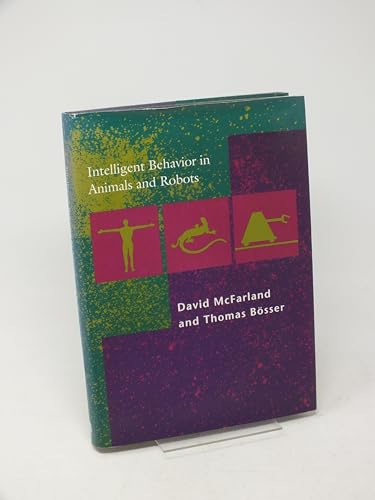
Intelligence takes many forms. This exciting study explores the novel insight, basedon well-established ethological principles, that animals, humans, and autonomous robots can all beanalyzed as multi-task autonomous control systems. Biological adaptive systems, the authors argue,can in fact provide a better understanding of intelligence and rationality than that provided bytraditional AI.
In this technically sophisticated, clearly written investigationof robot-animal analogies, McFarland and Bösser show that a bee's accuracy in navigating on a cloudyday and a moth's simple but effective hearing mechanisms have as much to teach us about intelligentbehavior as human models. In defining intelligent behavior, what matters is the behavioral outcome,not the nature of the mechanism by which the outcome is achieved. Similarly, in designing robotscapable of intelligent behavior, what matters is the behavioral outcome.
McFarlandand Bösser address the problem of how to assess the consequences of robot behavior in a way that ismeaningful in terms of the robot's intended role, comparing animal and robot in relation to rationalbehavior, goal seeking, task accomplishment, learning, and other important theoreticalissues.
Die Inhaltsangabe kann sich auf eine andere Ausgabe dieses Titels beziehen.
Über die Autorin bzw. den Autor
Thomas Bösser is Head of the Man Machine Research Group at Westfälische Wilhelms Universität, in Münster, and a partner in the consulting firm Advanced Concepts.
„Über diesen Titel“ kann sich auf eine andere Ausgabe dieses Titels beziehen.
Suchergebnisse für Intelligent Behavior in Animals and Robots (Complex...

Beispielbild für diese ISBN
Intelligent Behavior in Animals and Robots (Complex Adaptive Systems)
Anbieter: Bahamut Media, Reading, Vereinigtes Königreich
Verkäuferbewertung 4 von 5 Sternen

Hardcover. Zustand: Very Good. Shipped within 24 hours from our UK warehouse. Clean, undamaged book with no damage to pages and minimal wear to the cover. Spine still tight, in very good condition. Remember if you are not happy, you are covered by our 100% money back guarantee. Bestandsnummer des Verkäufers 6545-9780262132930
Gebraucht kaufen
EUR 10,40
EUR 8,17 Versand
Versand von Vereinigtes Königreich nach USA
Versand von Vereinigtes Königreich nach USA
Anzahl: 1 verfügbar
Beispielbild für diese ISBN
Intelligent Behavior in Animals and Robots (Complex Adaptive Systems)
Anbieter: AwesomeBooks, Wallingford, Vereinigtes Königreich
Verkäuferbewertung 5 von 5 Sternen

Hardcover. Zustand: Very Good. Intelligent Behavior in Animals and Robots (Complex Adaptive Systems) This book is in very good condition and will be shipped within 24 hours of ordering. The cover may have some limited signs of wear but the pages are clean, intact and the spine remains undamaged. This book has clearly been well maintained and looked after thus far. Money back guarantee if you are not satisfied. See all our books here, order more than 1 book and get discounted shipping. Bestandsnummer des Verkäufers 7719-9780262132930
Gebraucht kaufen
EUR 16,42
EUR 4,82 Versand
Versand von Vereinigtes Königreich nach USA
Versand von Vereinigtes Königreich nach USA
Anzahl: 2 verfügbar
Beispielbild für diese ISBN
Intelligent Behavior in Animals and Robots
Anbieter: Better World Books, Mishawaka, IN, USA
Verkäuferbewertung 5 von 5 Sternen
Zustand: Good. First Edition. Former library copy. Pages intact with minimal writing/highlighting. The binding may be loose and creased. Dust jackets/supplements are not included. Includes library markings. Stock photo provided. Product includes identifying sticker. Better World Books: Buy Books. Do Good. Bestandsnummer des Verkäufers 9968375-6
Gebraucht kaufen
EUR 22,43
Versand gratis
Versand innerhalb von USA
Versand innerhalb von USA
Anzahl: 1 verfügbar
Beispielbild für diese ISBN
Intelligent Behavior in Animals and Robots
Anbieter: Ammareal, Morangis, Frankreich
Verkäuferbewertung 5 von 5 Sternen
Hardcover. Zustand: Très bon. Ancien livre de bibliothèque avec équipements. Couverture différente. Edition 1993. Ammareal reverse jusqu'à 15% du prix net de cet article à des organisations caritatives. ENGLISH DESCRIPTION Book Condition: Used, Very good. Former library book. Different cover. Edition 1993. Ammareal gives back up to 15% of this item's net price to charity organizations. Bestandsnummer des Verkäufers I-141-824
Gebraucht kaufen
EUR 9,99
EUR 16,50 Versand
Versand von Frankreich nach USA
Versand von Frankreich nach USA
Anzahl: 1 verfügbar
Foto des Verkäufers
Intelligent Behavior in Animals and Robots.
Anbieter: Kloof Booksellers & Scientia Verlag, Amsterdam, Niederlande
Verkäuferbewertung 4 von 5 Sternen
Zustand: as new. Cambridge, MA: The MIT Press, 1993. Hardcover. Dustjacket. 322 pp.(Complex Adaptive Systems). - Intelligence takes many forms. This exciting study explores the novel insight, based on well-established ethological principles, that animals, humans, and autonomous robots can all be analyzed as multi-task autonomous control systems. Biological adaptive systems, the authors argue, can in fact provide a better understanding of intelligence and rationality than that provided by traditional AI. In this technically sophisticated, clearly written investigation of robot-animal analogies, McFarland and Bösser show that a bee's accuracy in navigating on a cloudy day and a moth's simple but effective hearing mechanisms have as much to teach us about intelligent behavior as human models. In defining intelligent behavior, what matters is the behavioral outcome, not the nature of the mechanism by which the outcome is achieved. Similarly, in designing robots capable of intelligent behavior, what matters is the behavioral outcome. English text. Condition : as new. Condition : as new copy. ISBN 9780262132930. Keywords : , Bestandsnummer des Verkäufers 253997
Gebraucht kaufen
EUR 16,95
EUR 30,00 Versand
Versand von Niederlande nach USA
Versand von Niederlande nach USA
Anzahl: 1 verfügbar