
Verwandte Artikel zu Machine Learners: Archaeology of a Data Practice (Mit...
Inhaltsangabe
If machine learning transforms the nature of knowledge, does it also transform the practice of critical thought?
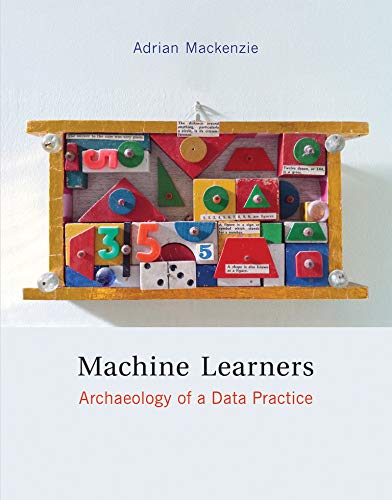
Machine learning—programming computers to learn from data—has spread across scientific disciplines, media, entertainment, and government. Medical research, autonomous vehicles, credit transaction processing, computer gaming, recommendation systems, finance, surveillance, and robotics use machine learning. Machine learning devices (sometimes understood as scientific models, sometimes as operational algorithms) anchor the field of data science. They have also become mundane mechanisms deeply embedded in a variety of systems and gadgets. In contexts from the everyday to the esoteric, machine learning is said to transform the nature of knowledge. In this book, Adrian Mackenzie investigates whether machine learning also transforms the practice of critical thinking.
Mackenzie focuses on machine learners—either humans and machines or human-machine relations—situated among settings, data, and devices. The settings range from fMRI to Facebook; the data anything from cat images to DNA sequences; the devices include neural networks, support vector machines, and decision trees. He examines specific learning algorithms—writing code and writing about code—and develops an archaeology of operations that, following Foucault, views machine learning as a form of knowledge production and a strategy of power. Exploring layers of abstraction, data infrastructures, coding practices, diagrams, mathematical formalisms, and the social organization of machine learning, Mackenzie traces the mostly invisible architecture of one of the central zones of contemporary technological cultures.
Mackenzie's account of machine learning locates places in which a sense of agency can take root. His archaeology of the operational formation of machine learning does not unearth the footprint of a strategic monolith but reveals the local tributaries of force that feed into the generalization and plurality of the field.
Die Inhaltsangabe kann sich auf eine andere Ausgabe dieses Titels beziehen.
Über die Autorin bzw. den Autor
Adrian Mackenzie is Professor of Technological Cultures in the Department of Sociology at Lancaster University and the author of Wirelessness: Radical Empiricism in Network Cultures (MIT Press).
„Über diesen Titel“ kann sich auf eine andere Ausgabe dieses Titels beziehen.
Suchergebnisse für Machine Learners: Archaeology of a Data Practice (Mit...

Beispielbild für diese ISBN
Machine Learners: Archaeology of a Data Practice
Anbieter: Bellwetherbooks, McKeesport, PA, USA
Verkäuferbewertung 4 von 5 Sternen

paperback. Zustand: Very Good. Very Good Condition - May show some limited signs of wear and may have a remainder mark. Pages and dust cover are intact and not marred by notes or highlighting. Bestandsnummer des Verkäufers mon0000007922
Gebraucht kaufen
EUR 25,32
EUR 3,53 Versand
Versand innerhalb von USA
Versand innerhalb von USA
Anzahl: 7 verfügbar
Beispielbild für diese ISBN
Machine Learners: Archaeology of a Data Practice
Anbieter: YESIBOOKSTORE, MIAMI, FL, USA
Verkäuferbewertung 5 von 5 Sternen

paperback. Zustand: As New. Bestandsnummer des Verkäufers 0262537869-VB
Gebraucht kaufen
EUR 105,06
Versand gratis
Versand innerhalb von USA
Versand innerhalb von USA
Anzahl: 1 verfügbar