
Verwandte Artikel zu Elbow Room: The Varieties of Free Will Worth Wanting...
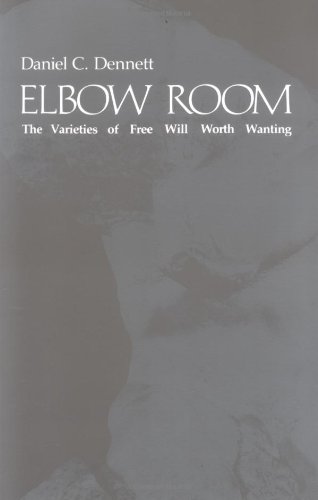
Inhaltsangabe
Anyone who has wondered if free will is just an illusion or has asked 'could I have chosen otherwise?' after performing some rash deed will find this book an absorbing discussion of an endlessly fascinating subject. Daniel Dennett, whose previous books include Brainstorms and (with Douglas Hofstadter) The Mind's I, tackles the free will problem in a highly original and witty manner, drawing on the theories and concepts of several fields usually ignored by philosophers; not just physics and evolutionary biology, but engineering, automata theory, and artificial intelligence.
In Elbow Room, Dennett shows how the classical formulations of the problem in philosophy depend on misuses of imagination, and he disentangles the philosophical problems of real interest from the "family of anxieties' they get enmeshed in - imaginary agents, bogeymen, and dire prospects that seem to threaten our freedom. Putting sociobiology in its rightful place, he concludes that we can have free will and science too. Elbow Room begins by showing how we can be "moved by reasons" without being exempt from physical causation. It goes on to analyze concepts of control and self-control-concepts often skimped by philosophers but which are central to the questions of free will and determinism. A chapter on "self-made selves" discusses the idea of self or agent to see how it can be kept from disappearing under the onslaught of science. Dennett then sees what can be made of the notion of acting under the idea of freedomdoes the elbow room we think we have really exist? What is an opportunity, and how can anything in our futures be "up to us"? He investigates the meaning of "can" and "could have done otherwise," and asks why we want free will in the first place.We are wise, Dennett notes, to want free will, but that in itself raises a host of questions about responsibility. In a final chapter, he takes up the problem of how anyone can ever be guilty, and what the rationale is for holding people responsible and even, on occasion, punishing them.
Elbow Room is an expanded version of the John Locke Lectures which Dennett gave at Oxford University in 1983.
Die Inhaltsangabe kann sich auf eine andere Ausgabe dieses Titels beziehen.
Über die Autorin bzw. den Autor
Daniel C. Dennett is University Professor Codirector of the Center for Cognitive Studies at Tufts University. He is the author of Brainchildren: Essays on Designing Minds; Sweet Dreams: Philosophical Obstacles to a Science of Consciousness; Elbow Room: T he Varieties of Free Will Worth Wanting; Sweet Dreams: Philosophical Obstacles to a Science of Consciousness (all published by the MIT Press), From Bacteria to Bach and Back: The Evolution of Mind, and other books.
„Über diesen Titel“ kann sich auf eine andere Ausgabe dieses Titels beziehen.
Suchergebnisse für Elbow Room: The Varieties of Free Will Worth Wanting...

Beispielbild für diese ISBN
Elbow Room: The Varieties of Free Will Worth Wanting
Anbieter: World of Books (was SecondSale), Montgomery, IL, USA
Verkäuferbewertung 5 von 5 Sternen

Paperback. Zustand: Good. Anyone who has wondered if free will is just an illusion or has asked 'could I have chosen otherwise?' after performing some rash deed will find this book an absorbing discussion of an endlessly fascinating subject. Daniel Dennett, whose previous books include Brainstorms and (with Douglas Hofstadter) The Mind's I, tackles the free will problem in a highly original and witty manner, drawing on the theories and concepts of several fields usually ignored by philosophers; not just physics and evolutionary biology, but engineering, automata theory, and artificial intelligence. In Elbow Room, Dennett shows how the classical formulations of the problem in philosophy depend on misuses of imagination, and he disentangles the philosophical problems of real interest from the family of anxieties' they get enmeshed in - imaginary agents, bogeymen, and dire prospects that seem to threaten our freedom. Putting sociobiology in its rightful place, he concludes that we can have free will and science too. Elbow Room begins by showing how we can be moved by reasons without being exempt from physical causation. It goes on to analyze concepts of control and self-control-concepts often skimped by philosophers but which are central to the questions of free will and determinism. A chapter on self-made selves discusses the idea of self or agent to see how it can be kept from disappearing under the onslaught of science. Dennett then sees what can be made of the notion of acting under the idea of freedomdoes the elbow room we think we have really exist? What is an opportunity, and how can anything in our futures be up to us? He investigates the meaning of can and could have done otherwise, and asks why we want free will in the first place.We are wise, Dennett notes, to want free will, but that in itself raises a host of questions about responsibility. In a final chapter, he takes up the problem of how anyone can ever be guilty, and what the rationale is for holding people responsible and even, on occasion, punishing them.Elbow Room is an expanded version of the John Locke Lectures which Dennett gave at Oxford University in 1983. Bestandsnummer des Verkäufers 00099448649
Gebraucht kaufen
EUR 4,86
Versand gratis
Versand innerhalb von USA
Versand innerhalb von USA
Anzahl: 1 verfügbar
Beispielbild für diese ISBN
Elbow Room: The Varieties of Free Will Worth Wanting
Anbieter: BooksRun, Philadelphia, PA, USA
Verkäuferbewertung 5 von 5 Sternen
Paperback. Zustand: Fair. 0. The item might be beaten up but readable. May contain markings or highlighting, as well as stains, bent corners, or any other major defect, but the text is not obscured in any way. Bestandsnummer des Verkäufers 0262540428-7-1
Gebraucht kaufen
EUR 4,87
Versand gratis
Versand innerhalb von USA
Versand innerhalb von USA
Anzahl: 1 verfügbar
Beispielbild für diese ISBN
Elbow Room: The Varieties of Free Will Worth Wanting
Anbieter: BooksRun, Philadelphia, PA, USA
Verkäuferbewertung 5 von 5 Sternen
Paperback. Zustand: Fair. The item might be beaten up but readable. May contain markings or highlighting, as well as stains, bent corners, or any other major defect, but the text is not obscured in any way. Bestandsnummer des Verkäufers 0262540428-7-22
Gebraucht kaufen
EUR 4,90
Versand gratis
Versand innerhalb von USA
Versand innerhalb von USA
Anzahl: 1 verfügbar
Foto des Verkäufers
Elbow Room: The Varieties of Free Will Worth Wanting
Anbieter: -OnTimeBooks-, Phoenix, AZ, USA
Verkäuferbewertung 5 von 5 Sternen
Zustand: good. A copy that has been read, remains in good condition. All pages are intact, and the cover is intact. The spine and cover show signs of wear. Pages can include notes and highlighting and show signs of wear, and the copy can include "From the library of" labels or previous owner inscriptions. 100% GUARANTEE! Shipped with delivery confirmation, if you're not satisfied with purchase please return item! Ships via media mail. Bestandsnummer des Verkäufers OTV.0262540428.G
Gebraucht kaufen
EUR 6,41
Versand gratis
Versand innerhalb von USA
Versand innerhalb von USA
Anzahl: 1 verfügbar
Beispielbild für diese ISBN
Elbow Room: The Varieties of Free Will Worth Wanting
Anbieter: Wonder Book, Frederick, MD, USA
Verkäuferbewertung 5 von 5 Sternen
Zustand: Good. Good condition. A copy that has been read but remains intact. May contain markings such as bookplates, stamps, limited notes and highlighting, or a few light stains. Bestandsnummer des Verkäufers F28A-04448
Gebraucht kaufen
EUR 6,41
Versand gratis
Versand innerhalb von USA
Versand innerhalb von USA
Anzahl: 1 verfügbar
Beispielbild für diese ISBN
Elbow Room: The Varieties of Free Will Worth Wanting
Anbieter: HPB-Emerald, Dallas, TX, USA
Verkäuferbewertung 5 von 5 Sternen
Paperback. Zustand: Very Good. Connecting readers with great books since 1972! Used books may not include companion materials, and may have some shelf wear or limited writing. We ship orders daily and Customer Service is our top priority! Bestandsnummer des Verkäufers S_479678029
Gebraucht kaufen
EUR 3,20
EUR 3,34 Versand
Versand innerhalb von USA
Versand innerhalb von USA
Anzahl: 1 verfügbar
Beispielbild für diese ISBN
Elbow Room: The Varieties of Free Will Worth Wanting
Anbieter: World of Books Inc, Montgomery, IL, USA
Verkäuferbewertung 4 von 5 Sternen

Paperback. Zustand: Good. Anyone who has wondered if free will is just an illusion or has asked 'could I have chosen otherwise?' after performing some rash deed will find this book an absorbing discussion of an endlessly fascinating subject. Daniel Dennett, whose previous books include Brainstorms and (with Douglas Hofstadter) The Mind's I, tackles the free will problem in a highly original and witty manner, drawing on the theories and concepts of several fields usually ignored by philosophers; not just physics and evolutionary biology, but engineering, automata theory, and artificial intelligence. In Elbow Room, Dennett shows how the classical formulations of the problem in philosophy depend on misuses of imagination, and he disentangles the philosophical problems of real interest from the family of anxieties' they get enmeshed in - imaginary agents, bogeymen, and dire prospects that seem to threaten our freedom. Putting sociobiology in its rightful place, he concludes that we can have free will and science too. Elbow Room begins by showing how we can be moved by reasons without being exempt from physical causation. It goes on to analyze concepts of control and self-control-concepts often skimped by philosophers but which are central to the questions of free will and determinism. A chapter on self-made selves discusses the idea of self or agent to see how it can be kept from disappearing under the onslaught of science. Dennett then sees what can be made of the notion of acting under the idea of freedomdoes the elbow room we think we have really exist? What is an opportunity, and how can anything in our futures be up to us? He investigates the meaning of can and could have done otherwise, and asks why we want free will in the first place.We are wise, Dennett notes, to want free will, but that in itself raises a host of questions about responsibility. In a final chapter, he takes up the problem of how anyone can ever be guilty, and what the rationale is for holding people responsible and even, on occasion, punishing them.Elbow Room is an expanded version of the John Locke Lectures which Dennett gave at Oxford University in 1983. Bestandsnummer des Verkäufers CIN0262540428G
Gebraucht kaufen
EUR 6,70
Versand gratis
Versand innerhalb von USA
Versand innerhalb von USA
Anzahl: 1 verfügbar
Beispielbild für diese ISBN
Elbow Room: The Varieties of Free Will Worth Wanting
Anbieter: ThriftBooks-Atlanta, AUSTELL, GA, USA
Verkäuferbewertung 5 von 5 Sternen
Paperback. Zustand: Fair. No Jacket. Readable copy. Pages may have considerable notes/highlighting. ~ ThriftBooks: Read More, Spend Less. Bestandsnummer des Verkäufers G0262540428I5N00
Gebraucht kaufen
EUR 6,86
Versand gratis
Versand innerhalb von USA
Versand innerhalb von USA
Anzahl: 1 verfügbar
Beispielbild für diese ISBN
Elbow Room: The Varieties of Free Will Worth Wanting
Anbieter: ThriftBooks-Reno, Reno, NV, USA
Verkäuferbewertung 5 von 5 Sternen
Paperback. Zustand: Fair. No Jacket. Readable copy. Pages may have considerable notes/highlighting. ~ ThriftBooks: Read More, Spend Less. Bestandsnummer des Verkäufers G0262540428I5N00
Gebraucht kaufen
EUR 6,86
Versand gratis
Versand innerhalb von USA
Versand innerhalb von USA
Anzahl: 1 verfügbar
Beispielbild für diese ISBN
Elbow Room: The Varieties of Free Will Worth Wanting
Anbieter: HPB-Movies, Dallas, TX, USA
Verkäuferbewertung 4 von 5 Sternen
paperback. Zustand: Very Good. Connecting readers with great books since 1972! Used books may not include companion materials, and may have some shelf wear or limited writing. We ship orders daily and Customer Service is our top priority! Bestandsnummer des Verkäufers S_484322728
Gebraucht kaufen
EUR 3,66
EUR 3,34 Versand
Versand innerhalb von USA
Versand innerhalb von USA
Anzahl: 1 verfügbar