
Verwandte Artikel zu The Structure of the Ordinary: Form and Control in...
Inhaltsangabe
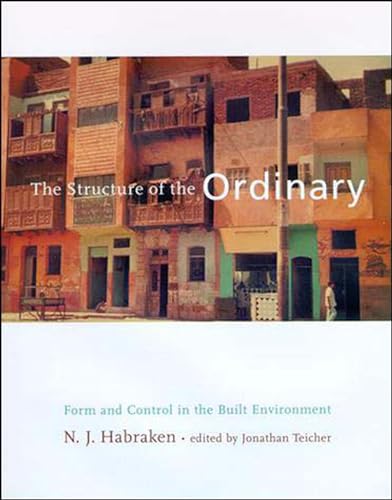
The influential Dutch architect's long-awaited manifesto on the everyday environment as the first and best ground for establishing the significance and coherence of architecture.
According to N. J. Habraken, intimate and unceasing interaction between people and the forms they inhabit uniquely defines built environment. The Structure of the Ordinary, the culmination of decades of environmental observation and design research, is a recognition and analysis of everyday environment as the wellspring of urban design and formal architecture. The author's central argument is that built environment is universally organized by the Orders of Form, Place, and Understanding. These three fundamental, interwoven principles correspond roughly to physical, biological, and social domains.
Historically, "ordinary" environment was the background against which architects built the "extraordinary." Drawing upon extensive examples from archaeological and contemporary sites worldwide, the author illustrates profound recent shifts in the structure of everyday environment. One effect of these transformations, Habraken argues, has been the loss of implicit common understanding that previously enabled architects to formally enhance and innovate while still maintaining environmental coherence. Consequently, architects must now undertake a study of the ordinary as the fertile common ground in which form- and place-making are rooted. In focusing on built environment as an autonomous entity distinct from the societies and natural environments that jointly create it, this book lays the foundation for a new dialogue on methodology and pedagogy, in support of a more informed approach to professional intervention.
Die Inhaltsangabe kann sich auf eine andere Ausgabe dieses Titels beziehen.
Über die Autorin bzw. den Autor
N. J. Habraken; edited by Jonathan Teicher
„Über diesen Titel“ kann sich auf eine andere Ausgabe dieses Titels beziehen.
Suchergebnisse für The Structure of the Ordinary: Form and Control in...

Beispielbild für diese ISBN
The Structure of the Ordinary: Form and Control in the Built Environment
Anbieter: World of Books (was SecondSale), Montgomery, IL, USA
Verkäuferbewertung 5 von 5 Sternen

Paperback. Zustand: Good. The influential Dutch architect's long-awaited manifesto on the everyday environment as the first and best ground for establishing the significance and coherence of architecture.According to N. J. Habraken, intimate and unceasing interaction between people and the forms they inhabit uniquely defines built environment. The Structure of the Ordinary, the culmination of decades of environmental observation and design research, is a recognition and analysis of everyday environment as the wellspring of urban design and formal architecture. The author's central argument is that built environment is universally organized by the Orders of Form, Place, and Understanding. These three fundamental, interwoven principles correspond roughly to physical, biological, and social domains.Historically, ordinary environment was the background against which architects built the extraordinary. Drawing upon extensive examples from archaeological and contemporary sites worldwide, the author illustrates profound recent shifts in the structure of everyday environment. One effect of these transformations, Habraken argues, has been the loss of implicit common understanding that previously enabled architects to formally enhance and innovate while still maintaining environmental coherence. Consequently, architects must now undertake a study of the ordinary as the fertile common ground in which form- and place-making are rooted. In focusing on built environment as an autonomous entity distinct from the societies and natural environments that jointly create it, this book lays the foundation for a new dialogue on methodology and pedagogy, in support of a more informed approach to professional intervention. Bestandsnummer des Verkäufers CIN0262581957G
Gebraucht kaufen
EUR 7,16
Versand gratis
Versand innerhalb von USA
Versand innerhalb von USA
Anzahl: 1 verfügbar
Beispielbild für diese ISBN
The Structure of the Ordinary: Form and Control in the Built Environment
Anbieter: World of Books Inc, Montgomery, IL, USA
Verkäuferbewertung 4 von 5 Sternen

Paperback. Zustand: Good. The influential Dutch architect's long-awaited manifesto on the everyday environment as the first and best ground for establishing the significance and coherence of architecture.According to N. J. Habraken, intimate and unceasing interaction between people and the forms they inhabit uniquely defines built environment. The Structure of the Ordinary, the culmination of decades of environmental observation and design research, is a recognition and analysis of everyday environment as the wellspring of urban design and formal architecture. The author's central argument is that built environment is universally organized by the Orders of Form, Place, and Understanding. These three fundamental, interwoven principles correspond roughly to physical, biological, and social domains.Historically, ordinary environment was the background against which architects built the extraordinary. Drawing upon extensive examples from archaeological and contemporary sites worldwide, the author illustrates profound recent shifts in the structure of everyday environment. One effect of these transformations, Habraken argues, has been the loss of implicit common understanding that previously enabled architects to formally enhance and innovate while still maintaining environmental coherence. Consequently, architects must now undertake a study of the ordinary as the fertile common ground in which form- and place-making are rooted. In focusing on built environment as an autonomous entity distinct from the societies and natural environments that jointly create it, this book lays the foundation for a new dialogue on methodology and pedagogy, in support of a more informed approach to professional intervention. Bestandsnummer des Verkäufers CIN0262581957G
Gebraucht kaufen
EUR 9,00
Versand gratis
Versand innerhalb von USA
Versand innerhalb von USA
Anzahl: 1 verfügbar
Foto des Verkäufers
The Structure of the Ordinary: Form and Control in the Built Environment
Anbieter: -OnTimeBooks-, Phoenix, AZ, USA
Verkäuferbewertung 5 von 5 Sternen
Zustand: very_good. Gently read. May have name of previous ownership, or ex-library edition. Binding tight; spine straight and smooth, with no creasing; covers clean and crisp. Minimal signs of handling or shelving. 100% GUARANTEE! Shipped with delivery confirmation, if you're not satisfied with purchase please return item! Ships USPS Media Mail. Bestandsnummer des Verkäufers OTV.0262581957.VG
Gebraucht kaufen
EUR 9,87
Versand gratis
Versand innerhalb von USA
Versand innerhalb von USA
Anzahl: 1 verfügbar
Beispielbild für diese ISBN
The Structure of the Ordinary: Form and Control in the Built Environment
Anbieter: Midtown Scholar Bookstore, Harrisburg, PA, USA
Verkäuferbewertung 5 von 5 Sternen
paperback. Zustand: Good. Good paperback, bumped/creased with shelfwear; may have previous owner's name inside. Oversized. Bestandsnummer des Verkäufers mon0000348889
Gebraucht kaufen
EUR 9,17
EUR 5,34 Versand
Versand innerhalb von USA
Versand innerhalb von USA
Anzahl: 1 verfügbar
Beispielbild für diese ISBN
The Structure of the Ordinary: Form and Control in the Built Environment
Anbieter: WorldofBooks, Goring-By-Sea, WS, Vereinigtes Königreich
Verkäuferbewertung 5 von 5 Sternen
Paperback. Zustand: Very Good. The book has been read, but is in excellent condition. Pages are intact and not marred by notes or highlighting. The spine remains undamaged. Bestandsnummer des Verkäufers GOR003394387
Gebraucht kaufen
EUR 12,05
EUR 6,65 Versand
Versand von Vereinigtes Königreich nach USA
Versand von Vereinigtes Königreich nach USA
Anzahl: 1 verfügbar
Beispielbild für diese ISBN
The Structure of the Ordinary: Form and Control in the Built Environment
Anbieter: Phatpocket Limited, Waltham Abbey, HERTS, Vereinigtes Königreich
Verkäuferbewertung 5 von 5 Sternen
Zustand: Good. Your purchase helps support Sri Lankan Children's Charity 'The Rainbow Centre'. Ex-library, so some stamps and wear, but in good overall condition. Our donations to The Rainbow Centre have helped provide an education and a safe haven to hundreds of children who live in appalling conditions. Bestandsnummer des Verkäufers Z1-I-013-02652
Gebraucht kaufen
EUR 10,66
EUR 12,64 Versand
Versand von Vereinigtes Königreich nach USA
Versand von Vereinigtes Königreich nach USA
Anzahl: 1 verfügbar
Foto des Verkäufers
The Structure of the Ordinary: Form and Control in the Built Environment
Anbieter: WeBuyBooks, Rossendale, LANCS, Vereinigtes Königreich
Verkäuferbewertung 5 von 5 Sternen
paperback. Zustand: Very Good. Most items will be dispatched the same or the next working day. A copy that has been read, but is in excellent condition. Pages are intact and not marred by notes or highlighting. The spine remains undamaged. Bestandsnummer des Verkäufers rev5413638355
Gebraucht kaufen
EUR 11,83
EUR 11,93 Versand
Versand von Vereinigtes Königreich nach USA
Versand von Vereinigtes Königreich nach USA
Anzahl: 1 verfügbar
Foto des Verkäufers
Structure of the Ordinary : Form and Control in the Built Environment
Anbieter: GreatBookPrices, Columbia, MD, USA
Verkäuferbewertung 5 von 5 Sternen
Zustand: As New. Unread book in perfect condition. Bestandsnummer des Verkäufers 650303
Gebraucht kaufen
EUR 57,51
EUR 2,35 Versand
Versand innerhalb von USA
Versand innerhalb von USA
Anzahl: 1 verfügbar
Foto des Verkäufers
Structure of the Ordinary : Form and Control in the Built Environment
Anbieter: GreatBookPrices, Columbia, MD, USA
Verkäuferbewertung 5 von 5 Sternen
Zustand: New. Bestandsnummer des Verkäufers 650303-n
Neu kaufen
EUR 78,03
EUR 2,35 Versand
Versand innerhalb von USA
Versand innerhalb von USA
Anzahl: 1 verfügbar
Beispielbild für diese ISBN
The Structure of the Ordinary
Print-on-DemandAnbieter: PBShop.store US, Wood Dale, IL, USA
Verkäuferbewertung 5 von 5 Sternen
PAP. Zustand: New. New Book. Shipped from UK. THIS BOOK IS PRINTED ON DEMAND. Established seller since 2000. Bestandsnummer des Verkäufers L0-9780262581950
Neu kaufen
EUR 80,46
Versand gratis
Versand innerhalb von USA
Versand innerhalb von USA
Anzahl: Mehr als 20 verfügbar