
Verwandte Artikel zu The Evolution of Morality (Life and Mind: Philosophical...
The Evolution of Morality (Life and Mind: Philosophical Issues in Biology and Psychology) - Softcover
Buch 1 von 14: Life and Mind: Philosophical Issues in Biology and Psychology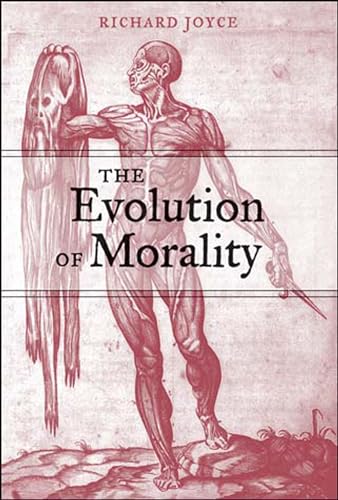
Inhaltsangabe
Moral thinking pervades our practical lives, but where did this way of thinking come from, and what purpose does it serve? Is it to be explained by environmental pressures on our ancestors a million years ago, or is it a cultural invention of more recent origin? In The Evolution of Morality, Richard Joyce takes up these controversial questions, finding that the evidence supports an innate basis to human morality. As a moral philosopher, Joyce is interested in whether any implications follow from this hypothesis. Might the fact that the human brain has been biologically prepared by natural selection to engage in moral judgment serve in some sense to vindicate this way of thinking—staving off the threat of moral skepticism, or even undergirding some version of moral realism? Or if morality has an adaptive explanation in genetic terms—if it is, as Joyce writes, "just something that helped our ancestors make more babies"—might such an explanation actually undermine morality's central role in our lives? He carefully examines both the evolutionary "vindication of morality" and the evolutionary "debunking of morality," considering the skeptical view more seriously than have others who have treated the subject.
Interdisciplinary and combining the latest results from the empirical sciences with philosophical discussion, The Evolution of Morality is one of the few books in this area written from the perspective of moral philosophy. Concise and without technical jargon, the arguments are rigorous but accessible to readers from different academic backgrounds. Joyce discusses complex issues in plain language while advocating subtle and sometimes radical views. The Evolution of Morality lays the philosophical foundations for further research into the biological understanding of human morality.
Die Inhaltsangabe kann sich auf eine andere Ausgabe dieses Titels beziehen.
Über die Autorin bzw. den Autor
Richard Joyce is Professor of Philosophy at Victoria University of Wellington and author of The Evolution of Morality (MIT Press, 2006) and The Myth of Morality (Cambridge University Press, 2001).
„Über diesen Titel“ kann sich auf eine andere Ausgabe dieses Titels beziehen.
Suchergebnisse für The Evolution of Morality (Life and Mind: Philosophical...

Beispielbild für diese ISBN
The Evolution of Morality
Anbieter: Better World Books, Mishawaka, IN, USA
Verkäuferbewertung 5 von 5 Sternen

Zustand: Good. Pages intact with minimal writing/highlighting. The binding may be loose and creased. Dust jackets/supplements are not included. Stock photo provided. Product includes identifying sticker. Better World Books: Buy Books. Do Good. Bestandsnummer des Verkäufers 7515570-6
Gebraucht kaufen
EUR 15,88
Versand gratis
Versand innerhalb von USA
Versand innerhalb von USA
Anzahl: 2 verfügbar
Beispielbild für diese ISBN
The Evolution of Morality
Anbieter: World of Books (was SecondSale), Montgomery, IL, USA
Verkäuferbewertung 5 von 5 Sternen
Paperback. Zustand: Good. Moral thinking pervades our practical lives, but where did this way of thinking come from, and what purpose does it serve? Is it to be explained by environmental pressures on our ancestors a million years ago, or is it a cultural invention of more recent origin? In The Evolution of Morality, Richard Joyce takes up these controversial questions, finding that the evidence supports an innate basis to human morality. As a moral philosopher, Joyce is interested in whether any implications follow from this hypothesis. Might the fact that the human brain has been biologically prepared by natural selection to engage in moral judgment serve in some sense to vindicate this way of thinking-staving off the threat of moral skepticism, or even undergirding some version of moral realism? Or if morality has an adaptive explanation in genetic terms-if it is, as Joyce writes, "just something that helped our ancestors make more babies"-might such an explanation actually undermine morality's central role in our lives? He carefully examines both the evolutionary "vindication of morality" and the evolutionary "debunking of morality," considering the skeptical view more seriously than have others who have treated the subject. Interdisciplinary and combining the latest results from the empirical sciences with philosophical discussion, The Evolution of Morality is one of the few books in this area written from the perspective of moral philosophy. Concise and without technical jargon, the arguments are rigorous but accessible to readers from different academic backgrounds. Joyce discusses complex issues in plain language while advocating subtle and sometimes radical views. The Evolution of Morality lays the philosophical foundations for further research into the biological understanding of human morality. Bestandsnummer des Verkäufers CIN0262600722G
Gebraucht kaufen
EUR 19,69
Versand gratis
Versand innerhalb von USA
Versand innerhalb von USA
Anzahl: 1 verfügbar
Beispielbild für diese ISBN
The Evolution of Morality
Anbieter: World of Books Inc, Montgomery, IL, USA
Verkäuferbewertung 4 von 5 Sternen

Paperback. Zustand: Good. Moral thinking pervades our practical lives, but where did this way of thinking come from, and what purpose does it serve? Is it to be explained by environmental pressures on our ancestors a million years ago, or is it a cultural invention of more recent origin? In The Evolution of Morality, Richard Joyce takes up these controversial questions, finding that the evidence supports an innate basis to human morality. As a moral philosopher, Joyce is interested in whether any implications follow from this hypothesis. Might the fact that the human brain has been biologically prepared by natural selection to engage in moral judgment serve in some sense to vindicate this way of thinking-staving off the threat of moral skepticism, or even undergirding some version of moral realism? Or if morality has an adaptive explanation in genetic terms-if it is, as Joyce writes, "just something that helped our ancestors make more babies"-might such an explanation actually undermine morality's central role in our lives? He carefully examines both the evolutionary "vindication of morality" and the evolutionary "debunking of morality," considering the skeptical view more seriously than have others who have treated the subject. Interdisciplinary and combining the latest results from the empirical sciences with philosophical discussion, The Evolution of Morality is one of the few books in this area written from the perspective of moral philosophy. Concise and without technical jargon, the arguments are rigorous but accessible to readers from different academic backgrounds. Joyce discusses complex issues in plain language while advocating subtle and sometimes radical views. The Evolution of Morality lays the philosophical foundations for further research into the biological understanding of human morality. Bestandsnummer des Verkäufers CIN0262600722G
Gebraucht kaufen
EUR 21,53
Versand gratis
Versand innerhalb von USA
Versand innerhalb von USA
Anzahl: 1 verfügbar
Beispielbild für diese ISBN
The Evolution of Morality (Life and Mind: Philosophical Issues in Biology and Psychology)
Anbieter: HPB Inc., Dallas, TX, USA
Verkäuferbewertung 5 von 5 Sternen
Paperback. Zustand: Very Good. Connecting readers with great books since 1972! Used books may not include companion materials, and may have some shelf wear or limited writing. We ship orders daily and Customer Service is our top priority! Bestandsnummer des Verkäufers S_484042225
Gebraucht kaufen
EUR 20,14
EUR 3,35 Versand
Versand innerhalb von USA
Versand innerhalb von USA
Anzahl: 1 verfügbar
Beispielbild für diese ISBN
Evolution of Morality
Verlag:
Bradford Book August 2007, 2007
ISBN 10: 0262600722
ISBN 13: 9780262600729
Gebraucht
Soft cover
Anbieter: Dunaway Books, St. Louis, MO, USA
Verkäuferbewertung 5 von 5 Sternen
Soft cover. Zustand: Good. Pages are very clean and bright with no markings. Binding is tight and square. Trivial shelving wear. Overall in excellent condition. Bestandsnummer des Verkäufers 339971
Gebraucht kaufen
EUR 23,00
EUR 3,57 Versand
Versand innerhalb von USA
Versand innerhalb von USA
Anzahl: 1 verfügbar
Foto des Verkäufers
THE EVOLUTION OF MORALITY
Anbieter: Easton's Books, Inc., Mount Vernon, WA, USA
Verkäuferbewertung 5 von 5 Sternen
Paperback. Zustand: NF. Paperback in Near Fine condition. Life And Mind: Philosophical Issues In Biology And Psychology. 6.13 X 0.69 X 9.06 inches. 288 pages. Quick shipping, excellent customer service. All books carefully packaged in boxes and ship with tracking information. Bestandsnummer des Verkäufers 72715
Gebraucht kaufen
EUR 22,96
EUR 5,35 Versand
Versand innerhalb von USA
Versand innerhalb von USA
Anzahl: 1 verfügbar
Beispielbild für diese ISBN
The Evolution of Morality
Anbieter: Mesquite Booksellers, Tucson, AZ, USA
Verkäuferbewertung 5 von 5 Sternen
Soft cover. Zustand: As New. xii,267. Printed in 2007, MIT. If you order this from outside the United States, we will almost certainly request an additional payment to help cover the postage. Every order includes tracking and is wrapped and robustly packaged with care in Tucson, AZ. ~Mesquite Booksellers. Bestandsnummer des Verkäufers 75324
Gebraucht kaufen
EUR 26,68
EUR 2,68 Versand
Versand innerhalb von USA
Versand innerhalb von USA
Anzahl: 1 verfügbar
Foto des Verkäufers
Evolution of Morality
Anbieter: GreatBookPrices, Columbia, MD, USA
Verkäuferbewertung 5 von 5 Sternen
Zustand: New. Bestandsnummer des Verkäufers 5164264-n
Neu kaufen
EUR 35,61
EUR 2,36 Versand
Versand innerhalb von USA
Versand innerhalb von USA
Anzahl: Mehr als 20 verfügbar
Foto des Verkäufers
The Evolution of Morality (Paperback or Softback)
Verlag:
MIT Press 8/24/2007, 2007
ISBN 10: 0262600722
ISBN 13: 9780262600729
Neu
Paperback or Softback
Anbieter: BargainBookStores, Grand Rapids, MI, USA
Verkäuferbewertung 5 von 5 Sternen
Paperback or Softback. Zustand: New. The Evolution of Morality. Book. Bestandsnummer des Verkäufers BBS-9780262600729
Beispielbild für diese ISBN
The Evolution of Morality (Life and Mind: Philosophical Issues in Biology and Psychology)
Print-on-DemandAnbieter: Majestic Books, Hounslow, Vereinigtes Königreich
Verkäuferbewertung 4 von 5 Sternen
Zustand: New. pp. 288 This item is printed on demand. Bestandsnummer des Verkäufers 8200293
Neu kaufen
EUR 31,55
EUR 7,68 Versand
Versand von Vereinigtes Königreich nach USA
Versand von Vereinigtes Königreich nach USA
Anzahl: 1 verfügbar