
Verwandte Artikel zu It's Complicated: The Social Lives of Networked...
Inhaltsangabe
“boyd’s new book is layered and smart . . . It’s Complicated will update your mind.”—Alissa Quart, New York Times Book Review
“A fascinating, well-researched and (mostly) reassuring look at how today's tech-savvy teenagers are using social media.”—People
“The briefest possible summary? The kids are all right, but society isn’t.”—Andrew Leonard, Salon
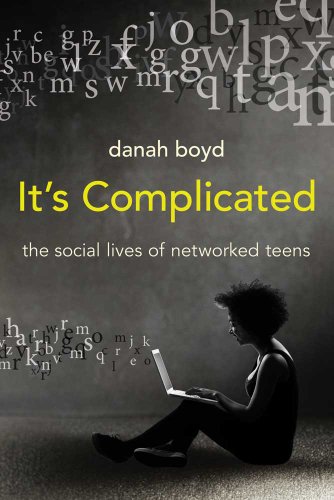
What is new about how teenagers communicate through services such as Facebook, Twitter, and Instagram? Do social media affect the quality of teens’ lives? In this eye-opening book, youth culture and technology expert danah boyd uncovers some of the major myths regarding teens' use of social media. She explores tropes about identity, privacy, safety, danger, and bullying. Ultimately, boyd argues that society fails young people when paternalism and protectionism hinder teenagers’ ability to become informed, thoughtful, and engaged citizens through their online interactions. Yet despite an environment of rampant fear-mongering, boyd finds that teens often find ways to engage and to develop a sense of identity.
Boyd’s conclusions are essential reading not only for parents, teachers, and others who work with teens but also for anyone interested in the impact of emerging technologies on society, culture, and commerce in years to come. Offering insights gleaned from more than a decade of original fieldwork interviewing teenagers across the United States, boyd concludes reassuringly that the kids are all right. At the same time, she acknowledges that coming to terms with life in a networked era is not easy or obvious. In a technologically mediated world, life is bound to be complicated.
“A fascinating, well-researched and (mostly) reassuring look at how today's tech-savvy teenagers are using social media.”—People
“The briefest possible summary? The kids are all right, but society isn’t.”—Andrew Leonard, Salon
What is new about how teenagers communicate through services such as Facebook, Twitter, and Instagram? Do social media affect the quality of teens’ lives? In this eye-opening book, youth culture and technology expert danah boyd uncovers some of the major myths regarding teens' use of social media. She explores tropes about identity, privacy, safety, danger, and bullying. Ultimately, boyd argues that society fails young people when paternalism and protectionism hinder teenagers’ ability to become informed, thoughtful, and engaged citizens through their online interactions. Yet despite an environment of rampant fear-mongering, boyd finds that teens often find ways to engage and to develop a sense of identity.
Boyd’s conclusions are essential reading not only for parents, teachers, and others who work with teens but also for anyone interested in the impact of emerging technologies on society, culture, and commerce in years to come. Offering insights gleaned from more than a decade of original fieldwork interviewing teenagers across the United States, boyd concludes reassuringly that the kids are all right. At the same time, she acknowledges that coming to terms with life in a networked era is not easy or obvious. In a technologically mediated world, life is bound to be complicated.
Die Inhaltsangabe kann sich auf eine andere Ausgabe dieses Titels beziehen.
Über die Autorinnen und Autoren
danah boyd is Principal Researcher at Microsoft Research, Research Assistant Professor at New York University, and Fellow at Harvard University’s Berkman Center for Internet and Society. She lives in New York City.
danah boyd is Principal Researcher at Microsoft Research, Research Assistant Professor at New York University, and Fellow at Harvard University's Berkman Center for Internet and Society. She lives in New York City.
Auszug. © Genehmigter Nachdruck. Alle Rechte vorbehalten.
it's complicated
the social lives of networked teens
By danah boydYale UNIVERSITY PRESS
Copyright © 2014 danah boyd
All rights reserved.
ISBN: 978-0-300-16631-6All rights reserved.
Contents
preface, ix,
introduction, 1,
1 identity why do teens seem strange online?, 29,
2 privacy why do youth share so publicly?, 54,
3 addiction what makes teens obsessed with social media?, 77,
4 danger are sexual predators lurking everywhere?, 100,
5 bullying is social media amplifying meanness and cruelty?, 128,
6 inequality can social media resolve social divisions?, 153,
7 literacy are today's youth digital natives?, 176,
8 searching for a public of their own, 199,
appendix: teen demographics, 215,
notes, 221,
bibliography, 245,
acknowledgments, 267,
index, 273,
CHAPTER 1
identity
why do teens seemstrange online?
In 2005, an Ivy League university was considering the application ofa young black man from South Central Los Angeles. The applicanthad written a phenomenal essay about how he wanted to walk awayfrom the gangs in his community and attend the esteemed institution.The admissions officers were impressed: a student who overcomessuch hurdles is exactly what they like seeing. In an effort tolearn more about him, the committee members Googled him. Theyfound his MySpace profile. It was filled with gang symbolism, crasslanguage, and references to gang activities. They recoiled.
I heard this story when a representative from the admissions officecontacted me. The representative opened the conversation with asimple question: Why would a student lie to an admissions committeewhen the committee could easily find the truth online? I askedfor context and learned about the candidate. Stunned by the question,my initial response was filled with nervous laughter. I had hungout with and interviewed teens from South Central. I was alwaysstruck by the challenges they faced, given the gang dynamics in theirneighborhood. Awkwardly, I offered an alternative interpretation:perhaps this young man is simply including gang signals on hisMySpace profile as a survival technique.
Trying to step into that young man's shoes, I shared with the collegeadmissions officer some of the dynamics that I had seen in LosAngeles. My hunch was that this teen was probably very conscious ofthe relationship between gangs and others in his hometown. Perhapshe felt as though he needed to position himself within the localcontext in a way that wouldn't make him a target. If he was anythinglike other teens I had met, perhaps he imagined the audience of hisMySpace profile to be his classmates, family, and community—notthe college admissions committee. Without knowing the teen, myguess was that he was genuine in his college essay. At the same time,I also suspected that he would never dare talk about his desire to goto a prestigious institution in his neighborhood because doing sowould cause him to be ostracized socially, if not physically attacked.As British sociologist Paul Willis argued in the 1980s, when youthattempt to change their socioeconomic standing, they often riskalienating their home community. This dynamic was often acutelypresent in the communities that I observed.
The admissions officer was startled by my analysis, and we had along conversation about the challenges of self-representationin a networked era. I'll never know if that teen was accepted into that prestigiousschool, but this encounter stayed with me as I watched otheradults misinterpret teens' online self-expressions. I came to realizethat, taken out of context, what teens appear to do and say on socialmedia seems peculiar if not outright problematic.
The intended audience matters, regardless of the actual audience.Unfortunately, adults sometimes believe that they understand whatthey see online without considering how teens imagined the contextwhen they originally posted a particular photograph or comment.The ability to understand how context, audience, and identity intersectis one of the central challenges people face in learning how tonavigate social media. And, for all of the mistakes that they can anddo make, teens are often leading the way at figuring out how to navigatea networked world in which collapsed contexts and imaginedaudiences are par for the course.
Taken Out of Context
In his 1985 book No Sense of Place, media scholar Joshua Meyrowitzdescribes the story of Stokely Carmichael, an American civil rightsactivist. In the 1960s, Carmichael regularly gave different talks todifferent audiences. He used a different style of speaking when headdressed white political leaders than when he addressed southernblack congregations. When Carmichael started presenting his ideason television and radio, he faced a difficult decision: which audienceshould he address? No matter which style of speaking he chose, heknew he'd alienate some. He was right. By using a rolling pastoralvoice in broadcast media, Carmichael ingratiated himself with blackactivists while alienating white elites.
Meyrowitz argues that electronic media like radio and televisioneasily collapse seemingly disconnected contexts. Public figures, journalists,and anyone in the limelight must regularly navigate disconnectedsocial contexts simultaneously, balancing what they say withhow their diverse audiences might interpret their actions. A contextcollapse occurs when people are forced to grapple simultaneously withotherwise unrelated social contexts that are rooted in different normsand seemingly demand different social responses. For example, somepeople might find it quite awkward to run into their former highschool teacher while drinking with their friends at a bar. These contextcollapses happen much more frequently in networked publics.
The dynamics that Meyrowitz describes are no longer simply thedomain of high-profile people who have access to broadcast media.When teens interact with social media, they must regularly contendwith collapsed contexts and invisible audiences as a part of everydaylife. Their teachers might read what they post online for their friends,and when their friends from school start debating their friendsfrom summer camp, they might be excited that their friend groupsare combining—or they might find it discomforting. In order to stabilizethe context in their own minds, teens do what others beforethem have done: just like journalists and politicians, teens imaginethe audience they're trying to reach. In speaking to an unknown orinvisible audience, it is impossible and unproductive to account forthe full range of plausible interpretations. Instead, public speakersconsistently imagine a specific subset of potential readers or viewersand focus on how those intended viewers are likely to respond toa particular statement. As a result, the imagined audience definesthe social context. In choosing how to present themselves before disconnectedand invisible audiences, people must attempt to resolvecontext collapses or actively define the context in which they'reoperating.
Teens often imagine their audience to be those that they've chosento "friend" or "follow," regardless of who might actually see theirprofile. In theory, privacy settings allow teens to limit their expressionsto the people they intend to reach by restricting who can seewhat. On MySpace and Twitter—where privacy settings are relativelysimple—using settings to limit who can access what contentcan be quite doable. Yet, on Facebook, this has proven to be intractableand confusing, given the complex and constantly...
„Über diesen Titel“ kann sich auf eine andere Ausgabe dieses Titels beziehen.
Suchergebnisse für It's Complicated: The Social Lives of Networked...

Beispielbild für diese ISBN
Its Complicated The Social Liv
Anbieter: World of Books (was SecondSale), Montgomery, IL, USA
Verkäuferbewertung 5 von 5 Sternen

Zustand: Acceptable. Item in acceptable condition! Textbooks may not include supplemental items i.e. CDs, access codes etc. Bestandsnummer des Verkäufers 00109000467
Gebraucht kaufen
EUR 3,82
Versand gratis
Versand innerhalb von USA
Versand innerhalb von USA
Anzahl: 1 verfügbar
Beispielbild für diese ISBN
Its Complicated The Social Liv
Anbieter: World of Books (was SecondSale), Montgomery, IL, USA
Verkäuferbewertung 5 von 5 Sternen
Zustand: Very Good. Item in very good condition! Textbooks may not include supplemental items i.e. CDs, access codes etc. Bestandsnummer des Verkäufers 00079064573
Gebraucht kaufen
EUR 3,82
Versand gratis
Versand innerhalb von USA
Versand innerhalb von USA
Anzahl: 4 verfügbar
Beispielbild für diese ISBN
Its Complicated The Social Liv
Anbieter: World of Books (was SecondSale), Montgomery, IL, USA
Verkäuferbewertung 5 von 5 Sternen
Zustand: Good. Item in good condition. Textbooks may not include supplemental items i.e. CDs, access codes etc. Bestandsnummer des Verkäufers 00094982173
Gebraucht kaufen
EUR 3,82
Versand gratis
Versand innerhalb von USA
Versand innerhalb von USA
Anzahl: 8 verfügbar
Beispielbild für diese ISBN
It's Complicated: The Social Lives of Networked Teens
Anbieter: Orion Tech, Kingwood, TX, USA
Verkäuferbewertung 5 von 5 Sternen
hardcover. Zustand: Good. Bestandsnummer des Verkäufers 0300166311-3-31341094
Gebraucht kaufen
EUR 3,83
Versand gratis
Versand innerhalb von USA
Versand innerhalb von USA
Anzahl: 1 verfügbar
Beispielbild für diese ISBN
It's Complicated: The Social Lives of Networked Teens
Anbieter: Gulf Coast Books, Cypress, TX, USA
Verkäuferbewertung 5 von 5 Sternen
hardcover. Zustand: Fair. Bestandsnummer des Verkäufers 0300166311-4-37302528
Gebraucht kaufen
EUR 3,83
Versand gratis
Versand innerhalb von USA
Versand innerhalb von USA
Anzahl: 1 verfügbar
Foto des Verkäufers
It's Complicated: The Social Lives of Networked Teens
Anbieter: Greenworld Books, Arlington, TX, USA
Verkäuferbewertung 5 von 5 Sternen
Zustand: good. Fast Free Shipping â" Good condition. It may show normal signs of use, such as light writing, highlighting, or library markings, but all pages are intact and the book is fully readable. A solid, complete copy that's ready to enjoy. Bestandsnummer des Verkäufers GWV.0300166311.G
Gebraucht kaufen
EUR 4,51
Versand gratis
Versand innerhalb von USA
Versand innerhalb von USA
Anzahl: 1 verfügbar
Foto des Verkäufers
It's Complicated: The Social Lives of Networked Teens
Anbieter: ZBK Books, Carlstadt, NJ, USA
Verkäuferbewertung 5 von 5 Sternen
Zustand: good. Fast & Free Shipping â" Good condition. It may show normal signs of use, such as light writing, highlighting, or library markings, but all pages are intact and the book is fully readable. A solid, complete copy that's ready to enjoy. Bestandsnummer des Verkäufers ZWV.0300166311.G
Gebraucht kaufen
EUR 4,55
Versand gratis
Versand innerhalb von USA
Versand innerhalb von USA
Anzahl: 1 verfügbar
Beispielbild für diese ISBN
It's Complicated: The Social Lives of Networked Teens
Verlag:
Yale University Press (edition 1), 2014
ISBN 10: 0300166311
ISBN 13: 9780300166316
Gebraucht
Hardcover
Anbieter: BooksRun, Philadelphia, PA, USA
Verkäuferbewertung 5 von 5 Sternen
Hardcover. Zustand: Very Good. 1. With dust jacket. It's a well-cared-for item that has seen limited use. The item may show minor signs of wear. All the text is legible, with all pages included. It may have slight markings and/or highlighting. Bestandsnummer des Verkäufers 0300166311-8-1-29
Gebraucht kaufen
EUR 4,66
Versand gratis
Versand innerhalb von USA
Versand innerhalb von USA
Anzahl: 1 verfügbar
Beispielbild für diese ISBN
It's Complicated: The Social Lives of Networked Teens
Anbieter: More Than Words, Waltham, MA, USA
Verkäuferbewertung 5 von 5 Sternen
Zustand: Good. . good. All orders guaranteed and ship within 24 hours. Before placing your order for please contact us for confirmation on the book's binding. Check out our other listings to add to your order for discounted shipping. Bestandsnummer des Verkäufers WAL-N-3e-002856
Gebraucht kaufen
EUR 1,16
EUR 3,55 Versand
Versand innerhalb von USA
Versand innerhalb von USA
Anzahl: 1 verfügbar
Beispielbild für diese ISBN
It's Complicated: The Social Lives of Networked Teens
Anbieter: Evergreen Goodwill, Seattle, WA, USA
Verkäuferbewertung 5 von 5 Sternen
hardcover. Zustand: Good. Bestandsnummer des Verkäufers mon0000728100
Gebraucht kaufen
EUR 1,45
EUR 3,55 Versand
Versand innerhalb von USA
Versand innerhalb von USA
Anzahl: 1 verfügbar