
Verwandte Artikel zu The Natural Pharmacy: Complete A-Z Reference to Natural...
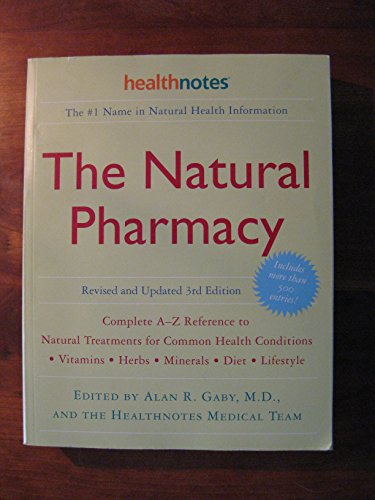
The Natural Pharmacy: Complete A-Z Reference to Natural Treatments for Common Health Conditions - Softcover
Inhaltsangabe
Alphabetically organized for easy access, a definitive guide provides the latest information on using herbs, vitamins, minerals, nutrition, and homeopathic remedies; discusses a wide variety of treatments for common ailments; and provides tabbed pages, quick-reference charts, and numerous cross-references. Original. 15,000 first printing.
Die Inhaltsangabe kann sich auf eine andere Ausgabe dieses Titels beziehen.
Auszug. © Genehmigter Nachdruck. Alle Rechte vorbehalten.
Abnormal Pap Smear
Sexually active teenagers and women 20 to 65 years old are advised to have periodic Pap smears, where a small amount of tissue is swabbed from the cervix and examined for evidence of precancerous or cancerous changes. A pap smear is considered abnormal when abnormal cervical cells are found. Cervical dysplasia is a term used to describe abnormal cervical cells taken during the pap smear. Cervical dysplasia is usually graded according to its severity, which can range from mild inflammation to precancerous changes to localized cancer.
If an abnormality is detected early, the doctor can prescribe effective treatment before the problem becomes more serious. Cervical cancer (page 000) is a common, sometimes fatal disease. It is now known that human papilloma virus (HPV), also the cause of genital warts (page 000), is the major cause of cervical dysplasia.
What are the symptoms of an abnormal pap smear?
There are no symptoms of cervical dysplasia until the disease has progressed into advanced cancer. Therefore, it is crucial that sexually active women, or women over age 20, have yearly Pap smears until the age of 65. Women who experience bleeding between menstrual periods, bleeding after intercourse, abnormal vaginal discharge, abdominal pain or swelling, urinary symptoms, or pelvic pain should be evaluated by a healthcare provider, even if it is not the regular time for a Pap test.
Medical treatments
If the Pap smear is normal, no further tests are necessary until the next yearly Pap test. If the cells collected on the Pap smear are abnormal, a repeat test and a pelvic exam where the doctor looks at the cervix with a special magnifying lens (colposcope) may be recommended. Sometimes a small piece of tissue is removed from the cervix (biopsy) and examined under a microscope to see if there are any precancerous changes or cancer present. If these additional tests find an early stage of cervical cancer, it is either treated by removing the affected portion of the cervix (cone biopsy) or by removing the entire cervix and uterus (abdominal hysterectomy).
Checklist for Abnormal Pap Smear
Nutritional
RatingSupplementsHerbs
HHHFolic acid (page 000)
(for women using oral
contraceptives)
HHIGreen tea extracts (page 000) (poly E or (-)-epigallocatechin-3-gallate)
HIISelenium (page 000)Echinacea (page
Vitamin A (page 000)000), Goldenseal
Vitamin E (page 000)(page 000), Marsh-
mallow (page 000), Myrrh (page 000), Usnea (page 000), Yarrow (page 000) (suppository; in various combinations)
Dietary changes that may be helpful
Most dietary studies have found that women consuming high amounts of nutrients from fruits and vegetables have less risk of cervical dysplasia. Protective effects may be especially strong from diets high in dark yellow/orange vegetables (carrots, winter squash, etc.) and tomatoes.
Lifestyle changes that may be helpful
Cigarette smoking increases the risk of cervical dysplasia, and increases the likelihood that mild forms of dysplasia will progress to more severe forms. Quitting smoking and avoiding exposure to secondhand smoke are essential for this and many other health reasons.
Certain sexual behaviors are consistently associated with cervical dysplasia, such as becoming sexually active at an early age and having multiple sexual partners. Avoiding these behaviors may reduce the risk of cervical dysplasia. For those who are sexually active, using barrier methods of contraception, such as a condom or diaphragm, is associated with reduced risk of cervical dysplasia.
Nutritional supplements that may be helpful
Large amounts of folic acid (page 000)—10 mg per day—have been shown to improve the abnormal Pap smears of women who are taking birth control pills. Folic acid does not improve the Pap smears of women who are not taking oral contraceptives. High blood levels of folate (the food form of folic acid) have been linked to protection against the development of cervical dysplasia but these folate levels may only be a marker for eating more fruit and vegetables.
Women with cervical dysplasia may have lower blood levels of beta-carotene (page 000) and vitamin E (page 000) compared to healthy women. Low levels of selenium (page 000) and low dietary intake of vitamin C (page 000) have also been observed in women with cervical dysplasia. Women with a low intake of vitamin A (page 000) have an increased risk of cervical dysplasia. However, there is little research on the use of vitamin A as a treatment for cervical dysplasia.
In a double-blind trial, when women with cervical abnormalities were given either 500 mg of vitamin C or 50,000 IU beta-carotene per day for two years, no significant evidence of improvement was seen in either group, and those assigned to both supplements experienced a statistically insignificant worsening of their condition. Given that the apparent association between these supplements and deterioration of the condition of the cervix appears to have been due to chance, there is currently no sound evidence supporting the use of vitamin C or beta-carotene supplements for women with cervical dysplasia.
Are there any side effects or interactions?
Refer to the individual supplement for information about any side effects or interactions.
Herbs that may be helpful
In a preliminary study, women with cervical dysplasia were randomly assigned to receive either (1) 200 mg per day of (-)-epigallocatechin-3-gallate (a flavonoid found in green tea [page 000]), (2) 200 mg per day of poly E (a green tea extract), or (3) no treatment (control group) for 8 to 12 weeks. Approximately two-thirds of the women receiving (-)-epigallocatechin-3-gallate or poly E had an improvement in their Pap smear, compared with only 10% of the women in the control group.
Several other herbs have been used as part of an approach for women with mild cervical dysplasia, including myrrh (page 000), echinacea (page 000), usnea (page 000), goldenseal (page 000), marshmallow (page 000), and yarrow (page 000). These herbs are used for their antiviral actions as well as to stimulate tissue healing; they are generally administered in a suppository preparation. No clinical trials have proven their effectiveness in treating cervical dysplasia. A doctor should be consulted to discuss the use and availability of these herbs.
Are there any side effects or interactions?
Refer to the individual herb for information about any side effects or interactions.
Acne Rosacea
Acne rosacea, now more accurately know just as rosacea, is a chronic skin condition of the forehead, cheeks, nose, and chin. It consists of flushing, which turns into red coloration from the dilation of the capillaries and can lead to pustules that resemble acne.
Rosacea occurs mostly in middle-aged adults with fair skin. The cause of rosacea is unknown, but there is likely a genetic component. Severe, untreated rosacea can be disfiguring to the face.
What are the symptoms of acne rosacea?
The skin of the center of the face—typically on or surrounding the nose—is red and swollen, with acne-like blemishes. As the condition progresses, parts of the eye can become inflamed and the nose may enlarge.
Checklist for Acne Rosacea
Nutritional
RatingSupplementsHerbs
HIIBetaine hydrochloride Burdock (page 000)
(page 000)
Digestive...
„Über diesen Titel“ kann sich auf eine andere Ausgabe dieses Titels beziehen.
Suchergebnisse für The Natural Pharmacy: Complete A-Z Reference to Natural...

Beispielbild für diese ISBN
Natural Pharmacy, the
Anbieter: World of Books (was SecondSale), Montgomery, IL, USA
Verkäuferbewertung 5 von 5 Sternen

Paperback. Zustand: Very Good. Bestandsnummer des Verkäufers 00104449127
Gebraucht kaufen
EUR 5,41
Versand gratis
Versand innerhalb von USA
Versand innerhalb von USA
Anzahl: 2 verfügbar
Foto des Verkäufers
The Natural Pharmacy Revised and Updated 3rd Edition: Complete A-Z Reference to Natural Treatments for Common Health Conditions
Anbieter: Zoom Books East, Glendale Heights, IL, USA
Verkäuferbewertung 5 von 5 Sternen
Zustand: good. Book is in good condition and may include underlining highlighting and minimal wear. The book can also include "From the library of" labels. May not contain miscellaneous items toys, dvds, etc. . We offer 100% money back guarantee and 24 7 customer service. Bestandsnummer des Verkäufers ZEV.0307336654.G
Gebraucht kaufen
EUR 5,42
Versand gratis
Versand innerhalb von USA
Versand innerhalb von USA
Anzahl: 1 verfügbar
Beispielbild für diese ISBN
The Natural Pharmacy Revised and Updated 3rd Edition: Complete A-Z Reference to Natural Treatments for Common Health Conditions
Anbieter: New Legacy Books, Annandale, NJ, USA
Verkäuferbewertung 5 von 5 Sternen
paperback. Zustand: Good. The cover shows normal wear. Fast shipping and order satisfaction guaranteed. A portion of your purchase benefits Non-Profit Organizations, First Aid and Fire Stations! Bestandsnummer des Verkäufers mon0000159371
Gebraucht kaufen
EUR 3,57
EUR 2,22 Versand
Versand innerhalb von USA
Versand innerhalb von USA
Anzahl: 1 verfügbar
Foto des Verkäufers
The Natural Pharmacy Revised and Updated 3rd Edition: Complete A-Z Reference to Natural Treatments for Common Health Conditions
Anbieter: -OnTimeBooks-, Phoenix, AZ, USA
Verkäuferbewertung 5 von 5 Sternen
Zustand: good. A copy that has been read, remains in good condition. All pages are intact, and the cover is intact. The spine and cover show signs of wear. Pages can include notes and highlighting and show signs of wear, and the copy can include "From the library of" labels or previous owner inscriptions. 100% GUARANTEE! Shipped with delivery confirmation, if you're not satisfied with purchase please return item! Ships via media mail. Bestandsnummer des Verkäufers OTV.0307336654.G
Gebraucht kaufen
EUR 6,29
Versand gratis
Versand innerhalb von USA
Versand innerhalb von USA
Anzahl: 1 verfügbar
Beispielbild für diese ISBN
The Natural Pharmacy Revised and Updated 3rd Edition: Complete A-Z Reference to Natural Treatments for Common Health Conditions
Anbieter: ThriftBooks-Dallas, Dallas, TX, USA
Verkäuferbewertung 5 von 5 Sternen
Paperback. Zustand: Fair. No Jacket. Readable copy. Pages may have considerable notes/highlighting. ~ ThriftBooks: Read More, Spend Less. Bestandsnummer des Verkäufers G0307336654I5N00
Gebraucht kaufen
EUR 7,15
Versand gratis
Versand innerhalb von USA
Versand innerhalb von USA
Anzahl: 2 verfügbar
Beispielbild für diese ISBN
The Natural Pharmacy Revised and Updated 3rd Edition: Complete A-Z Reference to Natural Treatments for Common Health Conditions
Anbieter: ThriftBooks-Reno, Reno, NV, USA
Verkäuferbewertung 5 von 5 Sternen
Paperback. Zustand: Fair. No Jacket. Readable copy. Pages may have considerable notes/highlighting. ~ ThriftBooks: Read More, Spend Less. Bestandsnummer des Verkäufers G0307336654I5N00
Gebraucht kaufen
EUR 7,15
Versand gratis
Versand innerhalb von USA
Versand innerhalb von USA
Anzahl: 1 verfügbar
Beispielbild für diese ISBN
The Natural Pharmacy Revised and Updated 3rd Edition: Complete A-Z Reference to Natural Treatments for Common Health Conditions
Anbieter: ThriftBooks-Phoenix, Phoenix, AZ, USA
Verkäuferbewertung 5 von 5 Sternen
Paperback. Zustand: Fair. No Jacket. Readable copy. Pages may have considerable notes/highlighting. ~ ThriftBooks: Read More, Spend Less. Bestandsnummer des Verkäufers G0307336654I5N00
Gebraucht kaufen
EUR 7,15
Versand gratis
Versand innerhalb von USA
Versand innerhalb von USA
Anzahl: 1 verfügbar
Beispielbild für diese ISBN
The Natural Pharmacy Revised and Updated 3rd Edition: Complete A-Z Reference to Natural Treatments for Common Health Conditions
Anbieter: ThriftBooks-Atlanta, AUSTELL, GA, USA
Verkäuferbewertung 5 von 5 Sternen
Paperback. Zustand: Fair. No Jacket. Readable copy. Pages may have considerable notes/highlighting. ~ ThriftBooks: Read More, Spend Less. Bestandsnummer des Verkäufers G0307336654I5N00
Gebraucht kaufen
EUR 7,15
Versand gratis
Versand innerhalb von USA
Versand innerhalb von USA
Anzahl: 1 verfügbar
Beispielbild für diese ISBN
Natural Pharmacy, the
Anbieter: World of Books Inc, Montgomery, IL, USA
Verkäuferbewertung 4 von 5 Sternen

Paperback. Zustand: Very Good. Bestandsnummer des Verkäufers CIN0307336654VG
Gebraucht kaufen
EUR 7,25
Versand gratis
Versand innerhalb von USA
Versand innerhalb von USA
Anzahl: 2 verfügbar
Beispielbild für diese ISBN
The Natural Pharmacy Revised and Updated 3rd Edition: Complete A-Z Reference to Natural Treatments for Common Health Conditions
Anbieter: HPB-Red, Dallas, TX, USA
Verkäuferbewertung 5 von 5 Sternen
Paperback. Zustand: Good. Connecting readers with great books since 1972! Used textbooks may not include companion materials such as access codes, etc. May have some wear or writing/highlighting. We ship orders daily and Customer Service is our top priority! Bestandsnummer des Verkäufers S_468894682
Gebraucht kaufen
EUR 4,59
EUR 3,34 Versand
Versand innerhalb von USA
Versand innerhalb von USA
Anzahl: 1 verfügbar