
Verwandte Artikel zu The Beautiful and Damned (Vintage Classics)
Inhaltsangabe
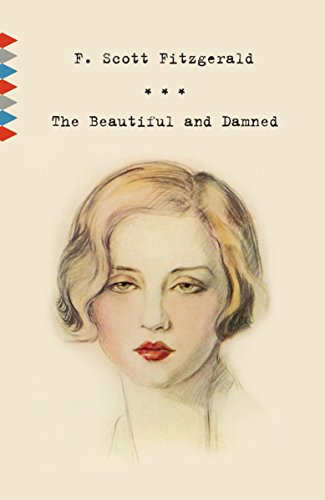
F. Scott Fitzgerald's second novel, which brilliantly satirizes a doomed and glamorous marriage, anticipated the master stroke—The Great Gatsby—that would follow, and marks a key moment in the writer’s career. Would-be Jazz Age aristocrats Anthony and Gloria Patch embody the corrupt high society of 1920s New York: they are beautiful, shallow, pleasure-seeking, and vain. As presumptive heirs to a large fortune, they begin their married life by living well beyond their means. Their days are marked by endless drinking, dancing, luxury, and play. But when the expected inheritance is withheld, their lives become consumed with the pursuit of wealth, and their alliance begins to fall apart. Inspired in part by Fitzgerald's own tumultuous union with his wife Zelda, hauntingly rendered and keenly observed, these characters evoke a vivid portrait of a lost world: a city steeped in vice, a society without direction, and the rootless and decadent generation that inhabited it.
Die Inhaltsangabe kann sich auf eine andere Ausgabe dieses Titels beziehen.
Über die Autorin bzw. den Autor
Francis Scott Key Fitzgerald was born in 1896 in St. Paul, Minnesota. He attended Princeton University, where he began writing what would become his first novel, This Side of Paradise. He left Princeton to join the army during World War I, though the war ended shortly after his enlistment. This Side of Paradise, published in 1920, was a critical and financial success and was followed the same year by his first story collection, Flappers and Philosophers, followed by Tales of the Jazz Age in 1922. Fitzgerald went on to publish three more novels—The Beautiful and Damned, The Great Gatsby, and Tender Is the Night—and many more stories. He died in 1940, leaving his last novel, The Love of the Last Tycoon, unfinished.
Auszug. © Genehmigter Nachdruck. Alle Rechte vorbehalten.
CHAPTER I
ANTHONY PATCH
In 1913, when Anthony Patch was twenty-five, two years were already gone since irony, the Holy Ghost of this later day, had, theoretically at least, descended upon him. Irony was the final polish of the shoe, the ultimate dab of the clothes-brush, a sort of intellectual “There!”—yet at the brink of this story he has as yet gone no further than the conscious stage. As you first see him he wonders frequently whether he is not without honor and slightly mad, a shameful and obscene thinness glistening on the surface of the world like oil on a clean pond, these occasions being varied, of course, with those in which he thinks himself rather an exceptional young man, thoroughly sophisticated, well adjusted to his environment, and somewhat more significant than any one else he knows.
This was his healthy state and it made him cheerful, pleasant, and very attractive to intelligent men and to all women. In this state he considered that he would one day accomplish some quiet subtle thing that the elect would deem worthy and, passing on, would join the dimmer stars in a nebulous, indeterminate heaven half-way between death and immortality. Until the time came for this effort he would be Anthony Patch—not a portrait of a man but a distinct and dynamic personality, opinionated, contemptuous, functioning from within outward—a man who was aware that there could be no honor and yet had honor, who knew the sophistry of courage and yet was brave.
A WORTHY MAN AND HIS GIFTED SON
Anthony drew as much consciousness of social security from being the grandson of Adam J. Patch as he would have had from tracing his line over the sea to the crusaders. This is inevitable; Virginians and Bostonians to the contrary notwithstanding, an aristocracy founded sheerly on money postulates wealth in the particular.
Now Adam J. Patch, more familiarly known as “Cross Patch,” left his father’s farm in Tarrytown early in sixty-one to join a New York cavalry regiment. He came home from the war a major, charged into Wall Street, and amid much fuss, fume, applause, and ill will he gathered to himself some seventy-five million dollars.
This occupied his energies until he was fifty-seven years old. It was then that he determined, after a severe attack of sclerosis, to consecrate the remainder of his life to the moral regeneration of the world. He became a reformer among reformers. Emulating the magnificent efforts of Anthony Comstock, after whom his grandson was named, he levelled a varied assortment of uppercuts and body-blows at liquor, literature, vice, art, patent medicines, and Sunday theatres. His mind, under the influence of that insidious mildew which eventually forms on all but the few, gave itself up furiously to every indignation of the age. From an armchair in the office of his Tarrytown estate he directed against the enormous hypothetical enemy, unrighteousness, a campaign which went on through fifteen years, during which he displayed himself a rabid monomaniac, an unqualified nuisance, and an intolerable bore. The year in which this story opens found him wearying; his campaign had grown desultory; 1861 was creeping up slowly on 1895; his thoughts ran a great deal on the Civil War, somewhat on his dead wife and son, almost infinitesimally on his grandson Anthony.
Early in his career Adam Patch had married an anæmic lady of thirty, Alicia Withers, who brought him one hundred thousand dollars and an impeccable entré into the banking circles of New York. Immediately and rather spunkily she had borne him a son and, as if completely devitalized by the magnificence of this performance, she had thenceforth effaced herself within the shadowy dimensions of the nursery. The boy, Adam Ulysses Patch, became an inveterate joiner of clubs, connoisseur of good form, and driver of tandems—at the astonishing age of twenty-six he began his memoirs under the title “New York Society as I Have Seen It.” On the rumor of its conception this work was eagerly bid for among publishers, but as it proved after his death to be immoderately verbose and overpoweringly dull, it never obtained even a private printing.
This Fifth Avenue Chesterfield married at twenty-two. His wife was Henrietta Lebrune, the Boston “Society Contralto,” and the single child of the union was, at the request of his grandfather, christened Anthony Comstock Patch. When he went to Harvard, the Comstock dropped out of his name to a nether hell of oblivion and was never heard of thereafter.
Young Anthony had one picture of his father and mother together—so often had it faced his eyes in childhood that it had acquired the impersonality of furniture, but every one who came into his bedroom regarded it with interest. It showed a dandy of the nineties, spare and handsome, standing beside a tall dark lady with a muff and the suggestion of a bustle. Between them was a little boy with long brown curls, dressed in a velvet Lord Fauntleroy suit. This was Anthony at five, the year of his mother’s death.
His memories of the Boston Society Contralto were nebulous and musical. She was a lady who sang, sang, sang, in the music room of their house on Washington Square—sometimes with guests scattered all about her, the men with their arms folded, balanced breathlessly on the edges of sofas, the women with their hands in their laps, occasionally making little whispers to the men and always clapping very briskly and uttering cooing cries after each song—and often she sang to Anthony alone, in Italian or French or in a strange and terrible dialect which she imagined to be the speech of the Southern negro.
His recollections of the gallant Ulysses, the first man in America to roll the lapels of his coat, were much more vivid. After Henrietta Lebrune Patch had “joined another choir,” as her widower huskily remarked from time to time, father and son lived up at grampa’s in Tarrytown, and Ulysses came daily to Anthony’s nursery and expelled pleasant, thick-smelling words for sometimes as much as an hour. He was continually promising Anthony hunting trips and fishing trips and excursions to Atlantic City, “oh, some time soon now”; but none of them ever materialized. One trip they did take; when Anthony was eleven they went abroad, to England and Switzerland, and there in the best hotel in Lucerne his father died with much sweating and grunting and crying aloud for air. In a panic of despair and terror Anthony was brought back to America, wedded to a vague melancholy that was to stay beside him through the rest of his life.
PAST AND PERSON OF THE HERO
At eleven he had a horror of death. Within six impressionable years his parents had died and his grandmother had faded off almost imperceptibly, until, for the first time since her marriage, her person held for one day an unquestioned supremacy over her own drawing room. So to Anthony life was a struggle against death, that waited at every corner. It was as a concession to his hypochondriacal imagination that he formed the habit of reading in bed—it soothed him. He read until he was tired and often fell asleep with the lights still on.
His favorite diversion until he was fourteen was his stamp collection; enormous, as nearly exhaustive as a boy’s could be—his grandfather considered fatuously that it was teaching him geography. So Anthony kept up a correspondence with a half dozen “Stamp and Coin” companies and it was rare that the mail failed to bring him new stamp-books or packages of glittering approval sheets—there was a mysterious fascination in transferring his acquisitions interminably from one book to another. His stamps were his greatest happiness and he bestowed impatient frowns on any one...
„Über diesen Titel“ kann sich auf eine andere Ausgabe dieses Titels beziehen.
Suchergebnisse für The Beautiful and Damned (Vintage Classics)

Beispielbild für diese ISBN
The Beautiful and Damned
Anbieter: World of Books (was SecondSale), Montgomery, IL, USA
Verkäuferbewertung 5 von 5 Sternen

Paperback. Zustand: Good. F. Scott Fitzgerald's second novel, which brilliantly satirizes a doomed and glamorous marriage, anticipated the master stroke-The Great Gatsby-that would follow, and marks a key moment in the writer's career.Would-be Jazz Age aristocrats Anthony and Gloria Patch embody the corrupt high society of 1920s New York: they are beautiful, shallow, pleasure-seeking, and vain. As presumptive heirs to a large fortune, they begin their married life by living well beyond their means. Their days are marked by endless drinking, dancing, luxury, and play. But when the expected inheritance is withheld, their lives become consumed with the pursuit of wealth, and their alliance begins to fall apart. Inspired in part by Fitzgerald's own tumultuous union with his wife Zelda, hauntingly rendered and keenly observed, these characters evoke a vivid portrait of a lost world: a city steeped in vice, a society without direction, and the rootless and decadent generation that inhabited it. Bestandsnummer des Verkäufers 00105162777
Gebraucht kaufen
EUR 4,45
Versand gratis
Versand innerhalb von USA
Versand innerhalb von USA
Anzahl: 4 verfügbar
Foto des Verkäufers
The Beautiful and Damned (Vintage Classics)
Anbieter: Greenworld Books, Arlington, TX, USA
Verkäuferbewertung 5 von 5 Sternen
Zustand: good. Fast Free Shipping â" Good condition. It may show normal signs of use, such as light writing, highlighting, or library markings, but all pages are intact and the book is fully readable. A solid, complete copy that's ready to enjoy. Bestandsnummer des Verkäufers GWV.0307476359.G
Gebraucht kaufen
EUR 4,45
Versand gratis
Versand innerhalb von USA
Versand innerhalb von USA
Anzahl: 1 verfügbar
Beispielbild für diese ISBN
The Beautiful and Damned (Vintage Classics)
Anbieter: Evergreen Goodwill, Seattle, WA, USA
Verkäuferbewertung 5 von 5 Sternen
paperback. Zustand: Good. Bestandsnummer des Verkäufers mon0000452273
Gebraucht kaufen
EUR 1,43
EUR 3,51 Versand
Versand innerhalb von USA
Versand innerhalb von USA
Anzahl: 1 verfügbar
Beispielbild für diese ISBN
The Beautiful and Damned (Vintage Classics)
Anbieter: BooksRun, Philadelphia, PA, USA
Verkäuferbewertung 5 von 5 Sternen
Paperback. Zustand: Very Good. 1. It's a well-cared-for item that has seen limited use. The item may show minor signs of wear. All the text is legible, with all pages included. It may have slight markings and/or highlighting. Bestandsnummer des Verkäufers 0307476359-8-22
Gebraucht kaufen
EUR 5,21
Versand gratis
Versand innerhalb von USA
Versand innerhalb von USA
Anzahl: 1 verfügbar
Foto des Verkäufers
The Beautiful and Damned (Vintage Classics)
Anbieter: Greenworld Books, Arlington, TX, USA
Verkäuferbewertung 5 von 5 Sternen
Zustand: very_good. Fast Free Shipping â" Very Good condition book with a firm cover and clean pages. Shows normal use and some light wear or limited notes markings. A solid, nice copy to enjoy. Bestandsnummer des Verkäufers GWV.0307476359.VG
Gebraucht kaufen
EUR 5,75
Versand gratis
Versand innerhalb von USA
Versand innerhalb von USA
Anzahl: 1 verfügbar
Beispielbild für diese ISBN
The Beautiful and Damned (Vintage Classics)
Anbieter: HPB Inc., Dallas, TX, USA
Verkäuferbewertung 5 von 5 Sternen
Paperback. Zustand: Very Good. Connecting readers with great books since 1972! Used books may not include companion materials, and may have some shelf wear or limited writing. We ship orders daily and Customer Service is our top priority! Bestandsnummer des Verkäufers S_468749635
Gebraucht kaufen
EUR 2,71
EUR 3,29 Versand
Versand innerhalb von USA
Versand innerhalb von USA
Anzahl: 1 verfügbar
Beispielbild für diese ISBN
The Beautiful and Damned (Vintage Classics)
Anbieter: HPB-Diamond, Dallas, TX, USA
Verkäuferbewertung 5 von 5 Sternen
Paperback. Zustand: Very Good. Connecting readers with great books since 1972! Used books may not include companion materials, and may have some shelf wear or limited writing. We ship orders daily and Customer Service is our top priority! Bestandsnummer des Verkäufers S_467457123
Gebraucht kaufen
EUR 2,71
EUR 3,29 Versand
Versand innerhalb von USA
Versand innerhalb von USA
Anzahl: 1 verfügbar
Beispielbild für diese ISBN
The Beautiful and Damned
Anbieter: World of Books Inc, Montgomery, IL, USA
Verkäuferbewertung 4 von 5 Sternen

Paperback. Zustand: Good. F. Scott Fitzgerald's second novel, which brilliantly satirizes a doomed and glamorous marriage, anticipated the master stroke-The Great Gatsby-that would follow, and marks a key moment in the writer's career.Would-be Jazz Age aristocrats Anthony and Gloria Patch embody the corrupt high society of 1920s New York: they are beautiful, shallow, pleasure-seeking, and vain. As presumptive heirs to a large fortune, they begin their married life by living well beyond their means. Their days are marked by endless drinking, dancing, luxury, and play. But when the expected inheritance is withheld, their lives become consumed with the pursuit of wealth, and their alliance begins to fall apart. Inspired in part by Fitzgerald's own tumultuous union with his wife Zelda, hauntingly rendered and keenly observed, these characters evoke a vivid portrait of a lost world: a city steeped in vice, a society without direction, and the rootless and decadent generation that inhabited it. Bestandsnummer des Verkäufers CIN0307476359G
Gebraucht kaufen
EUR 6,26
Versand gratis
Versand innerhalb von USA
Versand innerhalb von USA
Anzahl: 4 verfügbar
Beispielbild für diese ISBN
The Beautiful and Damned
Anbieter: ThriftBooks-Phoenix, Phoenix, AZ, USA
Verkäuferbewertung 5 von 5 Sternen
Paperback. Zustand: Very Good. No Jacket. May have limited writing in cover pages. Pages are unmarked. ~ ThriftBooks: Read More, Spend Less. Bestandsnummer des Verkäufers G0307476359I4N00
Gebraucht kaufen
EUR 6,40
Versand gratis
Versand innerhalb von USA
Versand innerhalb von USA
Anzahl: 1 verfügbar
Beispielbild für diese ISBN
The Beautiful and Damned
Anbieter: ThriftBooks-Atlanta, AUSTELL, GA, USA
Verkäuferbewertung 5 von 5 Sternen
Paperback. Zustand: Very Good. No Jacket. May have limited writing in cover pages. Pages are unmarked. ~ ThriftBooks: Read More, Spend Less. Bestandsnummer des Verkäufers G0307476359I4N00
Gebraucht kaufen
EUR 6,40
Versand gratis
Versand innerhalb von USA
Versand innerhalb von USA
Anzahl: 1 verfügbar