
Verwandte Artikel zu The English Patient: Introduction by Pico Iyer (Everyman'...
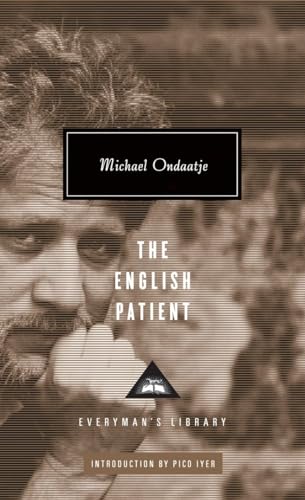
The English Patient: Introduction by Pico Iyer (Everyman's Library Contemporary Classics Series, Band 339) - Hardcover
Inhaltsangabe
Michael Ondaatje’s Booker Prize–winning best seller lyrically portrays the convergence of four damaged lives in a bomb-riddled Italian villa in the last days of the war. Hana, the grieving nurse; the maimed thief, Caravaggio; the emotionally detached Indian sapper, Kip—each is haunted in different ways by the riddle of the man they know only as the English patient, a nameless burn victim who lies swathed in bandages in an upstairs room. It is this man’s incandescent memories—of the bleak North African desert, of explorers’ caves and Bedouin tribesmen,
of forbidden love, and of annihilating anger—that illuminate the story, and the consequences of the mysteries they reveal radiate outward in shock waves that leave all the characters forever changed.
Die Inhaltsangabe kann sich auf eine andere Ausgabe dieses Titels beziehen.
Über die Autorin bzw. den Autor
Michael Ondaatje is the author of eleven books of poetry, a memoir, and six novels, including The Cat’s Table, coming in October 2011. He lives in Toronto.
Pico Iyer is the author of two novels and seven works of nonfiction. His new book, The Man Within My Head, comes out in 2012.
Auszug. © Genehmigter Nachdruck. Alle Rechte vorbehalten.
I N T R O D U C T I O N
by Pico Iyer
A Lost Oasis in the Midst of War
Much of what I love about The English Patient can be found in a more or less typical paragraph, chosen almost at random, very close to the beginning of the book. In it Michael Ondaatje takes us into a library, between the kitchen and the ‘‘destroyed chapel’’ of the old nunnery in which the novel is set, during the closing days of World War II. The library contains, among its high walls of books, a sofa, a shrouded piano and the head of a stuffed bear. Like the people around it, it has absorbed a ‘‘wound’’ from violent shelling, yet now, partly open to the world, it accepts ‘‘the habits of weather, evening stars, the sound of birds.’’ It seems a safe place, ultimately, protective, even as lightning often flashes into it and the rain that comes in through a hole left by mortar attack has ‘‘doubled the weight of the books.’’
The library could not be more ordinary, in short, even though it’s scarred and haunted as the house’s residents are. Yet it’s full of things from everywhere – like the book in which it sits – and when you bring words and wounds and bears together, they create startling and often fresh combinations. The description of the room has a poet’s caressing lyricism, every word attentively chosen, yet each phrase also brings us new information. And even as we take it to be an unusually sensuous and exact evocation of a particular place, we can also note, if we’re so inclined, that the library belongs to both the house and the elements now, that its collection throws old worlds and new together and that the fact it is at once room and symbol ‘‘doubles the weight’’ of the book in our hands.
We’re in the middle of a pulsing, concrete, very human story, we realize, but also of a vision, in which each clause holds us with a special vividness – how many other novels in English describe green-black paste of ‘‘ground peacock bone’’ or eighteen different kinds of wind? – even as each detail also stands for something beyond itself. It’s as if Keats and Marshall McLuhan are collaborating in every sentence. Ondaatje’s rare, risk-taking tale of four wounded characters gathering in an abandoned nunnery to put their selves and their stories together as the global war winds down, holds us as the classic novels it invokes (Anna Karenina and The Charterhouse of Parma) might: with a gorgeously stirring and universal set of romances set against a complex political backdrop, all delivered in newborn prose that nonetheless pushes us towards a resolution of several mysteries.
But at the same time it spins a different, much larger story about an alternative world in the midst of war – the private claiming its own space away from the public. At a moment when people are dying because of the passports they carry or the races they represent, we meet a ‘‘very English’’ patient who isn’t (fatally) English; a sapper risking his life for the British army although he’s Indian, and will later become a doctor; a man whose name is ‘‘absurd’’, he confesses – David Caravaggio – and who, in spite of that name and the heritage it suggests, loses both thumbs to another Italian; and a nurse, Hana, whose name (like her nickname, ‘‘Pico’’) could come from anywhere. Every assumption we might make about these people’s lives and origins will be wrong, and the central character – without a name for much of the book and almost without a face – will bring them into a sanctuary of sorts, a place of candlelight and ancient texts, in which they will exchange histories, kisses, intelligence in a new world ‘‘unconscious of ancestry.’’
*
When an unassuming beige-covered set of publisher’s galleys arrived at my home in the early fall of 1992, I had no idea what was awaiting me. I knew of Michael Ondaatje’s uncommon ability to mix traditions and cultures from having read his acclaimed memoir, Running in the Family, and I knew that he was a celebrated and radical poet in part because his lines weren’t entirely South Asian and yet didn’t only suggest ‘‘Upper America,’’ as he calls it; he belonged to a new mongrel tribe that had roots in every corner of the globe and would exult in the new harmonies and overlappings that could result. He had siblings on four continents and, of Burgher (mixed-race) descent, had spent his earliest years in colonial Ceylon before being educated in England and residing for most of his adult life in Canada. I remembered that his previous novel, In the Skin of a Lion, had – no coincidence – told the story of the founding of Toronto in the early twentieth century by mostly immigrant bridgebuilders; I recalled that none of his details were casual and that it was no accident that his four protagonists in The English Patient were a map-maker, a defuser of bombs, a nurse and (for good measure and proper, improper balance) a thief. Ondaatje in this book would be charting a map for a new kind of world; seeing how to disarm the instruments of war and national opposition; describing how broken individuals could be tended to and begin to heal; and offering a vision of deft appropriation.
But as I read the wildly unexpected pages – now he was describing (no coincidence again) a tightrope-walker in a lightning storm, now giving us oil-lamps made of snail shells – I quickly got pulled into a spell of sorts; I couldn’t look up for days, and I began racing through the ravishing scenes, each individual and somehow unprecedented, to see how the emotions would play themselves out. It was only after I’d put the book down that I noticed how original the whole thing was, how very different from the classic novels I’d read at school. There was no central point of view here; we cut very quickly between one scene and another, changing continents and worlds mid-sentence right to the very last clause (no wonder the book was quickly turned into an Academy Award-winning movie); there was no single story or truth, either. The world of common expectations and experience that we might find in a novel by Jane Austen had been blown to smithereens.
None of the main characters in the villas had a family, really, or a house or a steady job; there was no settled society to hold them in place. Most did not even seem to know who they were, deep down, and their histories came from everywhere. As we switch from a passage about Bedouin nomads to memories of a worm-market in Canada, as we move from Tacitus to Piero della Francesca to Pierre, or the Ambiguities, we see that everything’s in flux, and we’re in a world that Dickens or Flaubert could hardly have imagined. Like their author, the characters seem not quite native and not quite foreign.
Part of the excitement – the often breathtaking revolution – of the book, which instantly seemed to announce a new chapter in English-language writing, came from the fact that it offered a vision of characters moving through a world that was the opposite of fixed, less like a hierarchical order than a kind of deep space, in which spinning stars turn around one another like ‘‘planetary strangers,’’ in Ondaatje’s words, and (as he writes one page later) ‘‘human constellations.’’ This is a work in which we do not see individuals working in the world so much as the world working on and in individuals. And in order to keep pace with these restless gypsies, the...
„Über diesen Titel“ kann sich auf eine andere Ausgabe dieses Titels beziehen.
Suchergebnisse für The English Patient: Introduction by Pico Iyer (Everyman'...

Foto des Verkäufers
The English Patient
Anbieter: Zoom Books East, Glendale Heights, IL, USA
Verkäuferbewertung 5 von 5 Sternen

Zustand: good. Book is in good condition and may include underlining highlighting and minimal wear. The book can also include "From the library of" labels. May not contain miscellaneous items toys, dvds, etc. . We offer 100% money back guarantee and 24 7 customer service. Bestandsnummer des Verkäufers ZEV.0307700879.G
Gebraucht kaufen
EUR 7,55
Versand gratis
Versand innerhalb von USA
Versand innerhalb von USA
Anzahl: 1 verfügbar
Beispielbild für diese ISBN
The English Patient : Introduction by Pico Iyer
Verlag:
Knopf Doubleday Publishing Group, 2011
ISBN 10: 0307700879
ISBN 13: 9780307700872
Gebraucht
Hardcover
Anbieter: Better World Books: West, Reno, NV, USA
Verkäuferbewertung 5 von 5 Sternen
Zustand: Very Good. Former library copy. Pages intact with possible writing/highlighting. Binding strong with minor wear. Dust jackets/supplements may not be included. Includes library markings. Stock photo provided. Product includes identifying sticker. Better World Books: Buy Books. Do Good. Bestandsnummer des Verkäufers 9191947-6
Gebraucht kaufen
EUR 7,64
Versand gratis
Versand innerhalb von USA
Versand innerhalb von USA
Anzahl: 1 verfügbar
Beispielbild für diese ISBN
The English Patient : Introduction by Pico Iyer
Verlag:
Knopf Doubleday Publishing Group, 2011
ISBN 10: 0307700879
ISBN 13: 9780307700872
Gebraucht
Hardcover
Anbieter: Better World Books, Mishawaka, IN, USA
Verkäuferbewertung 5 von 5 Sternen
Zustand: Good. Former library copy. Pages intact with minimal writing/highlighting. The binding may be loose and creased. Dust jackets/supplements are not included. Includes library markings. Stock photo provided. Product includes identifying sticker. Better World Books: Buy Books. Do Good. Bestandsnummer des Verkäufers 14388055-6
Gebraucht kaufen
EUR 7,64
Versand gratis
Versand innerhalb von USA
Versand innerhalb von USA
Anzahl: 1 verfügbar
Beispielbild für diese ISBN
The English Patient : Introduction by Pico Iyer
Verlag:
Knopf Doubleday Publishing Group, 2011
ISBN 10: 0307700879
ISBN 13: 9780307700872
Gebraucht
Hardcover
Anbieter: Better World Books, Mishawaka, IN, USA
Verkäuferbewertung 5 von 5 Sternen
Zustand: Good. Pages intact with minimal writing/highlighting. The binding may be loose and creased. Dust jackets/supplements are not included. Stock photo provided. Product includes identifying sticker. Better World Books: Buy Books. Do Good. Bestandsnummer des Verkäufers 41000857-6
Gebraucht kaufen
EUR 7,64
Versand gratis
Versand innerhalb von USA
Versand innerhalb von USA
Anzahl: 1 verfügbar
Beispielbild für diese ISBN
The English Patient: Introduction by Pico Iyer
Anbieter: ThriftBooks-Atlanta, AUSTELL, GA, USA
Verkäuferbewertung 5 von 5 Sternen
Hardcover. Zustand: Very Good. No Jacket. Former library book; May have limited writing in cover pages. Pages are unmarked. ~ ThriftBooks: Read More, Spend Less. Bestandsnummer des Verkäufers G0307700879I4N10
Gebraucht kaufen
EUR 9,50
Versand gratis
Versand innerhalb von USA
Versand innerhalb von USA
Anzahl: 1 verfügbar
Beispielbild für diese ISBN
The English Patient
Verlag:
Everyman's Library (edition First Edition), 2011
ISBN 10: 0307700879
ISBN 13: 9780307700872
Gebraucht
Hardcover
Erstausgabe
Anbieter: BooksRun, Philadelphia, PA, USA
Verkäuferbewertung 5 von 5 Sternen
Hardcover. Zustand: Very Good. First Edition. With dust jacket. It's a well-cared-for item that has seen limited use. The item may show minor signs of wear. All the text is legible, with all pages included. It may have slight markings and/or highlighting. Bestandsnummer des Verkäufers 0307700879-11-1-29
Gebraucht kaufen
EUR 9,76
Versand gratis
Versand innerhalb von USA
Versand innerhalb von USA
Anzahl: 1 verfügbar
Beispielbild für diese ISBN
The English Patient
Anbieter: Deadstock Gear, Fort Oglethorpe, GA, USA
Verkäuferbewertung 5 von 5 Sternen
hardcover. Zustand: Very Good. Satisfaction guaranteed. Thank you! Bestandsnummer des Verkäufers 10-26-2026-Bulk-Shelf 56/E079
Gebraucht kaufen
EUR 7,60
EUR 2,69 Versand
Versand innerhalb von USA
Versand innerhalb von USA
Anzahl: 1 verfügbar
Beispielbild für diese ISBN
English Patient: Introduction by Pico Iyer
Verlag:
Everyman's Library October 2011, 2011
ISBN 10: 0307700879
ISBN 13: 9780307700872
Gebraucht
Hardcover
Anbieter: A Cappella Books, Inc., Atlanta, GA, USA
Verkäuferbewertung 5 von 5 Sternen
Hardcover. Zustand: Very Good. Zustand des Schutzumschlags: Very Good. Some inked underlining in the early pages of the text, else, clean and near fine. Bestandsnummer des Verkäufers 393394
Gebraucht kaufen
EUR 14,77
Versand gratis
Versand innerhalb von USA
Versand innerhalb von USA
Anzahl: 1 verfügbar
Beispielbild für diese ISBN
The English Patient
Anbieter: HPB-Emerald, Dallas, TX, USA
Verkäuferbewertung 5 von 5 Sternen
Hardcover. Zustand: Very Good. Connecting readers with great books since 1972! Used books may not include companion materials, and may have some shelf wear or limited writing. We ship orders daily and Customer Service is our top priority! Bestandsnummer des Verkäufers S_489941627
Gebraucht kaufen
EUR 11,54
EUR 3,36 Versand
Versand innerhalb von USA
Versand innerhalb von USA
Anzahl: 1 verfügbar
Beispielbild für diese ISBN
The English Patient
Anbieter: Chequamegon Books, Washburn, WI, USA
Verkäuferbewertung 5 von 5 Sternen
hardcover. Zustand: As New. Zustand des Schutzumschlags: As New. 5 1/4 x 8 1/4", 263 pages. In new condition. "A ravishingly imaginative epic of passion and betrayal on an international scale.". Bestandsnummer des Verkäufers 129326
Gebraucht kaufen
EUR 9,24
EUR 5,83 Versand
Versand innerhalb von USA
Versand innerhalb von USA
Anzahl: 2 verfügbar